
Chef Juliette
Various Almond Preparations
Five almond preparations, one discipline: remove the skins cleanly, dry every kernel through, then cut, toast, or cloak it in pale caramel without letting its fragrant oils escape.
A cooking platform built around craft, culture, and the stories behind what we eat.
Created by Chef Juliette
Based on No. 2644, Crème à la Chantilly, from Le Guide Culinaire (1907) by Auguste Escoffier
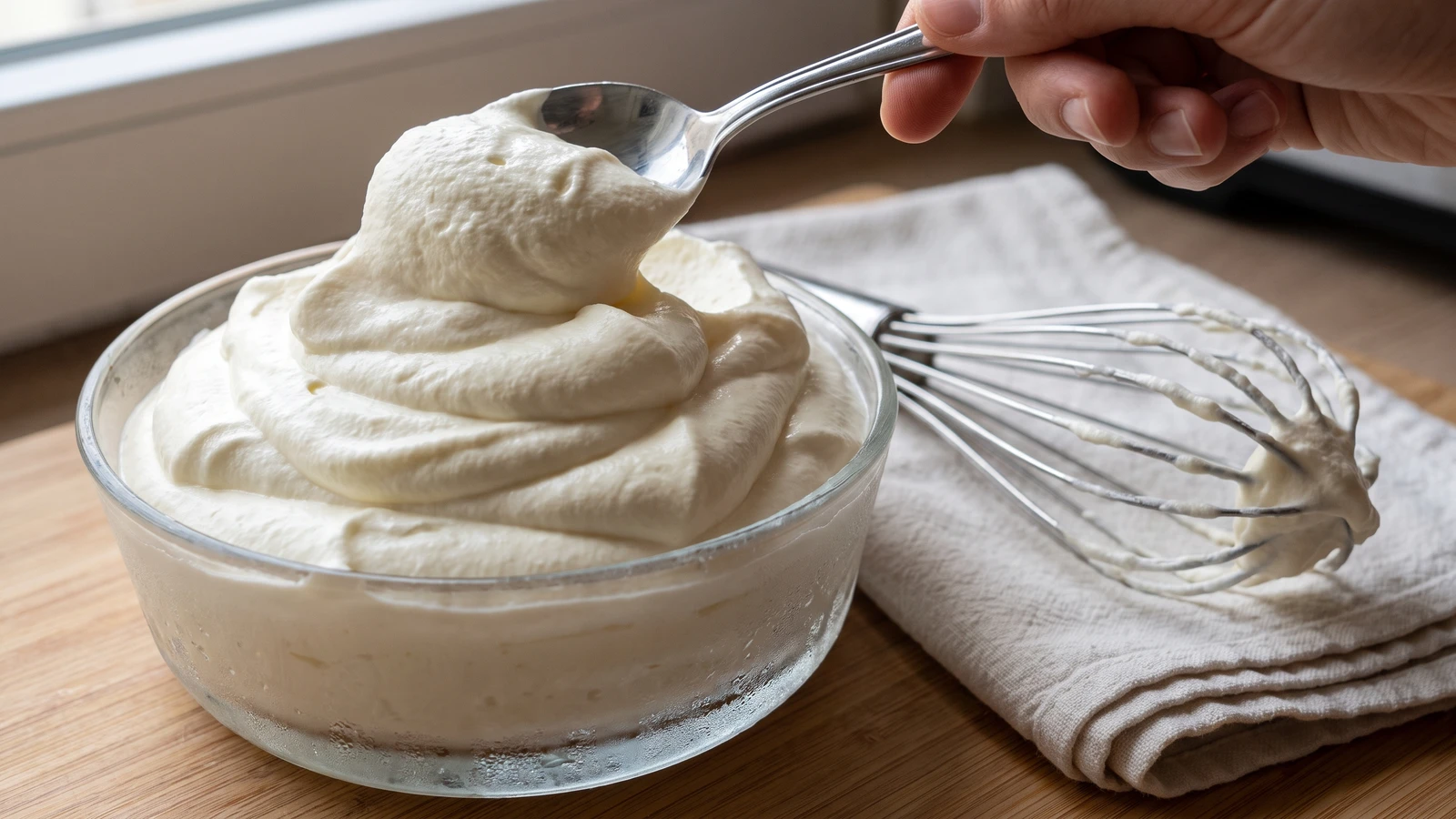
Cold cream, powdered sugar, and vanilla, whisked until the cream spans the whisk: a three-ingredient lesson in temperature, timing, and stopping at precisely the right moment.
Crème à la Chantilly (sweetened whipped cream) teaches one true thing: cold cream holds air, warm cream lets it go. Keep the cream, bowl, and whisk properly cold, then stop as soon as the cream clings across the whisk's wires. Everything else is three ingredients and attention.
The book gives a quart of thick cream and assumes a pastry hand stands ready to whisk it at the last moment. For the home table, that becomes one cup in a chilled bowl and a hand mixer; the brigade quantity and arm work are scaffolding, so they can go. The ratio does not: two ounces of powdered sugar for each cup of cream, added only after the cream has body, with vanilla or fruit essence at the end. One cook, one stove, one evening, and tonight the stove may stay cold.
The Chantilly should be dense yet supple, ivory, and firm enough to crown fruit or fill a gâteau without looking chalky. The moment that matters is the lift of the whisk: when the cream spans the wires and the peak bends just at its tip, stop. One minute too many turns silk granular, but catch it early and ça se rattrape.
Crème à la Chantilly takes its name from Chantilly in the Oise, north of Paris, yet sweetened whipped cream was already familiar before the name became fixed to the estate. The familiar tale that it sprang fully formed from a single château banquet is legend rather than a secure origin. In the classical pastry kitchen, Chantilly distinguished sweetened, usually vanilla-scented cream from crème fouettée (plain whipped cream), and that distinction traveled from grand tables into household tarts, fruits, and petits fours.
Quantity
1 cup (240 ml / 240 g)
very cold
Quantity
1/2 cup (120 ml / 57 g / 2 oz)
sifted
Quantity
1 teaspoon (5 ml / 4 g) vanilla extract or 2 drops fruit essence
choose one
Quantity
1 tablespoon (15 ml / 15 g)
very cold, reserved only for rescue
| Ingredient | Quantity |
|---|---|
| heavy whipping cream, 36 to 40% fatvery cold | 1 cup (240 ml / 240 g) |
| powdered sugarsifted | 1/2 cup (120 ml / 57 g / 2 oz) |
| pure vanilla extract or concentrated fruit essencechoose one | 1 teaspoon (5 ml / 4 g) vanilla extract or 2 drops fruit essence |
| additional heavy whipping cream (optional)very cold, reserved only for rescue | 1 tablespoon (15 ml / 15 g) |
Set a medium stainless-steel bowl and the beaters or balloon whisk in the freezer for 10 minutes. Keep the cream refrigerated until you are ready to whisk, and hold the optional rescue cream separately in the cold. Temperature decides this dish: cold butterfat forms a stable net around the air bubbles, while warm cream rises poorly and collapses quickly.
Sift the powdered sugar onto a sheet of parchment or into a small bowl, breaking up every lump before it reaches the cream. Measure by weight if possible. The book's ratio is exact, eight ounces of sugar to a quart of cream, which becomes two ounces for this one-cup batch.
Pour the cup of cold cream into the chilled bowl. Begin whisking at low speed to prevent splashing, then move to medium, working around the entire bowl. Once lasting ridges appear, stop every few seconds and lift the whisk. The cream is ready when it clings across the spaces between the wires and forms a firm peak whose tip bends slightly. Stop there. If the edges begin to look grainy, don't keep beating. Ça se rattrape: fold in the optional tablespoon of cold cream by hand until smooth. If yellow flecks and watery liquid have separated, the cream has become butter; save it for another use and begin the Chantilly again.
Sprinkle half the sifted powdered sugar over the whipped cream and fold gently with a flexible spatula, cutting down through the center and turning the cream over itself. Add the remaining sugar and fold only until no dry streaks remain. This sequence must stay: the cream gains its body first, then receives the sugar. If it slackens, chill the bowl for 5 minutes and give it several deliberate strokes with the hand whisk. Don't chase firmness with prolonged beating.
Fold in the vanilla extract or fruit essence with two or three broad turns, stopping as soon as the flavoring disappears into the ivory cream. Use the Chantilly immediately to crown fruit, fill a gâteau, accompany a warm dessert, or spoon generously into chilled coupes. It should hold a soft ridge without becoming chalky. This cream will not wait for you. À table!
1 serving (about 53g)
Culinary guides, cultural storytelling, and the editorial depth that makes cooking meaningful.
Discover Culinary ExplorerChef Juliette
Five almond preparations, one discipline: remove the skins cleanly, dry every kernel through, then cut, toast, or cloak it in pale caramel without letting its fragrant oils escape.

Chef Juliette
A pastry pantry lesson in one tray: filberts warmed only until their red skins release, rubbed clean, cooled, and chopped into a fragrant mise-en-place for cakes, creams, pralines, and petits fours.

Chef Juliette
The smallest pâtisserie discipline decides whether a cake leaves its mould intact: clarified butter in every corner, followed by the lightest veil of dry flour or fécule.

Chef Juliette
Four whites, one spotless bowl, and a patient change of speed: whisk gently until loosened, then briskly to glossy stiffness, with powdered sugar waiting if the foam begins to granulate.