
Chef Juliette
Various Almond Preparations
Five almond preparations, one discipline: remove the skins cleanly, dry every kernel through, then cut, toast, or cloak it in pale caramel without letting its fragrant oils escape.
A cooking platform built around craft, culture, and the stories behind what we eat.
Created by Chef Juliette
Based on No. 2624, Blanc-mange, from Le Guide Culinaire (1907) by Auguste Escoffier
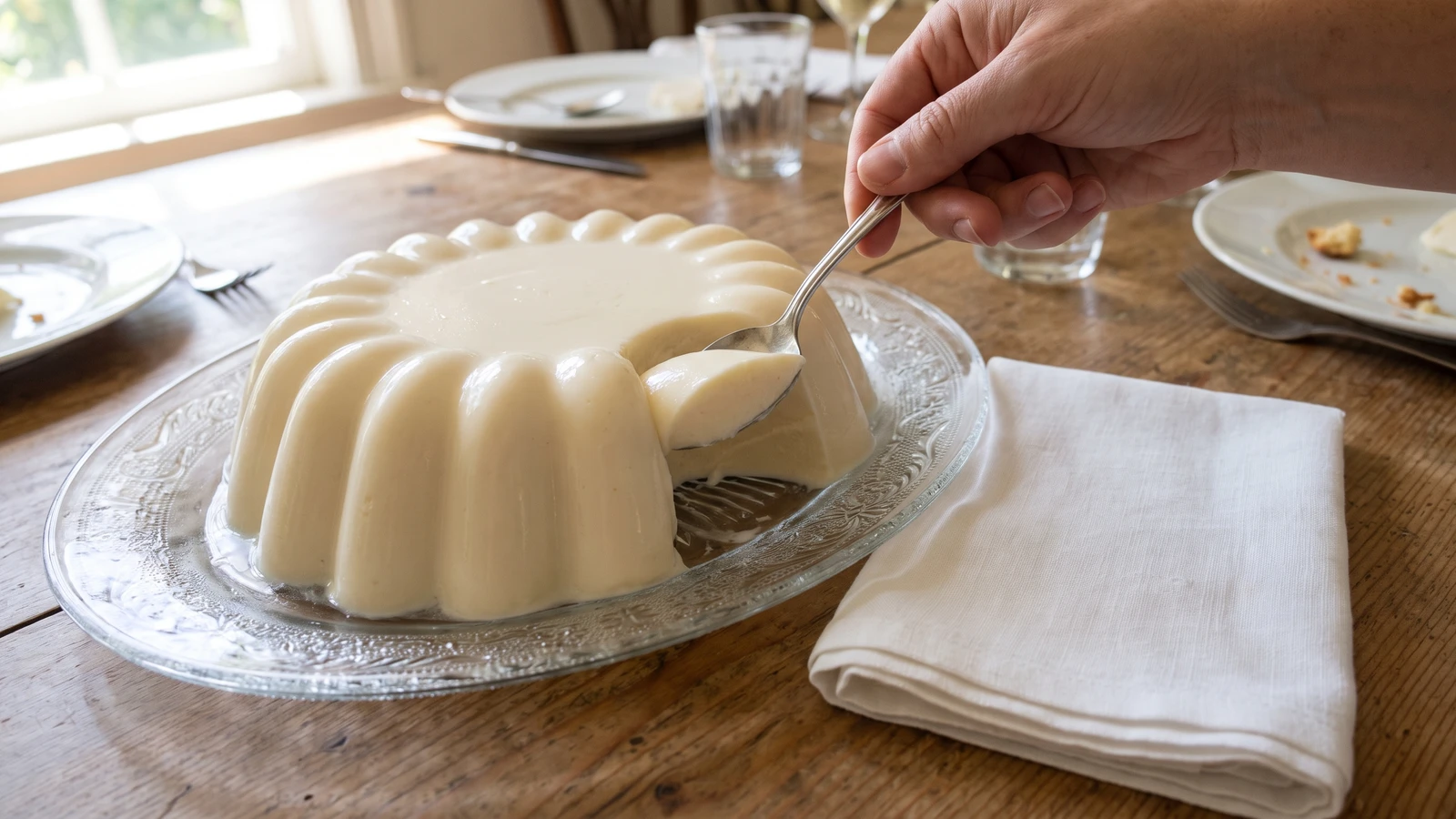
Blanc-mange proves that a pale pudding needn't be plain: freshly pressed almond milk, a breath of orange flower, and softly whipped cream held in a tender, cool set.
Blanc-mange (almond milk pudding) teaches the quietest lesson in the pastry canon: pale does not mean plain. Its entire character comes from milk pressed out of finely ground almonds, a little flower water, and a set tender enough to tremble when the spoon enters. The one true thing to know before touching the pan is this: the almond milk and gelatin must be warmed gently, never boiled, or perfume and texture both suffer.
The professional formula assumed a stone mortar, a cloth press, bitter almonds from the pastry larder, and trays of molds managed over ice. At home, a blender does the mortar's labor, a nut-milk bag does the pressing, safe almond extract stands in for bitter almonds, and the refrigerator manages one mold. The brigade quantity is cut to six generous portions, and the gelatin is weighed so the set stays tender. That's the scaffolding; the extraction, patient cooling, and soft set are the dish. One cook, one stove, one evening.
Cool the sweetened almond base until it begins to leave a faint trace on the spatula before you fold in the cream. Too warm and the cream loses its lift; too cold and the gelatin forms little knots. Watch that single moment and the rest is a quiet night in the refrigerator.
Blanc-mange belongs to the French grand and bourgeois entremets table rather than to one province, and its ancestry runs through generations of European cookery in which almonds, rice, and even poultry appeared together in a prized white dish. As it traveled from savory service to the sweet course, French pastry kitchens kept the almond milk and the name while gelatin and cream gave it a cool, trembling form. The starch-thickened English pudding is a legitimate cousin, not a failed French copy, and the fused name has long covered colored versions too, although this one keeps the whiteness promised by the words.
Quantity
1 cup (240 ml / 150 g)
Quantity
2 cups plus up to 2 tablespoons (480 to 510 ml / 480 to 510 g)
divided
Quantity
½ cup plus 1½ tablespoons (140 ml / 120 g)
Quantity
1 tablespoon plus ¼ teaspoon (16 ml / 10 g)
Quantity
1 cup (240 ml / 240 g)
well chilled
Quantity
1 teaspoon (5 ml / 5 g)
Quantity
⅛ teaspoon (0.6 ml / 0.6 g)
| Ingredient | Quantity |
|---|---|
| whole blanched sweet almonds | 1 cup (240 ml / 150 g) |
| cold filtered waterdivided | 2 cups plus up to 2 tablespoons (480 to 510 ml / 480 to 510 g) |
| fine granulated sugar | ½ cup plus 1½ tablespoons (140 ml / 120 g) |
| unflavored powdered gelatin | 1 tablespoon plus ¼ teaspoon (16 ml / 10 g) |
| heavy creamwell chilled | 1 cup (240 ml / 240 g) |
| culinary orange-flower water | 1 teaspoon (5 ml / 5 g) |
| pure almond extract | ⅛ teaspoon (0.6 ml / 0.6 g) |
Rinse a 1-liter decorative mold or six 150 ml molds with cold water and leave them wet, without oiling. The thin film of water helps the blanc-mange release while preserving its clean ivory surface. Pour ¼ cup (60 ml) of the measured cold water into a small bowl, sprinkle the gelatin evenly over it, and leave it undisturbed for 10 minutes, until every grain is swollen and translucent.
Put the almonds and the remaining 1¾ cups (420 ml) water in a blender. Blend for 2 full minutes, stopping once to scrape the sides, until the almonds become a very fine white pulp. Rest for 30 minutes, then pour through a damp nut-milk bag or two layers of damp cheesecloth set over a bowl. Twist and press firmly until you have extracted 1½ cups (360 ml) almond milk. If you are short, press again, then add only enough of the reserved extra water to reach the mark. This extraction is the foundation of the dish, so don't replace it with a thin boxed almond drink.
Combine half the almond milk, ¾ cup (180 ml), with the sugar in a small saucepan. Warm over low heat, stirring, until the sugar has dissolved and the liquid is hot but nowhere near a simmer, about 60°C. Remove from the heat and stir in the swollen gelatin until completely clear. If a few grains remain, return the pan to the lowest heat and stir gently; prolonged boiling weakens the set and flattens the almond perfume.
Stir in the remaining ¾ cup (180 ml) almond milk, the orange-flower water, and almond extract. Set the bowl over cold water and stir until the mixture cools to about 21°C and begins to coat the spatula like very light cream. This is the moment that decides the texture. If the edges set into little knots before the center thickens, don't discard it. Ça se rattrape: place the bowl over barely warm water and whisk gently until smooth, then cool it again with more attention.
Whip the cold cream to soft peaks that bend over when the whisk is lifted. Fold one-third into the lightly thickened almond base to loosen it, then fold in the remainder with broad strokes from the bottom of the bowl. Stop as soon as the color is even. Beating after the cream goes in knocks out its lift and gives the blanc-mange a close, rubbery texture instead of a tender one.
Pour the mixture into the prepared mold and tap it once against a folded towel to release any large air pockets. Cover and refrigerate for at least 6 hours, preferably overnight, until the blanc-mange holds as one soft mass and trembles when the mold is nudged. If it still seems loose after 6 hours, give it the night; gelatin continues organizing itself in the cold.
Dip the outside of the mold into warm water for 5 seconds, dry it, and invert a chilled serving dish over the top. Turn both together and give one firm downward shake. If the blanc-mange refuses to release, wrap the mold briefly in a warm towel rather than repeatedly dipping it, which melts the outer layer. Lift the mold straight up and serve the pudding cold, plain and generous. À table!
1 serving (about 145g)
Culinary guides, cultural storytelling, and the editorial depth that makes cooking meaningful.
Discover Culinary ExplorerChef Juliette
Five almond preparations, one discipline: remove the skins cleanly, dry every kernel through, then cut, toast, or cloak it in pale caramel without letting its fragrant oils escape.

Chef Juliette
A pastry pantry lesson in one tray: filberts warmed only until their red skins release, rubbed clean, cooled, and chopped into a fragrant mise-en-place for cakes, creams, pralines, and petits fours.

Chef Juliette
The smallest pâtisserie discipline decides whether a cake leaves its mould intact: clarified butter in every corner, followed by the lightest veil of dry flour or fécule.

Chef Juliette
Four whites, one spotless bowl, and a patient change of speed: whisk gently until loosened, then briskly to glossy stiffness, with powdered sugar waiting if the foam begins to granulate.