
Chef Juliette
Various Almond Preparations
Five almond preparations, one discipline: remove the skins cleanly, dry every kernel through, then cut, toast, or cloak it in pale caramel without letting its fragrant oils escape.
A cooking platform built around craft, culture, and the stories behind what we eat.
Created by Chef Juliette
Based on No. 2623, Various Fruit Bavarois, from Le Guide Culinaire (1907) by Auguste Escoffier
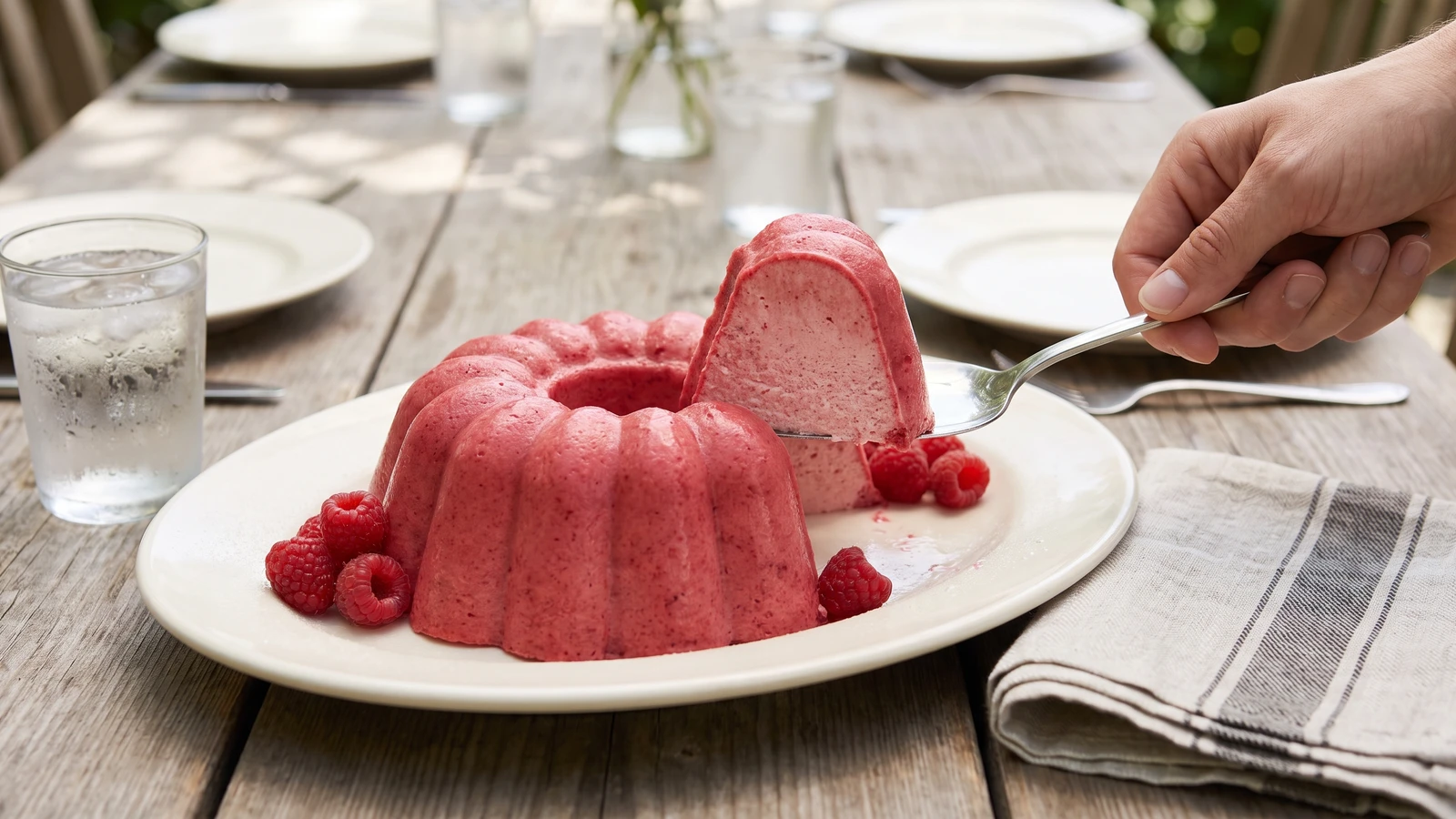
Five fruits, one disciplined formula: ripe purée, just enough gelatin, and softly whipped cream folded at the precise moment when the base begins to thicken. Choose one fruit and let it speak.
Bavarois aux fruits variés (a molded fruit cream made with your choice of fruit) teaches restraint: gelatin gives shape and cream gives lift, but neither gives flavor. The one true thing to know before you touch a pan is that the purée must already taste splendid. Underripe fruit asks for more sugar, and more sugar only makes its dullness sweeter.
The source entry is brigade shorthand. It assumes a generic Bavarois formula already understood, fruit purées passed through a tamis (a drum sieve), molds waiting in the ice chest, and enough hands to repeat the base for service. At home, one blender, one fine sieve, one chilled 1.5-litre mold, and weighed powdered gelatin do the same honest work. This version scales the formula to eight servings and one fruit because the list names alternatives, not a fruit salad. The repeated batches and large-service equipment are scaffolding and may go. The strained purée, measured gelatin, and cream folded at the setting point are the dish, and they stay. One cook, one stove, one evening, with the refrigerator carrying the long watch.
The finished Bavarois should stand cleanly yet tremble at the spoon, cool and matte outside, airy within. Watch the purée after the gelatin goes in: fold the cream when the base has thickened to the texture of light custard, not while it is warm and not after it has set. That moment decides the dessert, and if it slips past you, ça se rattrape.
Bavarois aux fruits belongs to the Parisian pâtisserie and grand-dining-room entremets repertoire, where French cooks adapted the molded Bavarois family to whichever fragrant purée the market supplied. The name suggests Bavaria, but it is not proof of a Bavarian invention; in the French canon it describes a gelatin-set cream, and the fruit branch often omits the custard used in vanilla versions so the purée remains clear in flavor. Because the formula is a method rather than a single flavor, it traveled naturally from professional pastry stations to the bourgeois home table, one seasonal fruit at a time.
Quantity
2 cups (500 ml / 500 g)
strained; fresh pineapple cooked and cooled
Quantity
2/3 cup (160 ml / 135 g)
Quantity
1/4 cup (60 ml / 60 g)
Quantity
1 tablespoon plus 1 teaspoon (20 ml / 12 g)
Quantity
1 1/2 cups (375 ml / 375 g)
very cold
Quantity
1/2 cup (120 ml / about 75 g)
sliced if needed
| Ingredient | Quantity |
|---|---|
| smooth purée from one perfectly ripe fruit: pineapple, apricot, strawberry, raspberry, or melonstrained; fresh pineapple cooked and cooled | 2 cups (500 ml / 500 g) |
| granulated sugar | 2/3 cup (160 ml / 135 g) |
| cold water | 1/4 cup (60 ml / 60 g) |
| unflavored powdered gelatin | 1 tablespoon plus 1 teaspoon (20 ml / 12 g) |
| heavy cream, at least 35% fatvery cold | 1 1/2 cups (375 ml / 375 g) |
| matching ripe fruit for serving (optional)sliced if needed | 1/2 cup (120 ml / about 75 g) |
Purée the chosen fruit until completely smooth, then pass it through a fine-mesh sieve and measure 2 cups (500 ml / 500 g) after straining. Hull strawberries, pit apricots, press raspberries without grinding their seeds, and remove every seed and strand from melon. This smoothness is not decoration; it is what lets the cream feel like silk rather than fruit pulp. Fresh pineapple is the exception: cover and simmer the entire purée for 3 minutes, then cool it completely. Raw pineapple contains bromelain, which prevents gelatin from setting; pineapple canned in juice has already been heated and needs only draining and puréeing.
Rinse a 1.5-litre metal mold with very cold water and drain it without drying; the fine film of water helps the Bavarois release later. Sprinkle the powdered gelatin evenly over the 1/4 cup (60 ml / 60 g) cold water. Leave it for 10 minutes, until every granule has swollen and no dry powder remains.
Put half the fruit purée and all the sugar in a saucepan over low heat. Stir only until the sugar has dissolved and the purée feels quite warm, about 60°C, then remove it from the heat; boiling strawberries, raspberries, apricots, or melon would flatten the fragrance you bought them for. Add the bloomed gelatin and stir until perfectly clear, then mix in the remaining cool purée. If gelatin grains remain, set the pan over the gentlest heat and stir until they disappear. Do not boil it. If necessary, pass the mixture through the sieve once more. Ça se rattrape.
Set the bowl of fruit mixture over a larger bowl of ice water and stir slowly, scraping the sides, until it cools and thickens to the texture of light custard. It should coat a spoon but still flow freely. This is the step that decides the Bavarois: fold in cream while the base is warm and the cream collapses; wait until the base is firm and gelatin threads run through the finished mold. If it sets around the edges or turns lumpy, lift it off the ice and place the bowl over barely warm water, stirring just until fluid and smooth again. Do not add water.
Whip the very cold cream until it forms soft peaks that bend at their tips. This is crème fouettée (whipped cream), not stiff piping cream. Fold one-third of the crème fouettée into the fruit base to lighten it, then fold in the remainder with broad strokes from the bottom of the bowl. Stop as soon as no white streaks remain. Vigorous stirring knocks out the air, while timid folding leaves pockets of plain cream; confidence, not fuss.
Pour the mixture immediately into the cold mold, smooth the top, and tap it once against a folded towel to release any large air pocket. Cover and chill for at least 6 hours, preferably overnight, until the center feels softly firm. Do not freeze it, as freezing weakens the cream and gives the thawed Bavarois a wet, grainy texture. If it remains too tender to unmold, give it another 2 hours. If it never firms because raw pineapple met the gelatin or the gelatin was mismeasured, spoon it into chilled glasses and serve it as a soft cream. Never apologize at your own table.
Dip the outside of the mold in warm water for 5 to 8 seconds, dry it, and press the top edge gently away from the mold with a clean fingertip. Invert a cold serving platter over it, turn both together, and lift the mold straight up. If it clings, return only the outside of the mold to warm water for another 2 seconds; too much warmth melts the surface. Arrange the optional matching fruit loosely around the base and serve the Bavarois cold. À table!
1 serving (about 135g)
Culinary guides, cultural storytelling, and the editorial depth that makes cooking meaningful.
Discover Culinary ExplorerChef Juliette
Five almond preparations, one discipline: remove the skins cleanly, dry every kernel through, then cut, toast, or cloak it in pale caramel without letting its fragrant oils escape.

Chef Juliette
A pastry pantry lesson in one tray: filberts warmed only until their red skins release, rubbed clean, cooled, and chopped into a fragrant mise-en-place for cakes, creams, pralines, and petits fours.

Chef Juliette
The smallest pâtisserie discipline decides whether a cake leaves its mould intact: clarified butter in every corner, followed by the lightest veil of dry flour or fécule.

Chef Juliette
Four whites, one spotless bowl, and a patient change of speed: whisk gently until loosened, then briskly to glossy stiffness, with powdered sugar waiting if the foam begins to granulate.