
Chef Juliette
Various Almond Preparations
Five almond preparations, one discipline: remove the skins cleanly, dry every kernel through, then cut, toast, or cloak it in pale caramel without letting its fragrant oils escape.
A cooking platform built around craft, culture, and the stories behind what we eat.
Created by Chef Juliette
Based on No. 2622, Various Cream Bavarois, from Le Guide Culinaire (1907) by Auguste Escoffier
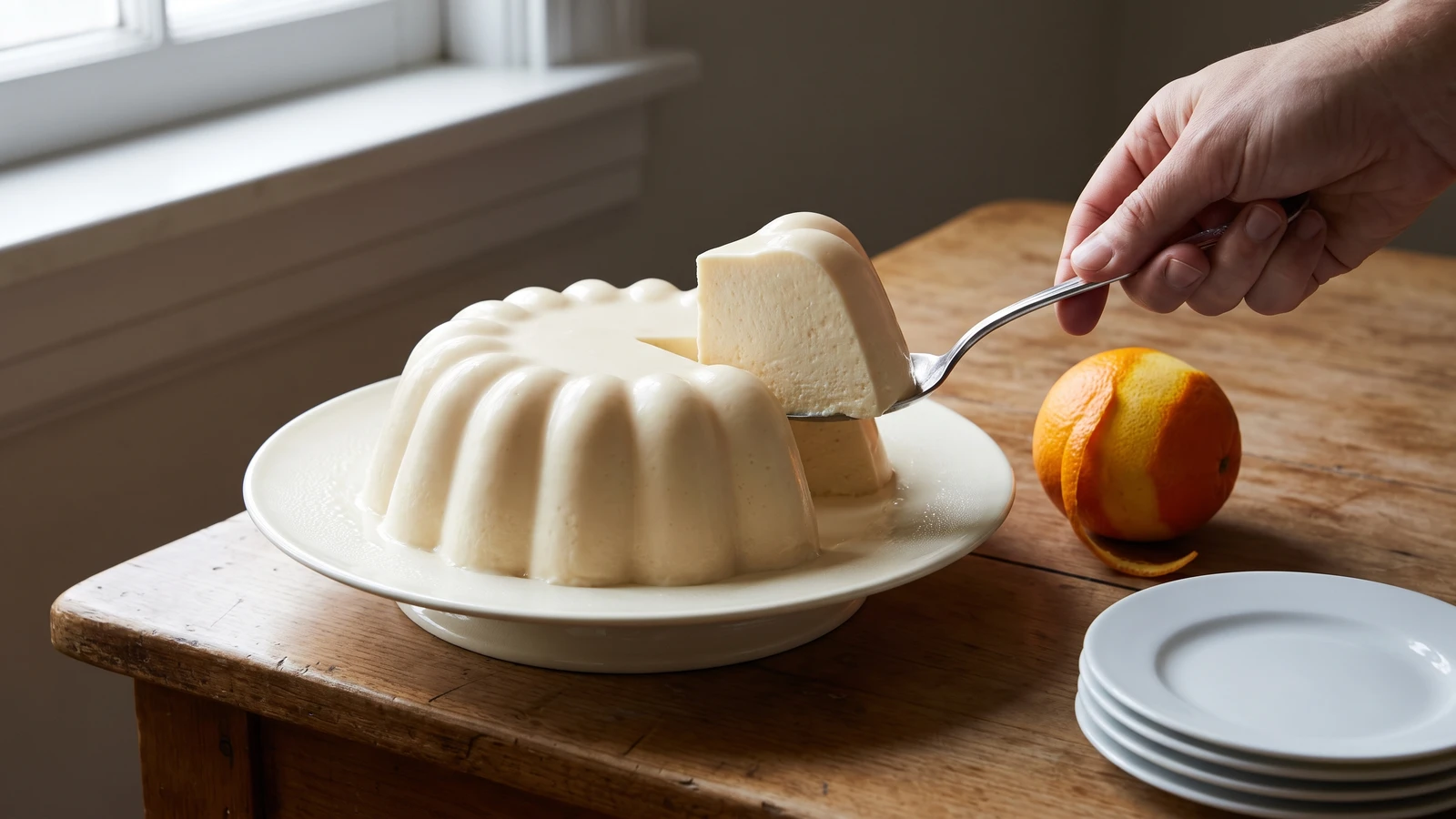
One custard, nine perfumes, one decisive moment: fold the whipped cream only when the base begins to thicken, then chill it into a tender Bavarois with a quiet wobble.
Bavarois à la crème aux parfums variés teaches one of the most useful truths in the pastry canon: a sound base can carry an entire family of desserts. Almond, anisette, filbert, coffee, chocolate, Kirsch, fresh walnut, orange, or violet changes the perfume, not the grammar.
The original formula assumed a pastry brigade and a banquet basin: fourteen yolks, great bowls, one pair of hands watching the custard while another whipped the cream. Here it becomes two-sevenths of Cream Bavarois (No. 2614), because fourteen yolks scale cleanly to four, enough for a 1-quart mold and six generous servings. The brigade quantity was scaffolding, so it goes; the custard cooked à la nappe, gelatin, careful cooling, and whipped-cream fold are the dish, so every one stays. One cook, one stove, one evening.
The one true thing to know before touching the pan is when to fold. A warm custard melts the whipped cream and loses its lift; a custard already set leaves rubbery flecks. Wait until it has cooled and just begun to thicken, then fold promptly. If the edges set before the center, gentle warmth brings them back. Ça se rattrape.
The molded bavarois belongs to the Parisian entremets repertoire, despite its Bavarian name: French pastry kitchens built it from crème anglaise, a stirred custard, set with gelatin and lightened with whipped cream. The name is debated, tied either to Bavarian visitors or to the earlier bavaroise, a milk-enriched café drink, but the dessert's technique is distinctly French. From grand dessert molds it traveled naturally to bourgeois dining rooms and home refrigerators, where nuts, coffee, chocolate, liqueurs, citrus, and flower essences made a whole family from one base.
Quantity
1 two-sevenths home-scale batch Cream Bavarois (No. 2614), about 4 cups (950 ml / 725 g)
omit the vanilla and replace its vanilla sugar gram for gram with caster sugar
Quantity
⅓ cup (80 ml / 45 g)
lightly toasted and coarsely crushed
Quantity
1½ tablespoons (22 ml / 22 g)
Quantity
⅓ cup (80 ml / 45 g)
toasted, skinned, and coarsely crushed
Quantity
2 tablespoons (30 ml / 18 g)
lightly crushed
Quantity
⅓ cup (80 ml / 60 g)
finely chopped
Quantity
1½ tablespoons (22 ml / 21 g)
Quantity
⅓ cup (80 ml / 40 g)
coarsely crushed
Quantity
1 tablespoon loosely packed (15 ml / 6 g)
from 1 large unwaxed orange, with no white pith
Quantity
¼ teaspoon (1.25 ml / about 1 g)
Quantity
¼ cup (60 ml / 62 g)
use only enough to replace milk retained by the strained solids
| Ingredient | Quantity |
|---|---|
| Cream Bavaroisomit the vanilla and replace its vanilla sugar gram for gram with caster sugar | 1 two-sevenths home-scale batch Cream Bavarois (No. 2614), about 4 cups (950 ml / 725 g) |
| almond variation: blanched almonds (optional)lightly toasted and coarsely crushed | ⅓ cup (80 ml / 45 g) |
| anisette variation: anisette liqueur (optional) | 1½ tablespoons (22 ml / 22 g) |
| filbert variation: hazelnuts or filberts (optional)toasted, skinned, and coarsely crushed | ⅓ cup (80 ml / 45 g) |
| coffee variation: whole coffee beans (optional)lightly crushed | 2 tablespoons (30 ml / 18 g) |
| chocolate variation: 70% dark chocolate (optional)finely chopped | ⅓ cup (80 ml / 60 g) |
| Kirsch variation: Kirsch (optional) | 1½ tablespoons (22 ml / 21 g) |
| fresh walnut variation: fresh shelled walnuts (optional)coarsely crushed | ⅓ cup (80 ml / 40 g) |
| orange variation: finely pared orange zest (optional)from 1 large unwaxed orange, with no white pith | 1 tablespoon loosely packed (15 ml / 6 g) |
| violet variation: food-grade violet extract (optional) | ¼ teaspoon (1.25 ml / about 1 g) |
| additional whole milk for nut or coffee infusions (optional)use only enough to replace milk retained by the strained solids | ¼ cup (60 ml / 62 g) |
Choose one flavor, not a medley. Use two-sevenths of Cream Bavarois (No. 2614): the original fourteen-yolk formula becomes four yolks exactly, and every other amount is multiplied by two-sevenths. Omit the vanilla and replace the vanilla sugar with an equal weight of plain caster sugar, so the chosen perfume speaks clearly. This reduction removes brigade bulk without changing a single working ratio.
For almond, filbert, fresh walnut, coffee, or orange, bring the milk called for in Cream Bavarois (No. 2614) just to the boil, remove it from the heat, and add the chosen flavoring. Cover and steep for 20 minutes, then strain finely. Do not press nut solids hard, which releases oil and muddies the custard. For nuts or coffee, begin with the additional milk, then measure the strained milk back to the exact quantity required by Cream Bavarois (No. 2614); the extra merely replaces what the solids retained. Anisette, Kirsch, chocolate, and violet are added later.
Continue Cream Bavarois (No. 2614) through its strained custard stage, using the flavored milk where applicable. Keep the heat mild and stir continuously until the custard reaches à la nappe, coating the back of a spoon so a finger drawn through it leaves a clean road, about 82 to 84°C (180 to 183°F). Never let it boil. If it turns faintly grainy but has not formed distinct egg curds, remove it immediately, blend for 10 seconds, and strain into a cold bowl. Ça se rattrape. A fully scrambled custard must be remade.
For chocolate Bavarois, whisk the chopped chocolate into the hot strained custard until completely melted and glossy; if tiny specks remain, blend briefly while it is still warm. For anisette, Kirsch, or violet Bavarois, wait until the custard has cooled below 30°C (86°F), then stir in the chosen flavoring, since greater heat drives away the liqueurs' aroma and flattens violet. Nut, coffee, and orange versions need nothing further after their milk infusion.
Set the bowl over ice water and stir from time to time, scraping the edges, until the custard is cool and just beginning to thicken, usually around 20 to 22°C (68 to 72°F). Watch the texture before the thermometer: a trail drawn with the spatula should close slowly rather than vanish at once. This is the moment that decides the Bavarois. If gelatin sets in streaks around the bowl, place it over lukewarm water and stir only until smooth again; do not make it warm.
Complete Cream Bavarois (No. 2614) with its specified whipped cream and sugar. Fold one-quarter of the cream into the thickening custard to lighten it, then fold in the remainder in two additions with broad turns from the bowl's floor. Stop when no white streaks remain. If the mixture loosens and slumps, it was still too warm; chill it for 5 minutes, stir gently until it regains a little body, and continue.
Rinse a metal mold with cold water and shake it almost dry; leave silicone or glass dry. Spoon in the Bavarois, press it gently into any fluting, tap the mold once to release large air pockets, and level the top. Cover and chill for at least 6 hours, preferably overnight, until the center feels tender but fully set.
Dip a metal mold into warm water for 5 seconds, dry its outside, and invert it onto a chilled serving plate. If the Bavarois clings, wrap the mold briefly in a warm damp towel rather than soaking it again. Should the rim soften, return the unmolded dessert to the cold for 10 minutes. Serve it plain, while its surface is cool and satin-smooth. À table!
1 serving (about 125g)
Culinary guides, cultural storytelling, and the editorial depth that makes cooking meaningful.
Discover Culinary ExplorerChef Juliette
Five almond preparations, one discipline: remove the skins cleanly, dry every kernel through, then cut, toast, or cloak it in pale caramel without letting its fragrant oils escape.

Chef Juliette
A pastry pantry lesson in one tray: filberts warmed only until their red skins release, rubbed clean, cooled, and chopped into a fragrant mise-en-place for cakes, creams, pralines, and petits fours.

Chef Juliette
The smallest pâtisserie discipline decides whether a cake leaves its mould intact: clarified butter in every corner, followed by the lightest veil of dry flour or fécule.

Chef Juliette
Four whites, one spotless bowl, and a patient change of speed: whisk gently until loosened, then briskly to glossy stiffness, with powdered sugar waiting if the foam begins to granulate.