
Chef Juliette
Various Almond Preparations
Five almond preparations, one discipline: remove the skins cleanly, dry every kernel through, then cut, toast, or cloak it in pale caramel without letting its fragrant oils escape.
A cooking platform built around craft, culture, and the stories behind what we eat.
Created by Chef Juliette
Based on No. 2620, Bavarois à la Religieuse, from Le Guide Culinaire (1907) by Auguste Escoffier
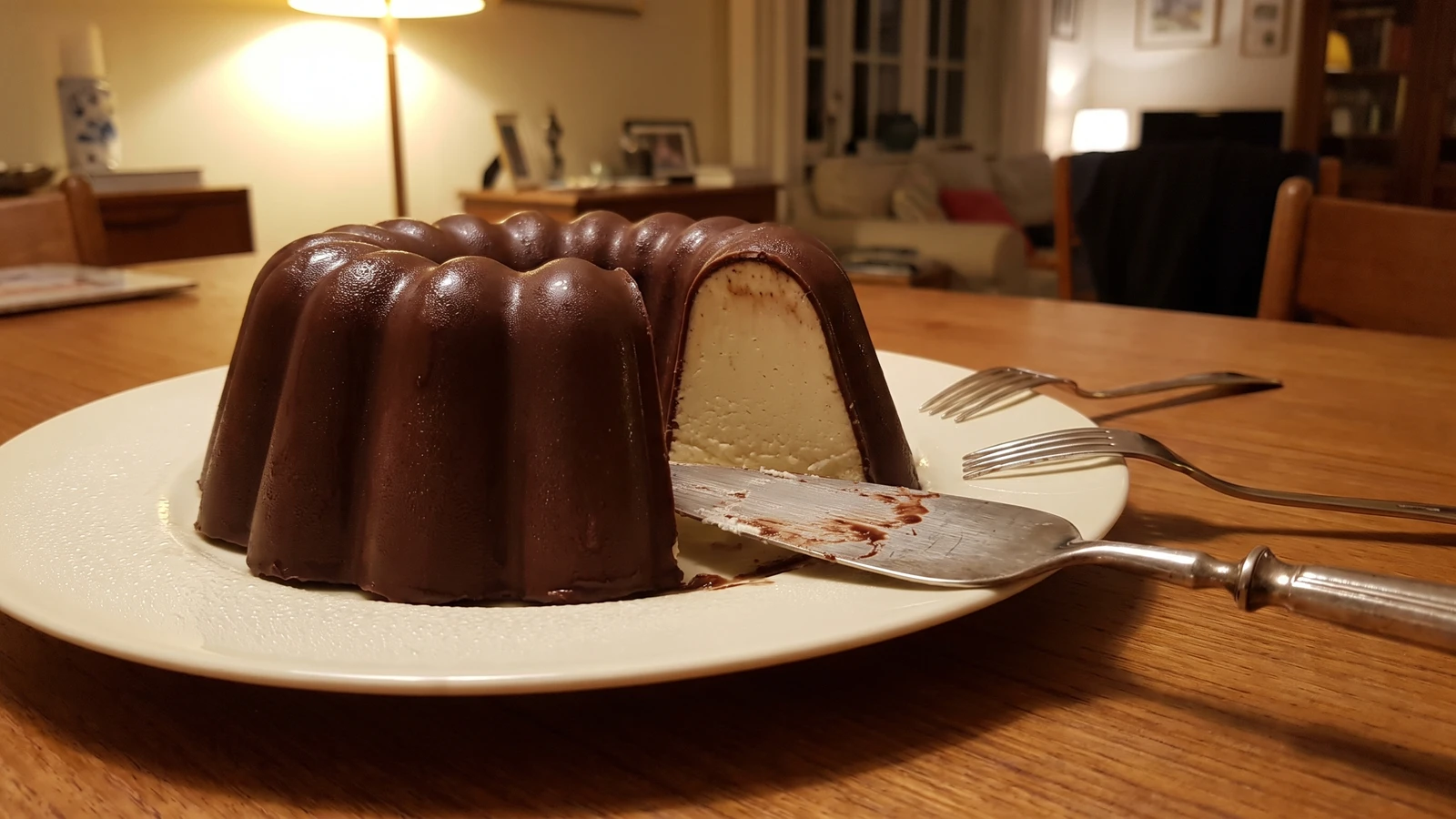
A firm dark chocolate shell gives way to pale vanilla bavarois made with cream left liquid, not whipped. The lesson is contrast: clean edges outside, tender silk within.
Bavarois à la Religieuse (vanilla bavarois in a firm chocolate-gelatine coat) teaches that contrast can be structural. The one truth to know before touching a pan is this: the cream remains plain and unwhipped. An ordinary bavarois borrows lightness from whipped cream; this one wants a close, pale interior beneath a dark, firmer shell. Whip the cream and you erase the point of the dish.
The brigade pastry kitchen assumed broken ice by the bin, a cold room, ornate metal moulds, and enough hands to coat several at once. Here the same intent fits one 1-litre metal mould, a bowl of ice water, powdered gelatine of known strength, and six generous portions. I have changed the quantity and the cooling equipment because those are brigade scaffolding. The unusually firm chocolate syrup and the liquid cream stay exactly as prescribed because they are the dish. One cook, one stove, one evening.
Your decisive moment arrives when the vanilla mixture meets the chocolate shell. It must be cool enough not to soften the coating, yet fluid enough to settle without seams. If it begins to thicken before you pour, warm the bowl gently over lukewarm water and stir until smooth. Ça se rattrape. Cooling the bavarois to that narrow pouring point is the one step that matters most.
Bavarois à la Religieuse belongs to the Parisian grand-kitchen entremets course, where moulded creams were carried in whole and cut at the table. Religieuse, literally “nun,” names the contrast between the dark chocolate coat and pale vanilla centre; it does not refer to the better-known stacked choux pastry sharing the name. Its defining departure from an ordinary bavarois is texture rather than decoration: plain cream replaces whipped cream, producing a close, silky interior beneath the firmer shell.
Quantity
2¼ teaspoons (11 ml / 7 g)
Quantity
2 tablespoons (30 ml / 30 g)
Quantity
⅓ cup (80 ml / 80 g)
Quantity
⅓ cup (80 ml / 67 g)
Quantity
½ cup (120 ml / 85 g)
finely chopped
Quantity
1 use (No. 916)
clothing-the-mould procedure only
Quantity
1 tablespoon (15 ml / 9 g)
Quantity
3 tablespoons (45 ml / 45 g)
Quantity
1½ cups (360 ml / 370 g)
Quantity
1
split lengthwise and scraped
Quantity
5 (about ⅓ cup / 85 g)
Quantity
½ cup (120 ml / 100 g)
Quantity
1½ cups (360 ml / 355 g)
kept cold, plain and unwhipped
| Ingredient | Quantity |
|---|---|
| powdered gelatine for the chocolate coating | 2¼ teaspoons (11 ml / 7 g) |
| cold water for blooming the coating gelatine | 2 tablespoons (30 ml / 30 g) |
| water for the syrup | ⅓ cup (80 ml / 80 g) |
| granulated sugar for the syrup | ⅓ cup (80 ml / 67 g) |
| bittersweet chocolate, 65 to 70% cacaofinely chopped | ½ cup (120 ml / 85 g) |
| Another Method of Preparing Aspics de Filets de Solesclothing-the-mould procedure only | 1 use (No. 916) |
| powdered gelatine for the vanilla bavarois | 1 tablespoon (15 ml / 9 g) |
| cold water for blooming the bavarois gelatine | 3 tablespoons (45 ml / 45 g) |
| whole milk | 1½ cups (360 ml / 370 g) |
| vanilla beansplit lengthwise and scraped | 1 |
| large egg yolks | 5 (about ⅓ cup / 85 g) |
| granulated sugar for the custard | ½ cup (120 ml / 100 g) |
| heavy cream, 35 to 40% fatkept cold, plain and unwhipped | 1½ cups (360 ml / 355 g) |
Chill a scrupulously clean, dry 1-litre metal mould for 15 minutes. Fill a bowl large enough to hold it with ice and enough water to make full contact around the sides. In one small bowl, sprinkle the 7 g coating gelatine over its 30 ml cold water. In a second bowl, bloom the 9 g bavarois gelatine over its 45 ml cold water. Leave both for at least 5 minutes, and keep them separate because the firmer proportion belongs only to the chocolate shell.
Bring the 80 ml water and 67 g sugar just to a simmer, stirring until the syrup is perfectly clear. Remove it from the heat and dissolve the bloomed coating gelatine in it without boiling. Pour one-third over the chopped chocolate and stir from the centre until glossy, then incorporate the remainder in two additions. The syrup should flow like thin cream and show no oily streaks. If it turns grainy, set the bowl over barely warm water and stir steadily until the emulsion returns; hard heat damages gelatine, so patience, not boiling.
Chemiser, or clothe, the mould using the motion prescribed by Another Method of Preparing Aspics de Filets de Soles (No. 916). Set the cold mould in the ice water, pour in the barely warm chocolate syrup, and tip and roll the mould steadily until every interior surface is covered. Pour the loose syrup back into its bowl before the layer becomes thick, then continue turning the mould over ice until the coat is opaque, firm, and no longer travels. Refrigerate it for 10 minutes. The ice-water bowl is the honest home equivalent of broken ice. If you find a bare patch, warm a spoonful of the reserved syrup just until fluid, cover the gap, and chill it again.
Put the milk, vanilla seeds, and pod in a saucepan and bring them just below a simmer. Cover, remove from the heat, and infuse for 10 minutes. Whisk the yolks with the 100 g sugar until smooth, not foamy. Reheat the milk, pour half of it gradually onto the yolks while stirring, then return everything to the saucepan. Cook over low heat, stirring constantly and scraping the corners, until the custard reaches 82°C or coats the back of a spoon so a finger leaves a clean path. At the first sign of tiny curds, remove the pan, strain the custard into a cold bowl, and whisk it over ice. Ça se rattrape when caught promptly; a fully scrambled custard must be remade. Discard the vanilla pod, stir in the bloomed bavarois gelatine until dissolved, and strain the custard through a fine sieve.
Let the custard cool to 43 to 45°C, stirring occasionally so no skin forms. Pour in the cold heavy cream in a steady stream, stirring gently with a spatula. Do not whip it. The finished bavarois should be smooth and close-textured, without the bubbles or volume of an ordinary whipped-cream bavarois. Cool it to 26 to 28°C, when it feels cool but remains freely pourable. If it is warmer, wait or it may soften the shell; if it begins to form ropes or soft lumps, rest the bowl over lukewarm water and stir only until fluid again.
Make certain the chocolate clothing is fully firm, then pour the vanilla bavarois into the centre from close to the mould so you don't trap bubbles. Fill to about 5 mm below the rim and smooth the surface. Cover without letting the wrapping touch the cream and refrigerate for at least 6 hours, preferably overnight. Do not freeze it. The interior is set when the centre feels firm yet gives slightly beneath a fingertip.
Dip the outside of the mould up to its rim in warm water for 3 to 5 seconds, dry it, cover it with a chilled serving plate, and invert in one confident motion. If it does not release, wrap the mould briefly in a warm damp towel and try again; repeated long dips will melt the chocolate coat. Refrigerate the turned-out bavarois for 10 minutes if its surface has softened. Cut it with a thin knife dipped in hot water and wiped dry between slices. Serve it cold and unadorned, with no whipped cream to blur the contrast. À table!
1 serving (about 200g)
Culinary guides, cultural storytelling, and the editorial depth that makes cooking meaningful.
Discover Culinary ExplorerChef Juliette
Five almond preparations, one discipline: remove the skins cleanly, dry every kernel through, then cut, toast, or cloak it in pale caramel without letting its fragrant oils escape.

Chef Juliette
A pastry pantry lesson in one tray: filberts warmed only until their red skins release, rubbed clean, cooled, and chopped into a fragrant mise-en-place for cakes, creams, pralines, and petits fours.

Chef Juliette
The smallest pâtisserie discipline decides whether a cake leaves its mould intact: clarified butter in every corner, followed by the lightest veil of dry flour or fécule.

Chef Juliette
Four whites, one spotless bowl, and a patient change of speed: whisk gently until loosened, then briskly to glossy stiffness, with powdered sugar waiting if the foam begins to granulate.