
Chef Juliette
Various Almond Preparations
Five almond preparations, one discipline: remove the skins cleanly, dry every kernel through, then cut, toast, or cloak it in pale caramel without letting its fragrant oils escape.
A cooking platform built around craft, culture, and the stories behind what we eat.
Created by Chef Juliette
Based on No. 2619, Bavarois My Queen, from Le Guide Culinaire (1907) by Auguste Escoffier
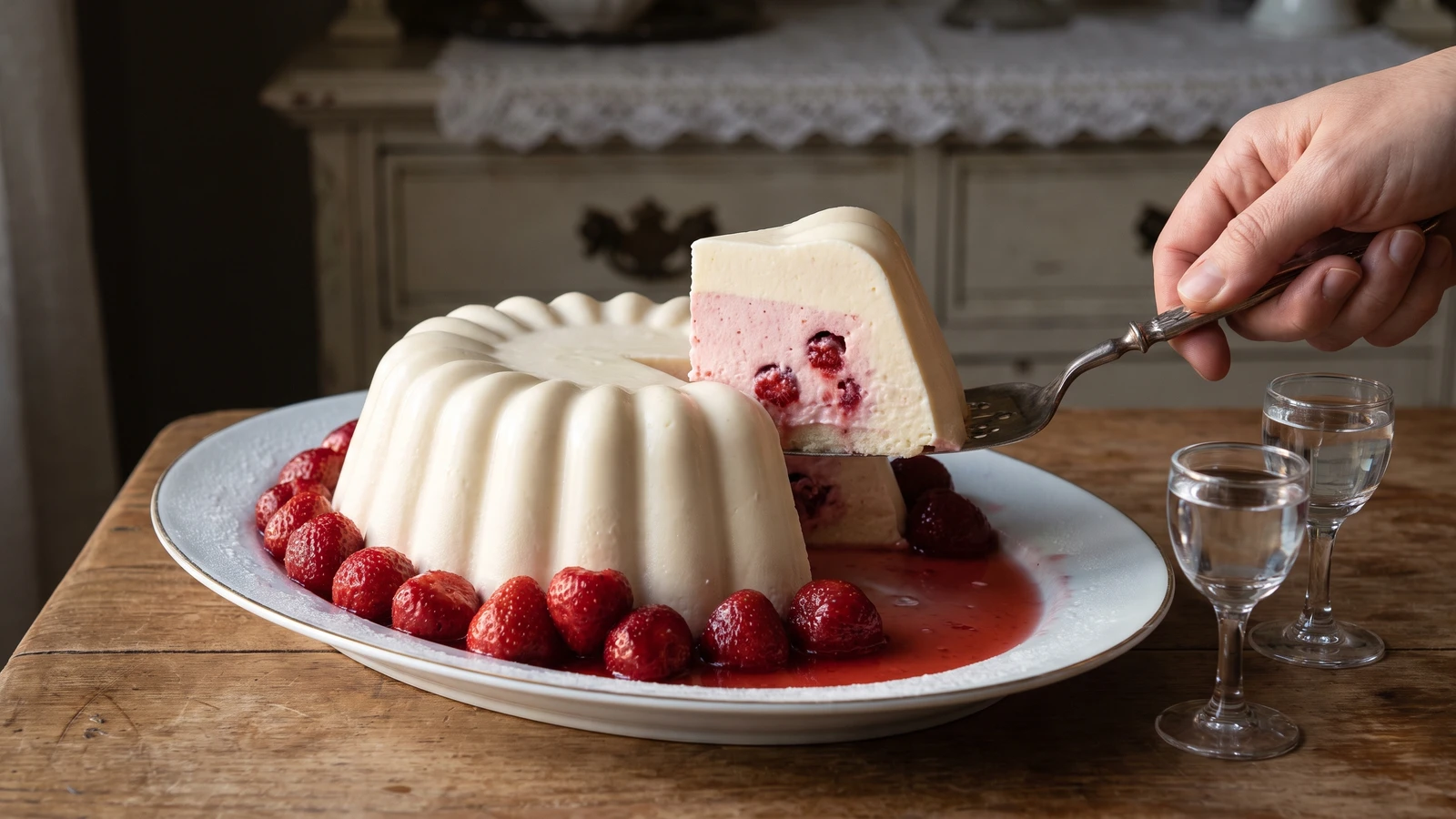
Bavarois My Queen turns strawberry purée, kirsch-soaked whole berries, and barely sweetened cream into a cool molded dessert, where patience with gelatin makes every slice hold its pale shell and rosy heart.
Bavarois My Queen (strawberry Bavarian cream) teaches the quiet discipline of gelatin: it must hold the dessert without announcing itself. The outer cream should yield beneath the spoon, the strawberry center should stand without becoming rubbery, and the whole berries must taste of kirsch through to their hearts. Gelatin is structure, never the flavor.
The original sent a brigade cook to Another Method of Preparing Aspics de Filets de Soles (No. 916) for chemiser, clothing the mould, and assumed a metal form turned patiently over broken ice. Your honest equivalent is a 1-liter mould, a bowl of ice water, and the refrigerator. The aspic decoration described in that reference is brigade scaffolding and stays in its own entry; the coating motion is what this dessert borrows. The barely sugared cream shell, strawberry purée, and whole berries given hours in kirsch are the dish itself, so every one remains.
Turned out, the bavarois is ivory and composed outside, rose-colored and generous within, with a bright border of berries around its base. The step that decides it comes before the final fold: cool the gelatin-bound purée until it begins to gain body, but stop before it sets. Get that moment right and the cream stays aloft while the berries remain suspended.
Bavarois belongs to the Parisian entremets tradition, where flavored creams were stabilized with gelatin and set in decorative moulds for service from the cold pantry. Despite the name's suggestion of Bavaria, the moulded dessert is a French grand-kitchen form rather than a Bavarian household pudding, and its precise lineage has long invited debate. Bavarois My Queen is a named strawberry variation distinguished by its pale cream chemise, kirsch-macerated berries within, and a second border of berries around the unmoulded dessert.
Quantity
8 berries (about 1 cup / 240 ml / 160 g)
hulled, for the filling
Quantity
1 tablespoon (15 ml / 13 g)
for the filling berries
Quantity
2 tablespoons (30 ml / 28 g)
for the filling berries
Quantity
12 berries (about 1½ cups / 360 ml / 240 g)
hulled, for the border
Quantity
1 tablespoon (15 ml / 13 g)
for the border berries
Quantity
2 tablespoons (30 ml / 28 g)
for the border berries
Quantity
⅔ cup (160 ml / 160 g)
for the outer shell
Quantity
1 tablespoon (15 ml / 13 g)
for the outer shell
Quantity
1 teaspoon (5 ml / 3 g)
for the outer shell
Quantity
1 tablespoon (15 ml / 15 g)
for blooming the shell gelatin
Quantity
2 cups (480 ml / 300 g)
hulled, for the purée
Quantity
¼ cup (60 ml / 50 g)
for the strawberry base
Quantity
2½ teaspoons (12 ml / 8 g)
for the strawberry base
Quantity
2 tablespoons (30 ml / 30 g)
for blooming the strawberry gelatin
Quantity
1 cup (240 ml / 240 g)
for the strawberry bavarois
Quantity
1 application (No. 916)
for clothing the mould
| Ingredient | Quantity |
|---|---|
| large ripe strawberrieshulled, for the filling | 8 berries (about 1 cup / 240 ml / 160 g) |
| caster sugarfor the filling berries | 1 tablespoon (15 ml / 13 g) |
| kirschfor the filling berries | 2 tablespoons (30 ml / 28 g) |
| large ripe strawberrieshulled, for the border | 12 berries (about 1½ cups / 360 ml / 240 g) |
| caster sugarfor the border berries | 1 tablespoon (15 ml / 13 g) |
| kirschfor the border berries | 2 tablespoons (30 ml / 28 g) |
| cold heavy creamfor the outer shell | ⅔ cup (160 ml / 160 g) |
| caster sugarfor the outer shell | 1 tablespoon (15 ml / 13 g) |
| powdered gelatinfor the outer shell | 1 teaspoon (5 ml / 3 g) |
| cold waterfor blooming the shell gelatin | 1 tablespoon (15 ml / 15 g) |
| ripe strawberrieshulled, for the purée | 2 cups (480 ml / 300 g) |
| caster sugarfor the strawberry base | ¼ cup (60 ml / 50 g) |
| powdered gelatinfor the strawberry base | 2½ teaspoons (12 ml / 8 g) |
| cold waterfor blooming the strawberry gelatin | 2 tablespoons (30 ml / 30 g) |
| cold heavy creamfor the strawberry bavarois | 1 cup (240 ml / 240 g) |
| Another Method of Preparing Aspics de Filets de Solesfor clothing the mould | 1 application (No. 916) |
Place the 8 filling strawberries and 12 border strawberries in separate shallow dishes. Sprinkle each group with its tablespoon of sugar and 2 tablespoons of kirsch, turning the berries gently until every surface is glossed. Cover and chill for 4 hours, turning them once halfway through. This waiting is part of the dish: minutes perfume only the surface, while hours carry the kirsch into the whole fruit.
Chill a clean 1-liter metal bavarois mould for 15 minutes. Put the 3 g shell gelatin over 15 ml cold water in one small bowl and the 8 g strawberry gelatin over 30 ml cold water in another, sprinkling each evenly rather than dropping it in a heap. Leave both for 5 to 10 minutes, until every grain is swollen and no dry powder remains.
Warm ¼ cup (60 ml / 60 g) of the shell cream with its sugar just until the sugar dissolves; it must not boil. Remove it from the heat, add the bloomed 3 g gelatin, and stir until perfectly clear, then mix in the remaining cold shell cream. Strain and set the bowl over ice water, stirring until the cream begins to coat the spoon. Following Another Method of Preparing Aspics de Filets de Soles (No. 916), pour it into the chilled mould and rotate the mould steadily over the ice bath until a thin, even cream chemise clings to the bottom and sides. Chill for 20 minutes. If the cream pools before gripping, return the mould to the ice for 20 seconds and rotate again; if it sets in the bowl, warm it gently over lukewarm water until fluid. Ça se rattrape.
Purée the 300 g strawberries with the 50 g sugar, then press the purée through a fine sieve to remove the seeds. Warm ⅓ cup (80 ml / about 85 g) of the purée until merely warm, remove it from the heat, and dissolve the bloomed 8 g gelatin in it completely. Stir this back into the remaining purée. Set the bowl over ice water and stir until the mixture is cool and has the body of pouring cream. If you see gelatin threads or grains, the purée was too cold when they met; warm the whole bowl gently until smooth, then cool it again. Ça se rattrape.
Whip the 240 ml cold cream to soft peaks, stopping when the whisk leaves folds that relax slowly into the bowl. Fold one-third into the strawberry base to lighten it, then fold in the rest with broad strokes until no white streaks remain. The strawberry base must be cool and slightly thickened before this meeting: too warm and the cream collapses, too cold and the gelatin sets in flecks.
Drain the 8 filling strawberries thoroughly, reserving their kirsch syrup. Spoon one-third of the bavarois into the clothed mould, then nestle in half the whole berries without letting them touch the cream shell. Add another third of the bavarois, the remaining berries, and the final bavarois, smoothing the top gently. Tap the mould once against a folded towel to release hidden air pockets. If the mixture begins setting in the bowl before the mould is filled, stand it over lukewarm water for a few seconds and fold once until supple. Chill for at least 6 hours, preferably overnight.
Drain the border strawberries and reserve their syrup. Dip the mould to just below its rim in warm water for 6 to 8 seconds, dry it, set a chilled serving platter over the top, and invert both together. If the bavarois refuses to release, don't pull at the edges; return the mould to the warm water for 2 seconds and try again. Arrange the border berries closely around the base and spoon over a little of their kirsch syrup, leaving the pale cream shell visible. Serve cold. À table!
1 serving (about 220g)
Culinary guides, cultural storytelling, and the editorial depth that makes cooking meaningful.
Discover Culinary ExplorerChef Juliette
Five almond preparations, one discipline: remove the skins cleanly, dry every kernel through, then cut, toast, or cloak it in pale caramel without letting its fragrant oils escape.

Chef Juliette
A pastry pantry lesson in one tray: filberts warmed only until their red skins release, rubbed clean, cooled, and chopped into a fragrant mise-en-place for cakes, creams, pralines, and petits fours.

Chef Juliette
The smallest pâtisserie discipline decides whether a cake leaves its mould intact: clarified butter in every corner, followed by the lightest veil of dry flour or fécule.

Chef Juliette
Four whites, one spotless bowl, and a patient change of speed: whisk gently until loosened, then briskly to glossy stiffness, with powdered sugar waiting if the foam begins to granulate.