
Chef Juliette
Various Almond Preparations
Five almond preparations, one discipline: remove the skins cleanly, dry every kernel through, then cut, toast, or cloak it in pale caramel without letting its fragrant oils escape.
A cooking platform built around craft, culture, and the stories behind what we eat.
Created by Chef Juliette
Based on No. 2615, Bavarois aux Fruits, from Le Guide Culinaire (1907) by Auguste Escoffier
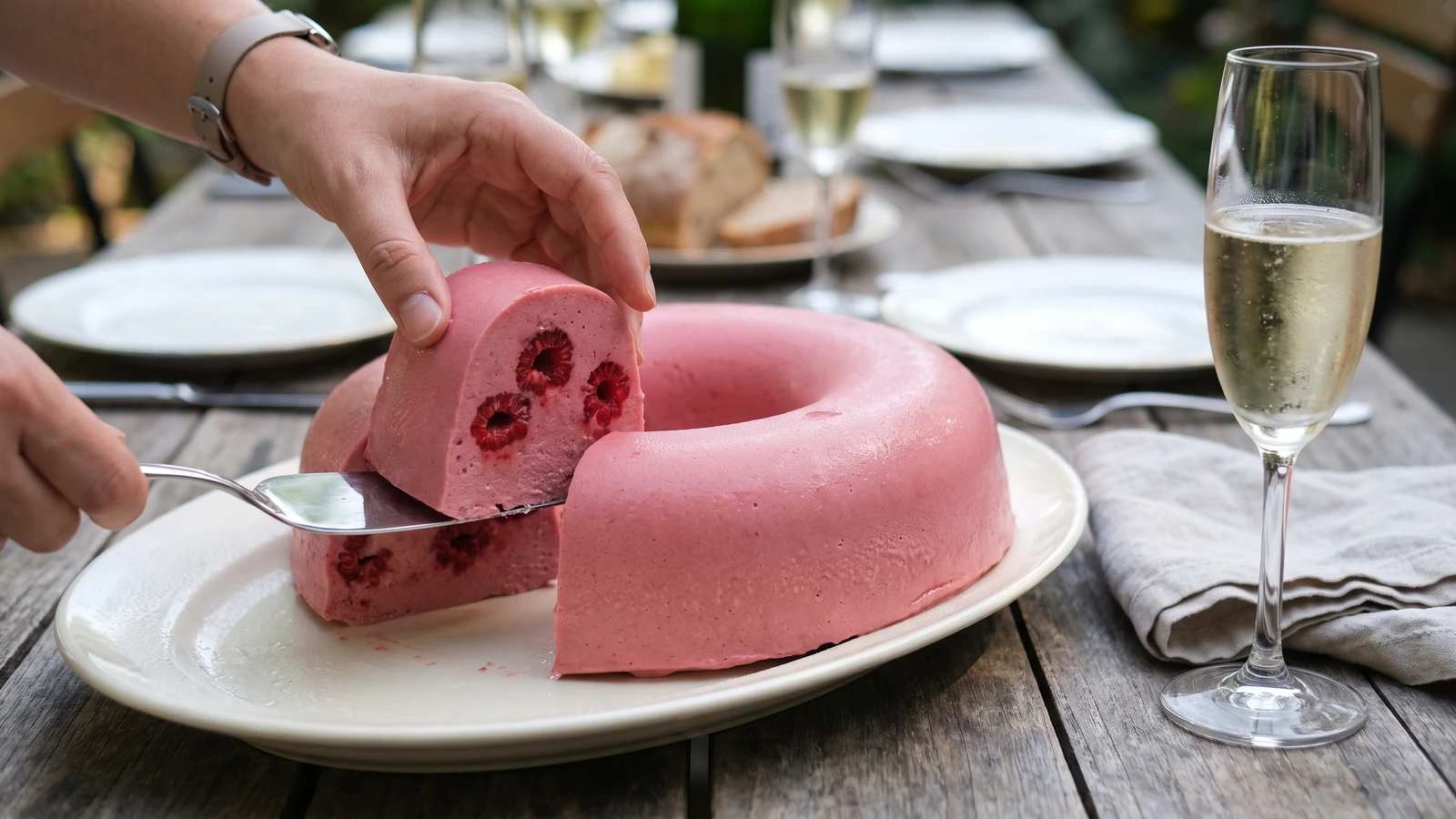
A fruit-first bavarois with no custard and no egg, only vivid berry purée, measured syrup, lemon, gelatin, and softly whipped cream, chilled until it unmolds in one tender, gleaming piece.
Bavarois aux Fruits (fruit Bavarian cream) teaches one true thing before you touch a pan: the fruit base and whipped cream must meet at the same cool, softly thickened consistency. Here purée and syrup take the place of custard, so there is no egg, and the lemon juice is not a flourish. It keeps the raspberry tasting of itself after sugar, cream, and cold have softened its edge.
The original formula assumed a pastry section with syrup checked by saccharometer, gelatin strained through linen, and molds sized for a great many guests. This version keeps the equal finished volumes of purée, syrup, and whipped cream, with the lemon and gelatin reduced in the same proportion, but fits them into a four-cup mold for six. A scale recreates the 30° syrup, which describes density rather than temperature, and a fine-mesh sieve replaces the linen. Those things were brigade scaffolding and can go. The measured syrup, full stroke of lemon, proper gelatin set, and gentle fold are the dish, so they stay. One cook, one stove, one evening.
When it is right, the bavarois unmolds with a satin raspberry sheen and cuts without rubbery resistance, the cream making the fruit feel lighter without muting it. The step that decides everything is cooling the fruit mixture until the whisk leaves a trace for one second before the cream goes in. Fold earlier and the cream melts; wait too long and the gelatin forms flecks. Watch the trace, not the clock.
Bavarois belongs to the Parisian entremets repertoire, where pastry kitchens set flavored custards or fruit purées with gelatin, then lightened them with whipped cream for molded service. Its name points toward Bavaria, but the molded dessert was codified at the French table; the naming remains debated, with one account connecting it to bavaroise, a tea-and-milk drink associated with Bavarian visitors. Fruit bavarois formed a distinct branch of the canon by replacing custard and egg with purée and measured syrup while keeping gelatin and whipped cream as its structure.
Quantity
1 cup (240 ml / 240 g)
made from about 2½ cups (600 ml / 300 g) fresh or thawed frozen raspberries
Quantity
⅞ cup (210 ml / 175 g)
Quantity
½ cup plus 2 teaspoons (130 ml / 130 g)
Quantity
1½, yielding 3 tablespoons (45 ml / 45 g) juice
juiced and strained
Quantity
4½ teaspoons (22 ml / 14 g; ½ oz)
Quantity
⅓ cup (80 ml / 80 g)
Quantity
½ cup (120 ml / 120 g), yielding 1 cup (240 ml / about 120 g) when whipped
whipped to soft peaks
Quantity
¾ cup (180 ml / 90 g)
for folding through and finishing
| Ingredient | Quantity |
|---|---|
| strained raspberry puréemade from about 2½ cups (600 ml / 300 g) fresh or thawed frozen raspberries | 1 cup (240 ml / 240 g) |
| granulated sugar | ⅞ cup (210 ml / 175 g) |
| water for the syrup | ½ cup plus 2 teaspoons (130 ml / 130 g) |
| medium lemonsjuiced and strained | 1½, yielding 3 tablespoons (45 ml / 45 g) juice |
| unflavored powdered gelatin | 4½ teaspoons (22 ml / 14 g; ½ oz) |
| cold water for blooming | ⅓ cup (80 ml / 80 g) |
| cold heavy creamwhipped to soft peaks | ½ cup (120 ml / 120 g), yielding 1 cup (240 ml / about 120 g) when whipped |
| whole raspberries (optional)for folding through and finishing | ¾ cup (180 ml / 90 g) |
Purée the raspberries, then press them through a fine-mesh sieve with a flexible spatula to remove the seeds. Measure exactly 1 cup (240 ml / 240 g); the formula begins with the measured purée, not with a guessed basket of fruit. Chill it while you make the syrup, and place a 4-cup (1 L) ring or charlotte mold in the cold as well.
Combine the sugar and syrup water in a small saucepan. Warm gently, stirring only until every crystal dissolves, then remove it from the heat before it boils away. The mixture should weigh 305 g and measure about 1 cup (240 ml); if evaporation has taken it below 305 g, add enough water to restore that weight. This gives syrup at 30° on the saccharometer, roughly 57 percent sugar by weight. The degree is density, not heat. Let the syrup cool completely.
Stir all the cooled syrup into the measured raspberry purée until the color is even, then add the strained lemon juice. This follows the formula's order exactly: purée diluted with syrup, lemon next. Taste it now. It should seem a little sweeter and sharper than the finished dessert, because cold and cream will soften both. Do not reduce the lemon; it is what keeps the raspberry distinct.
Pour the cold blooming water into a small pan and sprinkle the gelatin evenly across its surface. Leave it for 5 to 10 minutes, until every granule has swollen and no dry islands remain. Warm it over the lowest heat only until clear, stirring gently, then strain it through the fine-mesh sieve into the fruit base while whisking. The sieve is the honest home equivalent of linen. If you see gelatin grains, do not press on; ça se rattrape. Return the gelatin mixture to barely warm water, stir until fully fluid, strain again, and never let it boil.
Set the bowl of fruit mixture over an ice bath and stir slowly, scraping the sides and base so it chills evenly. Stop when it has the body of light cream and a line drawn by the whisk remains visible for one second before closing. This is the moment that matters. If a firm ring forms around the bowl before the center thickens, lift the bowl from the ice and whisk it smooth. If it has set into soft lumps, set it over barely warm water for a few seconds, whisk only until fluid, then return it to the ice.
Whip the cold cream in a narrow chilled bowl until it reaches soft peaks and measures 1 cup (240 ml). The peaks should bend at their tips; stiff cream makes the bavarois coarse. Fold one-third of the cream into the fruit base to lighten it, then fold in the remainder with broad strokes, turning the bowl as you work. If using whole raspberries, reserve a few for serving and fold the rest through gently. Stop as soon as no white streaks remain.
Pour the mixture into the chilled mold and tap it once against a folded towel to settle any large air pockets. Smooth the top without pressing out the lightness, cover, and chill for at least 6 hours, preferably overnight. The center must feel firmly set when touched through the cover. Do not rush it into the freezer; a hurried outer shell can hide a liquid center.
Dip the outside of the mold into warm water for 5 seconds, wipe it dry, place a chilled serving platter over it, and invert both together. Lift the mold straight up. If it clings, wrap the mold briefly in a warm towel and try again; prolonged heat melts the surface before it releases the center. Finish with the reserved raspberries and serve well chilled. For an outdoor table, keep it in its mold inside a cooler until the last moment. À table!
1 serving (about 145g)
Culinary guides, cultural storytelling, and the editorial depth that makes cooking meaningful.
Discover Culinary ExplorerChef Juliette
Five almond preparations, one discipline: remove the skins cleanly, dry every kernel through, then cut, toast, or cloak it in pale caramel without letting its fragrant oils escape.

Chef Juliette
A pastry pantry lesson in one tray: filberts warmed only until their red skins release, rubbed clean, cooled, and chopped into a fragrant mise-en-place for cakes, creams, pralines, and petits fours.

Chef Juliette
The smallest pâtisserie discipline decides whether a cake leaves its mould intact: clarified butter in every corner, followed by the lightest veil of dry flour or fécule.

Chef Juliette
Four whites, one spotless bowl, and a patient change of speed: whisk gently until loosened, then briskly to glossy stiffness, with powdered sugar waiting if the foam begins to granulate.