
Chef Juliette
Various Almond Preparations
Five almond preparations, one discipline: remove the skins cleanly, dry every kernel through, then cut, toast, or cloak it in pale caramel without letting its fragrant oils escape.
A cooking platform built around craft, culture, and the stories behind what we eat.
Created by Chef Juliette
Based on No. 2606, Célestine Omelet, from Le Guide Culinaire (1907) by Auguste Escoffier
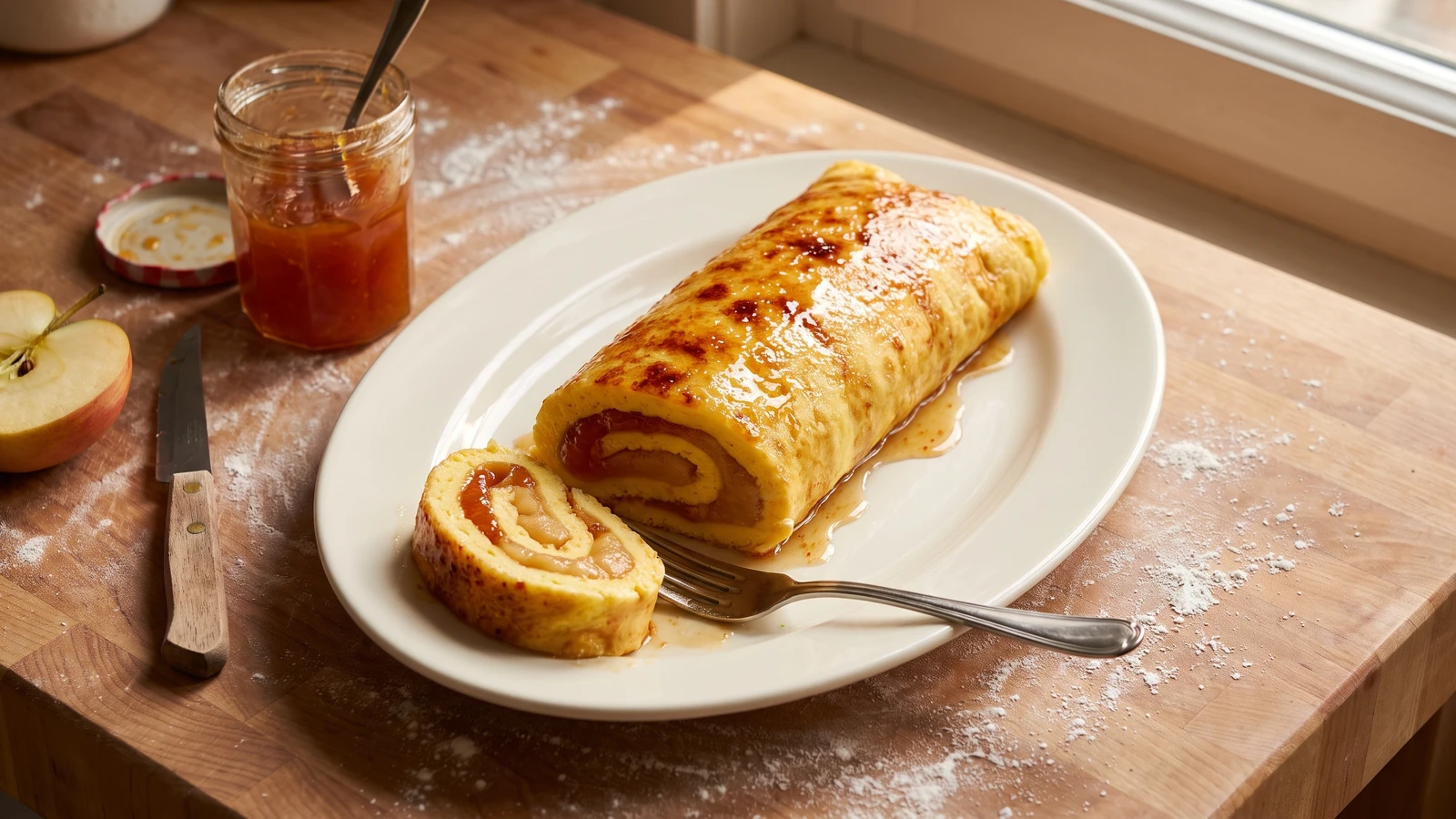
Two tender sweet omelets, apricot at the heart and apple around it, rolled into one generous dessert and sugared under the broiler. The outer layer must stay loose enough to embrace the first.
Omelette Célestine (a nested, double-filled sweet omelet) teaches that tenderness can also be architecture. One thing decides it before you touch the pan: the outer omelet must remain loose and glossy enough to fold around the first. Cook it firm and it tears. Keep it tender and the two become one plump, butter-gold roll.
The classical entry assumes an omelet station with fillings held ready, several pans in service, and a salamander or red-hot glazing iron waiting overhead. Your kitchen needs one 10-inch skillet used twice and a fully heated broiler. I have kept the first omelet at the prescribed two eggs and read the somewhat larger second omelet as three eggs, enough to surround the first without becoming a thick blanket. The source leaves the two garnishes to the cook, so this version pairs apricot jam with compote, fruit cooked down until thick, made from tart apple. They stay distinct when the roll is cut and, just as importantly, neither runs into the pan.
The extra pans and dedicated glazing iron were brigade scaffolding. They can go. The two different fillings, the omelet within an omelet, and the loose outer layer are the dish itself and must stay. Have both garnishes ready and the broiler hot before beating the eggs, because once the outer omelet reaches the pan, you have less than a minute to enclose the first.
Omelette Célestine belongs to the Parisian classical repertory of named sweet omelets, preparations assembled to order and finished before they left the kitchen. Its distinction is structural rather than regional: one garnished omelet is rolled inside a larger omelet carrying a second garnish, so every cut reveals two layers and two fruits. The salamander or glazing iron belonged to service practice, not to the dish's identity; a fierce home broiler gives the same sugared finish.
Quantity
½ medium (about 3 ounces / 85 g)
peeled, cored, and cut into ¼-inch dice
Quantity
1 tablespoon (15 ml / 15 g)
Quantity
1 tablespoon (15 ml / 12 g)
Quantity
1 teaspoon (5 ml / 5 g)
Quantity
2 tablespoons (30 ml / 40 g)
Quantity
2
Quantity
3
Quantity
⅛ teaspoon (0.6 ml / 0.8 g)
divided
Quantity
2 tablespoons (30 ml / 28 g)
divided
Quantity
2 tablespoons (30 ml / 15 g)
| Ingredient | Quantity |
|---|---|
| medium tart applepeeled, cored, and cut into ¼-inch dice | ½ medium (about 3 ounces / 85 g) |
| cold water | 1 tablespoon (15 ml / 15 g) |
| granulated sugar | 1 tablespoon (15 ml / 12 g) |
| fresh lemon juice | 1 teaspoon (5 ml / 5 g) |
| thick apricot jam | 2 tablespoons (30 ml / 40 g) |
| large eggs for the inner omelet | 2 |
| large eggs for the outer omelet | 3 |
| fine sea saltdivided | ⅛ teaspoon (0.6 ml / 0.8 g) |
| unsalted butterdivided | 2 tablespoons (30 ml / 28 g) |
| icing sugar | 2 tablespoons (30 ml / 15 g) |
Put the diced apple, water, granulated sugar, lemon juice, and a small pinch of the salt in a little saucepan. Cover and cook over medium-low heat for 4 minutes, then uncover and cook for another 4 to 6 minutes, stirring and crushing the apple lightly, until tender and thick enough to remain heaped on a spoon. Spread the compote on a plate to cool. If liquid gathers around it, return it to the saucepan and reduce for another minute; a wet garnish will make the outer omelet slide apart.
Set an oven rack about 5 inches (13 cm) below the broiler and heat the broiler fully. Put a broiler-safe platter or small rimmed baking sheet beside the stove. Stir the apricot jam until smooth. Beat the two inner eggs with half the remaining salt in one bowl, then beat the three outer eggs with the rest in another, stopping as soon as each mixture is uniform. Froth gives a sweet omelet a dry, porous surface, so mix cleanly rather than furiously.
Heat a 10-inch (25 cm) nonstick or well-seasoned carbon steel skillet over medium heat. Add half the butter and swirl when its foam begins to settle. Pour in the two-egg mixture, then shake the pan while drawing the setting egg toward the center with a flexible spatula. Stop stirring when soft curds sit in a thin layer of loose egg, and let the base set for about 10 seconds. The surface should be moist but show no clear raw puddles. Spoon the apricot jam in a narrow strip just off center, fold the nearer third over it, and roll into a compact cylinder. Slide it seam-side down onto a warm plate.
Wipe the skillet clean, return it to medium heat, and add the remaining butter. Pour in the three-egg mixture and work it as before, but stop sooner: the underside must hold while the top remains loose, glossy, and able to flow. Spread the cooled apple compote in a broad strip just off center and lay the apricot omelet directly on it. Fold the near edge over the first omelet, then use the slope of the pan and the spatula to roll the outer omelet completely around it. If the outer layer begins to split, stop. Ça se rattrape: tilt the pan so a little loose egg runs into the gap, press the edges toward it, and hold over low heat for 10 seconds. Set the completed roll seam-side down on the broiler-safe platter.
Sift the icing sugar evenly over the omelet in a generous white veil. Place it beneath the fully heated broiler for 20 to 45 seconds, rotating the platter if necessary, until the sugar melts into amber freckles and narrow caramel patches. Watch without looking away. If one spot turns black, remove the omelet immediately, lift off only that bitter patch with the point of a knife, dust the spot again, and return it briefly to the heat. A fierce, short glaze preserves the tender eggs; a cool broiler merely bakes them while the sugar waits.
Let the omelet stand for 1 minute so the fillings settle, then move it to an oval serving platter if you glazed it on a baking sheet. Cut it crosswise into four thick portions with a sharp knife, wiping the blade between cuts so the apricot center and apple-lined outer layer remain clear. Serve at once while the sugar is crisp at the edges and the eggs remain tender. À table!
1 serving (about 100g)
Culinary guides, cultural storytelling, and the editorial depth that makes cooking meaningful.
Discover Culinary ExplorerChef Juliette
Five almond preparations, one discipline: remove the skins cleanly, dry every kernel through, then cut, toast, or cloak it in pale caramel without letting its fragrant oils escape.

Chef Juliette
A pastry pantry lesson in one tray: filberts warmed only until their red skins release, rubbed clean, cooled, and chopped into a fragrant mise-en-place for cakes, creams, pralines, and petits fours.

Chef Juliette
The smallest pâtisserie discipline decides whether a cake leaves its mould intact: clarified butter in every corner, followed by the lightest veil of dry flour or fécule.

Chef Juliette
Four whites, one spotless bowl, and a patient change of speed: whisk gently until loosened, then briskly to glossy stiffness, with powdered sugar waiting if the foam begins to granulate.