
Chef Juliette
Flan aux Carottes
A pale short-paste shell holds silken, lightly sweet carrot purée beneath neat glazed half-discs, their butter syrup catching the light: a classical tart poised between vegetable course and sweet.
A cooking platform built around craft, culture, and the stories behind what we eat.
Created by Chef Juliette
Based on No. 2605, Mince Pies, from Le Guide Culinaire (1907) by Auguste Escoffier
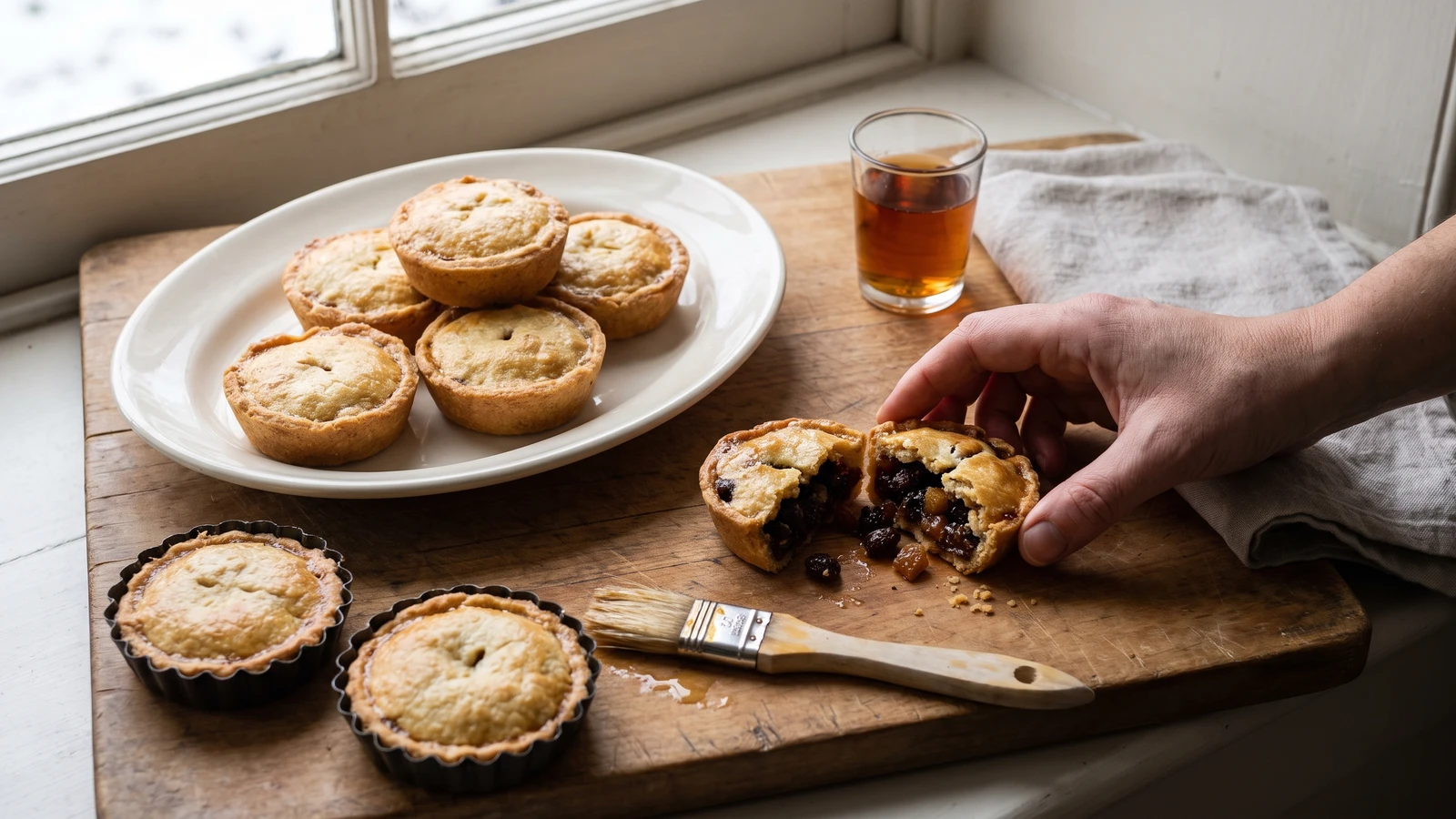
Tartelettes anglaises au mincemeat make patience the principal ingredient: fruit, brandy, Madeira and rum matured for a month, then joined with beef and suet beneath gilded puff-pastry lids.
These tartelettes teach patience before pastry. The one true thing to know is that the month of maceration is the dish: dried fruit, candied rind, apple, orange, allspice, brandy, Madeira and rum must become one dark, fragrant preparation before the oven enters the conversation.
The classical entry assumed brigade quantities, an earthenware crock in a reliably cold larder and a pastry bench with both short paste and puff paste ready. At home, the batch is quartered to twelve deep tartlets, a lidded glass jar replaces the crock, and good all-butter pâte feuilletée replaces hours of lamination. Those are scaffolding. The separate short-paste case, puff lid, beef, suet and full month given to the fruit are the dish, and they stay. One change is deliberate: cooked beef and fresh suet join only for the final overnight rest, because holding them for a month in a domestic refrigerator is not sound practice.
The step that decides the baking is temperature. Fill cold shells, seal them with cold puff lids and put them onto a hot baking sheet. If the pastry softens while you work, stop and chill it. Then the lids rise in crisp layers, the short paste holds firm and the mincemeat glistens darkly through its little vent.
These tartlets belong to England's Christmas table, where meat, suet, dried fruit and strong drink formed a festive preserved filling through generations of household practice. French classical kitchens admitted the dish under its English identity, translating it into their own pastry grammar with ordinary short paste below and puff paste above rather than claiming it for a French province. The beef is not a mistranslation: it preserves the savory-sweet construction that many familiar commercial fillings have abandoned.
Quantity
3/4 cup (180 ml / 115 g)
Quantity
3/4 cup (180 ml / 115 g)
Quantity
3/4 cup (180 ml / 115 g)
Quantity
3/4 cup (180 ml / 115 g)
cut into small dice
Quantity
1/2 cup (120 ml / 60 g)
finely chopped
Quantity
1/4
colored zest finely chopped and juice reserved
Quantity
2 teaspoons (10 ml / 5 g)
Quantity
1 tablespoon plus 2 teaspoons (25 ml / 24 g)
Quantity
1 tablespoon plus 2 teaspoons (25 ml / 25 g)
Quantity
1 tablespoon plus 2 teaspoons (25 ml / 24 g)
Quantity
3/4 cup loosely packed (180 ml / 115 g)
trimmed and finely chopped
Quantity
1 cup loosely packed (240 ml / 150 g)
cut into 3 mm dice
Quantity
2 cups (480 ml / 250 g)
Quantity
1/2 cup plus 1 tablespoon (135 ml / 125 g)
cubed
Quantity
1/2 teaspoon (2.5 ml / 3 g)
Quantity
Up to 1/4 cup (60 ml / 60 g)
Quantity
1 sheet (8 oz / 225 g)
thawed but cold
Quantity
2 tablespoons (30 ml / 16 g)
Quantity
1 tablespoon (15 ml / 14 g)
Quantity
1
Quantity
1 teaspoon (5 ml / 5 g)
| Ingredient | Quantity |
|---|---|
| seedless black raisins | 3/4 cup (180 ml / 115 g) |
| dried currants | 3/4 cup (180 ml / 115 g) |
| sultanas | 3/4 cup (180 ml / 115 g) |
| mixed candied citrus rindscut into small dice | 3/4 cup (180 ml / 115 g) |
| peeled raw applefinely chopped | 1/2 cup (120 ml / 60 g) |
| medium orangecolored zest finely chopped and juice reserved | 1/4 |
| ground allspice | 2 teaspoons (10 ml / 5 g) |
| brandy | 1 tablespoon plus 2 teaspoons (25 ml / 24 g) |
| Madeira | 1 tablespoon plus 2 teaspoons (25 ml / 25 g) |
| dark rum | 1 tablespoon plus 2 teaspoons (25 ml / 24 g) |
| fresh beef suettrimmed and finely chopped | 3/4 cup loosely packed (180 ml / 115 g) |
| cold cooked beef filletcut into 3 mm dice | 1 cup loosely packed (240 ml / 150 g) |
| all-purpose flour | 2 cups (480 ml / 250 g) |
| cold unsalted buttercubed | 1/2 cup plus 1 tablespoon (135 ml / 125 g) |
| fine salt | 1/2 teaspoon (2.5 ml / 3 g) |
| ice water | Up to 1/4 cup (60 ml / 60 g) |
| all-butter pâte feuilletée, or puff pastrythawed but cold | 1 sheet (8 oz / 225 g) |
| all-purpose flour for rolling | 2 tablespoons (30 ml / 16 g) |
| softened unsalted butter for the molds | 1 tablespoon (15 ml / 14 g) |
| large egg | 1 |
| water for gilding | 1 teaspoon (5 ml / 5 g) |
One month before baking, thoroughly mix the raisins, currants, sultanas, candied rinds, apple, orange zest and juice, allspice, brandy, Madeira and rum. The zest means only the colored outer rind, with none of the bitter white pith. Pack the mixture into a clean, completely dry 1 litre glass jar, cover tightly and refrigerate at 4°C / 40°F or colder. Turn the jar every several days so the liquor moves through the fruit. The fruit will swell, darken and produce a thick aromatic syrup. If you find mold, gas pressure or a fermented odor, discard it; unsafe preserves aren't rescued.
On the day before baking, make the pâte brisée, the ordinary short paste. Mix the 250 g flour with the salt, then rub in the cold butter until the mixture resembles coarse crumbs with a few pea-sized pieces remaining. Add the ice water gradually, stopping as soon as the dough holds when pressed. If it crumbles, add water one teaspoon at a time; if it turns greasy, stop and chill it for fifteen minutes. Ça se rattrape. Press into a flat disc, wrap and refrigerate for at least forty-five minutes.
Fold the finely chopped suet and cold diced beef into the matured fruit until evenly distributed. Cover and refrigerate for twelve to twenty-four hours, no longer, before baking. The classical preparation macerated the cooked meat and fresh suet for the whole month, but a domestic refrigerator does not make that safe; adding them for the final overnight rest preserves the formula while keeping the meat within a sound storage window.
Set a heavy baking sheet in the oven and heat it to 220°C / 425°F. Butter twelve deep 7 cm tartlet molds or the wells of a standard metal muffin tin. Roll the pâte brisée on a lightly floured surface to 3 mm thick, cut twelve rounds about 10 cm across and ease them into the molds without stretching. Patch a tear with a scrap pressed over it, then chill the lined molds for twenty minutes. Cold pastry meeting a hot oven is the principle that keeps the cases crisp and upright.
Stir the mincemeat well and divide it among the cases, using about 70 g per tartlet and leaving the filling just below the rim. Roll the cold pâte feuilletée to about 2.5 mm thick and cut twelve lids slightly wider than the molds. Cut a 5 mm hole in the center of each lid. Moisten the short-paste rims lightly with water, lay on the lids and press firmly to seal. If the puff paste softens or stretches, chill the assembled pies for fifteen minutes before continuing; warm puff paste leaks butter instead of lifting.
Beat the egg with the teaspoon of water and gild the lids with a thin, even coat, keeping the egg away from the cut edges and center holes so the layers can rise. Set the molds on the hot baking sheet and bake for ten minutes, then lower the oven to 190°C / 375°F and continue for twelve to sixteen minutes. They are ready when the lids are deeply burnished, the short-paste sides are crisp and the filling reaches 74°C / 165°F. If the lids color before the cases are baked, cover them loosely with foil and move the tray to a lower rack. Ça se rattrape.
Rest the tartlets in their molds for ten minutes, then loosen their edges with a small knife and lift them onto a rack. Serve warm or at room temperature, when the puff lid is crisp and the dark filling tastes first of fruit and spice, then quietly of beef, suet and spirits. No dusting, no decorative flourish. The burnished lid is finish enough. À table!
1 serving (about 120g)
Culinary guides, cultural storytelling, and the editorial depth that makes cooking meaningful.
Discover Culinary ExplorerChef Juliette
A pale short-paste shell holds silken, lightly sweet carrot purée beneath neat glazed half-discs, their butter syrup catching the light: a classical tart poised between vegetable course and sweet.
Chef Juliette
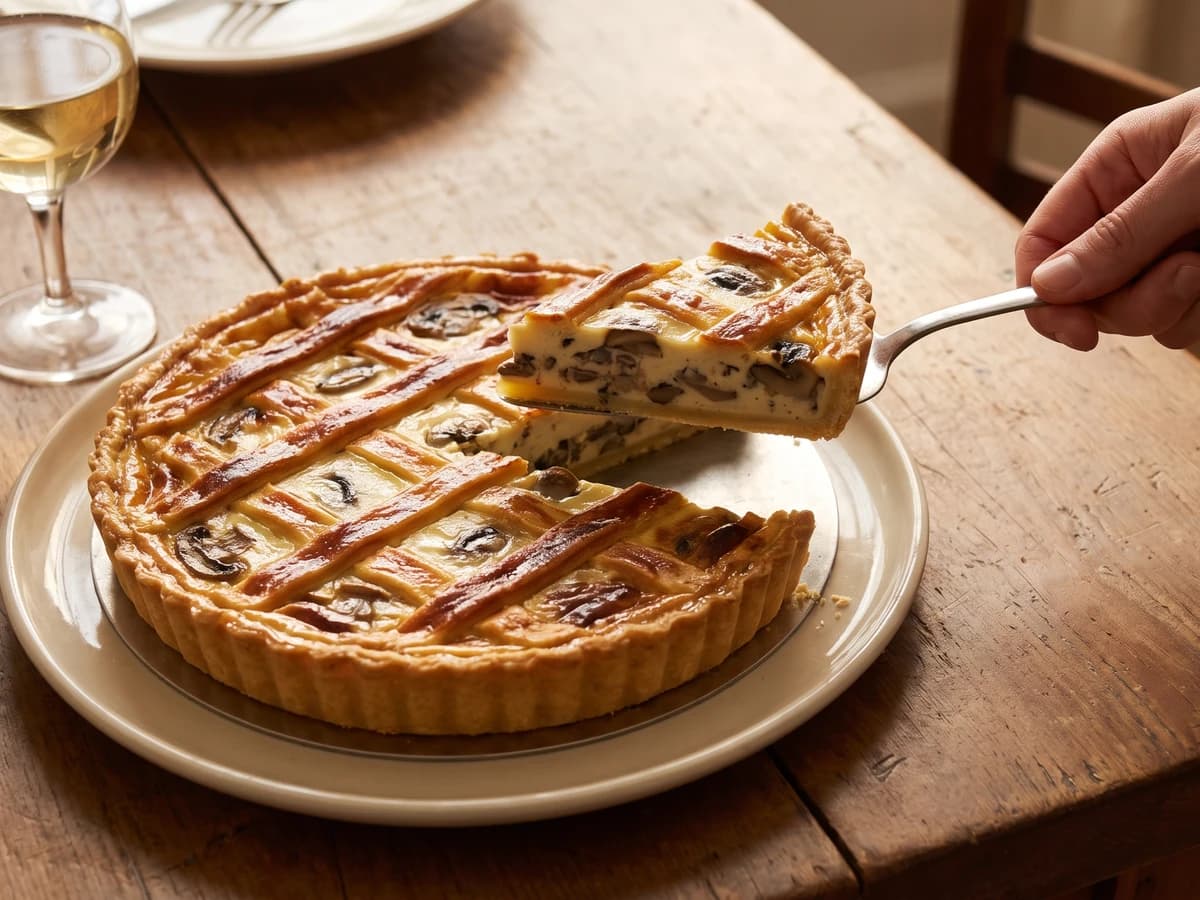
A hot mushroom flan under a butter-gold lattice, with cream reduced close around barely opened caps and a crisp short-paste base protected by one discipline: cool the filling completely.

Chef Juliette
Four little mushroom flans, latticed and gilded, baked hard and fast until butter-gold: a classical garnish scaled to the meat it accompanies and served before its crispness has time to fade.
Chef Juliette
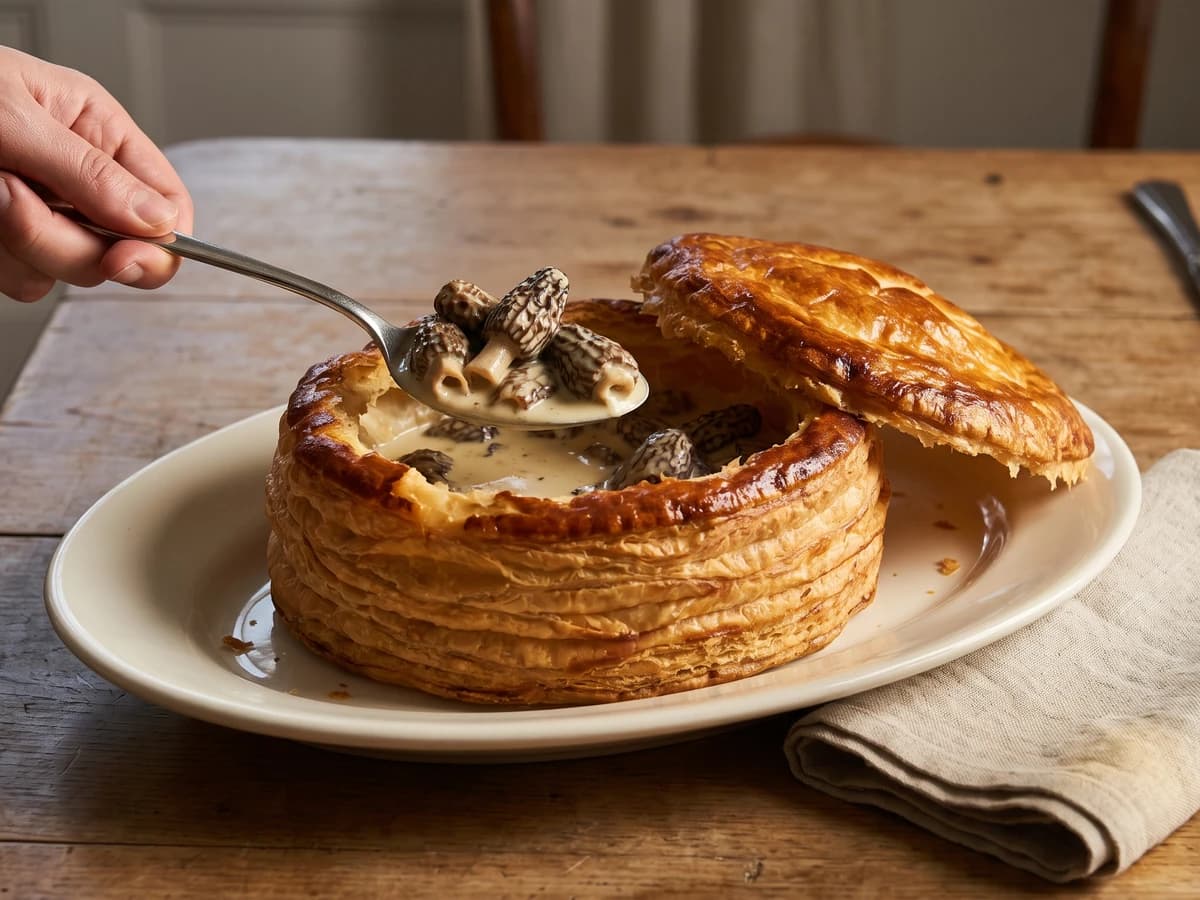
Morels surrender their liquor, then take it back as a glossy cream-and-butter sauce inside burnished puff pastry. The lesson is simple and absolute: reduce with patience, then heat gently and never boil.