
Chef Juliette
Flan aux Carottes
A pale short-paste shell holds silken, lightly sweet carrot purée beneath neat glazed half-discs, their butter syrup catching the light: a classical tart poised between vegetable course and sweet.
A cooking platform built around craft, culture, and the stories behind what we eat.
Created by Chef Juliette
Based on No. 2604, Flan de Pommes à la Batelière, from Le Guide Culinaire (1907) by Auguste Escoffier
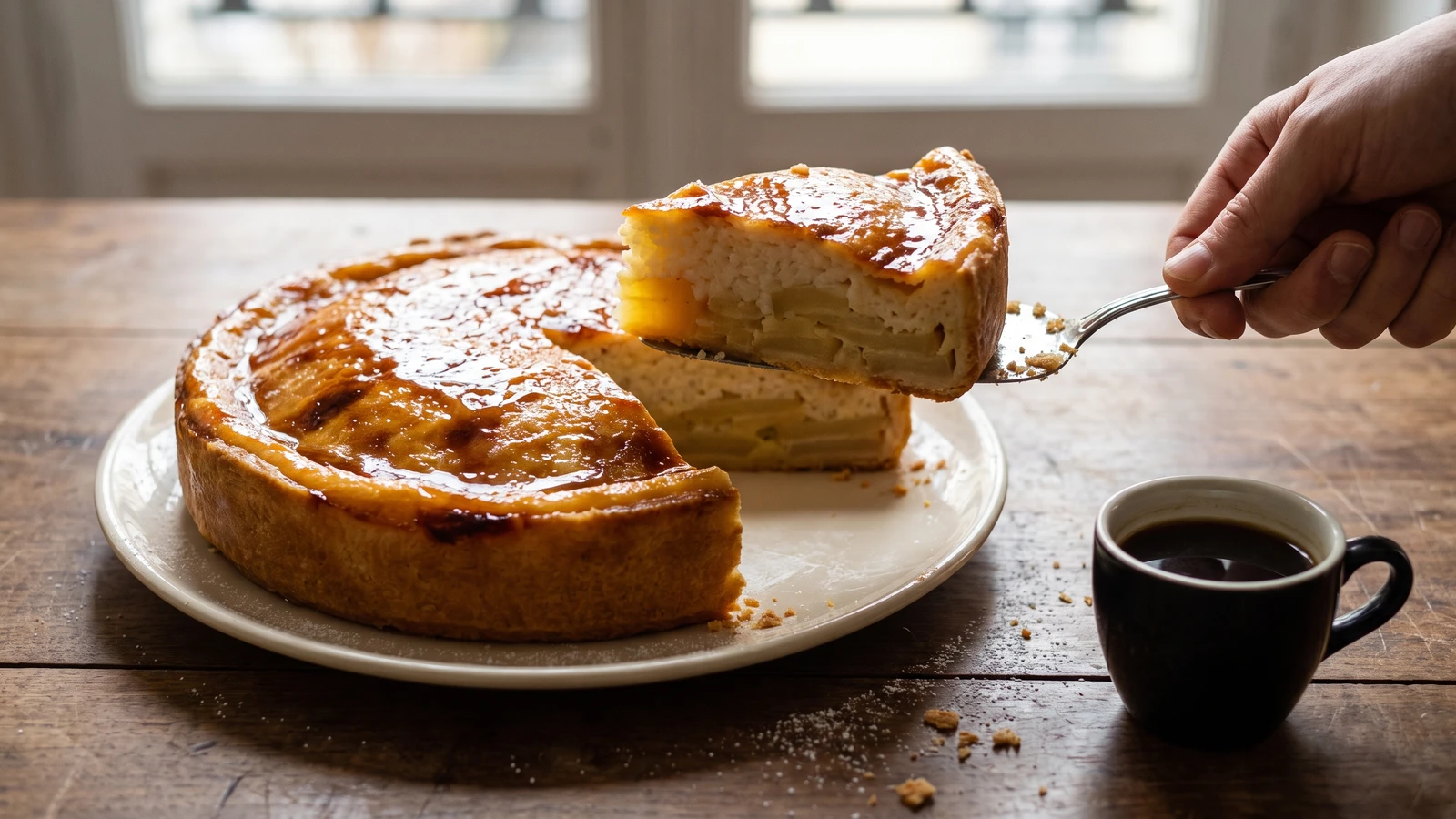
A crisp pastry flan holding butter-stewed apples beneath a domed, airy rice filling, finished with the Batelière mark: a generous veil of icing sugar burned to amber just before serving.
Flan de Pommes à la Batelière (apple flan under a light rice dome) teaches one true thing before you touch a pan: moisture must be managed, not banished. The apples need enough butter and gentle cooking to become tender, yet they must surrender their loose juice before reaching the pastry. The riz pour entremets, creamy dessert rice, must remain supple enough to accept beaten whites without crushing them.
A classical pastry station approached this with short paste already resting, apples prepared as for a charlotte, a pot of rice ready for entremets, a flan ring, and a red-hot glazing iron. At home, those separate preparations become three small batches made in a sensible order, the ring becomes a deep loose-bottomed tart tin, and a kitchen torch replaces the iron safely. That brigade mise en place was scaffolding, so it goes. The stewed apples, the dome of creamy rice lightened with exactly four whites per pound of cooked rice, and the burned sugar finish are the dish, so every one stays.
Cut through the finished flan and you should find three distinct textures: crisp golden pastry, buttery apple that holds a little shape, and a pale rice dome made airy by the whites. Cool the apple and rice completely before assembly. That pause is the step that decides whether the dome rises lightly or collapses into a heavy pudding.
Flan de Pommes à la Batelière belongs to the Paris-centered classical entremets repertoire, where pastry cooks assembled pâte brisée, apples prepared as for charlotte, and riz pour entremets beneath a named finish. Batelière means boatwoman, but the title functions as a classical kitchen name rather than proof of a regional boatman's pudding, and no French province claims the flan as its own. Here flan means a filled pastry case, not an unmolded caramel custard, while the hot-iron sugar glaze records the dish's journey from the grand pastry station to the bourgeois table.
Quantity
2 cups (480 ml / 250 g)
Quantity
1/3 cup (80 ml / 40 g)
Quantity
1/2 teaspoon (2.5 ml / 3 g)
Quantity
9 tablespoons (135 ml / 125 g)
cubed
Quantity
1
Quantity
1 tablespoon (15 ml / 15 g), plus up to 1 tablespoon (15 ml / 15 g) if needed
Quantity
1 teaspoon (5 ml / 5 g)
Quantity
6 medium (about 2 lb / 900 g before peeling)
peeled, cored, and cut into 1.5 cm pieces
Quantity
3 tablespoons (45 ml / 42 g)
Quantity
1/3 cup (80 ml / 65 g)
Quantity
1/2 cup (120 ml / 100 g)
Quantity
1 3/4 cups (420 ml / 430 g)
divided
Quantity
1/4 cup (60 ml / 50 g)
Quantity
1/2
split and scraped
Quantity
1 tablespoon (15 ml / 14 g)
Quantity
4 (about 1/2 cup / 120 g)
Quantity
1/2 cup (120 ml / 60 g)
| Ingredient | Quantity |
|---|---|
| plain flour | 2 cups (480 ml / 250 g) |
| icing sugar, for the pastry | 1/3 cup (80 ml / 40 g) |
| fine sea salt | 1/2 teaspoon (2.5 ml / 3 g) |
| cold unsalted buttercubed | 9 tablespoons (135 ml / 125 g) |
| large egg | 1 |
| ice water | 1 tablespoon (15 ml / 15 g), plus up to 1 tablespoon (15 ml / 15 g) if needed |
| softened unsalted butter, for the tin | 1 teaspoon (5 ml / 5 g) |
| firm tart-sweet applespeeled, cored, and cut into 1.5 cm pieces | 6 medium (about 2 lb / 900 g before peeling) |
| unsalted butter, for the apples | 3 tablespoons (45 ml / 42 g) |
| caster sugar, for the apples | 1/3 cup (80 ml / 65 g) |
| short-grain white rice | 1/2 cup (120 ml / 100 g) |
| whole milkdivided | 1 3/4 cups (420 ml / 430 g) |
| caster sugar, for the rice | 1/4 cup (60 ml / 50 g) |
| vanilla beansplit and scraped | 1/2 |
| unsalted butter, for the rice | 1 tablespoon (15 ml / 14 g) |
| large egg whites | 4 (about 1/2 cup / 120 g) |
| icing sugar, for glazing | 1/2 cup (120 ml / 60 g) |
Make the pâte brisée, the short pastry: whisk together the flour, icing sugar, and salt, then rub in the cold butter until the mixture resembles coarse crumbs with a few flat butter flakes remaining. Add the egg and 1 tablespoon of ice water, mixing only until the dough holds when pressed. If dry flour remains, add the extra water a teaspoon at a time. Don't knead it smooth; overworking builds gluten and makes the baked shell tough. Flatten into a disc, wrap, and chill for 45 minutes.
Reserve 2 tablespoons of the milk, then combine the remaining milk, rice, vanilla seeds and pod in a heavy saucepan. Bring to a gentle simmer and cook uncovered for 25 to 35 minutes, stirring often near the end, until the grains are tender and suspended in a thick cream. Stir in the caster sugar for the final 5 minutes, then remove the vanilla pod and beat in the butter. Weigh exactly 1 lb (454 g) of cooked rice mixture. If you have more, reserve the excess; if you have less, stir in enough warm reserved milk to reach 454 g. This preserves the source's ratio of four whites to one pound of cooked rice. Spread the rice in a shallow dish and cool completely within 2 hours.
Melt the butter in a wide sauté pan, add the apples and caster sugar, and toss until every piece glistens. Cover for 5 minutes to begin softening them, then uncover and cook over medium heat for 12 to 18 minutes, stirring gently, until tender but not reduced to purée. This is pommes pour charlotte, apples stewed until tender and nearly dry. If they catch before softening, add 1 tablespoon (15 ml / 15 g) water. If they are tender but surrounded by syrup, keep cooking uncovered. Ça se rattrape. The apples are ready when a spoon drawn across the pan leaves a clean path. Cool completely.
Butter a 23 cm (9-inch) loose-bottomed tart tin or flan ring about 4 cm (1 1/2 inches) deep. Roll the chilled pastry to a 32 cm (12 1/2-inch) round about 3 mm thick, line the base and sides without stretching, and press it firmly into the corners. Trim the edge level with the tin and chill for 30 minutes. The shell isn't blind-baked because the source fills and bakes it in one operation; dry apples, chilled pastry, and a preheated metal sheet give the base its crispness.
Set a heavy baking sheet in the oven and heat to 190°C (375°F). Beat the egg whites in a spotless bowl until they hold stiff, glossy peaks but still look supple. Stir one-third into the completely cooled rice to loosen it, then fold in the remainder with broad strokes, turning the bowl and stopping as soon as no white streaks remain. Warm rice cooks the foam and heavy stirring crushes it. If the mixture loses more volume than intended, don't discard it. Ça se rattrape: mound it promptly and bake; the dome will be closer-grained, but its structure and flavor remain sound.
Spread the cooled apples evenly in the chilled pastry shell, pressing only enough to remove large gaps. Spoon the lightened rice over them, keeping the edges level with the pastry and building the centre into a smooth, generous dome. Shape it with the back of a spoon dipped briefly in cold water, using a light hand so you don't press out the air.
Place the flan on the hot baking sheet and bake at 190°C (375°F) for 15 minutes. Lower the oven to 175°C (350°F) and continue for 35 to 45 minutes, until the pastry is deep gold at the edge, the rice dome feels set rather than liquid beneath its surface, and a thin skewer enters the rice without meeting wet egg white. If the dome colors before the pastry is ready, cover the rice loosely with foil while leaving the pastry exposed.
As soon as the flan leaves the oven, sift the icing sugar copiously and evenly over the dome. Protect the pastry rim with narrow strips of foil, then pass a kitchen torch steadily over the sugar until it melts into glossy amber patches with a few deeper lines. Without a torch, place the flan 15 cm (6 inches) beneath a fully heated broiler and rotate it constantly. Watch without blinking. If one patch blackens, scrape away that bitter spot while the sugar is still warm, sift over fresh sugar, and glaze it again. Ça se rattrape.
Let the flan settle in its tin for 30 minutes, then loosen the sides with a thin knife and unmold it onto a flat serving plate. Rest for another 15 minutes before cutting so the rice and apple layers hold their shape. Serve barely warm or at room temperature, with no cream or decorative sauce hiding the burned sugar and buttered apple. À table!
1 serving (about 220g)
Culinary guides, cultural storytelling, and the editorial depth that makes cooking meaningful.
Discover Culinary ExplorerChef Juliette
A pale short-paste shell holds silken, lightly sweet carrot purée beneath neat glazed half-discs, their butter syrup catching the light: a classical tart poised between vegetable course and sweet.
Chef Juliette
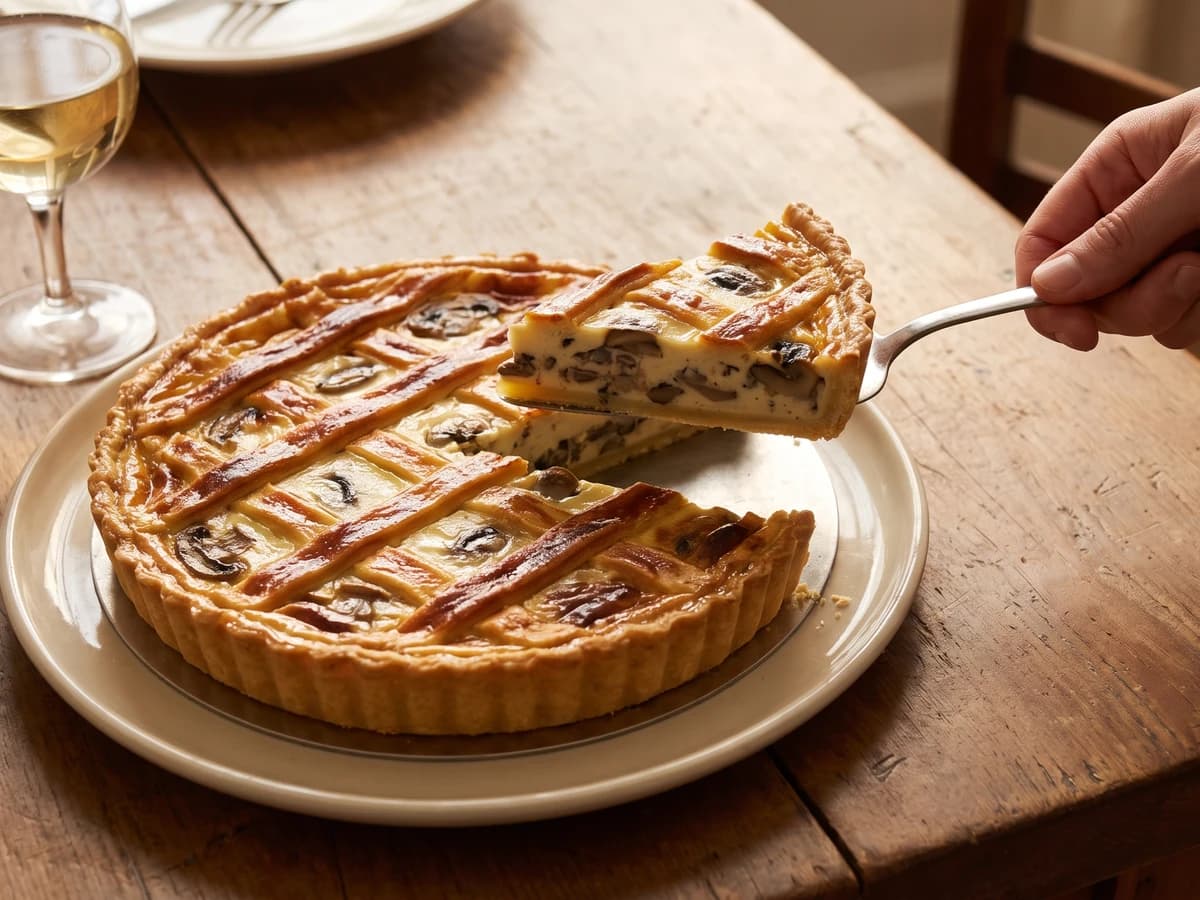
A hot mushroom flan under a butter-gold lattice, with cream reduced close around barely opened caps and a crisp short-paste base protected by one discipline: cool the filling completely.

Chef Juliette
Four little mushroom flans, latticed and gilded, baked hard and fast until butter-gold: a classical garnish scaled to the meat it accompanies and served before its crispness has time to fade.
Chef Juliette
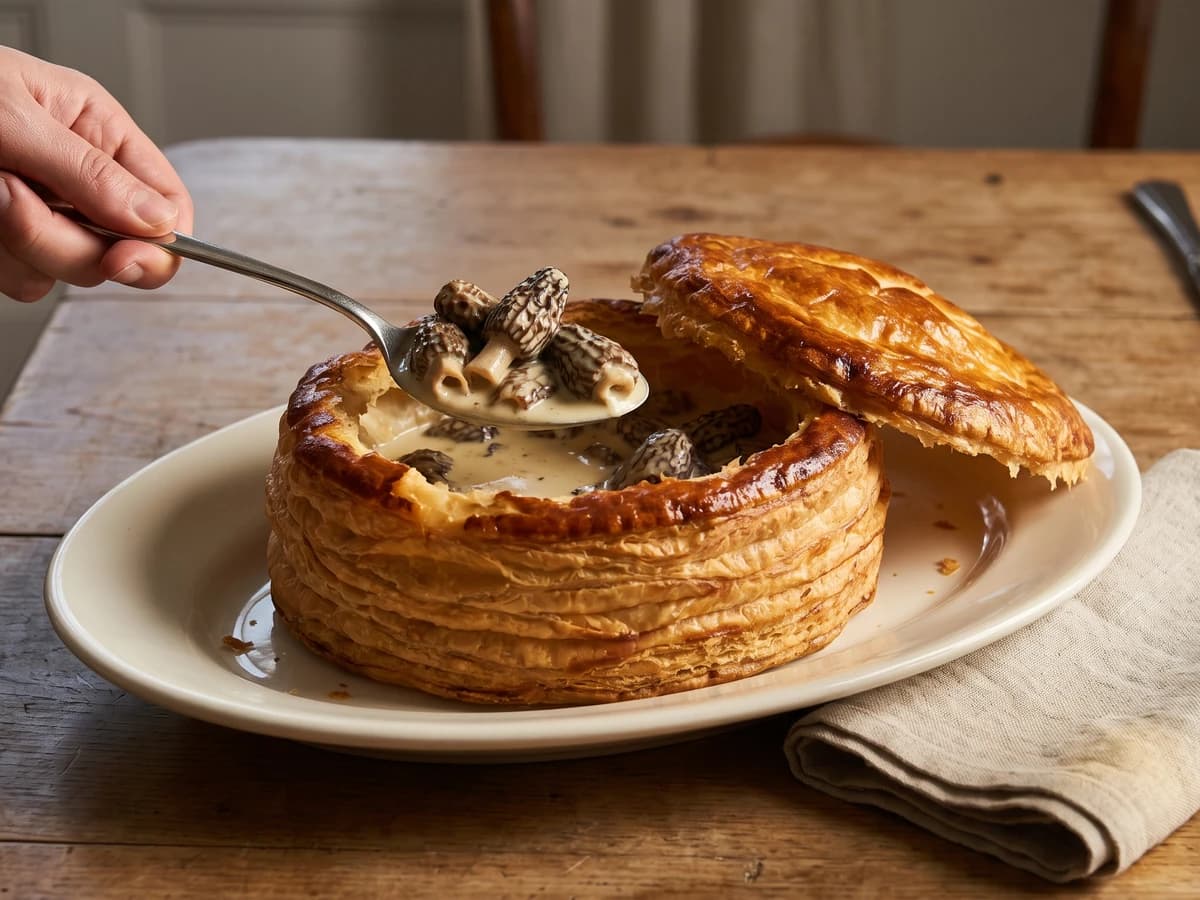
Morels surrender their liquor, then take it back as a glossy cream-and-butter sauce inside burnished puff pastry. The lesson is simple and absolute: reduce with patience, then heat gently and never boil.