
Chef Juliette
Flan aux Carottes
A pale short-paste shell holds silken, lightly sweet carrot purée beneath neat glazed half-discs, their butter syrup catching the light: a classical tart poised between vegetable course and sweet.
A cooking platform built around craft, culture, and the stories behind what we eat.
Created by Chef Juliette
Based on No. 2603, Flan de Pommes Chaud Ninon, from Le Guide Culinaire (1907) by Auguste Escoffier
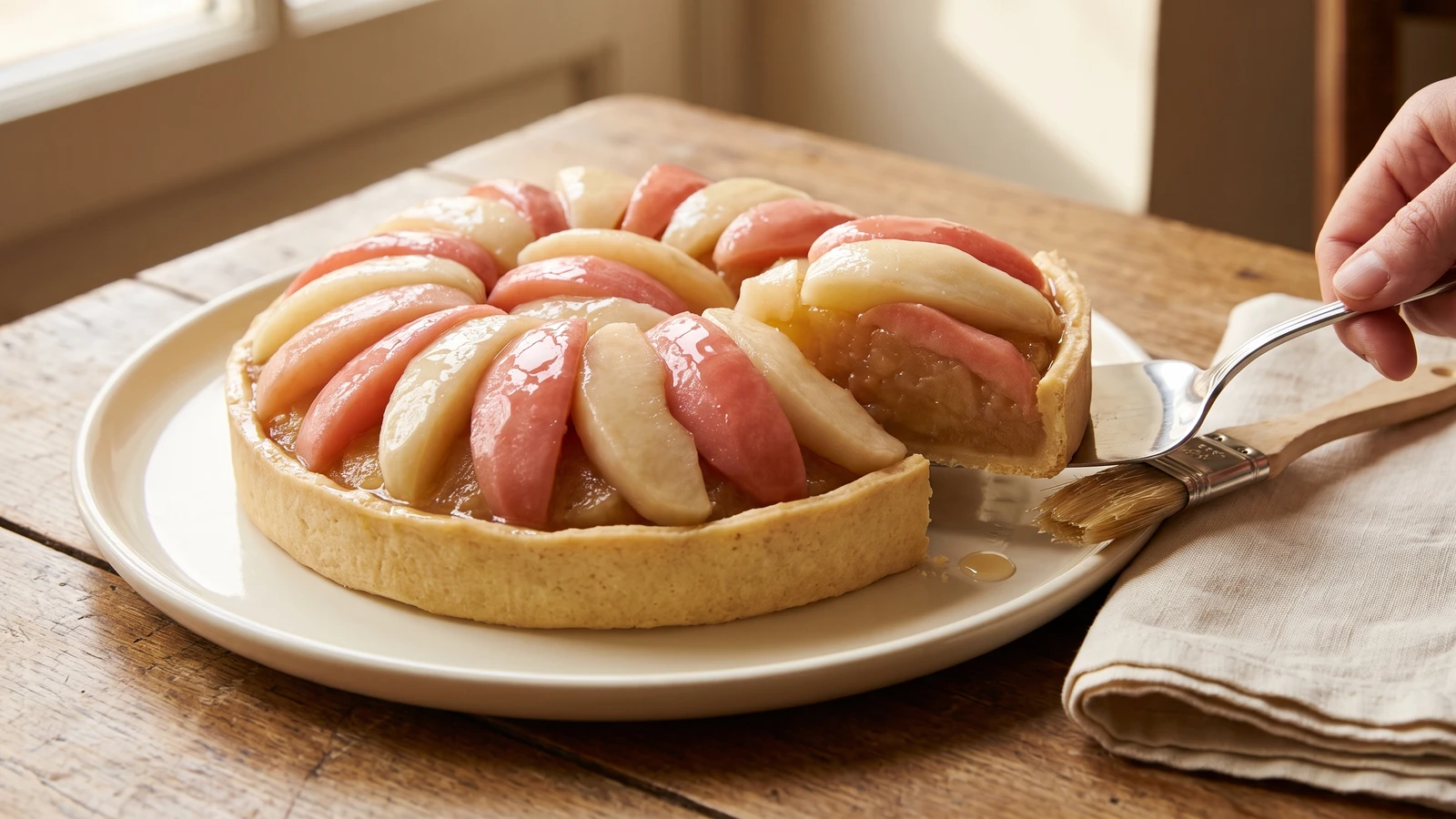
A pale flan shell, a firm dome of buttery apple, and alternating pink and white quarters under clear syrup: a classical apple tart whose whole success rests on cooking the base stiff.
Flan de Pommes Chaud Ninon (hot Ninon apple tart) teaches one uncompromising principle: the stewed apple beneath the decoration must be stiff enough to stand exactly where the spoon puts it. A loose compote cannot support the dome, and no amount of careful glazing will persuade sliding apples to behave.
The original entry assumed a pastry station that could bake pale flan shells, stew one apple preparation, poach two differently colored garnishes, and keep reduced white syrup ready. At home, one 8-inch tart tin and one saucepan used in sequence do the same work. The extra pans and hands were brigade scaffolding, so they can go; the pale shell, Charlotte-style apple base, alternating quarters, and clear glaze are the dish and must stay. One cook, one stove, one evening.
Finished properly, the shell is crisp but scarcely colored, the apple filling rises in a generous buttery dome, and the pink and ivory quarters shine beneath a thin coat of syrup. Before you touch a pan, remember the test that decides everything: draw a spoon through the stewed apples, and the path must remain open without liquid running back into it.
Hot fruit flans belong to the Parisian classical entremets repertoire, where flan means a shallow pastry case rather than a set custard. The Ninon arrangement carries the stewed apple preparation used for a Charlotte into a formal tart, covering it with regularly alternating quarters of pale and lightly colored fruit. The pink and white effect comes from separate poaching, not from two naturally different apples, and reduced clear syrup supplies the final polish.
Quantity
1¾ cups (420 ml / 225 g)
Quantity
½ cup (120 ml / 113 g)
cubed
Quantity
2 tablespoons (30 ml / 25 g)
Quantity
½ teaspoon (2.5 ml / 3 g)
Quantity
1
beaten
Quantity
1 to 2 tablespoons (15 to 30 ml / 15 to 30 g)
Quantity
5 large (about 2 lb / 900 g)
peeled, cored, and thinly sliced
Quantity
3 tablespoons (45 ml / 42 g)
Quantity
⅓ cup (80 ml / 65 g)
Quantity
1 tablespoon (15 ml / 15 g)
Quantity
4 small (about 1¼ lb / 570 g)
peeled, cored, and quartered
Quantity
4 cups (950 ml / 950 g)
Quantity
2 cups (475 ml / 400 g)
Quantity
2 tablespoons (30 ml / 30 g)
Quantity
1 small drop
| Ingredient | Quantity |
|---|---|
| all-purpose flour | 1¾ cups (420 ml / 225 g) |
| cold unsalted buttercubed | ½ cup (120 ml / 113 g) |
| superfine sugar for the pastry | 2 tablespoons (30 ml / 25 g) |
| fine salt | ½ teaspoon (2.5 ml / 3 g) |
| large eggbeaten | 1 |
| ice water (optional) | 1 to 2 tablespoons (15 to 30 ml / 15 to 30 g) |
| Golden Delicious or other soft-cooking applespeeled, cored, and thinly sliced | 5 large (about 2 lb / 900 g) |
| unsalted butter for the stewed apples | 3 tablespoons (45 ml / 42 g) |
| superfine sugar for the stewed apples | ⅓ cup (80 ml / 65 g) |
| fresh lemon juice for the stewed apples | 1 tablespoon (15 ml / 15 g) |
| firm dessert applespeeled, cored, and quartered | 4 small (about 1¼ lb / 570 g) |
| water for the poaching syrup | 4 cups (950 ml / 950 g) |
| granulated sugar for the poaching syrup | 2 cups (475 ml / 400 g) |
| fresh lemon juice for the poaching syrup | 2 tablespoons (30 ml / 30 g) |
| rose-pink gel food coloring | 1 small drop |
Combine the flour, sugar, and salt. Rub in the cold butter until the mixture resembles fine crumbs with a few small flakes remaining, then add the beaten egg and mix just until the dough begins to gather. If dry flour remains, add the ice water a teaspoon at a time; stop as soon as the dough holds when pressed. If it feels sticky, don't add more flour. Flatten it into a disc and chill it for 45 minutes, and the butter will firm while the gluten relaxes.
Heat the oven to 325°F (165°C). Roll the pastry between two sheets of parchment to a ⅛-inch (3 mm) thickness, then line an 8-inch (20 cm) loose-bottomed tart tin, pressing the dough into the corner without stretching it. Save a walnut-sized scrap for repairs, trim the rim, prick the base, and chill the lined tin for 20 minutes. Line it with parchment and weights, then bake for 20 to 22 minutes. Remove the weights and bake for another 8 to 10 minutes, just until the base is dry and the shell is the palest blond. This is cuisson à blanc, blind baking, but colorless never means raw. If a crack appears, press a speck of reserved dough into it while the shell is hot and return it to the oven for 2 minutes.
Melt the butter in a wide pan over medium heat. Add the sliced cooking apples, sugar, and lemon juice, cover, and cook for 8 minutes until the fruit releases its juice and begins to collapse. Uncover and continue cooking for 25 to 35 minutes, stirring and pressing the apples against the pan, until they become a thick, coarse mass. Draw the spoon across the bottom: the furrow must stay open, and a spoonful set on a plate must hold its mound without syrup gathering around it. If it spreads, keep cooking uncovered over medium-low heat. Ça se rattrape. Never add starch, because reduction concentrates the apple while starch makes the filling pasty. If the bottom catches, transfer the unburned apple to a clean pan without scraping the scorched layer. Let the finished filling stand for 10 minutes.
Combine the water, granulated sugar, and lemon juice in a wide saucepan, stirring over medium heat only until the sugar dissolves. Bring the sirop blanc, the clear poaching syrup, to the gentlest simmer. Add 8 apple quarters in one layer and cover them with a parchment round if they float. Poach for 6 to 10 minutes, turning once, until a thin knife enters with slight resistance. Boiling will break their edges, so keep the syrup quiet. Lift the white quarters onto a tray, then ladle 1½ cups (360 ml) of the clear syrup into a small saucepan and reserve it for the glaze.
Tint the syrup remaining in the wide pan with one very small drop of rose-pink coloring. The syrup should look like a pale blush, because the fruit deepens as it poaches. Add the remaining 8 apple quarters and poach them at the same gentle simmer until tender but intact, 6 to 10 minutes. Lift them onto a separate tray so the pink cannot bleed onto the white fruit. If a quarter splits, keep it for the center of the dome, where neighboring fruit will support it.
Bring the reserved clear syrup to a steady simmer and reduce it to about ½ cup (120 ml), 10 to 15 minutes. It is ready when it falls from a spoon in a heavy thread and brushes over a cold plate in a thin, glossy film. If it becomes sticky like candy or crystals form at the rim, add 1 tablespoon (15 ml / 15 g) water and warm it gently until smooth again. Keep it warm enough to remain fluid.
Spoon the warm stewed apple into the pale shell and shape it into a smooth dome, keeping the filling within the pastry rim. Arrange the poached quarters over it with their curved sides upward, alternating white and pink regularly in two close, staggered rings. Press only enough to seat them; force will push the filling outward. If the components have cooled, warm the assembled flan for 8 minutes in a 300°F (150°C) oven. Brush the quarters delicately with the reduced clear syrup, working from the center outward so you glaze rather than dislodge them. Serve warm, while the butter still lends the apple its sheen and the shell remains crisp. À table!
1 serving (about 265g)
Culinary guides, cultural storytelling, and the editorial depth that makes cooking meaningful.
Discover Culinary ExplorerChef Juliette
A pale short-paste shell holds silken, lightly sweet carrot purée beneath neat glazed half-discs, their butter syrup catching the light: a classical tart poised between vegetable course and sweet.
Chef Juliette
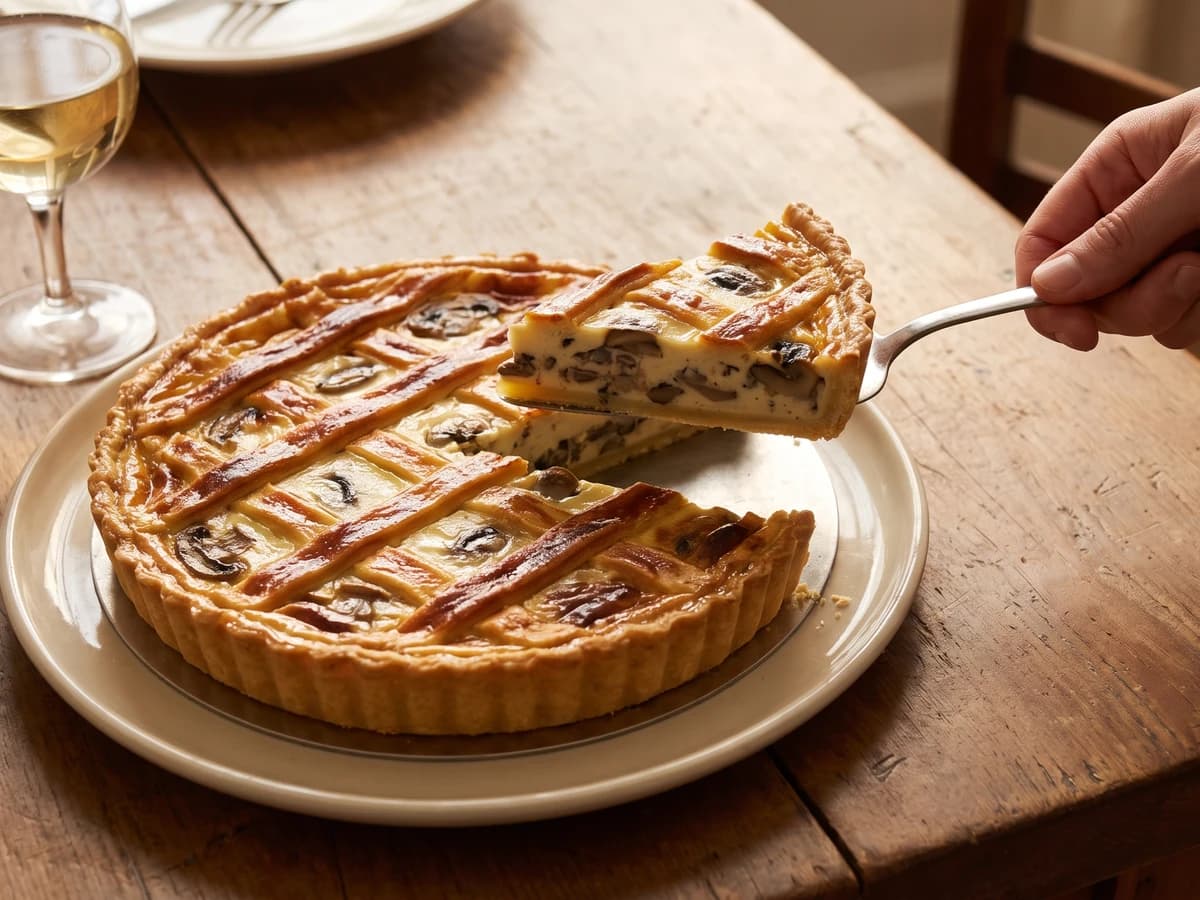
A hot mushroom flan under a butter-gold lattice, with cream reduced close around barely opened caps and a crisp short-paste base protected by one discipline: cool the filling completely.

Chef Juliette
Four little mushroom flans, latticed and gilded, baked hard and fast until butter-gold: a classical garnish scaled to the meat it accompanies and served before its crispness has time to fade.
Chef Juliette
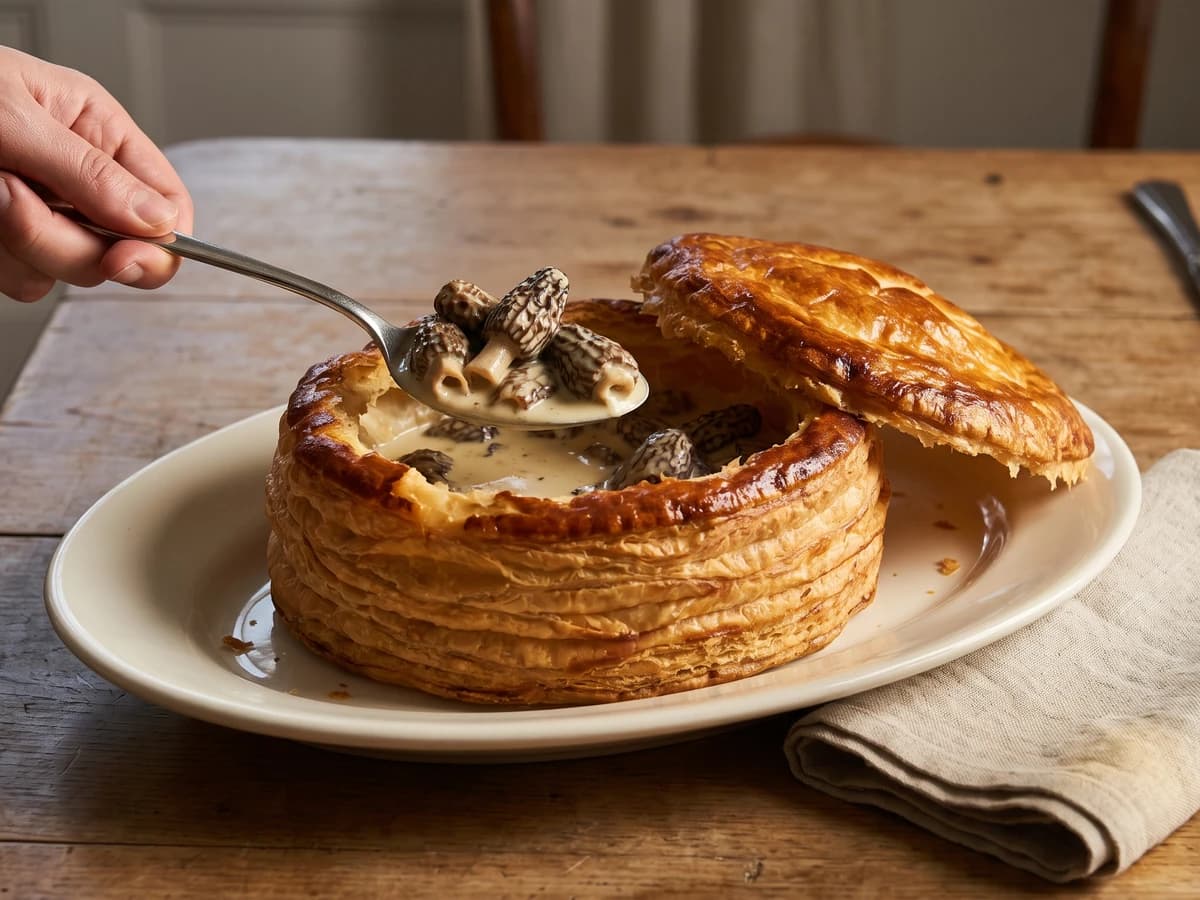
Morels surrender their liquor, then take it back as a glossy cream-and-butter sauce inside burnished puff pastry. The lesson is simple and absolute: reduce with patience, then heat gently and never boil.