Chef Juliette
Apricots (Abricots)
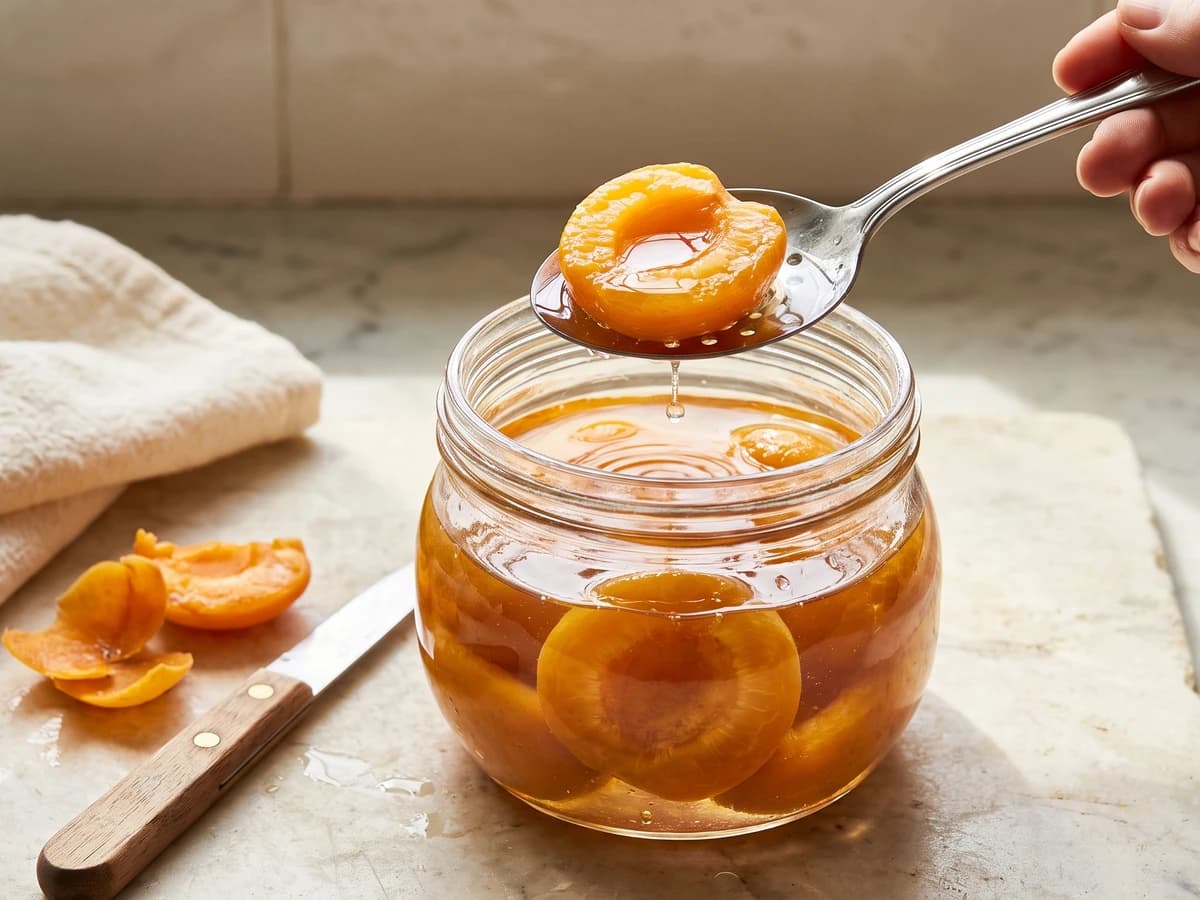
Apricots peeled clean and poached just to tenderness, their golden halves held in clear syrup for tarts and cold sweets: a small lesson in texture, restraint, and knowing when fruit is ready.
A cooking platform built around craft, culture, and the stories behind what we eat.
Created by Chef Juliette
Based on No. 2601, Rabotte de Pommes ou Douillon Norman, from Le Guide Culinaire (1907) by Auguste Escoffier
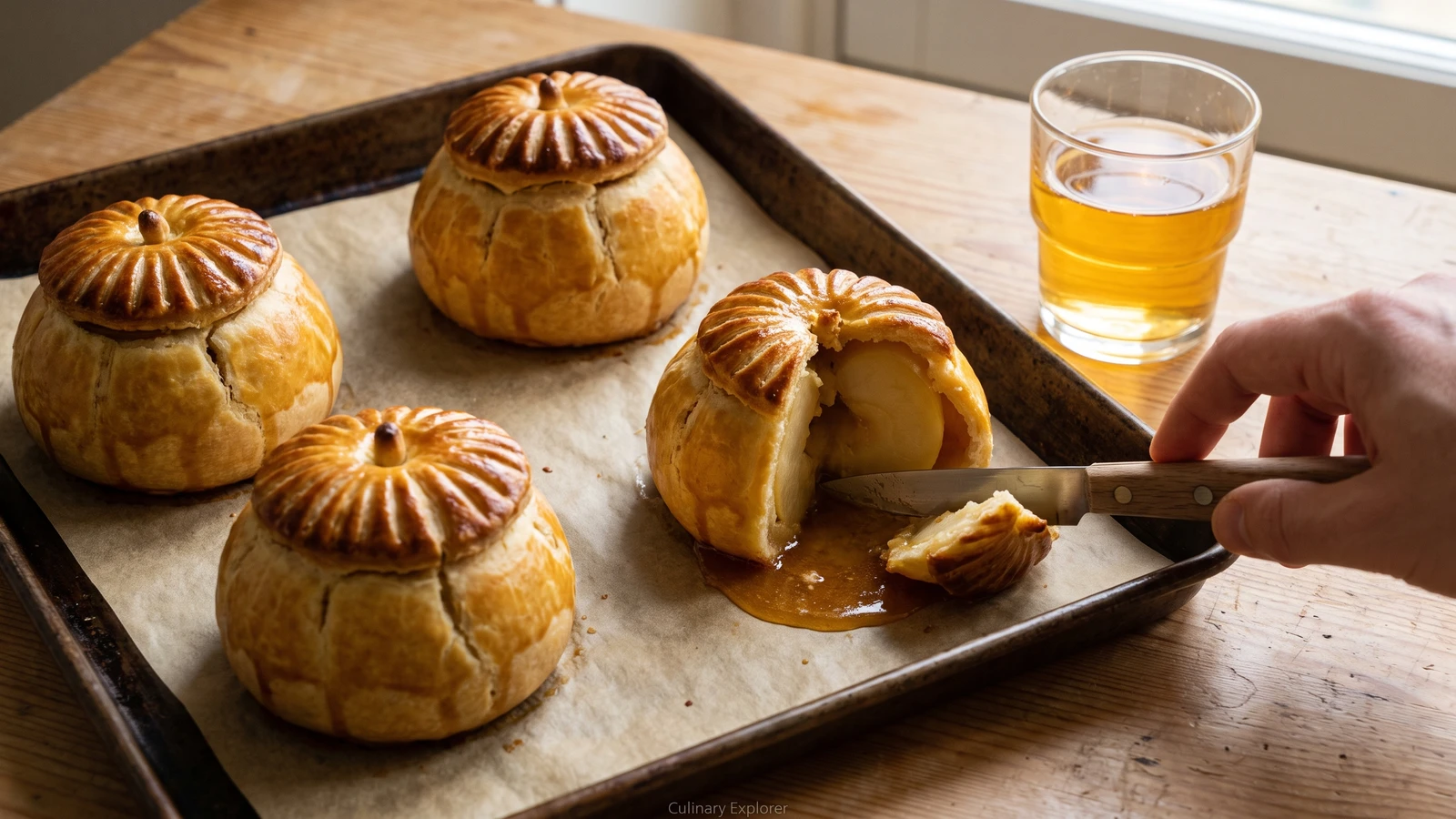
A whole buttered apple, wrapped in fine short paste and gilded deep gold: the Norman parcel that teaches one uncompromising lesson, seal the pastry completely or lose its syrup to the oven.
Rabotte de pommes, ou douillon normand (a whole buttered apple enclosed in fine short paste), teaches the discipline of containment. Before you touch a pan, know the one true thing: the seal is the dish. Butter and sugar melt inside the apple into a private little syrup; leave one weak seam and that syrup finds the baking sheet before you find your plate.
The book assumes a pastry larder, trays of evenly small apples, and a fiercely hot oven with plenty of stored heat. For one cook, one stove, one evening, we make enough pâte fine à foncer (fine short paste) for four apples and thoroughly heat a heavy baking sheet before they go in. The pastry larder and brigade-sized batch are scaffolding, so they go. The buttered apple, thin paste, complete seal, fluted lid, gilding, streaking, and hot fifteen-minute bake are the dish, so every one stays.
The finished rabotte should be deeply golden and crisp at its ridges, with a tender apple and amber butter-sugar syrup waiting inside. Roll the paste thin, keep it cool, and press every join until the wrapper becomes one continuous skin. That seal is the step that matters most.
Whole fruit baked in pastry belongs to Normandy’s apple country, where household cooks used short paste to turn stored apples, butter, and sugar into a self-contained pudding. Rabotte is the neighboring Picard name, while Norman tables also say bourdelot; some households reserve douillon for pear, but the classical canon uses the name for apple as this entry does. The parcel traveled easily from farm oven to pâtisserie because its thrift and its presentation are the same thing: one fruit, wrapped and served whole.
Quantity
1¾ cups (415 ml / 225 g)
Quantity
½ cup (120 ml / 113 g)
cut into small cubes
Quantity
1 tablespoon (15 ml / 12 g)
Quantity
½ teaspoon (2.5 ml / 3 g)
Quantity
1
cold
Quantity
1 to 2 tablespoons (15 to 30 ml / 15 to 30 g)
Quantity
Up to 2 tablespoons (30 ml / 16 g)
Quantity
4, about 4 to 4½ ounces each (450 to 500 g total)
Quantity
2 tablespoons (30 ml / 28 g)
softened
Quantity
¼ cup (60 ml / 50 g)
Quantity
2 teaspoons (10 ml / 10 g)
Quantity
1
beaten
| Ingredient | Quantity |
|---|---|
| all-purpose flour | 1¾ cups (415 ml / 225 g) |
| cold unsalted buttercut into small cubes | ½ cup (120 ml / 113 g) |
| granulated sugar for the paste | 1 tablespoon (15 ml / 12 g) |
| fine sea salt | ½ teaspoon (2.5 ml / 3 g) |
| large egg for the pastecold | 1 |
| ice water | 1 to 2 tablespoons (15 to 30 ml / 15 to 30 g) |
| all-purpose flour for rolling | Up to 2 tablespoons (30 ml / 16 g) |
| small firm baking apples | 4, about 4 to 4½ ounces each (450 to 500 g total) |
| unsalted butter for the applessoftened | 2 tablespoons (30 ml / 28 g) |
| granulated sugar for the apples | ¼ cup (60 ml / 50 g) |
| cold water for sealing | 2 teaspoons (10 ml / 10 g) |
| large egg for gildingbeaten | 1 |
Combine the 1¾ cups flour, pastry sugar, and salt in a wide bowl. Add the cold cubed butter and make a sablage, rubbing the butter into the flour with your fingertips until the mixture resembles coarse sand with a few lentil-sized flakes remaining. Beat the cold egg, work it through the crumbs, then add 1 tablespoon of ice water. Squeeze a handful: if it holds, stop; if it falls apart, add the remaining water a teaspoon at a time. Bring the dough together without kneading, flatten it into a disc, wrap, and chill for 30 minutes. If it feels sticky, don’t bury it in flour. Chill it until firm and it will roll properly.
Set a heavy rimmed baking sheet on the middle rack and heat the oven to 450°F (230°C), or 410°F (210°C) with convection, for at least 30 minutes. Cut a sheet of baking parchment large enough to hold all four rabottes and place it on a flat board or an inverted cool baking sheet so the pastries can be slid onto the hot metal together.
Mash the softened butter and ¼ cup sugar into a rough paste. Peel the apples, then core each from the stem end without piercing through the blossom end; the intact base helps contain the syrup. This is the Bonne-femme preparation called for by the entry: a whole apple, hollowed, buttered, and sugared. Pack one-quarter of the butter-sugar mixture into each cavity, keeping the filling just below the rim, then pat the apples dry.
Reserve about one-sixth of the chilled dough for the lids and divide the rest into four equal pieces. On a lightly floured surface, roll each piece into a round about 7 inches (18 cm) across and ⅛ inch (3 mm) thick. Set a filled apple upright in the center, brush the outer edge of the paste lightly with cold water, and lift opposite sides around the fruit. Join them without stretching, bring up the remaining sides, and pinch every seam into a continuous seal. Trim away any heavy knot at the crown. If the paste cracks or turns translucent over the apple, stop and patch it with a thin, water-moistened scrap, feathering the edges firmly into the wrapper. Ça se rattrape. A patch now is invisible after gilding; a hole in the oven becomes burnt syrup.
Roll the reserved paste ⅛ inch (3 mm) thick and cut four fluted roundels about 2¼ inches (5 to 6 cm) across. Moisten the sealed crown of each rabotte and press a roundel over it as a lid. Gild the pastries, meaning brush every visible surface lightly and evenly with beaten egg. Use the back of a small knife to streak shallow curved lines over the paste without cutting through it. If the dough has softened enough to take fingerprints, chill the assembled rabottes for 10 minutes before baking.
Arrange the rabottes on the prepared parchment, leaving space between them, then slide the paper onto the thoroughly heated baking sheet. Bake for 15 minutes, until the paste is deep butter-gold with bronze ridges and the bases feel firm. A thin skewer slipped through the crown should enter the apple with gentle resistance; the fruit should be tender but still hold its shape. If your oven has lost heat and the paste remains pale, give it 2 to 3 minutes more. If the top bronzes too quickly, lay a small loose piece of foil over it while the base finishes.
Move the rabottes from the hot sheet before any stray sugar hardens around their bases, then rest them for 10 minutes. Serve warm and whole, letting each person break through the gilded lid to reach the apple and its butter-sugar syrup. Never apologize at your own table. À table!
1 serving (about 220g)
Culinary guides, cultural storytelling, and the editorial depth that makes cooking meaningful.
Discover Culinary ExplorerChef Juliette
Apricots peeled clean and poached just to tenderness, their golden halves held in clear syrup for tarts and cold sweets: a small lesson in texture, restraint, and knowing when fruit is ready.
Chef Juliette
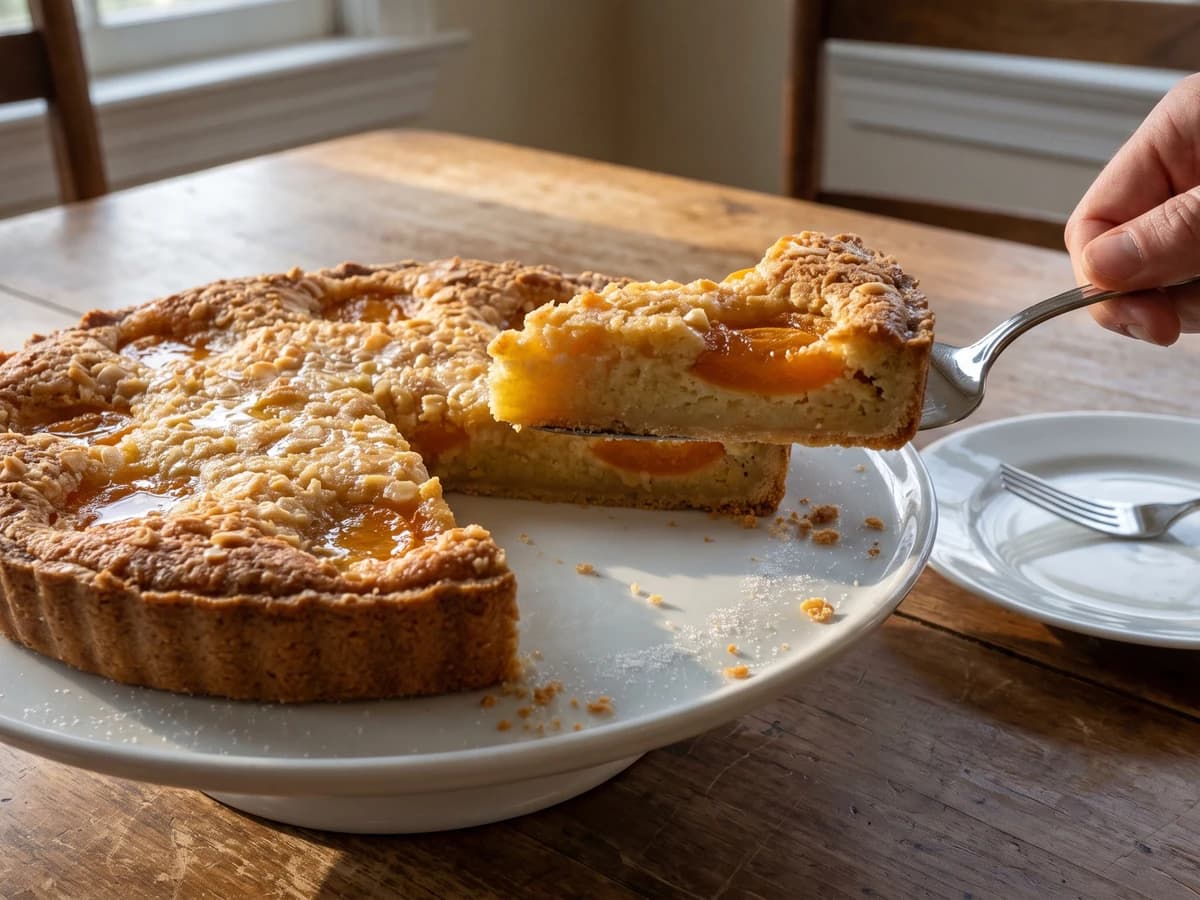
Abricots à la Bourdaloue teaches the discipline of colour: an ivory flawn crust, macaroon-rich frangipane, and vanilla-poached fruit, finished with one fierce flash of buttered gratin.
Chef Juliette
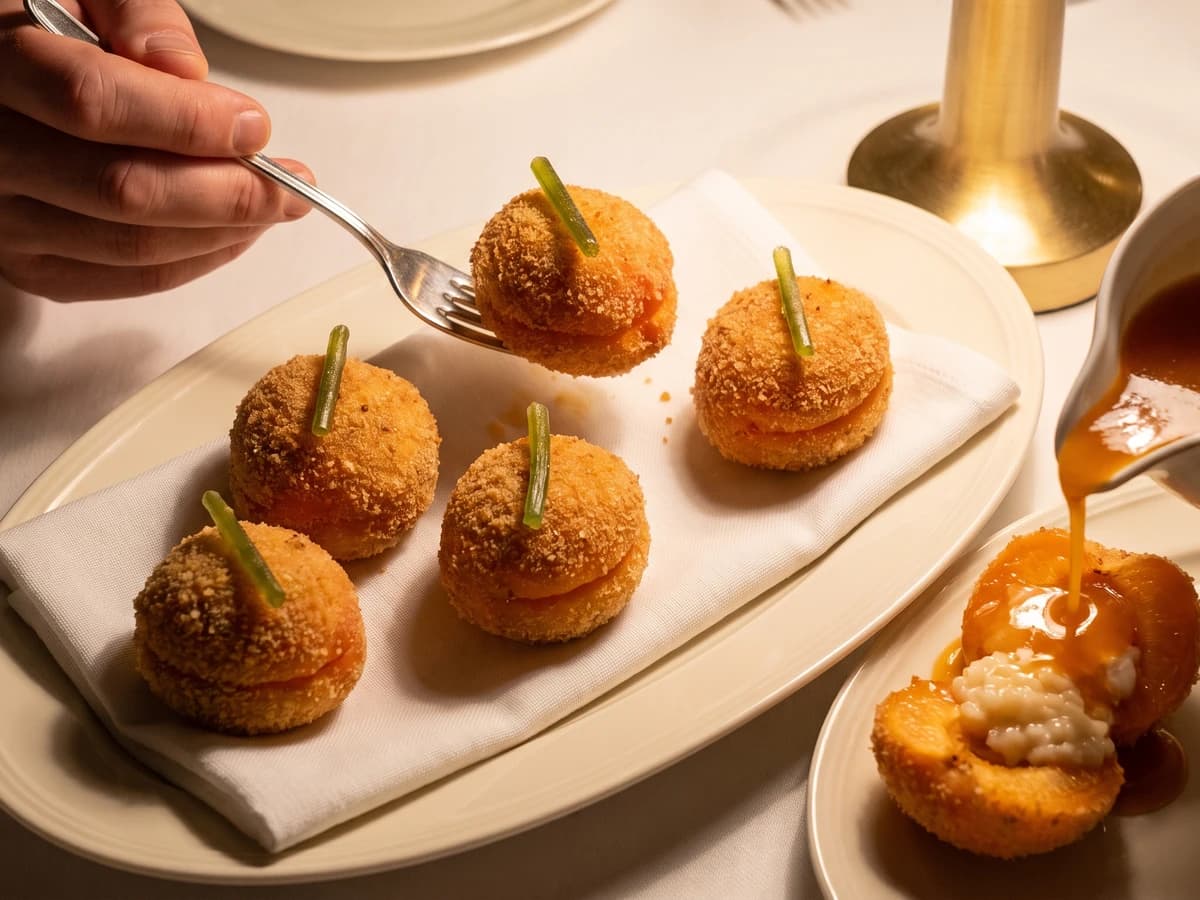
Firm-poached apricots, sweet entremets rice, and a fine panure à l’anglaise meet the fryer for one golden minute, then arrive crisp with warm Kirsch apricot sauce alongside.
Chef Juliette
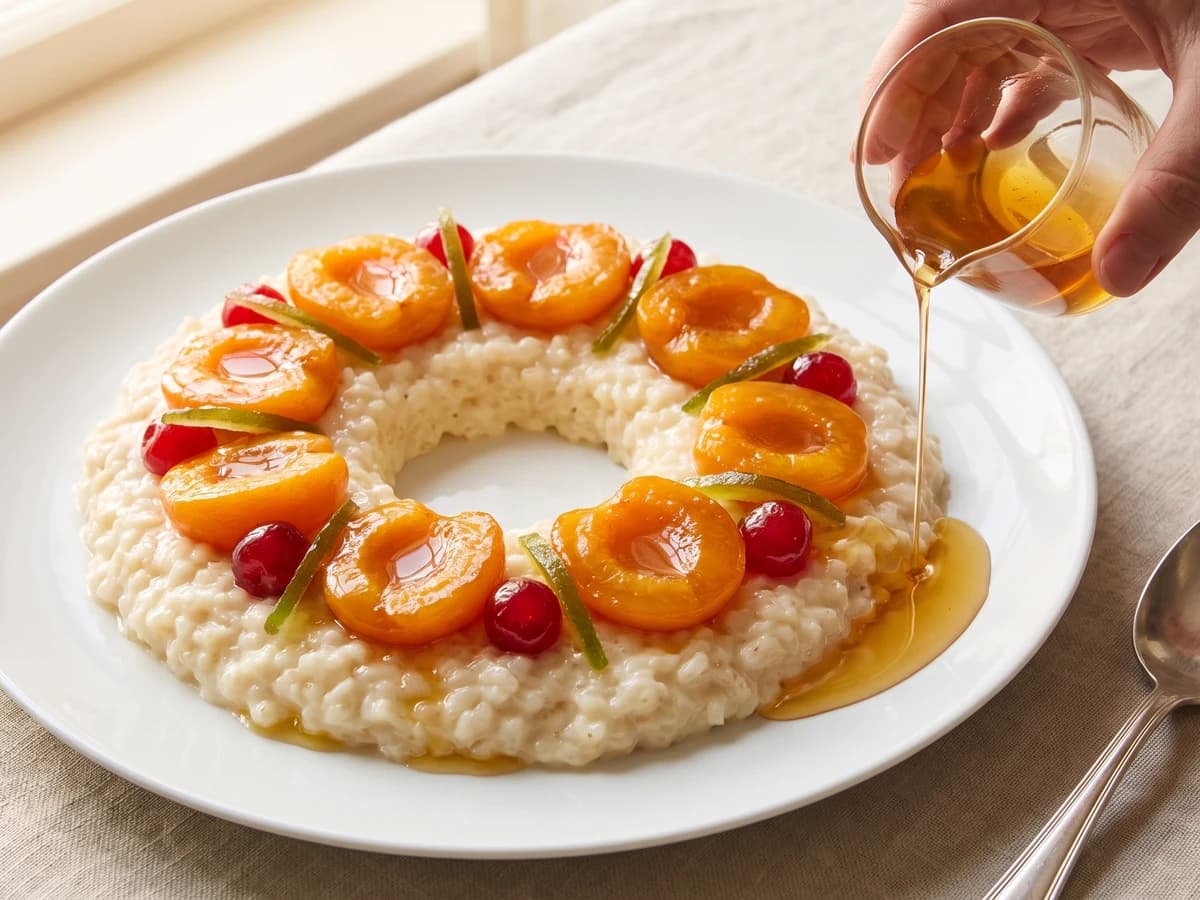
Apricots à la Condé sets tender poached fruit on a border of distinct vanilla rice grains, then coats the whole with glossy kirsch-scented apricot syrup and bright candied fruit.