
Chef Juliette
Various Almond Preparations
Five almond preparations, one discipline: remove the skins cleanly, dry every kernel through, then cut, toast, or cloak it in pale caramel without letting its fragrant oils escape.
A cooking platform built around craft, culture, and the stories behind what we eat.
Created by Chef Juliette
Based on No. 2589, Apples with Butter, from Le Guide Culinaire (1907) by Auguste Escoffier
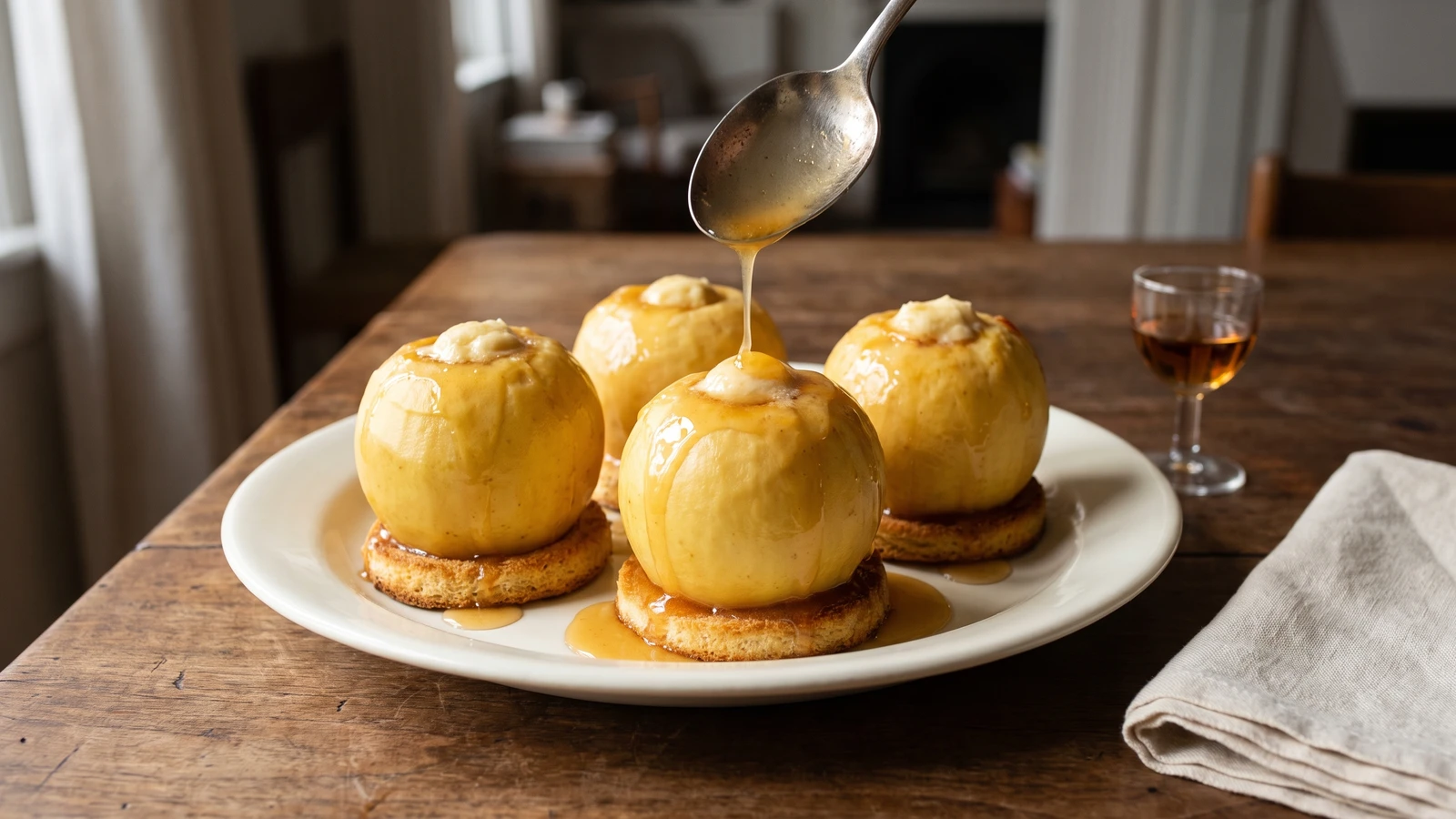
Whole russet apples, held intact by a two-minute parboil, then baked in vanilla syrup and settled on glazed brioche croûtons, their hollows melting with brandy butter beneath an apricot-bright glaze.
Pommes au beurre (apples with butter) teaches the quietest discipline in fruit cookery: make the apple tender without surrendering its shape. The two minutes in lemon water are not a head start you can stretch. They begin the cooking evenly, protect the color, and leave the oven to finish the center. Two means two.
The brigade kitchen assumed a tube-cutter, vanilla syrup ready at hand, apricot purée already passed through a sieve, and enough oven space to glaze trays of brioche croûtons. You have an apple corer, one ovenproof sauté pan, a small sieve, and four slices of brioche. The ready pots and large batches were scaffolding and can go. The two-minute parboil, covered baking, butter-fried croûton, equal-weight brandy butter, and apple syrup tightened with apricot are the dish, so each stays. One cook, one stove, one evening.
Done properly, the apples arrive upright and glossy, the croûtons crisp at their rims and soaked at their centers, with brandy butter melting through the hollow. Watch the fruit after its parboil and lift each apple when a skewer meets only slight resistance. That judgment, more than the clock, is the step that matters most.
Pommes au beurre has no honest single-region claim; it belongs to the French classical entremets table, where orchard fruit was cooked whole and dressed with syrup, brioche, and butter rather than buried beneath pastry. Calville and russet apples point to the keeping-fruit culture of northern French orchards, Normandy among them, while the apricot-bound glaze and precisely cut croûton record the dish's passage from household baked fruit into the grand-kitchen repertory. Despite being shelved among crisps and cobblers, it is neither: the apple remains whole, and the croûton, brandy butter, and its own syrup form the dessert around it.
Quantity
4 medium (about 24 oz / 680 g total)
cored and peeled
Quantity
8 cups (1.9 L / 1.9 kg)
Quantity
2 tablespoons (30 ml / 30 g)
Quantity
1/4 cup (60 ml / 50 g)
for the vanilla syrup
Quantity
1/4 cup (60 ml / 60 g)
Quantity
1 teaspoon (5 ml / 5 g)
Quantity
1 tablespoon (15 ml / 14 g)
softened
Quantity
4 slices, each 1/2 inch (1.25 cm) thick (about 5 oz / 140 g total)
cut into rounds slightly wider than the apples
Quantity
2 tablespoons (30 ml / 28 g)
Quantity
2 tablespoons (30 ml / 15 g)
Quantity
3 tablespoons (45 ml / 42 g)
softened
Quantity
1/3 cup (80 ml / 42 g)
Quantity
2 teaspoons (10 ml / 9 g)
Quantity
2 tablespoons (30 ml / 30 g)
sieved if necessary
| Ingredient | Quantity |
|---|---|
| Gray Calville, russet, or firm Reinette applescored and peeled | 4 medium (about 24 oz / 680 g total) |
| water for parboiling | 8 cups (1.9 L / 1.9 kg) |
| fresh lemon juice | 2 tablespoons (30 ml / 30 g) |
| granulated sugarfor the vanilla syrup | 1/4 cup (60 ml / 50 g) |
| water for the vanilla syrup | 1/4 cup (60 ml / 60 g) |
| pure vanilla extract | 1 teaspoon (5 ml / 5 g) |
| unsalted butter for the pansoftened | 1 tablespoon (15 ml / 14 g) |
| briochecut into rounds slightly wider than the apples | 4 slices, each 1/2 inch (1.25 cm) thick (about 5 oz / 140 g total) |
| unsalted butter for the croûtons | 2 tablespoons (30 ml / 28 g) |
| powdered sugar for glazing | 2 tablespoons (30 ml / 15 g) |
| unsalted butter for the fillingsoftened | 3 tablespoons (45 ml / 42 g) |
| powdered sugar for the filling | 1/3 cup (80 ml / 42 g) |
| brandy | 2 teaspoons (10 ml / 9 g) |
| smooth apricot puréesieved if necessary | 2 tablespoons (30 ml / 30 g) |
Heat the oven to 350°F (180°C), with a rack in the middle. Combine the granulated sugar and syrup water in a 10-inch (25 cm) ovenproof sauté pan. Bring to a gentle simmer and cook only until the sugar dissolves and the liquid turns clear, about 2 minutes. Remove from the heat, stir in the vanilla, and pour the syrup into a heatproof jug. Wipe the pan and butter its base and sides. This small batch replaces the brigade's ready pot of vanilla syrup without changing what the syrup must do.
Combine the parboiling water and lemon juice in a large saucepan. While the water is still cool, core each apple straight through with an apple corer, the home equivalent of the tube-cutter, then peel it neatly and lower it into the acidulated water. Once all four are prepared, lift them out with a slotted spoon and bring the water to a full boil.
Working with two apples at a time so the boil stays lively, lower them into the boiling lemon water and cook for exactly 2 minutes from immersion. Lift them out promptly and drain them upside down for a moment. They should still feel firm. This is not the stage at which to seek tenderness; the brief parboil begins the cooking evenly, and the covered oven finishes it.
Stand the drained apples upright in the buttered sauté pan and spoon the vanilla syrup over and around them. Cover with a lid, or seal the pan closely with foil, and bake for 20 minutes. Baste with the syrup, then test every 5 minutes until a thin skewer enters with slight resistance and the apples remain upright, usually 25 to 35 minutes in all. If one softens before the others, lift it out and return it for assembly; if the syrup nearly disappears before the fruit is tender, add 1 tablespoon of hot water and cover again. Ça se rattrape.
While the apples bake, cut the brioche into four round croûtons slightly wider than the fruit. Melt the croûton butter in a skillet over medium heat and fry the rounds until deep gold on both sides, about 1 to 2 minutes per side. Transfer them to a baking sheet and dust their tops evenly with the glazing sugar. Once the apples leave the oven, raise the heat to 425°F (220°C) and bake the croûtons for 3 to 5 minutes, until the sugar melts into a thin, pale-amber glaze. If the glaze forms in patches, brush those spots with a little apple syrup and return the tray for 30 seconds.
Beat the softened filling butter with exactly the same weight of powdered sugar until smooth, pale, and creamy. Add the brandy a few drops at a time, beating until each addition disappears before the next. If the mixture turns greasy, the butter has become too warm; chill the bowl for 5 minutes, then beat again. Equal weights of butter and sugar are the ratio that gives this filling body as it melts.
Lift the apples carefully onto a warm plate and set the sauté pan over medium heat. Whisk the apricot purée into the apples' own vanilla syrup and simmer for 1 to 3 minutes, until it lightly coats the back of a spoon but still pours freely. The source asks for the syrup only slightly thickened, not cooked into jam. If it tightens too far, loosen it with a teaspoon of hot water; if it runs like water, reduce it for another minute.
Set one glazed brioche croûton on each shallow dessert plate, or arrange all four on a warm oval platter. Place an apple upright on every croûton and fill each hollow generously with the brandy butter, letting it soften into the warm fruit and brioche. Spoon the apricot-thickened syrup over the apples until their surfaces gleam and a little sauce pools at the base. Serve warm. À table!
1 serving (about 225g)
Culinary guides, cultural storytelling, and the editorial depth that makes cooking meaningful.
Discover Culinary ExplorerChef Juliette
Five almond preparations, one discipline: remove the skins cleanly, dry every kernel through, then cut, toast, or cloak it in pale caramel without letting its fragrant oils escape.

Chef Juliette
A pastry pantry lesson in one tray: filberts warmed only until their red skins release, rubbed clean, cooled, and chopped into a fragrant mise-en-place for cakes, creams, pralines, and petits fours.

Chef Juliette
The smallest pâtisserie discipline decides whether a cake leaves its mould intact: clarified butter in every corner, followed by the lightest veil of dry flour or fécule.

Chef Juliette
Four whites, one spotless bowl, and a patient change of speed: whisk gently until loosened, then briskly to glossy stiffness, with powdered sugar waiting if the foam begins to granulate.