
Chef Juliette
John Dory (St. Pierre)
John Dory has the delicacy of sole and the firmness of turbot. A light flouring, a quick butter sauté, and nut-brown beurre noisette show exactly why looks never mattered.
A cooking platform built around craft, culture, and the stories behind what we eat.
Created by Chef Juliette
Based on No. 256, The Dressing and Accompaniments of Roasts, from Le Guide Culinaire (1907) by Auguste Escoffier
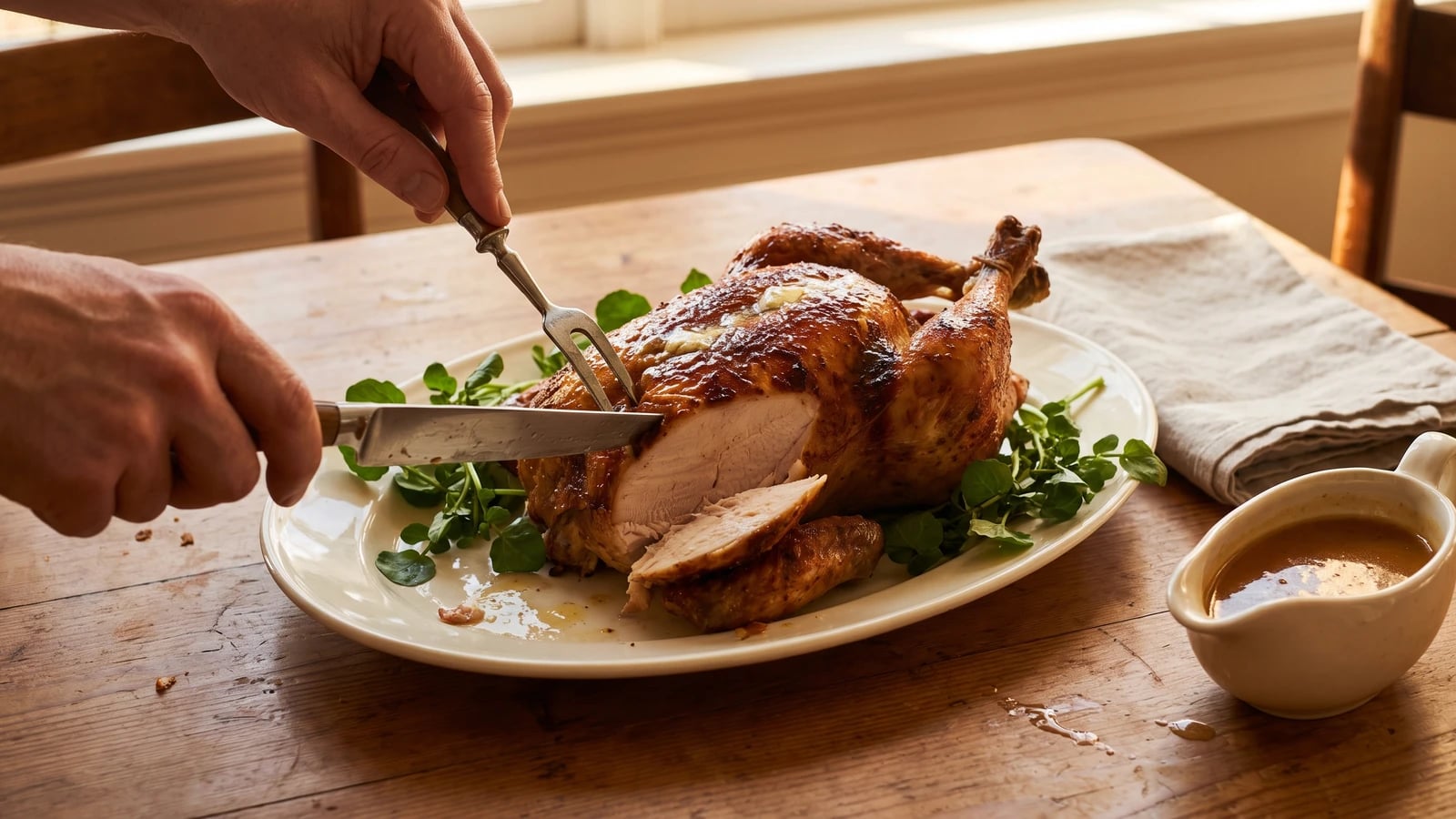
The final discipline of a French roast: hot bird, hot platter, butter's sheen, and gravy kept properly apart, with watercress for poultry and the old bread accompaniments ready when game is served.
Service des Rôtis (dressing and accompaniments for roasts) teaches one true thing: once a roast is ready, the table waits for it. The bird goes onto a thoroughly heated platter, receives a light gloss of fresh butter, and leaves the kitchen at once. Gravy belongs beside it, never pooled underneath where it would soften the browned skin.
The original service expected a saucier on staff, stock never off the fire, a hot cupboard full of platters, and a salamander ready to finish the forcemeat croûtes for game. At home, warm the platter in a low oven, keep the gravy in one small saucepan, and finish four croûtes in a skillet and ordinary oven. The brigade quantities and spare hands are scaffolding, so they go. The hot platter, separate gravy, fresh butter, and correct accompaniments are the dish, so they stay. One cook, one stove, one evening.
For an ordinary roast chicken, simplicity wins: butter, optional watercress, gravy apart, and lemon in its own little dish if wanted. Small game may sit on forcemeat-covered croûtes; game served à l'anglaise brings crisp breadcrumbs, bread sauce, and optional pommes chips. Before touching a pan, choose your service and have every accompaniment ready before the roast completes its prescribed rest.
Service des rôtis belongs to the national French classical table, shaped in the grand kitchens of Paris and carried into bourgeois dining rooms throughout France. Its deliberate simplicity replaced an older courtly habit of presenting feathered game in its plumage, while service à l'anglaise preserved the British companions of bread sauce, crisp breadcrumbs, and potatoes. The book's northern fruit preserves reflect a separate northern European custom, while its instruction to serve lemon apart prevents a grease-tainted garnish from returning to the plate.
Quantity
1 chicken, about 4 lb (1.8 kg), or 4 game birds
rested only as their roasting recipe directs
Quantity
1 tablespoon (15 ml / 14 g)
melted
Quantity
2 loosely packed cups (500 ml / 50 g)
washed and thoroughly dried
Quantity
1½ cups (360 ml / 360 g)
kept hot
Quantity
½ cup (120 ml / 120 g)
for adjusting the gravy if needed
Quantity
1
cut into fresh wedges immediately before serving
Quantity
4 thick slices (120 g)
crusts removed for small-game croûtes
Quantity
2 tablespoons (30 ml / 28 g)
Quantity
½ cup (120 ml / 115 g) Gratin Forcemeat for Ordinary Hot, Raised Pies (No. 202)
for the small-game croûtes
Quantity
4 cups (1 L / 500 g)
thin fried potato slices, kept crisp
Quantity
1 cup (240 ml / 100 g)
Quantity
1 cup (240 ml / 250 g)
kept hot
Quantity
1 cup (240 ml / 250 g) stewed apples, or ½ cup (120 ml / 160 g) jam
| Ingredient | Quantity |
|---|---|
| freshly roasted whole chicken or small roasted game birdsrested only as their roasting recipe directs | 1 chicken, about 4 lb (1.8 kg), or 4 game birds |
| fresh unsalted buttermelted | 1 tablespoon (15 ml / 14 g) |
| fresh watercress (optional)washed and thoroughly dried | 2 loosely packed cups (500 ml / 50 g) |
| pan gravy from the roastkept hot | 1½ cups (360 ml / 360 g) |
| unsalted poultry stock (optional)for adjusting the gravy if needed | ½ cup (120 ml / 120 g) |
| lemon (optional)cut into fresh wedges immediately before serving | 1 |
| firm white sandwich bread (optional)crusts removed for small-game croûtes | 4 thick slices (120 g) |
| unsalted butter for frying (optional) | 2 tablespoons (30 ml / 28 g) |
| Gratin Forcemeat for Ordinary Hot, Raised Pies (optional)for the small-game croûtes | ½ cup (120 ml / 115 g) Gratin Forcemeat for Ordinary Hot, Raised Pies (No. 202) |
| pommes chips (optional)thin fried potato slices, kept crisp | 4 cups (1 L / 500 g) |
| crisp fried breadcrumbs (optional) | 1 cup (240 ml / 100 g) |
| bread sauce (optional)kept hot | 1 cup (240 ml / 250 g) |
| slightly sugared stewed apples, or cherry or apricot jam (optional) | 1 cup (240 ml / 250 g) stewed apples, or ½ cup (120 ml / 160 g) jam |
Decide before the roast is ready. For chicken or other butcher's poultry, prepare the butter, optional watercress, gravy, and separate lemon. For small roasted game, add the forcemeat croûtes. For feathered game à l'anglaise, set out the gravy, fried breadcrumbs, bread sauce, and optional pommes chips; stewed apples or jam belong only to the northern variation. Cooking well is not cooking fancy. The correct accompaniments, prepared on time, are enough.
Put an oven-safe platter in a 200°F (95°C) oven for 10 minutes. Fill the gravy boat and any sauce bowls with very hot water, leave them for 5 minutes, then empty and dry them just before filling. A cold platter steals heat from the roast immediately. If the platter is delicate porcelain, warm it gradually in the cooling oven rather than moving it from a cold cupboard into fierce heat.
For small roasted game, melt the frying butter in a wide skillet over medium heat and fry the bread slices until crisp and deep gold on both sides. Spread each with 2 tablespoons of Gratin Forcemeat for Ordinary Hot, Raised Pies (No. 202), then bake at 375°F (190°C) until the topping is fully set and reaches 165°F (74°C), about 8 to 10 minutes. If the bread darkens too quickly, move the croûtes onto a clean baking sheet and lower the heat. Ça se rattrape. Hold them uncovered in the low oven for no more than 10 minutes so they remain crisp.
Bring the gravy to a gentle simmer and taste it. If it is thin, reduce it until it lightly coats a spoon; if it tightens too far, whisk in the poultry stock a tablespoon at a time. Ça se rattrape. For service à l'anglaise, warm the bread sauce without boiling it and keep the breadcrumbs and pommes chips uncovered and dry. Put any stewed apples or jam into a separate bowl. Cut fresh lemon wedges now and place them on their own small dish, never on the greasy platter.
Remove the hot platter carefully. Set an ordinary poultry roast directly at its center and spoon the melted fresh butter lightly over it, enough for a fine sheen rather than a coating. Arrange small, loose bunches of dry watercress around the bird if using. For small game, place one bird squarely on each hot forcemeat croûte. Add no plumage and no lemon garnish. The roast should look generous, browned, and unmistakably like food.
Pour the hot gravy into the warmed sauce boat and carry it separately to the table. Bring any bread sauce, fried breadcrumbs, pommes chips, fruit accompaniment, and lemon in their own dishes. Do not return the dressed roast to the oven, where its skin will soften and its meat continue cooking. It leaves the platter only to be carved. À table!
1 serving (about 330g)
Culinary guides, cultural storytelling, and the editorial depth that makes cooking meaningful.
Discover Culinary ExplorerChef Juliette
John Dory has the delicacy of sole and the firmness of turbot. A light flouring, a quick butter sauté, and nut-brown beurre noisette show exactly why looks never mattered.

Chef Juliette
Fresh haddock proves its delicacy in the meunière pan: a fine flour crust, moist pearly flakes, and beurre noisette sharpened with lemon and parsley, ready from one skillet in half an hour.

Chef Juliette
Éperlans à l’Anglaise turns small fish into a lesson in disciplined coating: boned smelts under a close, crisp crumb, pan-fried in clarified butter and finished with bright, half-melted maître d’hôtel butter.

Chef Juliette
Tiny smelts, shallot, mushrooms, white wine, gratin sauce, and fine bread raspings meet a fierce oven, where the fish must turn tender in the same breath the buttered crust bronzes.