
Chef Juliette
Various Almond Preparations
Five almond preparations, one discipline: remove the skins cleanly, dry every kernel through, then cut, toast, or cloak it in pale caramel without letting its fragrant oils escape.
A cooking platform built around craft, culture, and the stories behind what we eat.
Created by Chef Juliette
Based on No. 2551, Apricots à la Condé, from Le Guide Culinaire (1907) by Auguste Escoffier
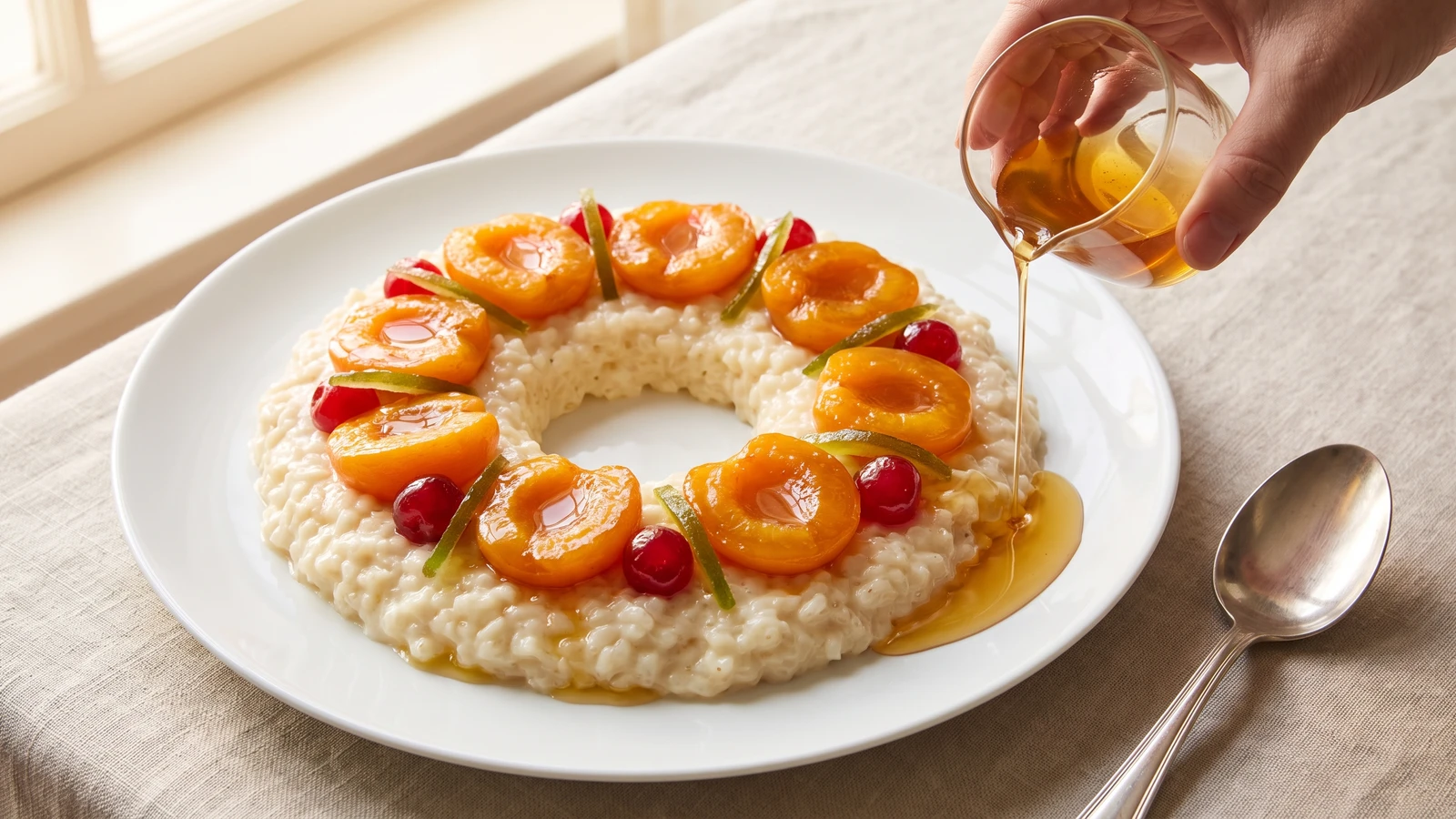
Apricots à la Condé sets tender poached fruit on a border of distinct vanilla rice grains, then coats the whole with glossy kirsch-scented apricot syrup and bright candied fruit.
Apricots à la Condé (poached apricots with vanilla sweet rice) teaches restraint: the rice must become tender enough to hold a border while every grain remains itself. Before you touch a pan, know this one thing. Stir only enough to prevent catching. A spoon worked too eagerly turns Condé into paste, and no candied cherry can distract from it.
The original entry assumes a pastry section with poached fruit, finished apricot syrup, and an even buttered border mould ready for service. At home, one poaching liquor becomes the syrup, while a small bowl and buttered spatula shape the rice directly on a round platter. The quantities here make four generous portions. The brigade's separate batches and special mould are scaffolding and can go; the whole-grain vanilla rice, poached apricots, candied fruit, and kirsch finish are the dish and must stay. One cook, one stove, one evening.
When it is right, the ivory rice holds a soft, distinct grain, the apricots sit on it like little amber domes, and the syrup gleams rather than puddles. Pay closest attention while the rice cooks. Gentle heat and an undisturbed pan decide the Condé before the fruit ever reaches the platter.
Apricots à la Condé belongs to the Parisian classical repertory of entremets, where à la Condé became menu shorthand for sweet rice paired with fruit. The name is traditionally linked to the princely house of Condé, but the useful fact for the cook is simpler: Condé means the rice is structural, not a loose pudding hidden beneath the fruit. From grand dining rooms it passed naturally into bourgeois home manuals, because the rice, poached fruit, and syrup could wait separately and be assembled before dinner.
Quantity
6 medium (about 14 oz / 400 g)
halved and pitted
Quantity
1½ cups (355 ml / 355 g)
for poaching
Quantity
1 cup (240 ml / 200 g)
divided
Quantity
1 tablespoon (15 ml / 15 g)
Quantity
½ cup (120 ml / 100 g)
Quantity
4 cups (950 ml / 950 g)
for blanching the rice
Quantity
2¼ cups (540 ml / 555 g)
divided
Quantity
1
split lengthwise
Quantity
¼ teaspoon (1.25 ml / 1.5 g)
Quantity
2 (about 36 g)
Quantity
2 tablespoons (30 ml / 28 g)
softened and divided
Quantity
1½ tablespoons (22 ml / 21 g)
Quantity
¼ cup (60 ml / 40 g)
cut into small pieces
| Ingredient | Quantity |
|---|---|
| fresh apricotshalved and pitted | 6 medium (about 14 oz / 400 g) |
| cold waterfor poaching | 1½ cups (355 ml / 355 g) |
| granulated sugardivided | 1 cup (240 ml / 200 g) |
| fresh lemon juice | 1 tablespoon (15 ml / 15 g) |
| short-grain white rice | ½ cup (120 ml / 100 g) |
| waterfor blanching the rice | 4 cups (950 ml / 950 g) |
| whole milkdivided | 2¼ cups (540 ml / 555 g) |
| vanilla beansplit lengthwise | 1 |
| fine sea salt | ¼ teaspoon (1.25 ml / 1.5 g) |
| large egg yolks | 2 (about 36 g) |
| unsalted buttersoftened and divided | 2 tablespoons (30 ml / 28 g) |
| Kirsch | 1½ tablespoons (22 ml / 21 g) |
| mixed candied fruit, preferably cherries and angelicacut into small pieces | ¼ cup (60 ml / 40 g) |
Combine the cold water, ¾ cup (150 g) of the sugar, and the lemon juice in a wide saucepan. Bring to a simmer, stirring only until the sugar dissolves. Lower in the apricot halves and cover them with a round of parchment if they float. Poach at the barest tremble for 3 to 6 minutes, removing each half as soon as a knife enters with slight resistance. The fruit should yield but keep its shape. If a few halves soften too far, lift them out at once and chill them separately. Ça se rattrape: reserve the firm halves for the border and crush the softer ones into the syrup before straining.
Return the poaching liquid to a lively simmer and reduce it to about ¾ cup (180 ml), 8 to 12 minutes. It should lightly nap the back of a spoon while remaining fluid enough to pour. Strain, especially if softened fruit was added, and let it cool until just warm before stirring in the Kirsch. Adding Kirsch off the heat preserves its cherry fragrance. If the syrup tightens into a sticky glaze, loosen it with hot water one teaspoon at a time.
Heat the oven to 325°F (165°C). Bring the blanching water to a full boil, add the rice, and cook for 2 minutes. Drain it thoroughly without rinsing. Blanching removes loose surface starch, which helps the grains remain distinct rather than collapsing into a stirred pudding.
Scrape the vanilla seeds into an ovenproof saucepan and add the pod, 2 cups (475 ml) of the milk, the remaining ¼ cup (50 g) sugar, and the salt. Bring just to a simmer, add the blanched rice, and stir once to distribute it. Cover tightly and bake for 28 to 35 minutes without stirring. The grains are ready when tender but still distinct and nearly all the milk is absorbed. If the rice is firm and dry, gently fold in up to 2 tablespoons of the reserved milk and bake for 5 minutes more. If it is tender but loose, uncover it for the final 5 minutes. Both conditions can be corrected; working it vigorously cannot.
Remove the vanilla pod. Whisk the egg yolks with whatever remains of the reserved milk, then temper them with two spoonfuls of hot rice. Fold this mixture and 1½ tablespoons (21 g) of the butter through the rice using broad, gentle turns. Cover and return the pan to the oven for 4 to 5 minutes, until the rice is glossy and the yolks have thickened around the grains without forming yellow curds. Stop folding as soon as the mixture is even. The butter and yolks bind the Condé; they are not an invitation to stir it into paste.
Use the remaining butter to grease a 10 to 11-inch (25 to 28 cm) round serving platter, the outside of a 5-inch (13 cm) bowl, and a flexible spatula. Set the bowl upside down in the centre of the platter. Spoon the warm rice around it in an even border about 2 inches (5 cm) high, then smooth the top and sides with the buttered spatula. Lift away the bowl and tidy the inner edge. Let the rice cool for 20 minutes, cover without pressing film against the grains, and chill for at least 1 hour.
Drain the chilled apricot halves well and arrange them, rounded sides up, along the rice border. Tuck the candied cherries and angelica between them without burying the fruit. Spoon enough apricot-kirsch syrup over the apricots to coat them and let a little run onto the rice, then serve the remaining syrup from a small pitcher. Chill the assembled Condé for 30 minutes, but let it stand for 15 minutes before serving so the rice is cool and tender, not hard from the cold. Slice through rice and fruit together. À table!
1 serving (about 320g)
Culinary guides, cultural storytelling, and the editorial depth that makes cooking meaningful.
Discover Culinary ExplorerChef Juliette
Five almond preparations, one discipline: remove the skins cleanly, dry every kernel through, then cut, toast, or cloak it in pale caramel without letting its fragrant oils escape.

Chef Juliette
A pastry pantry lesson in one tray: filberts warmed only until their red skins release, rubbed clean, cooled, and chopped into a fragrant mise-en-place for cakes, creams, pralines, and petits fours.

Chef Juliette
The smallest pâtisserie discipline decides whether a cake leaves its mould intact: clarified butter in every corner, followed by the lightest veil of dry flour or fécule.

Chef Juliette
Four whites, one spotless bowl, and a patient change of speed: whisk gently until loosened, then briskly to glossy stiffness, with powdered sugar waiting if the foam begins to granulate.