
Chef Juliette
Various Almond Preparations
Five almond preparations, one discipline: remove the skins cleanly, dry every kernel through, then cut, toast, or cloak it in pale caramel without letting its fragrant oils escape.
A cooking platform built around craft, culture, and the stories behind what we eat.
Created by Chef Juliette
Based on No. 2461, Croûte Victoria, from Le Guide Culinaire (1907) by Auguste Escoffier
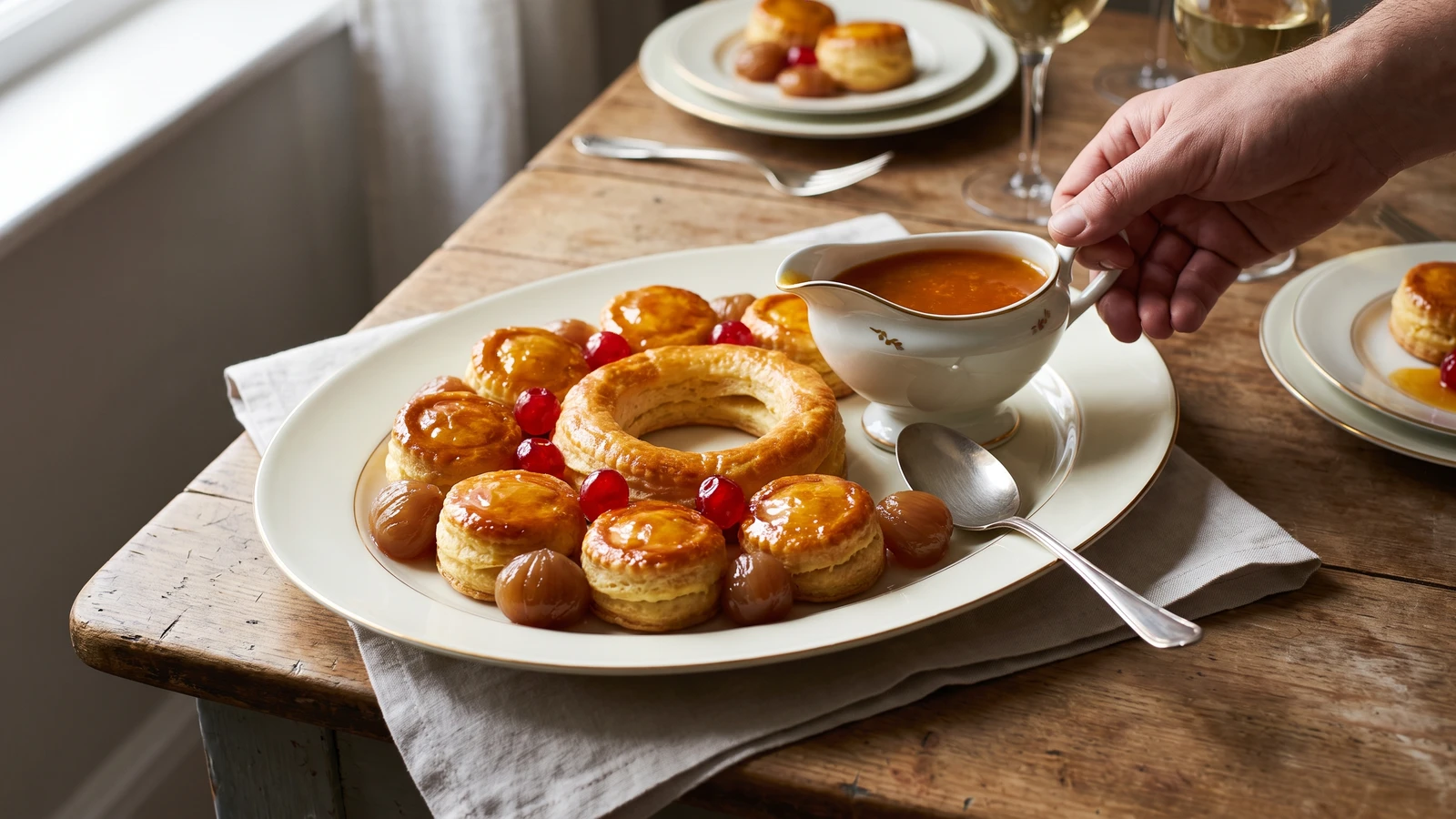
A ring of glossy Madère croûtes cradles jewel-red candied cherries and whole marrons glacés, while rum-scented apricot sauce waits alongside: a formal French dessert translated for one careful pair of hands.
Croûte Victoria (glazed bread rounds with candied cherries and chestnuts) teaches the light hand. Its centre should look abundant and polished, but the marrons glacés are fragile beneath their sugar glaze. The one true thing is simple: move the glaze around the chestnuts, never the chestnuts through the glaze.
The original formula assumed a pastry station with glazed croûtes ready, apricot sauce close at hand, and chestnuts candied over several days. At home, Croûte au Madère (No. 2456) supplies the finished foundation, good purchased marrons glacés replace the confectioner's long work, and one small saucepan handles the sauce. We scale the ring to eight croûtes for four people and leave out the Madère preparation's raisin centre because the Victoria garnish replaces it. That raisin garnish is brigade scaffolding for another variation; the ring, candied cherries, intact chestnuts, and rum-apricot sauce served apart are the dish and must stay. One cook, one stove, one evening.
When it lands correctly, the croûtes gleam amber around a mound of jewel-red cherries and lacquered chestnuts, with the sharp perfume of rum waiting in the sauceboat. Before you touch the pan, set the chestnuts in one layer and remember: tilt and spoon, but never stir.
Croûte Victoria belongs to the Parisian grand-kitchen repertoire of named entremets, where glazed bread croûtes were arranged geometrically and preserved fruits brought colour to the celebration table. Its foundation comes from the plainer French habit of transforming bread with syrup and fruit, while the Victoria treatment adds candied cherries and marrons glacés as signs of formal abundance. Croûte au Madère (No. 2456) fills its centre with Malaga raisins, currants, and sultanas; Victoria changes that centre and sends its rum-flavoured apricot sauce separately.
Quantity
1 home-scale preparation of Croûte au Madère (No. 2456), 8 glazed croûtes
complete through glazing, leaving the centre open for the Victoria garnish
Quantity
12 pieces (about 1 cup / 240 ml / 200 g)
Quantity
16 pieces (⅔ cup / 160 ml / 120 g)
Quantity
¾ cup (180 ml / 240 g)
Quantity
⅓ cup (80 ml / 80 g)
Quantity
2 tablespoons (30 ml / 28 g)
| Ingredient | Quantity |
|---|---|
| Croûte au Madère preparationcomplete through glazing, leaving the centre open for the Victoria garnish | 1 home-scale preparation of Croûte au Madère (No. 2456), 8 glazed croûtes |
| whole marrons glacés | 12 pieces (about 1 cup / 240 ml / 200 g) |
| red candied cherries | 16 pieces (⅔ cup / 160 ml / 120 g) |
| apricot preserves | ¾ cup (180 ml / 240 g) |
| water | ⅓ cup (80 ml / 80 g) |
| dark rum | 2 tablespoons (30 ml / 28 g) |
Reach for Croûte au Madère (No. 2456) as the finished foundation. Keep its eight glazed croûtes and leave their centre open: the raisin garnish belongs to the Madère preparation, while candied cherries and marrons glacés define Victoria. Arrange the croûtes in a close ring on a room-temperature serving platter, glazed faces upward, then set the platter aside while you make the sauce.
Put the apricot preserves and water in a small heavy saucepan. Bring them to a gentle simmer, stirring only until smooth, then cook for 4 to 6 minutes until the sauce falls from the spoon in a broad glossy ribbon. Pass it through a fine-mesh sieve. If it is stiff enough to sit in a lump, whisk in hot water one teaspoon at a time; if it runs like juice, return it to the pan for another minute. Ça se rattrape. Reserve 3 tablespoons for the chestnuts, then stir the rum into the remaining sauce off the heat so its perfume stays bright.
Place the marrons glacés in a wide pan in one uncrowded layer and spoon the reserved apricot glaze around them. Set the pan over the lowest heat for 30 to 60 seconds, tilting it gently while you spoon the glaze over each chestnut. Never stir them. Lift the marrons out individually with a small spoon as soon as they shine; prolonged heat softens them and makes them collapse. If one breaks, don't discard it. Tuck the pieces into the bottom of the garnish and keep the whole marrons for the crown.
Pile the candied cherries inside the ring of croûtes, reserving four of the finest for the top. Nestle any broken chestnut pieces among the cherries, then arrange the whole glazed marrons above them without pressing. Finish with the reserved cherries so the centre reads red, amber, and chestnut-gold. Keep the rum-apricot sauce apart; pouring it over now would soften the croûtes and hide the careful glaze.
Pour the rum-apricot sauce into a small warmed sauceboat and bring it beside the Croûte Victoria. Serve one or two croûtes per person with cherries and a whole marron, then offer the sauce at the table. The croûtes should still hold their edges beneath the syrup, while the centre remains soft and generous. À table!
1 serving (about 235g)
Culinary guides, cultural storytelling, and the editorial depth that makes cooking meaningful.
Discover Culinary ExplorerChef Juliette
Five almond preparations, one discipline: remove the skins cleanly, dry every kernel through, then cut, toast, or cloak it in pale caramel without letting its fragrant oils escape.

Chef Juliette
A pastry pantry lesson in one tray: filberts warmed only until their red skins release, rubbed clean, cooled, and chopped into a fragrant mise-en-place for cakes, creams, pralines, and petits fours.

Chef Juliette
The smallest pâtisserie discipline decides whether a cake leaves its mould intact: clarified butter in every corner, followed by the lightest veil of dry flour or fécule.

Chef Juliette
Four whites, one spotless bowl, and a patient change of speed: whisk gently until loosened, then briskly to glossy stiffness, with powdered sugar waiting if the foam begins to granulate.