
Chef Juliette
Flan aux Carottes
A pale short-paste shell holds silken, lightly sweet carrot purée beneath neat glazed half-discs, their butter syrup catching the light: a classical tart poised between vegetable course and sweet.
A cooking platform built around craft, culture, and the stories behind what we eat.
Created by Chef Juliette
Based on No. 2453, Various Croquettes, from Le Guide Culinaire (1907) by Auguste Escoffier
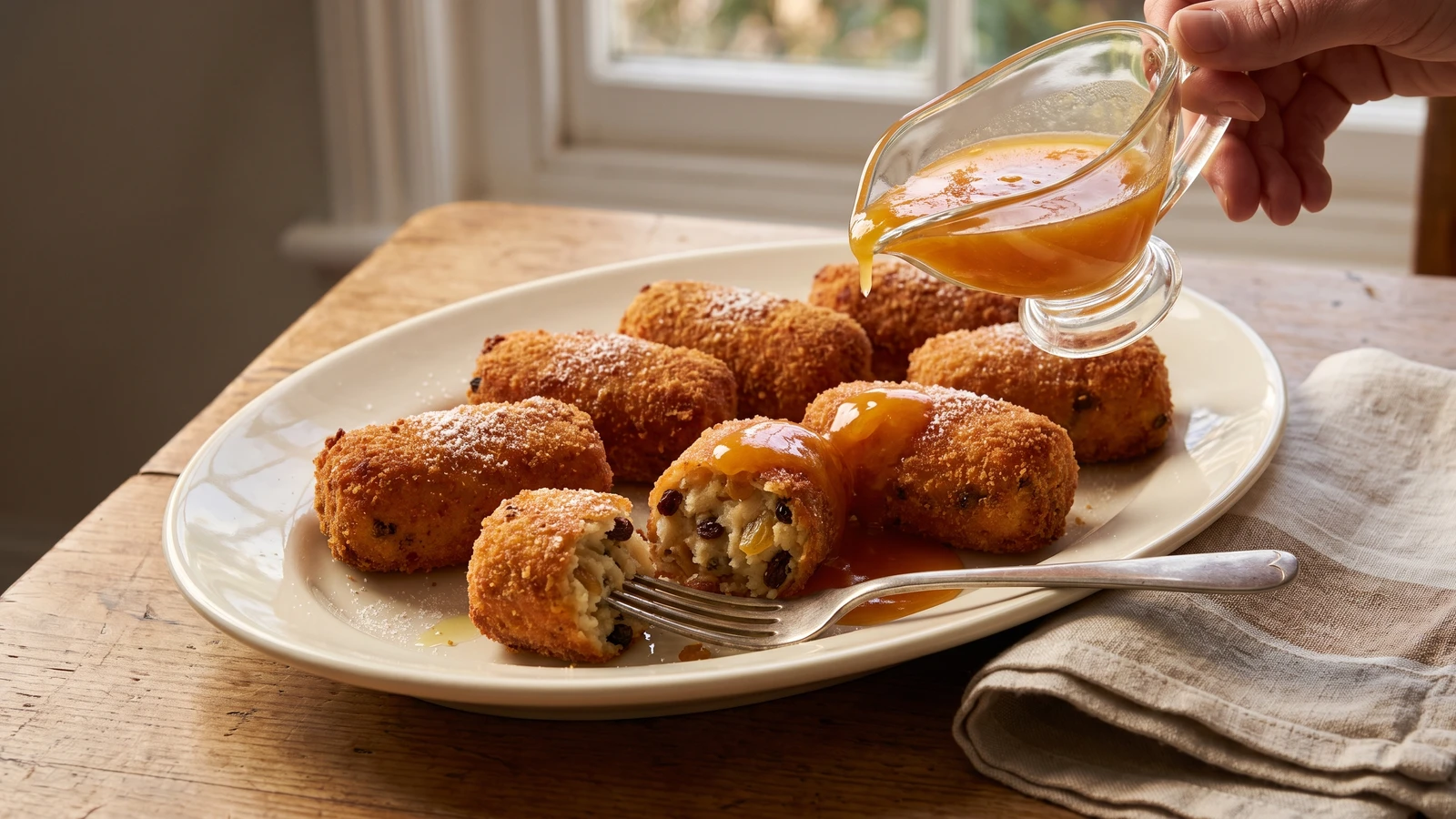
Four humble starches learn the same French grammar: a rich milk paste, currants and sultanas, a hard chill, and a crisp crumb, fried gold and carried to the table with fruit sauce.
Croquettes diverses (various sweet croquettes) teach one true thing: a croquette stands or collapses according to its paste. Tapioca, semolina, vermicelli, and fresh noodles can all carry the same idea, but the cooked base must leave the pan as a dense mass and go fully cold before shaping. Chill it hard or it holds no shape.
The original entry points back to Rice Croquettes and assumes a brigade keeping several pastes cold, a deep fryer held ready, and a saucier on staff to send whichever sauce suits the batch. At home, choose one starch for twelve croquettes, cook it in one saucepan, chill it in a shallow dish, and serve a finished apricot or raspberry sauce alongside. I have made that delegated formula explicit and scaled the service to four. Those separate stations are brigade scaffolding and can go. The dense paste, hard chill, panure (the flour, egg, and breadcrumb coating), and clean hot frying are the dish and must stay. One cook, one stove, one evening.
Currants and sultanas leave dark little pockets of fruit inside the pale center; outside, the crumb should be evenly bronze and crisp under the teeth. Before you touch the frying pot, press the cold paste between two fingers. If it smears rather than holds, it isn't ready, and that test is the step that matters most.
These sweet croquettes belong to the Parisian classical dessert repertoire and cuisine bourgeoise rather than to a single province, where cooked rice and other economical starches became neat fried sweets. Their variety is the revealing point: tapioca, semolina, vermicelli, and fresh noodles all traveled through the same milk-cooked, chilled, crumbed method, proof that the canon organized preparations by technique as much as by ingredient. A croquette is often assumed to be savory, but French tables also served the family sweet, with dried fruit inside and a suitable sauce alongside.
Quantity
1/2 cup (120 ml / 80 g) pearls and 2 cups (480 ml / 495 g) milk
Quantity
2/3 cup (160 ml / 110 g) semolina and 2 cups (480 ml / 495 g) milk
Quantity
about 2 cups (480 ml / 115 g) vermicelli and 2 cups (480 ml / 495 g) milk
broken into 1 cm lengths
Quantity
about 2 packed cups (480 ml / 225 g) noodles and 1 1/2 cups (360 ml / 370 g) milk
finely cut
Quantity
1/3 cup (80 ml / 65 g)
Quantity
1/4 teaspoon (1.25 ml / 1.5 g)
Quantity
1 teaspoon (5 ml / 5 g)
Quantity
3
Quantity
3 tablespoons (45 ml / 42 g)
divided
Quantity
1/4 cup (60 ml / 40 g)
Quantity
1/4 cup (60 ml / 40 g)
Quantity
1 cup (240 ml / 240 g)
for plumping the fruit
Quantity
1/2 cup (120 ml / 60 g)
Quantity
2
Quantity
1 tablespoon (15 ml / 15 g)
Quantity
1 1/2 cups (360 ml / 150 g)
Quantity
6 cups (1.4 litres / 1.3 kg), or enough for a 7.5 cm depth
Quantity
1/4 cup (60 ml / 50 g)
for finishing
Quantity
1 cup (240 ml / 250 g)
gently warmed for serving
| Ingredient | Quantity |
|---|---|
| quick-cooking small tapioca pearls and whole milk, tapioca option (optional) | 1/2 cup (120 ml / 80 g) pearls and 2 cups (480 ml / 495 g) milk |
| fine semolina and whole milk, semolina option (optional) | 2/3 cup (160 ml / 110 g) semolina and 2 cups (480 ml / 495 g) milk |
| fine wheat vermicelli and whole milk, vermicelli option (optional)broken into 1 cm lengths | about 2 cups (480 ml / 115 g) vermicelli and 2 cups (480 ml / 495 g) milk |
| fresh egg noodles and whole milk, fresh noodle option (optional)finely cut | about 2 packed cups (480 ml / 225 g) noodles and 1 1/2 cups (360 ml / 370 g) milk |
| granulated sugar | 1/3 cup (80 ml / 65 g) |
| fine salt | 1/4 teaspoon (1.25 ml / 1.5 g) |
| pure vanilla extract | 1 teaspoon (5 ml / 5 g) |
| large egg yolks | 3 |
| unsalted butterdivided | 3 tablespoons (45 ml / 42 g) |
| dried currants | 1/4 cup (60 ml / 40 g) |
| sultanas | 1/4 cup (60 ml / 40 g) |
| boiling waterfor plumping the fruit | 1 cup (240 ml / 240 g) |
| plain flour | 1/2 cup (120 ml / 60 g) |
| large eggs | 2 |
| water | 1 tablespoon (15 ml / 15 g) |
| fine dry breadcrumbs | 1 1/2 cups (360 ml / 150 g) |
| neutral frying oil | 6 cups (1.4 litres / 1.3 kg), or enough for a 7.5 cm depth |
| caster sugarfor finishing | 1/4 cup (60 ml / 50 g) |
| smooth apricot or raspberry fruit saucegently warmed for serving | 1 cup (240 ml / 250 g) |
Cover the currants and sultanas with the boiling water and leave them for 10 minutes. Drain thoroughly, spread them on a clean towel, and pat them dry. The fruit should be plump but not wet; water carried into the paste loosens the very structure you need for shaping.
Choose one starch and use only the milk paired with it. Hold back about 1/4 cup of that milk, then warm the remainder with the granulated sugar, salt, and vanilla in a heavy saucepan. For tapioca, stir in the pearls and simmer gently for 18 to 22 minutes, until nearly translucent. For semolina, rain it into the milk while whisking, then stir for 7 to 9 minutes. For vermicelli, add the broken strands and cook for 10 to 12 minutes. For fresh noodles, add the finely cut noodles and cook for 6 to 8 minutes. Whichever base you choose, finish with a wooden spoon and keep cooking until the paste gathers heavily around it and a furrow drawn across the pan stays open. If the starch is still firm when the mixture becomes too tight, add the reserved milk one spoonful at a time. If the paste flows when the pan is tipped, keep stirring over low heat. Ça se rattrape.
Take the pan from the heat. Beat the yolks with a spoonful of the hot paste, then stir this mixture back into the pan. Return it to the lowest heat for 60 to 90 seconds, stirring constantly, until the paste is dense and the yolks no longer smell raw. Remove from the heat and beat in 2 tablespoons of the butter, then fold through the dried currants and sultanas without crushing them. Grease a shallow dish with the remaining butter, spread the paste about 2 cm thick, and press parchment directly against its surface. Cool for 15 minutes, then chill for at least 2 hours, until cold and rigid.
Press the cold paste between two fingers. It must hold a clean ridge rather than smear. If it is merely soft, chill it for another 30 minutes; if it still flows after that, return it to the saucepan and stir over the lowest heat until it draws cleanly from the pan, then spread and chill it again. Divide the firm paste into 12 equal portions and shape each into a short cylinder or compact oval. Set them on a parchment-lined tray and chill for 20 minutes.
Arrange the flour in one shallow dish. Beat the whole eggs with the tablespoon of water in a second, and place the breadcrumbs in a third. Roll each croquette lightly in flour, dip it completely in egg, then press it into the crumbs so every surface is sealed. Shake off excess at each stage. A bald patch becomes a weak patch in the frying pot, so cover it with egg and crumbs before proceeding.
Pour the oil into a heavy pot, leaving the vessel no more than half full, and heat it to 175°C. Fry three or four croquettes at a time for 2 to 3 minutes, turning once, until evenly deep gold. Let the oil return to temperature between batches. If one splits, lift it out promptly, bring the oil back to 175°C, and chill the remaining croquettes for another 15 minutes; cool oil and warm paste are the usual culprits, and the rest of the batch is entirely recoverable.
Lift the croquettes onto a wire rack and leave them for 1 minute, just long enough for excess oil to fall away. Dust them with caster sugar while their crusts still carry a slight sheen. Bring them to the table at once with the warm apricot or raspberry sauce in a small sauceboat, allowing each person to spoon on as much as wanted without drowning the crisp panure. À table!
1 serving (about 345g)
Culinary guides, cultural storytelling, and the editorial depth that makes cooking meaningful.
Discover Culinary ExplorerChef Juliette
A pale short-paste shell holds silken, lightly sweet carrot purée beneath neat glazed half-discs, their butter syrup catching the light: a classical tart poised between vegetable course and sweet.
Chef Juliette
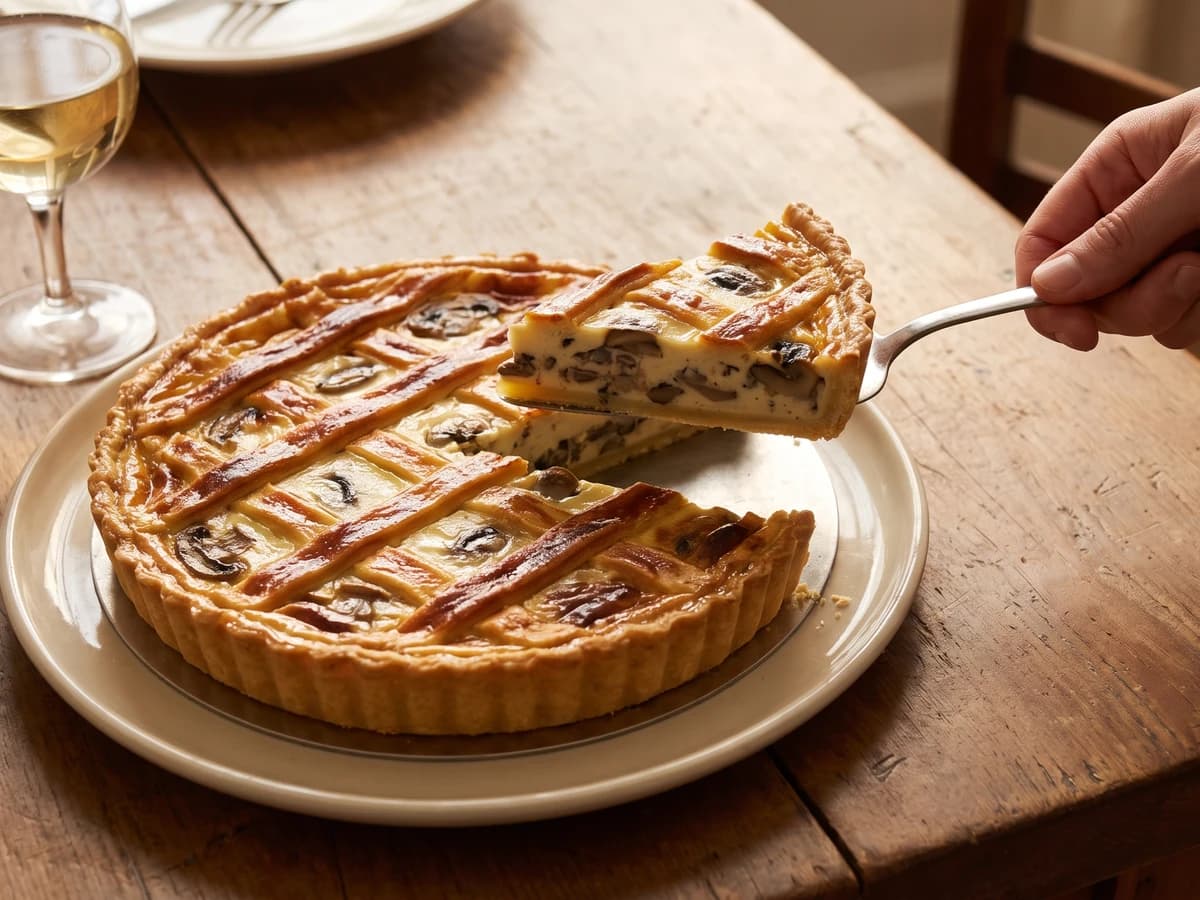
A hot mushroom flan under a butter-gold lattice, with cream reduced close around barely opened caps and a crisp short-paste base protected by one discipline: cool the filling completely.

Chef Juliette
Four little mushroom flans, latticed and gilded, baked hard and fast until butter-gold: a classical garnish scaled to the meat it accompanies and served before its crispness has time to fade.
Chef Juliette
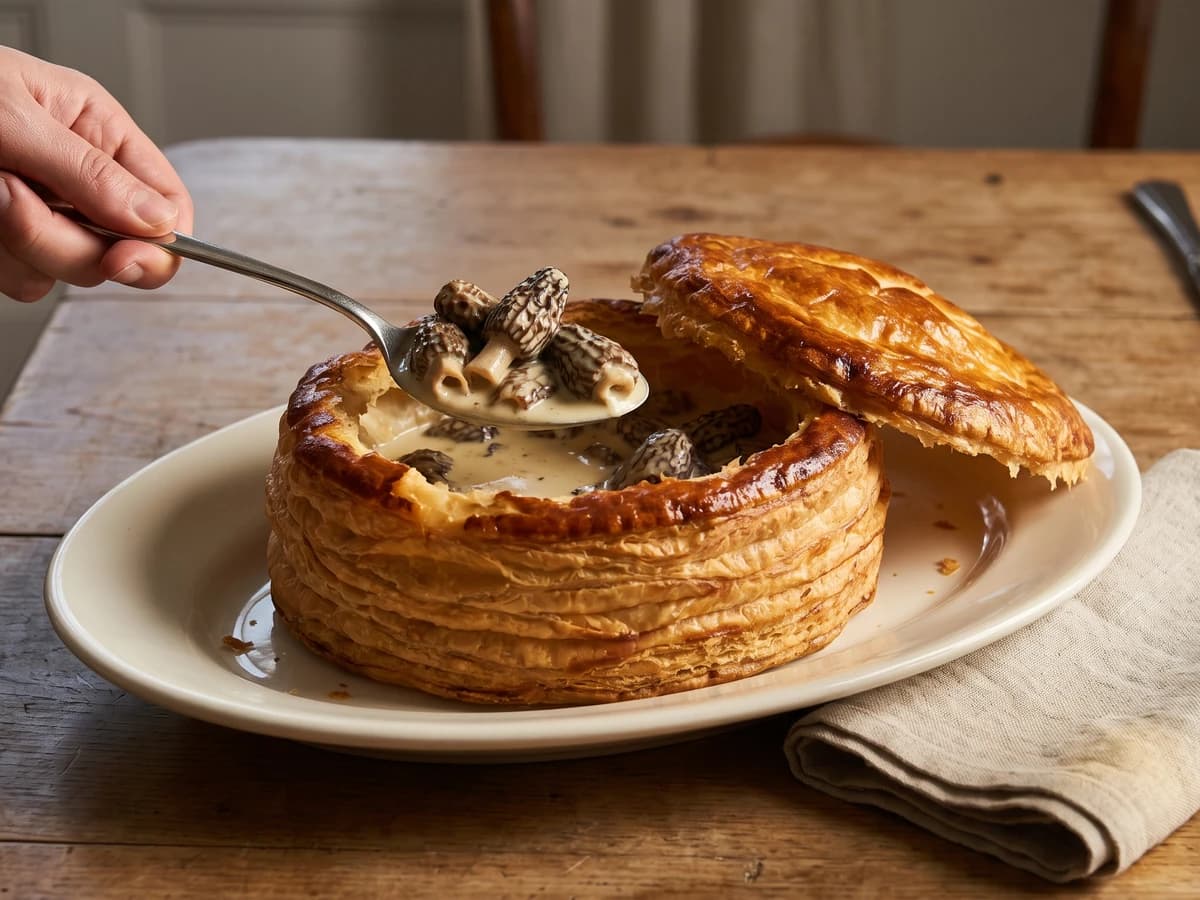
Morels surrender their liquor, then take it back as a glossy cream-and-butter sauce inside burnished puff pastry. The lesson is simple and absolute: reduce with patience, then heat gently and never boil.