Chef Juliette
Omelette à l’Écossaise
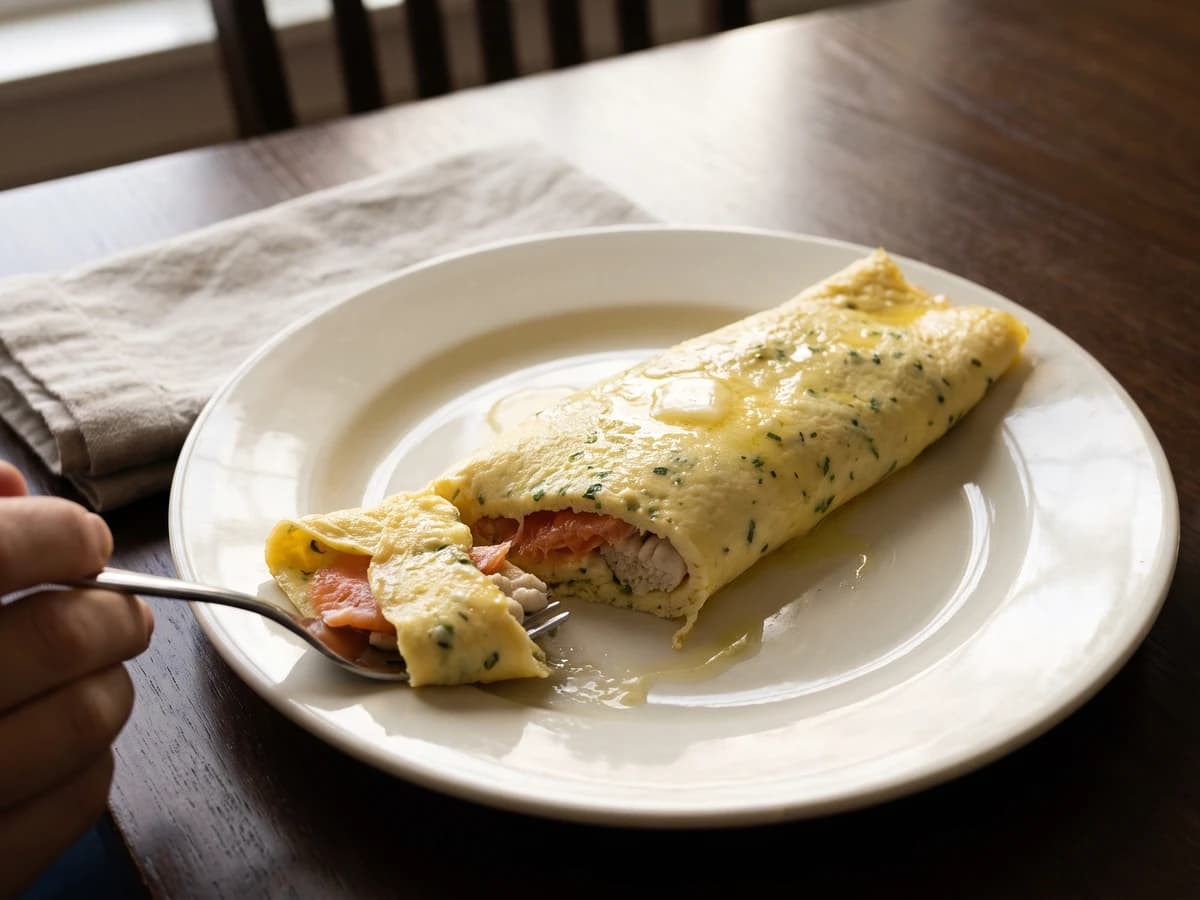
A creamy omelette aux fines herbes closes around smoked-salmon-wrapped herring milts, gently poached in butter. Have the filling ready, then roll the eggs while they still shine.
A cooking platform built around craft, culture, and the stories behind what we eat.
Created by Chef Juliette
Based on No. 2450, Suzette Pancakes, from Le Guide Culinaire (1907) by Auguste Escoffier
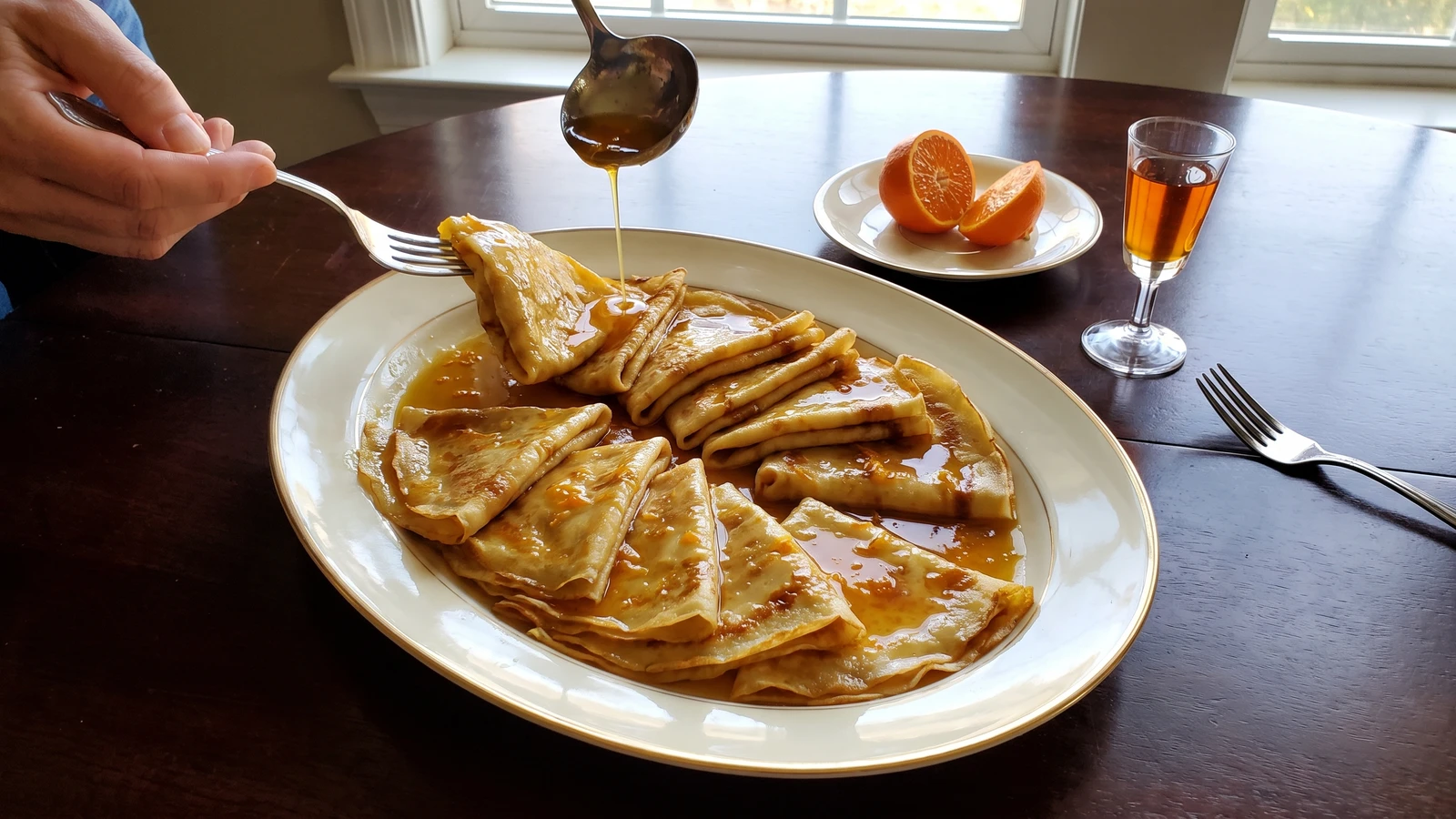
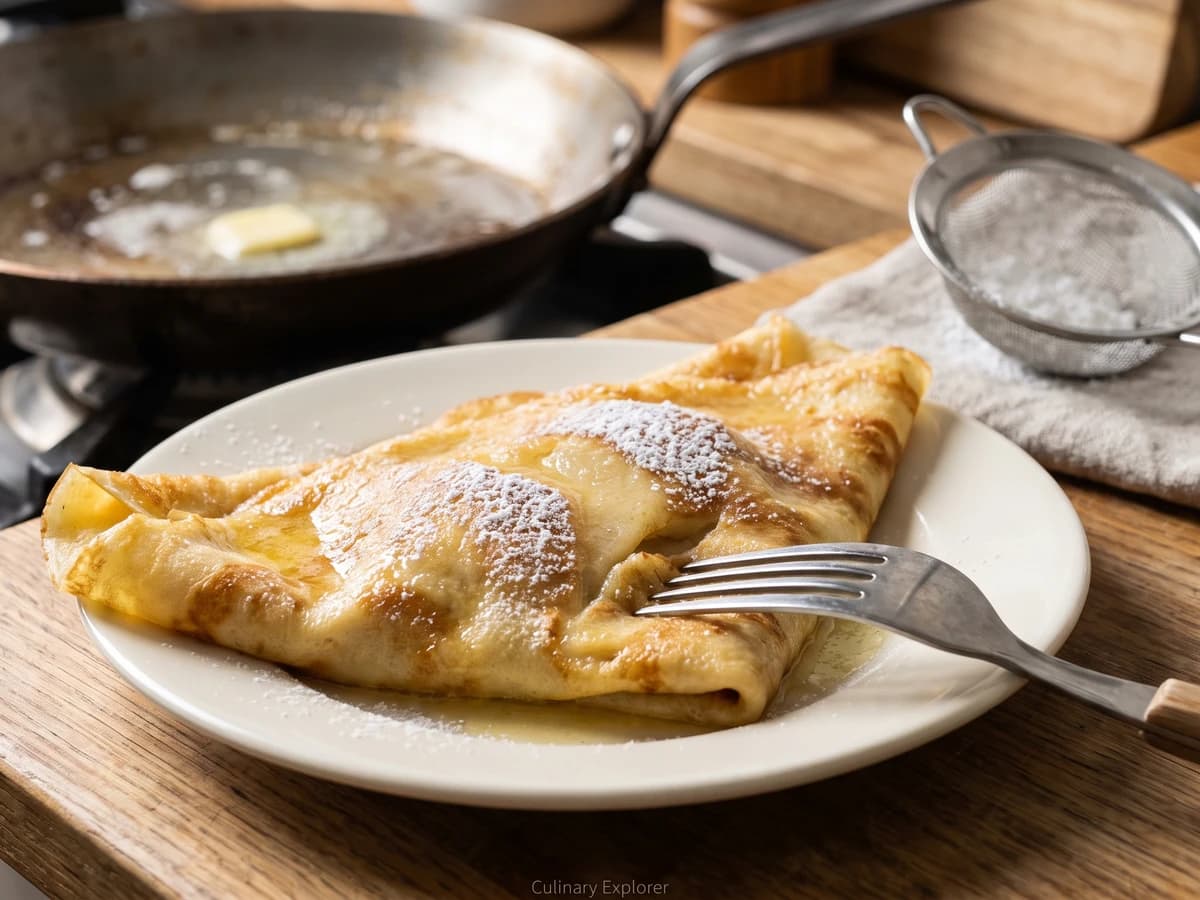
Crêpes scented twice with curaçao and tangerine, first in the batter, then in a supple butter, folded into quarters and warmed only until the coating turns glossy and fragrant.
Crêpes Suzette (thin crêpes with tangerine and curaçao butter) teaches one exact lesson: perfume the crêpe itself as well as the butter that coats it. Tangerine, not orange, is the one true thing to settle before touching the pan; its brisk, floral juice keeps the butter bright while curaçao carries the perfume through every bite.
The source assumed a brigade that kept Preparation A ready and already knew the Gil-Blas pancake coating method, with each order cooked and finished as it was called. Your home kitchen has one cook and one skillet, so this version makes twelve small crêpes, stacks them, coats them with the same flavoured butter, and warms them in two batches. Individual service is scaffolding and can go. Flavouring both the batter and the butter, then coating rather than drowning the crêpes, is the dish and must stay. One cook, one stove, one evening.
The step that matters most is the beurre Suzette (flavoured butter): keep the butter and liquids at the same cool room temperature, then beat in each spoonful completely before adding the next. If it splits, ça se rattrape, and the method below rebuilds it. No flambé is needed; the source asks for fragrance and gloss, not flames.
Crêpes Suzette belong to the grand dining rooms of Paris and Monte Carlo rather than one regional farmhouse table, and their parentage has long been disputed among cooks, waiters, and hotel lore. The durable technique is less theatrical than the stories: thin crêpes are perfumed with citrus liqueur and coated in citrus butter, while flambéing is optional in many lineages rather than the definition of the dish. In this canonical formulation the juice is specifically tangerine, paired with curaçao in both batter and butter, a precision blurred by versions that reach automatically for orange.
Quantity
1 home-scale batch, about 2 cups (500 ml / 520 g)
rested
Quantity
2 tablespoons (30 ml / 28 g)
divided
Quantity
2 tablespoons (30 ml / 30 g)
finely strained and divided
Quantity
1/2 cup (8 tablespoons / 113 g)
very soft but not greasy
Quantity
1 tablespoon (15 ml / 14 g)
melted
| Ingredient | Quantity |
|---|---|
| Preparation A pancake batterrested | 1 home-scale batch, about 2 cups (500 ml / 520 g) |
| curaçaodivided | 2 tablespoons (30 ml / 28 g) |
| fresh tangerine juicefinely strained and divided | 2 tablespoons (30 ml / 30 g) |
| unsalted buttervery soft but not greasy | 1/2 cup (8 tablespoons / 113 g) |
| unsalted butter for the panmelted | 1 tablespoon (15 ml / 14 g) |
Whisk 1 tablespoon (15 ml) of the curaçao and 1 tablespoon (15 ml) of the strained tangerine juice into Preparation A just until smooth. Let the batter rest for 10 minutes so the flour settles again and the bubbles rise away. Stir gently before cooking; a frothy batter leaves the crêpes pocked instead of fine and even.
Reserve 1 teaspoon of the soft butter as insurance. Beat the rest in a small bowl until smooth and plastic, then work in the remaining curaçao and tangerine juice one teaspoon at a time, beating each addition in completely before the next. The beurre Suzette should hold soft ridges and show no beads of liquid. If it splits into greasy curds, stop. Ça se rattrape: beat the reserved butter smooth in a clean bowl, then add the broken mixture to it a teaspoon at a time until the emulsion comes back together.
Set a 20 cm (8-inch) crêpe pan over medium heat and brush it with the thinnest film of melted butter. Pour in a scant 3 tablespoons (about 40 ml) of batter, immediately tilting the pan so it runs into a thin round. Cook until the surface loses its wet shine and the rim turns lacy and bronze, 45 to 60 seconds, then turn and cook the second side for 10 to 15 seconds. If the first crêpe tears, give the next one a few seconds longer before turning it. The first is tuition. Stack all 12 crêpes on a plate and cover them loosely with a clean towel.
Following the Gil-Blas pancake coating method, lay one warm crêpe flat and spread about 2 level teaspoons of beurre Suzette thinly across its entire surface, right to the rim. Fold it in half, then in half again to make a loose quarter. Repeat with the remaining crêpes. A thin complete coating is the point; a heavy lump of butter in the centre melts out and leaves the edges bare.
Arrange six folded crêpes in a wide clean skillet, overlapping them only slightly. Set the pan over medium-low heat for 2 to 3 minutes, turning the crêpes once and spooning the melted beurre Suzette over them until their surfaces gleam. If the butter begins to foam and fry, lift the pan from the heat; it should melt and coat, not brown. Transfer them to a warmed platter and repeat with the second batch. Spoon over every drop of fragrant butter and serve at once. À table!
1 serving (about 150g)
Culinary guides, cultural storytelling, and the editorial depth that makes cooking meaningful.
Discover Culinary ExplorerChef Juliette
A creamy omelette aux fines herbes closes around smoked-salmon-wrapped herring milts, gently poached in butter. Have the filling ready, then roll the eggs while they still shine.
Chef Juliette
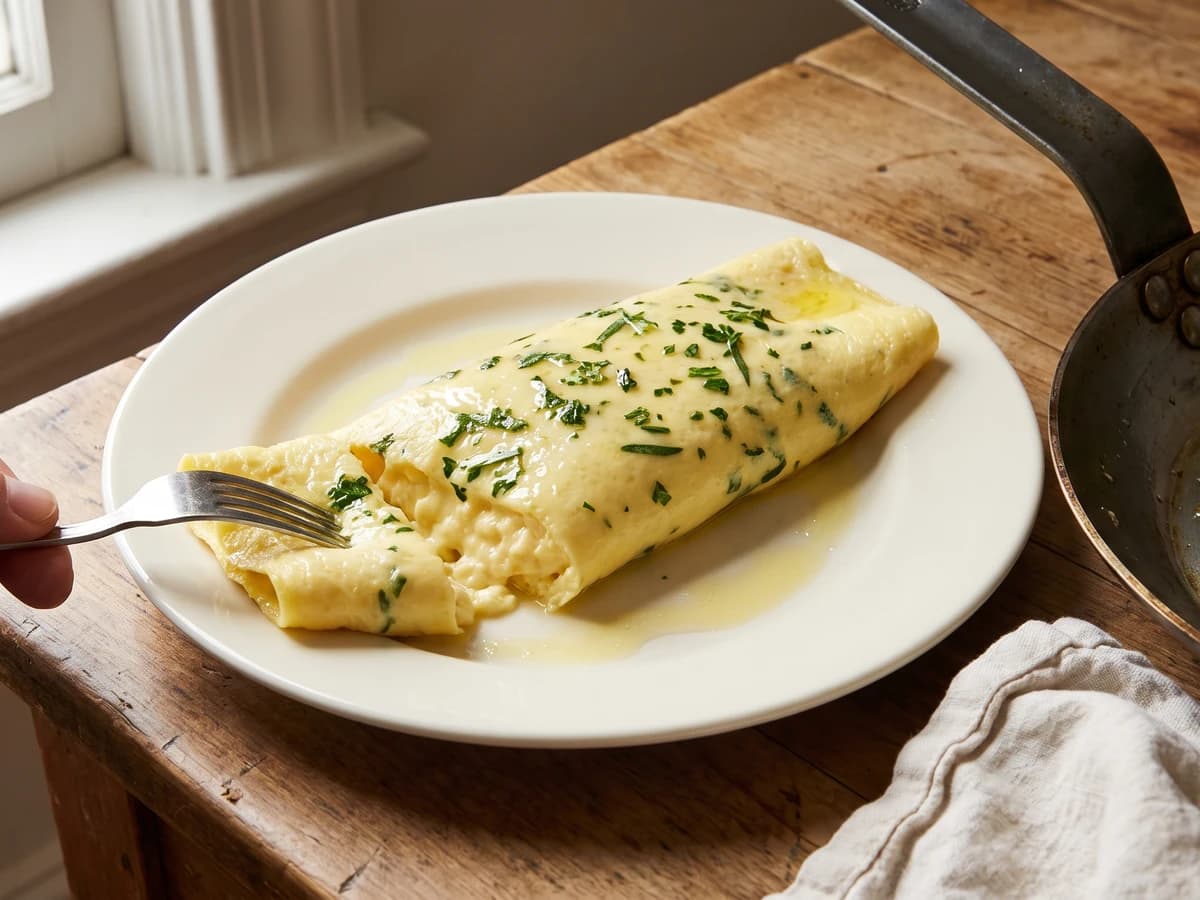
Four tender herbs, hot butter, and two eggs per pan: this rolled omelette teaches the quick hand and good judgment that keep the outside pale and the center creamy.
Chef Juliette
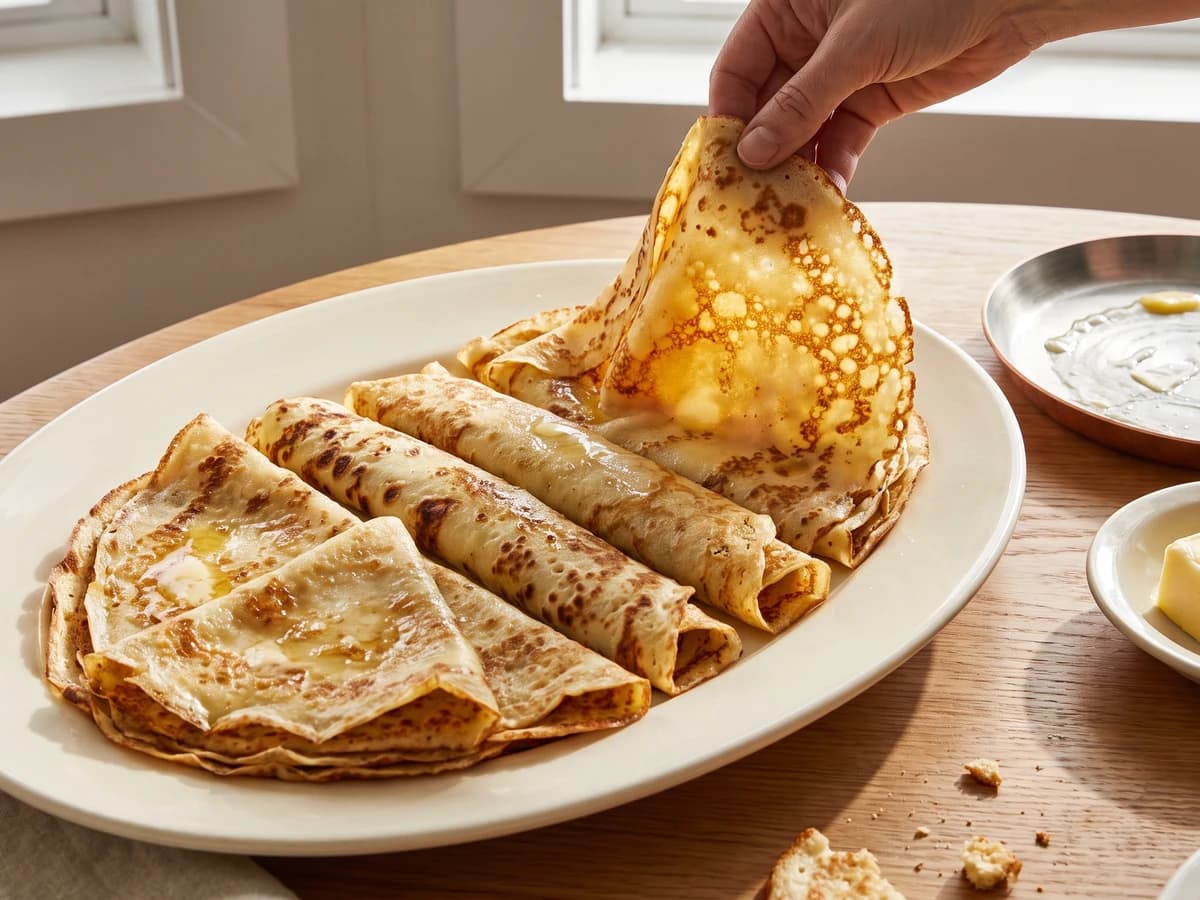
Four batters, one lesson: let the flour drink deeply before cooking, then spread the batter thinly in butter for crêpes and pannequets that bend without becoming tough.
Chef Juliette
Crêpes au Couvent trap ripe Williams pear dice between two thin pours of sweet batter, then turn in one clean toss and reach the table butter-gold, powdered, and burning hot.