
Chef Juliette
Various Almond Preparations
Five almond preparations, one discipline: remove the skins cleanly, dry every kernel through, then cut, toast, or cloak it in pale caramel without letting its fragrant oils escape.
A cooking platform built around craft, culture, and the stories behind what we eat.
Created by Chef Juliette
Based on No. 2439, Crème à la Régence, from Le Guide Culinaire (1907) by Auguste Escoffier
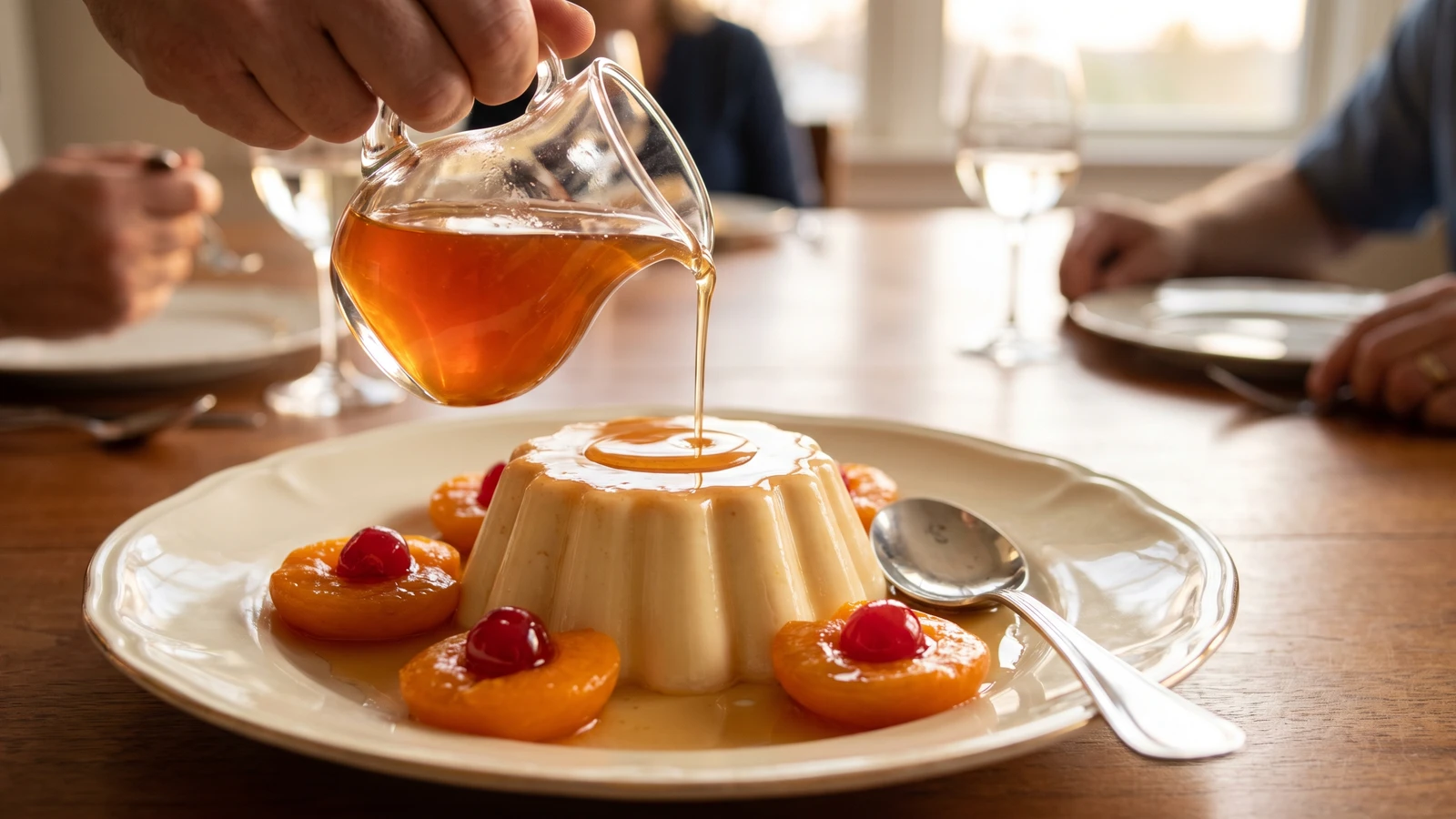
Crème à la Régence turns liqueur-soaked biscuits into the body of a tender molded custard, then rings it with apricots and preserved cherries. The lesson is gentle heat: the bain-marie must never boil.
Crème à la Régence (Regency-style molded custard) teaches the gentlest lesson in the custard family: the water bath cooks the custard, but it must never boil. Biscuits à la cuiller, first saturated with maraschino and Kirsch, disappear through the sieve into milk and eggs. What emerges is a close, tender cream with the perfume of almond, cherry, and stone fruit.
The source formula assumed a silk sieve, a shallow Charlotte mould sized for a brigade, and enough hands to tend the water while the fruit and syrup were readied. A fine-mesh sieve and a 3-cup metal mould are their honest home equivalents. The milk, biscuits, eggs, yolks, and sugar have been quartered exactly for four servings; the source leaves the liqueurs to kitchen judgment, so they are measured here to saturate the biscuits without leaving a puddle. Good jarred poached apricots replace a separate fruit station when fresh apricots aren't at their best. The silk and the extra hands were scaffolding. Saturating the biscuits, rubbing them through the sieve, and poaching the custard in a bain-marie are the dish itself. One cook, one stove, one evening.
The one step that decides everything is the bain-marie, the hot-water bath. Keep it hot and quiet. If bubbles begin to rise, cool the bath immediately; ça se rattrape before boiling punches holes through the custard.
Crème à la Régence belongs to the honorific vocabulary of Parisian grand cuisine, where molded entremets were composed with liqueur perfumes, glazed fruit, and formal crowns rather than tied to a regional larder. Its most revealing detail is that the biscuits à la cuiller are not served beside the custard but sieved into it, giving the finished cream both body and fragrance. Here crème means a molded custard, not dairy cream; milk, eggs, and yolks do the work.
Quantity
About 8 biscuits (2 oz / 57 g)
Quantity
3 tablespoons (45 ml / 50 g)
divided
Quantity
3 tablespoons (45 ml / 43 g)
divided
Quantity
1 cup plus 2 teaspoons (250 ml / 258 g)
Quantity
2 eggs (about 100 g without shells)
Quantity
2½ yolks (45 g)
beaten
Quantity
⅔ cup (160 ml / 76 g)
sifted
Quantity
1 small pinch (about 0.3 g)
Quantity
1 teaspoon (5 ml / 5 g)
for the mould
Quantity
8 halves (about 1 cup / 200 g)
well drained
Quantity
8 cherries (about ¼ cup / 40 g)
Quantity
½ cup (120 ml / 135 g)
| Ingredient | Quantity |
|---|---|
| dry biscuits à la cuiller | About 8 biscuits (2 oz / 57 g) |
| maraschino liqueurdivided | 3 tablespoons (45 ml / 50 g) |
| Kirschdivided | 3 tablespoons (45 ml / 43 g) |
| whole milk | 1 cup plus 2 teaspoons (250 ml / 258 g) |
| large eggs | 2 eggs (about 100 g without shells) |
| large egg yolksbeaten | 2½ yolks (45 g) |
| powdered sugarsifted | ⅔ cup (160 ml / 76 g) |
| fine salt | 1 small pinch (about 0.3 g) |
| unsalted butterfor the mould | 1 teaspoon (5 ml / 5 g) |
| poached or stewed apricot halveswell drained | 8 halves (about 1 cup / 200 g) |
| preserved cherries | 8 cherries (about ¼ cup / 40 g) |
| apricot poaching syrup | ½ cup (120 ml / 135 g) |
Heat the oven to 300°F (150°C). Butter a 3-cup (700 ml) shallow metal Charlotte mould in the thinnest possible film, paying attention to any fluting, and set it inside a deep roasting pan. Put a kettle of water on to heat, but don't let it reach a rolling boil.
Break the biscuits à la cuiller into a heatproof bowl. Sprinkle them evenly with 2 tablespoons of the maraschino and 2 tablespoons of the Kirsch, turning until every piece is saturated but no liqueur remains pooled beneath them. Bring the milk just to a boil, pour it immediately over the biscuits, and press them below the surface. Leave them for 5 minutes, until completely swollen and soft.
Rub the softened biscuits and milk through a fine-mesh sieve into a clean bowl, pressing firmly with the back of a spoon until only a few dry crumbs remain. A silk sieve was the professional kitchen's tool; fine stainless steel does the same work at home. Don't use a blender, which whips in air that can open into holes during poaching. Let the smooth base cool until warm rather than hot.
Beat 3 yolks together and weigh out 45 g for the precise half-yolk measure. Whisk the whole eggs, measured yolks, powdered sugar, and salt only until smooth, not frothy. Gradually whisk in the warm biscuit mixture. If thin threads of egg appear, the base was too hot. Ça se rattrape: pass the mixture immediately through the cleaned sieve, then cool it for 5 minutes before continuing. Skim away any foam from the surface.
Pour the custard into the prepared mould and tap it once against the counter to release hidden air. Pour hot, nonboiling water into the roasting pan until it reaches halfway up the mould. Poach in the oven for about 35 minutes, checking at 30 minutes. The edges should be set while the centre moves as one soft disc when nudged; an instant-read thermometer should register 170 to 175°F (77 to 80°C). Never let the bain-marie boil, because boiling cooks the eggs harshly and fills the cream with holes. If bubbles appear in the water, lift out one cup of hot water, replace it with cool water, and lower the oven by 25°F (15°C). The custard can then finish gently.
Lift the mould from the bain-marie and let it rest for 10 minutes. Run a thin flexible knife just around the upper rim, cover the mould with a chilled rimmed serving dish, and invert them together in one confident movement. If the custard clings, wrap the mould for 15 seconds in a towel wrung from hot water, then lift again. Don't shake it. Chill the unmoulded custard until fully cold, about 2 hours.
Put the apricot poaching syrup in a small saucepan and simmer for 3 to 5 minutes, until it lightly coats the back of a spoon. Remove it from the heat and let it cool for 5 minutes, then stir in the remaining 1 tablespoon maraschino and 1 tablespoon Kirsch. Let the syrup cool completely. If it sets too sticky, loosen it with a teaspoon of water; if it runs like water, simmer it for another minute before adding the liqueurs.
Arrange the 8 apricot halves around the base of the chilled Crème à la Régence, cut sides up, forming a complete crown. Set one preserved cherry in the hollow of each apricot. Spoon the apricot syrup over the custard so it gleams and runs down the sides, then coat the fruit with the remainder. Let the cream stand outside the refrigerator for 15 minutes before serving so the liqueur perfume opens properly. À table!
1 serving (about 245g)
Culinary guides, cultural storytelling, and the editorial depth that makes cooking meaningful.
Discover Culinary ExplorerChef Juliette
Five almond preparations, one discipline: remove the skins cleanly, dry every kernel through, then cut, toast, or cloak it in pale caramel without letting its fragrant oils escape.

Chef Juliette
A pastry pantry lesson in one tray: filberts warmed only until their red skins release, rubbed clean, cooled, and chopped into a fragrant mise-en-place for cakes, creams, pralines, and petits fours.

Chef Juliette
The smallest pâtisserie discipline decides whether a cake leaves its mould intact: clarified butter in every corner, followed by the lightest veil of dry flour or fécule.

Chef Juliette
Four whites, one spotless bowl, and a patient change of speed: whisk gently until loosened, then briskly to glossy stiffness, with powdered sugar waiting if the foam begins to granulate.