
Chef Juliette
Flan aux Carottes
A pale short-paste shell holds silken, lightly sweet carrot purée beneath neat glazed half-discs, their butter syrup catching the light: a classical tart poised between vegetable course and sweet.
A cooking platform built around craft, culture, and the stories behind what we eat.
Created by Chef Juliette
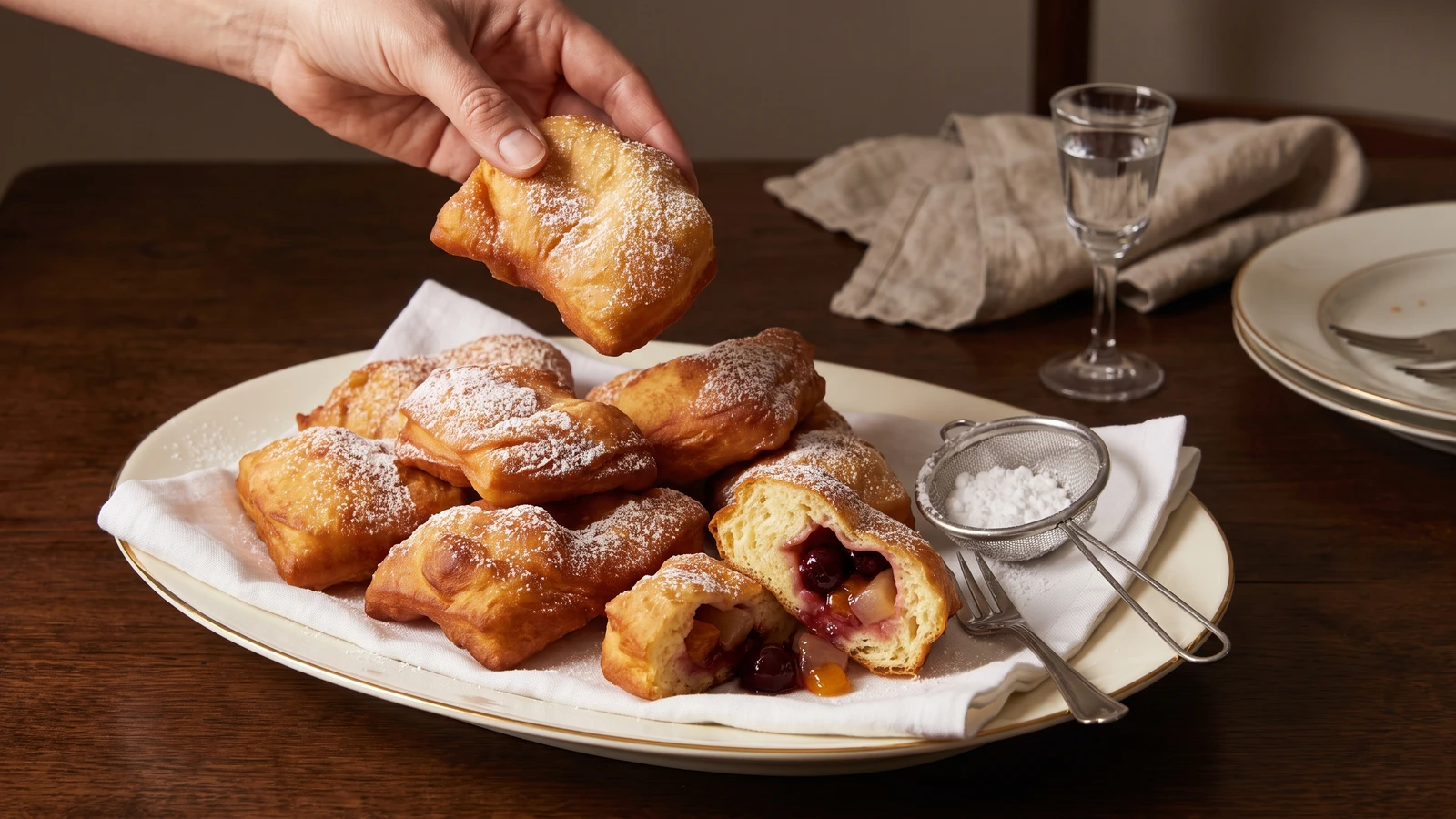
Based on No. 2431, Sylvana Fritters, from Le Guide Culinaire (1907) by Auguste Escoffier
Small brioche shells drink vanilla cream, hide a kirsch-bright fruit salpicon, and fry beneath a thin golden coat. Seat each lid firmly, and the filling stays where pleasure intended.
Beignets Sylvana teach a hard little pastry truth: the frying is won at the lid. Each small brioche is hollowed, lightly steeped in sweet vanilla cream, packed with a kirsch-bright salpicon, then closed and fried beneath a thin coat of batter. Before you touch the pan, know the one true thing: if the cover does not sit flush, the filling will find the fat.
The source assumed a pastry bench with trays of identical small brioches, a prepared fruit salpicon, a steady fryer, and several hands moving the sweets through assembly and service. At home, eight bought plain brioches, a heavy saucepan, a thermometer, and a wire rack do the same work. Drained preserved pear, apricot, and sour cherry give the salpicon tidy, low-moisture dice in any season; the book leaves the fruits and cream flavoring open, so vanilla supports the kirsch without competing with it. One cook, one stove, one evening.
House-baking a brigade tray of brioches and using a service napkin for the actual draining are scaffolding, so they go. The cream soak, kirsch salpicon, fitted cover, thin batter, deep frying, and icing sugar stay because they are the dish. Press every lid until it is level and immovable. That seal decides everything.
Beignets Sylvana sit in the Parisian grande cuisine repertoire of named entremets, sweets assembled from the pastry kitchen's daily foundations rather than tied to a provincial larder. Their surprise is structural: each begins as a finished brioche, not raw dough, and becomes a soaked shell for fruit before meeting the frying fat. Salpicon appears more often in savory cookery, but its precise dice suit pâtisserie beautifully because evenly cut fruit packs closely without forcing open the cover.
Quantity
8 (about 45 g each; 360 g total)
preferably day-old
Quantity
½ cup (120 ml / 120 g)
Quantity
¼ cup (60 ml / 60 g)
Quantity
2 tablespoons (30 ml / 25 g)
Quantity
1 teaspoon (5 ml / 5 g)
Quantity
⅓ cup (80 ml / 55 g)
thoroughly drained and cut into 3 mm dice
Quantity
⅓ cup (80 ml / 55 g)
thoroughly drained and cut into 3 mm dice
Quantity
¼ cup (60 ml / 40 g)
thoroughly drained and cut into 3 mm dice
Quantity
1 tablespoon (15 ml / 20 g)
Quantity
1 tablespoon (15 ml / 14 g)
Quantity
¾ cup (180 ml / 90 g), plus up to 1 tablespoon (15 ml / 8 g) if needed
Quantity
¼ teaspoon (1.25 ml / 1.5 g)
Quantity
1
Quantity
½ cup (120 ml / 120 g), plus up to 2 tablespoons (30 ml / 30 g) if needed
Quantity
1 tablespoon (15 ml / 14 g)
melted and cooled
Quantity
6 cups (1.4 L / 1.3 kg)
for frying
Quantity
¼ cup (60 ml / 30 g)
for finishing
| Ingredient | Quantity |
|---|---|
| small round plain brioche rollspreferably day-old | 8 (about 45 g each; 360 g total) |
| heavy cream | ½ cup (120 ml / 120 g) |
| whole milk | ¼ cup (60 ml / 60 g) |
| superfine sugar | 2 tablespoons (30 ml / 25 g) |
| pure vanilla extract | 1 teaspoon (5 ml / 5 g) |
| canned pearthoroughly drained and cut into 3 mm dice | ⅓ cup (80 ml / 55 g) |
| canned apricotthoroughly drained and cut into 3 mm dice | ⅓ cup (80 ml / 55 g) |
| canned or jarred sour cherriesthoroughly drained and cut into 3 mm dice | ¼ cup (60 ml / 40 g) |
| smooth apricot preserve | 1 tablespoon (15 ml / 20 g) |
| kirsch | 1 tablespoon (15 ml / 14 g) |
| all-purpose flour | ¾ cup (180 ml / 90 g), plus up to 1 tablespoon (15 ml / 8 g) if needed |
| fine salt | ¼ teaspoon (1.25 ml / 1.5 g) |
| large egg | 1 |
| chilled water | ½ cup (120 ml / 120 g), plus up to 2 tablespoons (30 ml / 30 g) if needed |
| unsalted buttermelted and cooled | 1 tablespoon (15 ml / 14 g) |
| neutral high-heat oilfor frying | 6 cups (1.4 L / 1.3 kg) |
| icing sugarfor finishing | ¼ cup (60 ml / 30 g) |
Blot the pear, apricot, and cherries until no syrup marks the towel, then cut everything into precise 3 mm dice. This is the salpicon, fruit cut into small even pieces and lightly cohered so it fills the brioche without tearing it. Stir the apricot preserve with the kirsch until loose and glossy, fold in the fruit, and leave it for 10 minutes. If liquid gathers underneath, drain the salpicon in a fine sieve for 2 minutes. The fruit should cling together lightly, not swim.
Cut a shallow lid from the domed top of each brioche and keep every lid beside its own roll. Using a teaspoon, hollow out the soft crumb while leaving an 8 mm wall and a sturdy base. Work gently around the sides rather than digging straight down. If you pierce a small hole, ça se rattrape: press a tuft of the removed crumb firmly against the opening from inside and leave it undisturbed.
Whisk the cream, milk, superfine sugar, and vanilla until the sugar dissolves. Dip each hollow brioche body and its lid into the thin sweet cream, turning once and lifting them out within 2 seconds. Set them cut-side down on a rack for 5 minutes. The cream should perfume and soften the crumb, not collect inside the cavity. If a shell holds a puddle, pour it out and give that brioche another 5 minutes on the rack.
Whisk the flour and salt together. Add the egg, ½ cup chilled water, and melted butter, then whisk only until smooth. The batter should fall from the whisk in a continuous ribbon and leave a thin, nearly translucent coat on a spoon. Let it stand for 10 minutes while the oil heats to 175°C (350°F) in a deep heavy pot. If the batter thickens, loosen it with chilled water, 1 tablespoon at a time; if it slides off and leaves the spoon bare, whisk in 1 tablespoon flour.
Spoon about 1½ tablespoons of salpicon into each shell, stopping 6 mm below the rim. Brush the rim and underside of its matching lid with a little batter, replace the lid, and press firmly for 10 seconds until it sits level. Wipe away any fruit at the seam. If the cover rocks or fruit remains visible, remove a spoonful of filling and reseat it. Ça se rattrape, but do it now. The outer batter cannot rescue a badly fitted lid.
Coat one filled brioche at a time in the batter, turning it gently and letting the excess fall for 3 seconds. Lower it into the oil lid-side first. Fry only 2 at a time for 3 to 4 minutes, turning with a wire skimmer until the coat is evenly butter-gold with deeper bronze along its ridges. Keep the oil between 170°C and 175°C (338°F and 350°F). If it falls below 165°C (329°F), pause before adding another fritter or the brioche will drink oil. If a seam opens, lift that fritter out immediately and skim away the escaped fruit before continuing.
Lift each Beignet Sylvana onto a wire rack set over a tray and let it drain for 2 minutes. The source sends them to a napkin, but a rack is the honest home equivalent because it keeps the underside crisp rather than holding oil against it. Transfer the fritters to a platter lined with a clean folded napkin, dust generously with icing sugar, and serve within 10 minutes while the shell remains crisp and the fruit inside is glossy. À table!
1 serving (about 215g)
Culinary guides, cultural storytelling, and the editorial depth that makes cooking meaningful.
Discover Culinary ExplorerChef Juliette
A pale short-paste shell holds silken, lightly sweet carrot purée beneath neat glazed half-discs, their butter syrup catching the light: a classical tart poised between vegetable course and sweet.
Chef Juliette
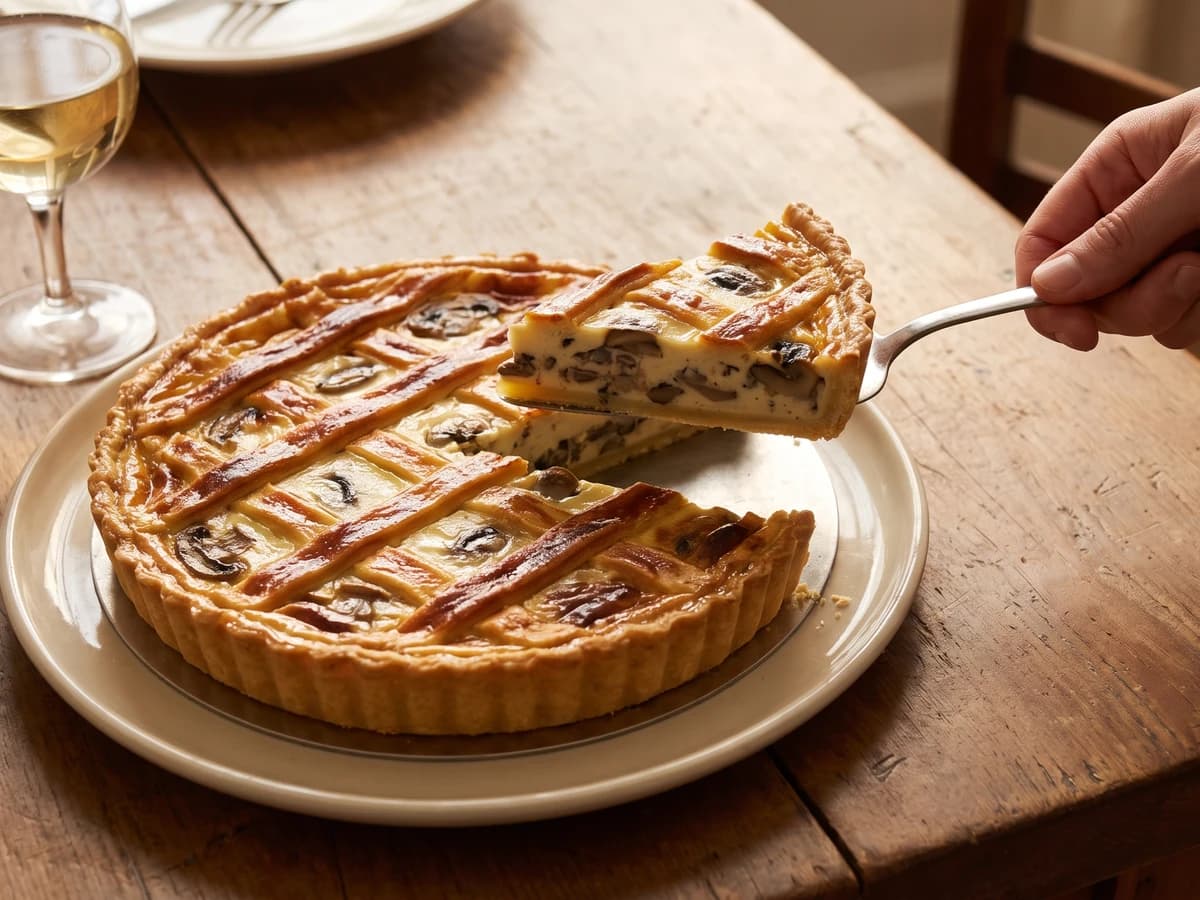
A hot mushroom flan under a butter-gold lattice, with cream reduced close around barely opened caps and a crisp short-paste base protected by one discipline: cool the filling completely.

Chef Juliette
Four little mushroom flans, latticed and gilded, baked hard and fast until butter-gold: a classical garnish scaled to the meat it accompanies and served before its crispness has time to fade.
Chef Juliette
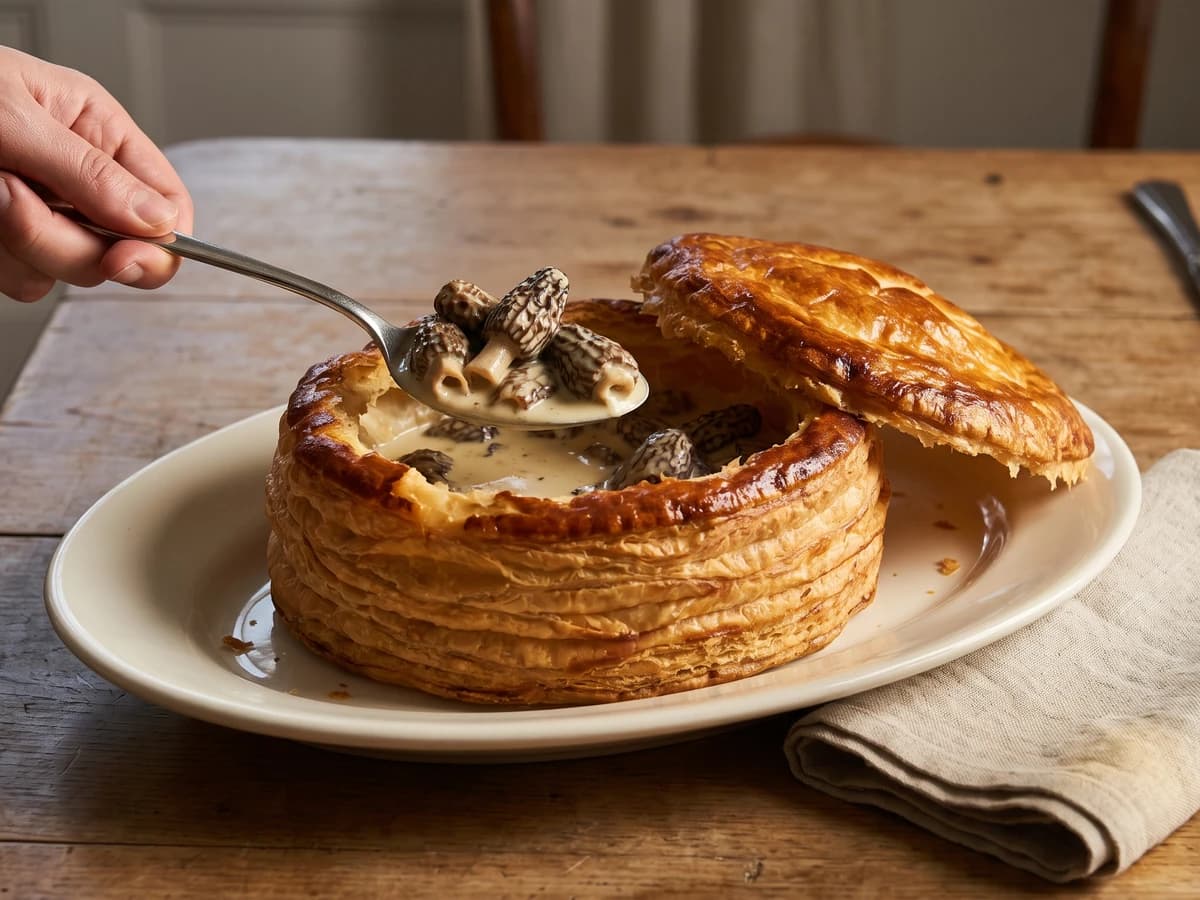
Morels surrender their liquor, then take it back as a glossy cream-and-butter sauce inside burnished puff pastry. The lesson is simple and absolute: reduce with patience, then heat gently and never boil.