
Chef Juliette
Flan aux Carottes
A pale short-paste shell holds silken, lightly sweet carrot purée beneath neat glazed half-discs, their butter syrup catching the light: a classical tart poised between vegetable course and sweet.
A cooking platform built around craft, culture, and the stories behind what we eat.
Created by Chef Juliette
Based on No. 2430, Fritters “à la Bourgeoise”, from Le Guide Culinaire (1907) by Auguste Escoffier
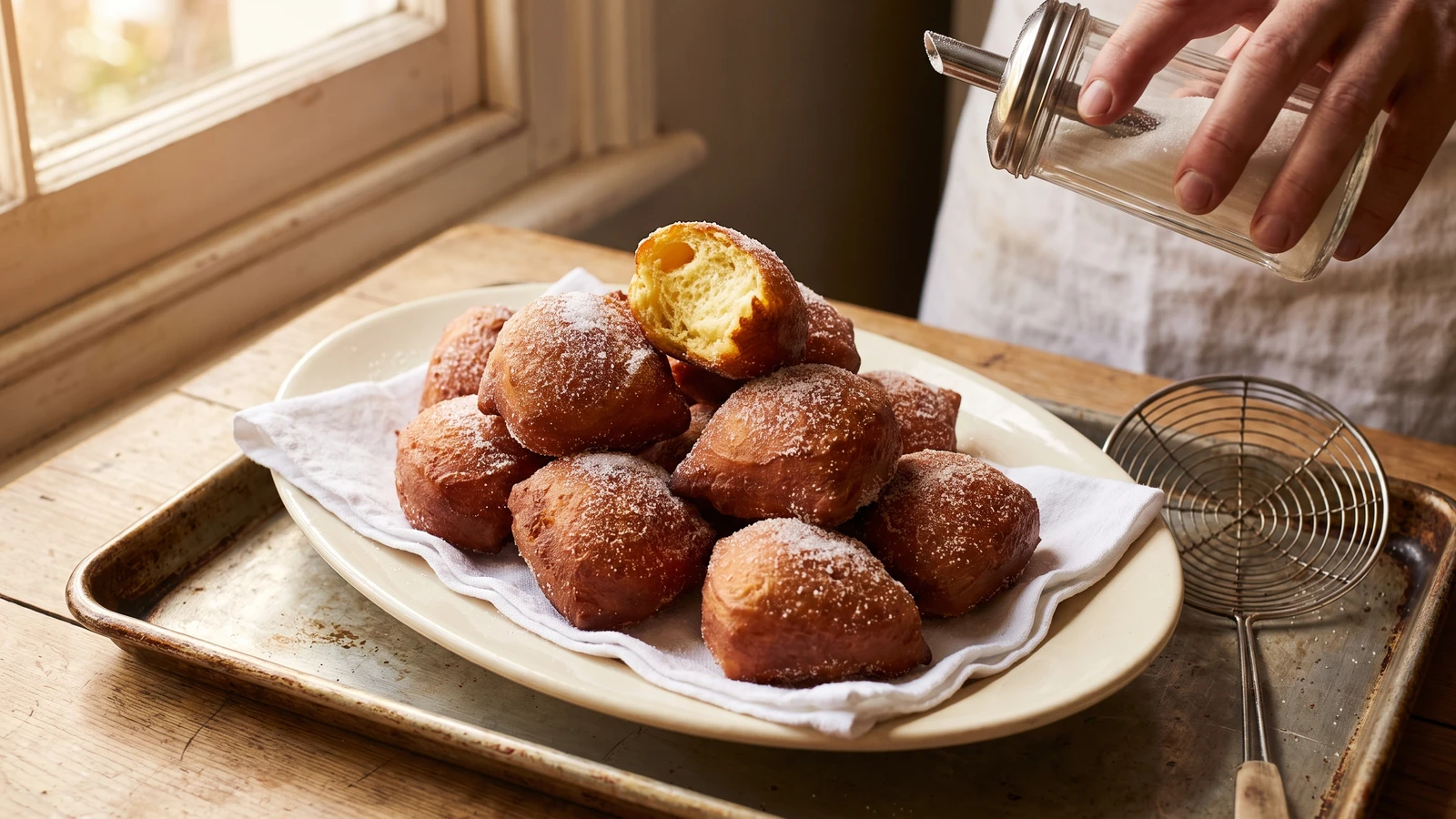
Yesterday's brioche crown becomes Beignets à la Bourgeoise: cream-soaked slices in a fine crisp coat, fried golden and sugared, with the tender heart of the brioche still intact.
Beignets à la Bourgeoise (brioche fritters) teach one exact lesson: batter clings to a surface that is moist within and dry without. Dip stale brioche in sweetened cream, certainly, but let every excess drop away before the batter touches it. Get that right and the coating fries fine and crisp around a tender, cream-rich center. Get it wrong and the batter slips off into the fat.
The source entry assumes a brioche crown ready to use, a frying station holding very hot fat, and a service napkin waiting beside it. Those are brigade conveniences, not the soul of the recipe. For one cook, one stove, one evening, I use eight slices, a deep household pot with a thermometer, and a wire rack for proper draining. The fryer and its service cloth are scaffolding. The cream dip, slight drying, thin batter, and truly hot fat are the dish, so they remain untouched.
Vanilla is tonight's flavoring, quiet enough to leave the butter-rich brioche in command. The sugar goes on only after the fried slices have shed their excess fat, giving a delicate crust rather than a greasy coat. Before you touch the pan, remember the deciding step: drain the cream-soaked brioche until its surface is merely damp.
Beignets à la Bourgeoise belong to cuisine bourgeoise, the well-provisioned French household table rather than a single province. Such kitchens made a virtue of yesterday's enriched bread by dipping brioche in sweet cream, veiling it with batter, and frying it, a richer cousin to the stale breads revived in pans across France. Despite the plain-English gloss, this is not a doughnut formed from dough; the slice of brioche enclosed within the coating is its defining character.
Quantity
8 slices (about 10 oz / 280 g total)
cut 1/3 inch (8 mm) thick
Quantity
1 cup (240 ml / 240 g)
Quantity
2 tablespoons (30 ml / 25 g)
for sweetening the cream
Quantity
1 teaspoon (5 ml / 4 g)
Quantity
1 cup (240 ml / 125 g)
Quantity
1/4 teaspoon (1.25 ml / 1.5 g)
Quantity
1
Quantity
3/4 cup (180 ml / 180 g)
Quantity
6 cups (1.4 L / about 1.28 kg)
for frying
Quantity
1/3 cup (80 ml / 65 g)
for finishing
| Ingredient | Quantity |
|---|---|
| stale brioche crowncut 1/3 inch (8 mm) thick | 8 slices (about 10 oz / 280 g total) |
| fresh heavy cream | 1 cup (240 ml / 240 g) |
| caster sugarfor sweetening the cream | 2 tablespoons (30 ml / 25 g) |
| pure vanilla extract | 1 teaspoon (5 ml / 4 g) |
| all-purpose flour | 1 cup (240 ml / 125 g) |
| fine salt | 1/4 teaspoon (1.25 ml / 1.5 g) |
| large egg | 1 |
| ice-cold sparkling water | 3/4 cup (180 ml / 180 g) |
| neutral high-heat oil, such as sunflower or peanut oilfor frying | 6 cups (1.4 L / about 1.28 kg) |
| caster sugarfor finishing | 1/3 cup (80 ml / 65 g) |
Cut the stale brioche crown into 8 slices, each precisely 1/3 inch (8 mm) thick. The slices should feel firm but not hard, with enough structure to survive the cream. If your brioche is fresh and pillowy, lay the slices on a rack and dry them in a 250°F (120°C) oven for 10 minutes, then cool completely before proceeding.
Whisk the heavy cream with the 2 tablespoons of caster sugar and the vanilla until the sugar dissolves. Pour it into a shallow dish. Dip each brioche slice for 3 to 4 seconds per side, long enough for the cream to enter the crumb but not long enough for the slice to slump. Lift with a thin spatula, let the excess fall back into the dish, and arrange the slices on a wire rack for 8 to 10 minutes. Their interiors should remain tender while their surfaces lose their wet shine.
Whisk the flour and salt together in a wide bowl. Make a well, add the egg and half the sparkling water, then whisk from the center outward until smooth. Add the remaining water gradually. The pâte à frire, the frying batter, should flow like light cream and leave a fine, continuous veil on a spoon. If it falls in heavy ribbons, loosen it with a teaspoon of cold water. If it runs off without leaving any coat, whisk in a teaspoon of flour.
Pour the oil into a deep, heavy pot, making certain the pot is no more than one-third full. Clip on the thermometer and heat the oil to 365°F (185°C). This is the source entry's very hot fat translated into a number you can trust. Keep the area dry, lower food away from yourself, and adjust the heat between batches so the oil remains between 350°F and 365°F (175°C and 185°C).
Working with one slice at a time, lower the drained brioche into the batter and turn it once. Lift it with two forks, allow the extra batter to fall away for 2 seconds, then slide it gently into the oil. Fry only 2 slices at a time for 60 to 90 seconds per side, turning once, until the coating is evenly golden with deeper bronze ridges. If the batter slides off before the slice reaches the oil, return the brioche to the rack for 5 minutes and whisk a teaspoon of flour into the batter. Ça se rattrape. If the oil falls below 350°F (175°C), pause before the next batch or the fritters will drink the fat instead of sealing crisply.
Lift each fritter with a wire skimmer and hold it over the pot until the first rush of oil stops. Transfer it to the wire rack, not directly to the serving napkin, and drain for 1 minute per side. Sprinkle generously with the finishing sugar while the coating is still warm enough to catch it. Arrange the fritters on a fresh folded napkin and serve at once, while the crust is crisp and the cream-rich center remains tender. À table!
1 serving (about 230g)
Culinary guides, cultural storytelling, and the editorial depth that makes cooking meaningful.
Discover Culinary ExplorerChef Juliette
A pale short-paste shell holds silken, lightly sweet carrot purée beneath neat glazed half-discs, their butter syrup catching the light: a classical tart poised between vegetable course and sweet.
Chef Juliette
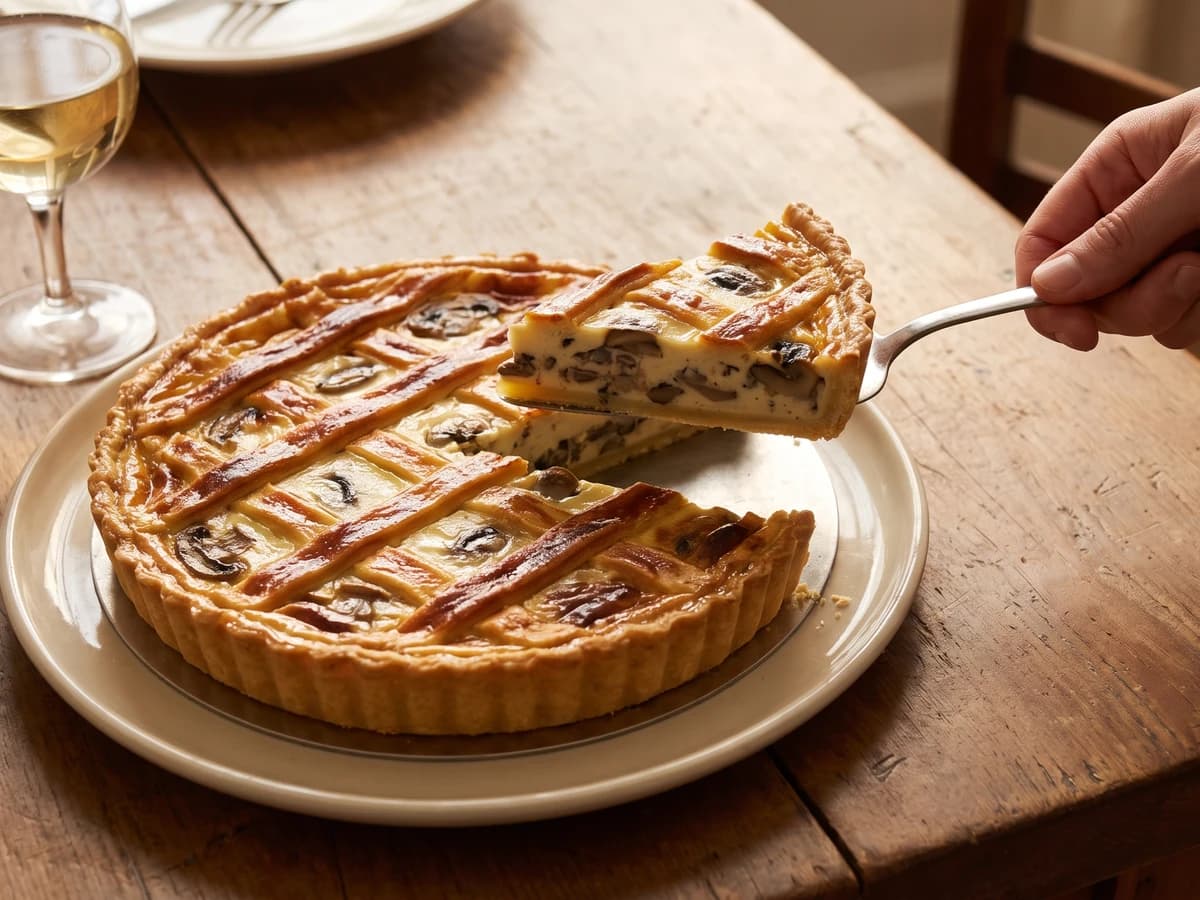
A hot mushroom flan under a butter-gold lattice, with cream reduced close around barely opened caps and a crisp short-paste base protected by one discipline: cool the filling completely.

Chef Juliette
Four little mushroom flans, latticed and gilded, baked hard and fast until butter-gold: a classical garnish scaled to the meat it accompanies and served before its crispness has time to fade.
Chef Juliette
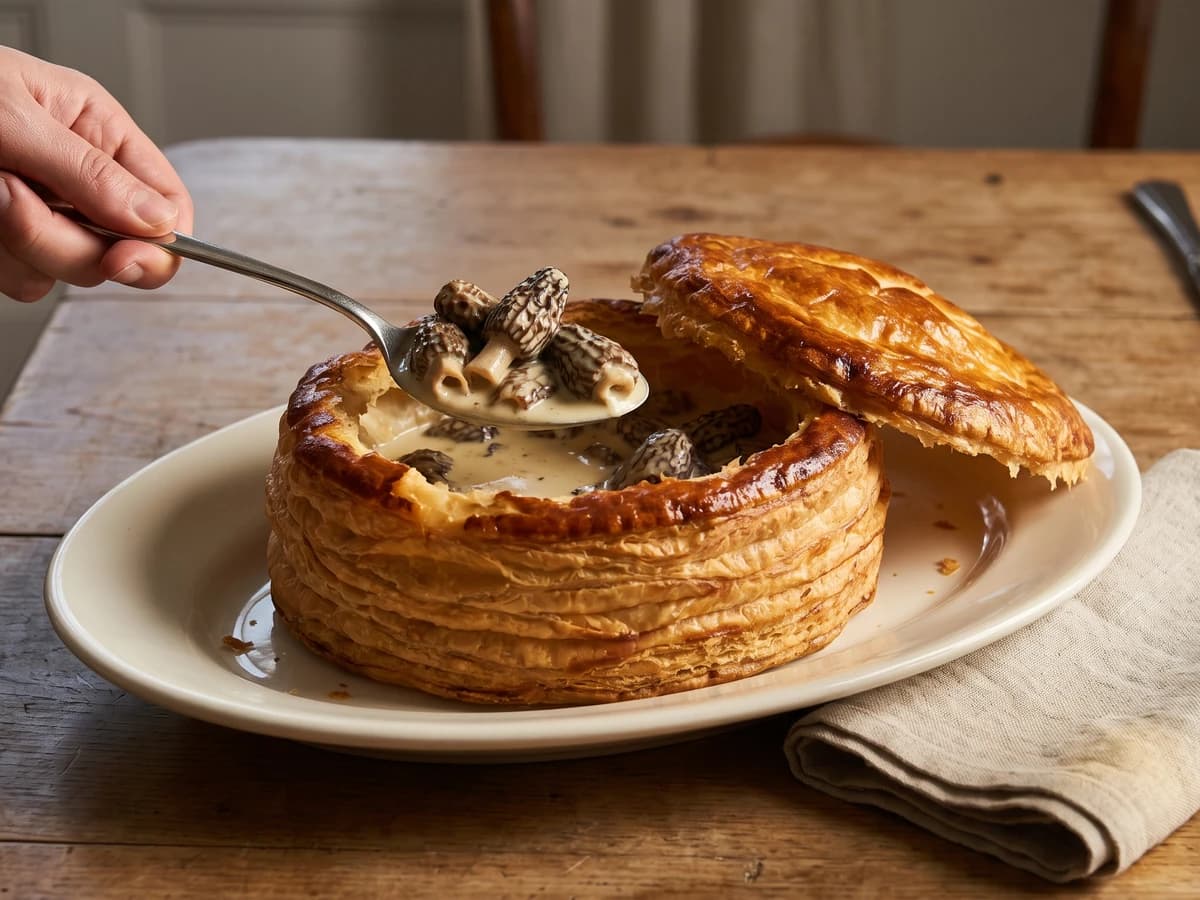
Morels surrender their liquor, then take it back as a glossy cream-and-butter sauce inside burnished puff pastry. The lesson is simple and absolute: reduce with patience, then heat gently and never boil.