
Chef Juliette
Flan aux Carottes
A pale short-paste shell holds silken, lightly sweet carrot purée beneath neat glazed half-discs, their butter syrup catching the light: a classical tart poised between vegetable course and sweet.
A cooking platform built around craft, culture, and the stories behind what we eat.
Created by Chef Juliette
Based on No. 2429, Pineapple Fritters “à la Favorite”, from Le Guide Culinaire (1907) by Auguste Escoffier
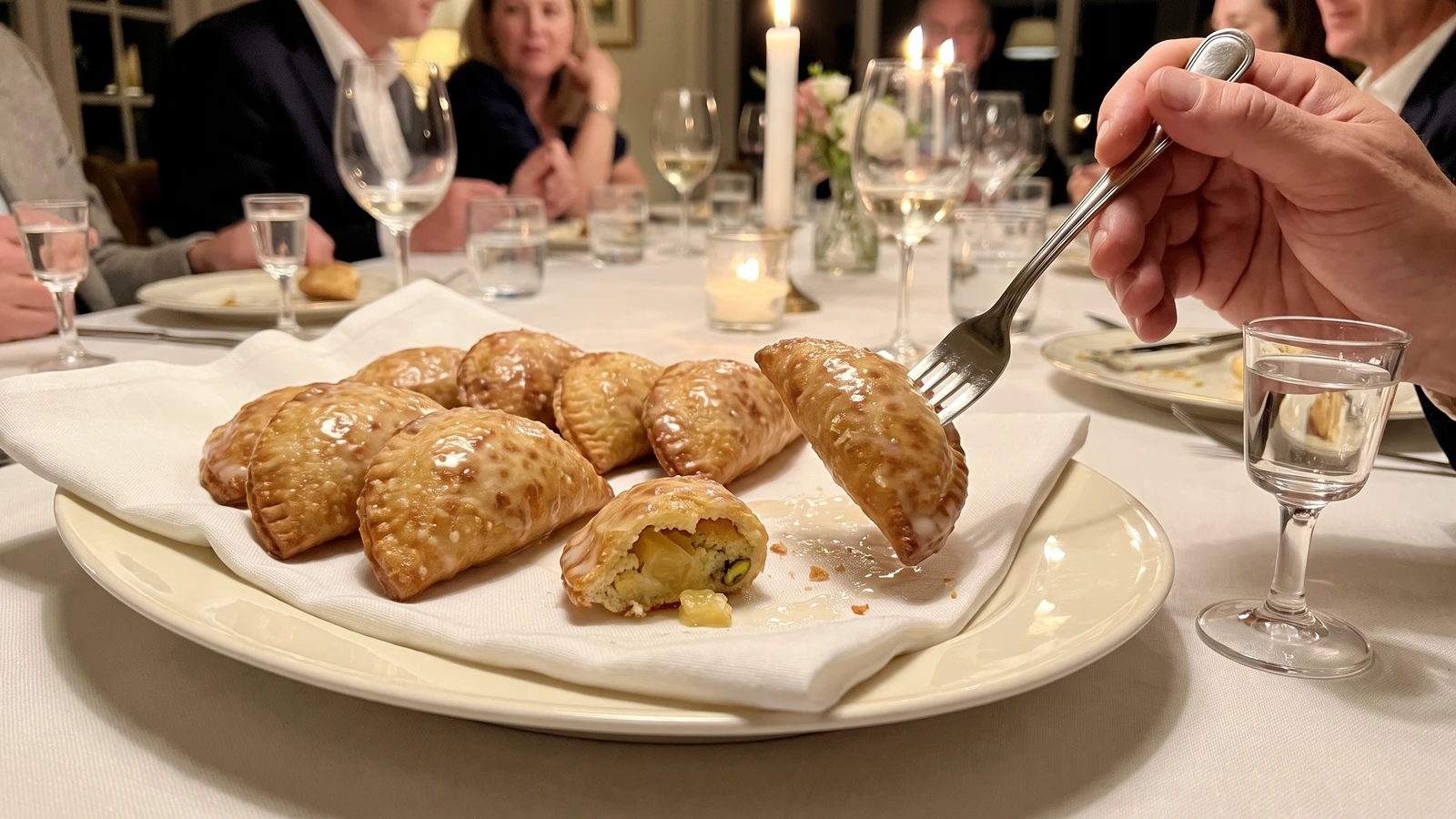
Kirsch-macerated pineapple wears a thick pistachio frangipane jacket, then a thin batter, before hot fat and fierce top heat turn eight half-moons golden, crisp-edged, and fit for celebration.
Beignets d’Ananas à la Favorite teach the discipline of setting a rich coating before it meets hot fat. The pineapple is juicy, the frangipane is soft with butter, and the fryer has no patience for either. One true thing decides the dish: the cream must be cold and firm enough to remain around the fruit, or it melts into the oil before the batter can protect it.
The original entry assumed a pastry station with prepared cream, broad cold trays, a fryer always ready, and a fierce oven for the final glaze. Your honest equivalents are a compact batch of crème frangipane, a tray that fits the freezer, a deep saucepan of neutral oil, and the concentrated top heat of the broiler. I’ve scaled the dish to eight half-discs for four people. The long holding trays were brigade scaffolding and go; the kirsch maceration, pistachio frangipane, complete chilling, thin batter, frying, and icing-sugar glaze are the dish and stay. One cook, one stove, one evening.
When they’re right, the fritters arrive butter-gold and faintly lacquered, with warm pineapple beneath a crisp shell and a pale seam of pistachio cream between them. Dry the macerated fruit thoroughly, then give the coated pieces their full cold set. Do not approach the fryer until the frangipane holds without slumping.
Beignets d’ananas à la Favorite belong to the Parisian grand-kitchen repertoire of sweet entremets, not to a pineapple-growing province of France. Imported pineapple moved from formal displays into pastry work, where cooks macerated it with spirits and enclosed it in rich preparations before frying. The title à la Favorite is not an empty flourish here: pistachio-laced frangipane beneath a thin batter, followed by an icing-sugar glaze, defines the treatment.
Quantity
4 (about 12 oz / 340 g total)
peeled, cored, and cut 1/3 inch (8 mm) thick
Quantity
2 tablespoons (30 ml / 25 g)
Quantity
2 tablespoons (30 ml / 28 g)
Quantity
1/2 cup (120 ml / 123 g)
Quantity
2 tablespoons (30 ml / 25 g)
Quantity
2 tablespoons (30 ml / 16 g)
Quantity
2
divided
Quantity
2 tablespoons (30 ml / 28 g)
softened
Quantity
2 tablespoons (30 ml / 25 g)
Quantity
1/4 cup (60 ml / 28 g)
Quantity
1/4 cup (60 ml / 30 g)
finely chopped
Quantity
1/2 cup plus 1 tablespoon (135 ml / 68 g)
divided
Quantity
1/4 teaspoon (1.25 ml / 1.5 g)
Quantity
1
Quantity
6 tablespoons (90 ml / 90 g)
Quantity
6 cups (1.4 L / about 1.3 kg)
Quantity
1/2 cup (120 ml / 60 g)
| Ingredient | Quantity |
|---|---|
| fresh pineapple roundelspeeled, cored, and cut 1/3 inch (8 mm) thick | 4 (about 12 oz / 340 g total) |
| granulated sugar for macerating | 2 tablespoons (30 ml / 25 g) |
| kirsch | 2 tablespoons (30 ml / 28 g) |
| whole milk | 1/2 cup (120 ml / 123 g) |
| granulated sugar for the crème pâtissière | 2 tablespoons (30 ml / 25 g) |
| cornstarch | 2 tablespoons (30 ml / 16 g) |
| large egg yolksdivided | 2 |
| unsalted buttersoftened | 2 tablespoons (30 ml / 28 g) |
| granulated sugar for the almond cream | 2 tablespoons (30 ml / 25 g) |
| fine almond flour | 1/4 cup (60 ml / 28 g) |
| unsalted shelled pistachiosfinely chopped | 1/4 cup (60 ml / 30 g) |
| all-purpose flourdivided | 1/2 cup plus 1 tablespoon (135 ml / 68 g) |
| fine salt | 1/4 teaspoon (1.25 ml / 1.5 g) |
| large egg | 1 |
| ice-cold water | 6 tablespoons (90 ml / 90 g) |
| neutral frying oil, such as grapeseed or sunflower | 6 cups (1.4 L / about 1.3 kg) |
| icing sugar | 1/2 cup (120 ml / 60 g) |
Cut each pineapple roundel in half to make eight half-discs. Lay them in one layer in a shallow dish, sprinkle with the macerating sugar and kirsch, and turn them so every surface is moistened. Leave for 30 minutes, no longer, then drain and blot both sides very thoroughly with clean towels. The sugar draws juice from the fruit, and any syrup left on the surface will make the frangipane slide away.
For the crème pâtissière (pastry cream), warm the milk in a small saucepan until bubbles gather around the edge. Whisk one yolk with its 2 tablespoons of sugar and the cornstarch until smooth. Whisk in half the hot milk, return everything to the saucepan, and cook over medium-low heat, whisking constantly, until the cream boils and becomes thick enough to leave a clean path across the pan. Keep it bubbling gently for 1 minute, then scrape it into a shallow bowl, cover the surface directly, and cool until barely warm. Beat the softened butter with the remaining 2 tablespoons of sugar, almond flour, and second yolk until smooth. Beat in the crème pâtissière, then fold in the chopped pistachios. The crème frangipane should be very thick and almost cold. If warm pastry cream melts the butter and the mixture loosens, do not coat the fruit yet. Ça se rattrape: chill it for 15 minutes, stir until firm, and continue.
Line a small metal tray with parchment. Turn each dry pineapple half-disc through the frangipane, using a small offset spatula to jacket the top, bottom, cut edge, and curved edge in an even layer about 1/8 inch (3 mm) thick. Set the pieces apart on the tray and freeze for 40 to 50 minutes, until the coating feels hard and lifts with the fruit as one piece, though the pineapple itself need not freeze solid. If a patch slips or exposes fruit, press on a little cold frangipane and return the piece to the freezer for 10 minutes. The cold set is the dish, not optional waiting.
Shortly before frying, whisk 1/2 cup (60 g) of the flour with the salt. Add the whole egg and 5 tablespoons of the ice water, whisking only until smooth, then add enough of the final tablespoon of water to make a pâte à frire (thin frying batter) that falls in a continuous ribbon and leaves only a light veil on a spoon. Rest it in the cold for 10 minutes. If it runs off like water, whisk in the reserved tablespoon of flour a teaspoon at a time; if it sits thickly, add the remaining water a teaspoon at a time. The batter protects the frangipane without burying it.
Pour the oil into a deep, heavy saucepan, leaving the pan no more than half full, and heat it to 350°F (175°C). Set a wire rack over a tray for draining. Heat the broiler to high and position an oven rack about 6 inches (15 cm) below it. This concentrated top heat is the home equivalent of the original fierce oven. Keep the coated pineapple in the freezer until the oil is steady and everything else is ready.
Working with two pieces at a time, detach the chilled half-discs from the tray, dip each completely in the pâte à frire, and let the excess fall away for a second. Lower them gently into the oil and fry for about 3 minutes, turning once, until evenly deep gold and crisp at the edges. Keep the oil between 340°F and 350°F (170°C and 175°C); cooler fat lets the frangipane escape before the shell sets. If cream begins leaking, lift out the batch and skim away the escaped pieces. Ça se rattrape: return the remaining fritters to the freezer for 10 minutes, let the oil regain its heat, and resume with one piece as a test. Drain each finished fritter on the rack.
Transfer the drained fritters to a bare, broiler-safe metal tray and sift the icing sugar generously over them. Broil for 20 to 45 seconds, watching without looking away, until the sugar melts into a fine gloss and freckles pale amber. Pull the tray before the sugar darkens. Arrange the fritters on a platter lined with a clean folded napkin, as the original service directs, and carry them straight to the table while the shell is crisp and the pineapple warm. À table!
1 serving (about 225g)
Culinary guides, cultural storytelling, and the editorial depth that makes cooking meaningful.
Discover Culinary ExplorerChef Juliette
A pale short-paste shell holds silken, lightly sweet carrot purée beneath neat glazed half-discs, their butter syrup catching the light: a classical tart poised between vegetable course and sweet.
Chef Juliette
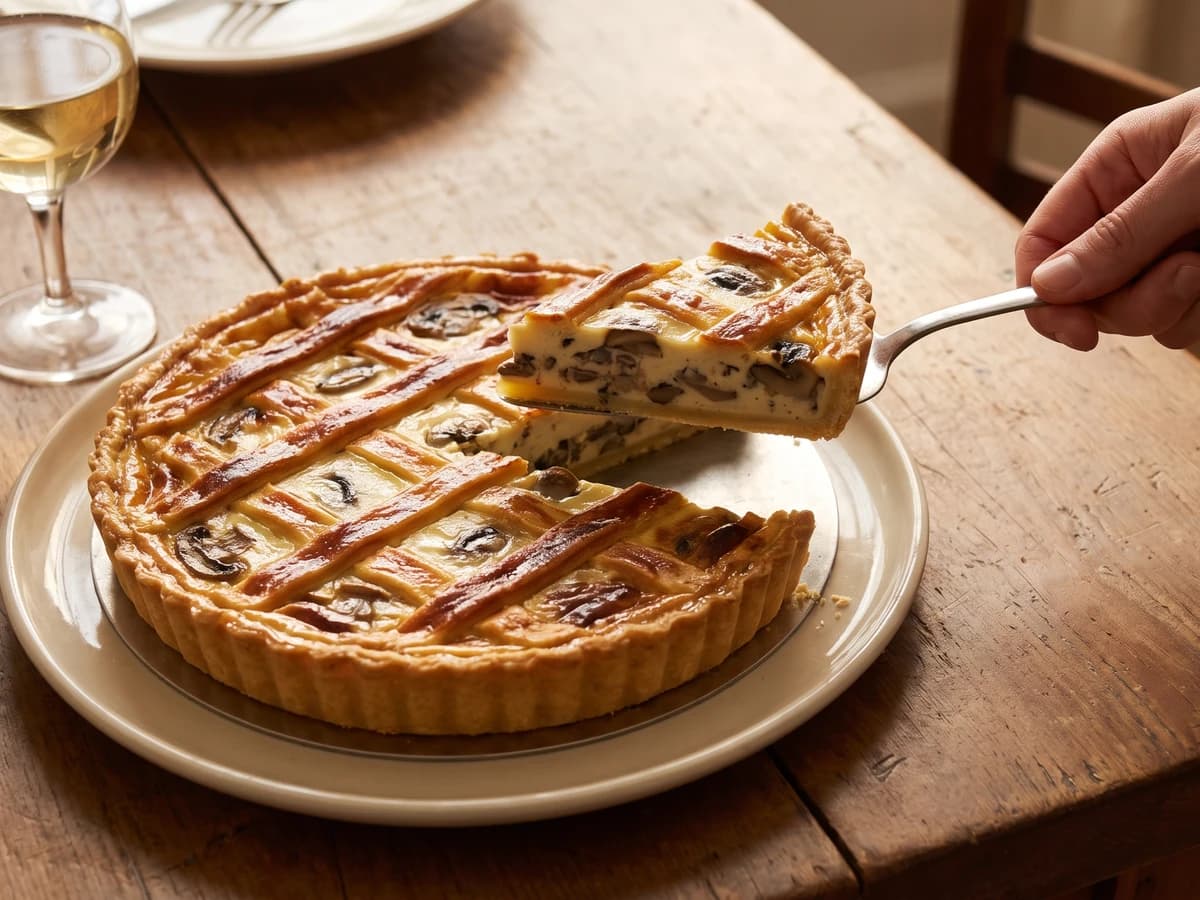
A hot mushroom flan under a butter-gold lattice, with cream reduced close around barely opened caps and a crisp short-paste base protected by one discipline: cool the filling completely.

Chef Juliette
Four little mushroom flans, latticed and gilded, baked hard and fast until butter-gold: a classical garnish scaled to the meat it accompanies and served before its crispness has time to fade.
Chef Juliette
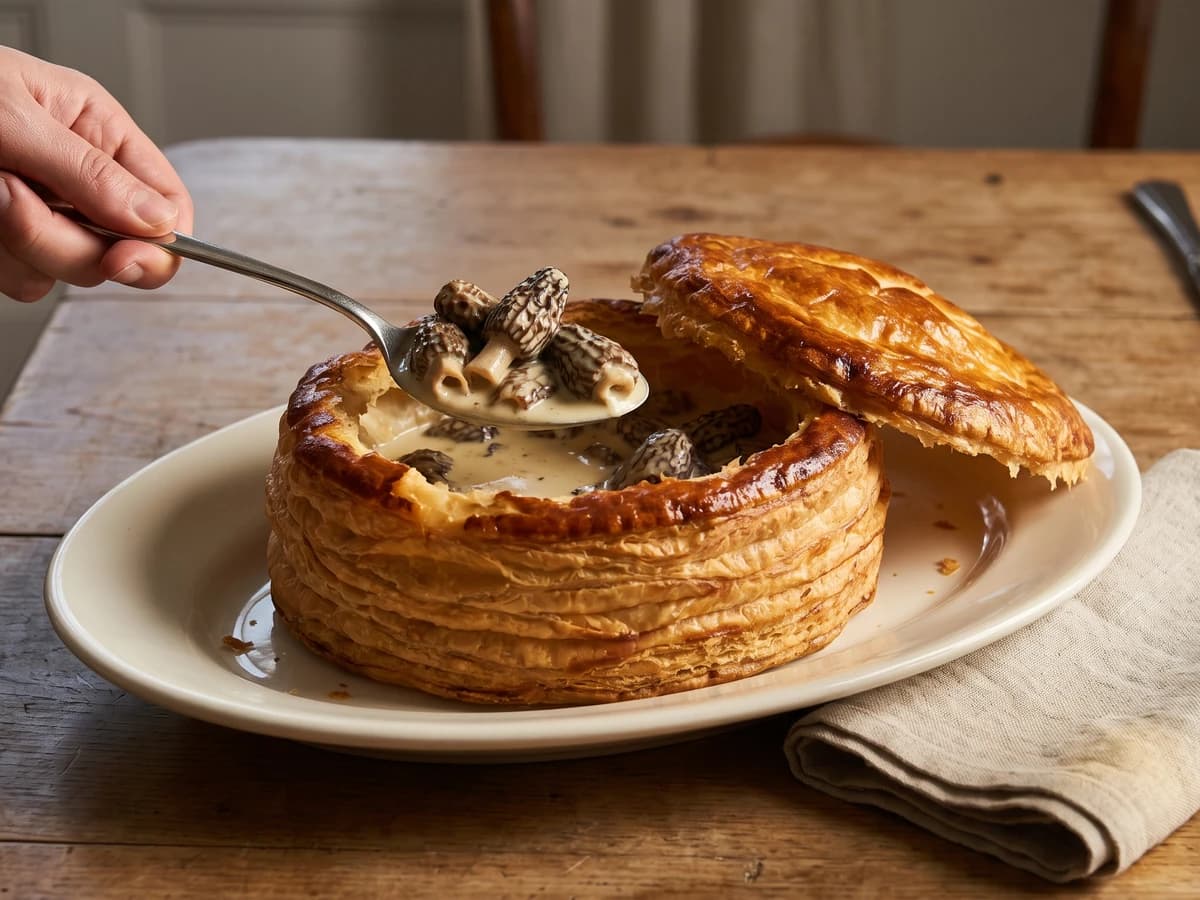
Morels surrender their liquor, then take it back as a glossy cream-and-butter sauce inside burnished puff pastry. The lesson is simple and absolute: reduce with patience, then heat gently and never boil.