
Chef Juliette
Flan aux Carottes
A pale short-paste shell holds silken, lightly sweet carrot purée beneath neat glazed half-discs, their butter syrup catching the light: a classical tart poised between vegetable course and sweet.
A cooking platform built around craft, culture, and the stories behind what we eat.
Created by Chef Juliette
Based on No. 2426, Cold Viennese Fritters, from Le Guide Culinaire (1907) by Auguste Escoffier
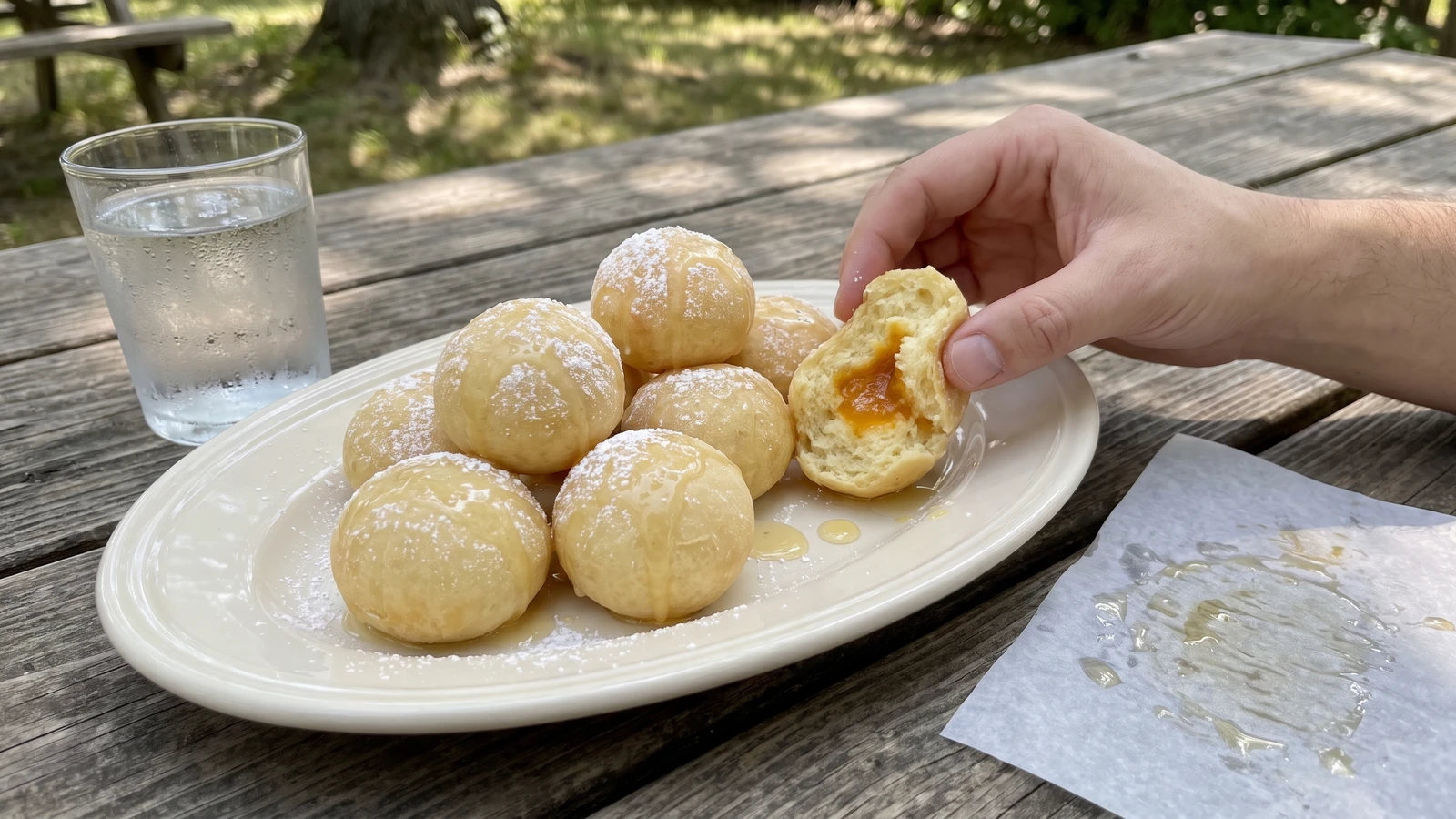
Beignets viennois fried straight from buttered paper, dipped briefly in hot lemon-vanilla syrup, then cooled just as their pale crust turns glossy. The lesson is timing: let them drink, never drown.
Beignets viennois froids (cold Viennese fritters) teach restraint at the syrup pan. The fritters leave the fat pale gold and delicately crusted, then pass through hot, lightly scented syrup only until the surface gleams and the pastry gains the slightest weight. Leave them soaking and they slump into sponge. The one true thing is simple: lift them the moment they begin to drink.
The original entry needed neither a saucier nor a stockpot, but it assumed something equally unavailable at home: a pastry station with a wide vat of fat, long buttered sheets of paper, trays, and enough hands to lower everything evenly. I replace those sheets with individual buttered parchment squares and make eight fritters in a compact pot of refined oil. The long sheets were brigade scaffolding. The soft pâte levée, the thirty-minute fermentation, the release from paper, and the immediate syrup dip are the dish, so all four stay. One cook, one stove, one evening.
Properly made, the beignets viennois are softly puffed, apricot-bright at the centre, and covered by a thin lemon-vanilla gloss that settles as they cool. Keep the dough tacky rather than correcting it with handfuls of flour, seal the jam inside with care, and watch the syrup above all. That brief dip decides the whole pastry.
Beignets viennois belong to the Parisian classical pâtisserie repertoire, where the enriched yeast-pastry habits associated with Vienna were translated into French service. The name viennois records that lineage, but it should not be mistaken for a claim that this exact paper-fried, syruped form arrived unchanged from Vienna. In the canon, the cold version could also appear as beignets à la Dauphine, filled with a fruit salpicon, a small diced fruit mixture, or with a cream preparation.
Quantity
1⅔ cups (400 ml / 200 g)
Quantity
⅓ cup (80 ml / 82 g)
Quantity
1½ teaspoons (7 ml / 5 g)
Quantity
1 tablespoon plus 2 teaspoons (25 ml / 20 g)
Quantity
1
Quantity
¾ teaspoon (4 ml / 4 g)
Quantity
2 tablespoons (30 ml / 28 g)
very soft
Quantity
2 tablespoons (30 ml / 15 g)
Quantity
1 teaspoon (5 ml / 5 g)
softened
Quantity
¼ cup (60 ml / 80 g)
Quantity
1 tablespoon (15 ml / 15 g)
Quantity
6 cups (1.4 L / 1.3 kg)
Quantity
1 cup (240 ml / 200 g)
Quantity
2 cups (480 ml / 480 g)
Quantity
3 wide strips
Quantity
½
split lengthwise
| Ingredient | Quantity |
|---|---|
| all-purpose flour | 1⅔ cups (400 ml / 200 g) |
| whole milk | ⅓ cup (80 ml / 82 g) |
| instant yeast | 1½ teaspoons (7 ml / 5 g) |
| granulated sugar | 1 tablespoon plus 2 teaspoons (25 ml / 20 g) |
| large egg | 1 |
| fine salt | ¾ teaspoon (4 ml / 4 g) |
| unsalted buttervery soft | 2 tablespoons (30 ml / 28 g) |
| all-purpose flour for rolling (optional) | 2 tablespoons (30 ml / 15 g) |
| unsalted butter for the parchmentsoftened | 1 teaspoon (5 ml / 5 g) |
| thick smooth apricot jam | ¼ cup (60 ml / 80 g) |
| water for sealing | 1 tablespoon (15 ml / 15 g) |
| neutral refined frying oil | 6 cups (1.4 L / 1.3 kg) |
| granulated sugar for the syrup | 1 cup (240 ml / 200 g) |
| water for the syrup | 2 cups (480 ml / 480 g) |
| lemon peel | 3 wide strips |
| vanilla beansplit lengthwise | ½ |
Warm the milk to about 30°C / 85°F, pleasantly warm but never hot, and whisk in the yeast. Combine the flour, sugar, and salt in a bowl, then add the milk and egg. Mix until no dry flour remains and knead for 4 minutes. Add the soft butter a little at a time, kneading until each addition disappears before the next. Continue for 6 to 8 minutes, until the pâte levée, the soft raised dough, looks satiny and stretches before tearing. It must remain tacky. If the butter smears and the dough turns greasy, chill the bowl for 10 minutes and resume kneading. Ça se rattrape. Do not bury it under more flour.
Shape the dough into a loose ball, place it in a lightly buttered bowl, and cover. Let it ferment in a warm place for 45 to 60 minutes, until it has expanded by about half and holds a fingertip impression for a moment. Do not wait for a full doubling because the filled fritters receive another fermentation. Press out the largest bubbles, cover again, and chill for 20 minutes so the soft dough can be rolled without being stiffened by flour.
Cut sixteen 10 cm / 4 inch squares of parchment and brush each lightly with the butter reserved for them. On a surface dusted with as little flour as possible, roll the dough 5 mm / ¼ inch thick. Stamp out sixteen rounds with a 6.5 cm / 2½ inch cutter, rerolling the scraps once. Set eight rounds on the buttered parchment squares. Place a scant 1½ teaspoons of apricot jam in each centre, leaving a clean 1 cm / ⅜ inch border. Moisten the borders lightly with water, cover with the remaining rounds, and press the edges together without crushing the centres. If jam touches a seam, wipe it away completely before sealing; if a weak spot tears, cover it with a thin moistened patch of dough. A sugared edge will open in the fat, but the patch saves it.
Cover the filled beignets loosely and let them ferment for exactly 30 minutes. They should look softly swollen, not doubled or fragile. Meanwhile combine the syrup sugar, syrup water, lemon peel, and vanilla bean in a wide saucepan. Bring to a boil, stirring only until the sugar dissolves, then simmer for 3 minutes. Remove the flavourings and keep the syrup hot, around 80°C / 175°F, without allowing it to boil hard while the fritters are dipped.
Pour the oil into a deep, heavy pot, leaving the pot no more than half full, and heat it to 170°C / 340°F. Lower one or two fritters into the oil with their parchment squares beneath them, holding a corner of each square with tongs. After 5 to 10 seconds the dough should release; withdraw the paper carefully. If it clings, lower that edge for a few seconds longer rather than pulling at the soft dough. Fry for 1½ to 2 minutes on the first side, turn once, and cook for another 1 to 2 minutes. Drain the beignets the moment their crust is set and only beginning to turn pale gold. Hold each on a skimmer for no more than 20 seconds, then take it directly to the syrup.
Slide each hot fritter into the hot light syrup, turn it once, and lift it after 5 to 10 seconds, just as the crust turns glossy and the fritter feels fractionally heavier. This is a passage through syrup, not a bath. If one begins to slump, support it flat between a skimmer and fork, drain it on the rack, and halve the dipping time for the rest. Ça se rattrape: the soft one will still taste splendid, and the remaining fritters will keep their shape.
Set the syruped fritters in a single layer on a lightly oiled wire rack and cool completely for about 45 minutes. Transfer them to a platter and chill for 30 minutes, uncovered until their surfaces set, then cover loosely if they must wait. Bring them out 10 minutes before serving so the butter-soft crumb relaxes while the fritters remain cold. Serve without powdered sugar or another disguise. The thin syrup gloss is their finish. À table!
1 serving (about 155g)
Culinary guides, cultural storytelling, and the editorial depth that makes cooking meaningful.
Discover Culinary ExplorerChef Juliette
A pale short-paste shell holds silken, lightly sweet carrot purée beneath neat glazed half-discs, their butter syrup catching the light: a classical tart poised between vegetable course and sweet.
Chef Juliette
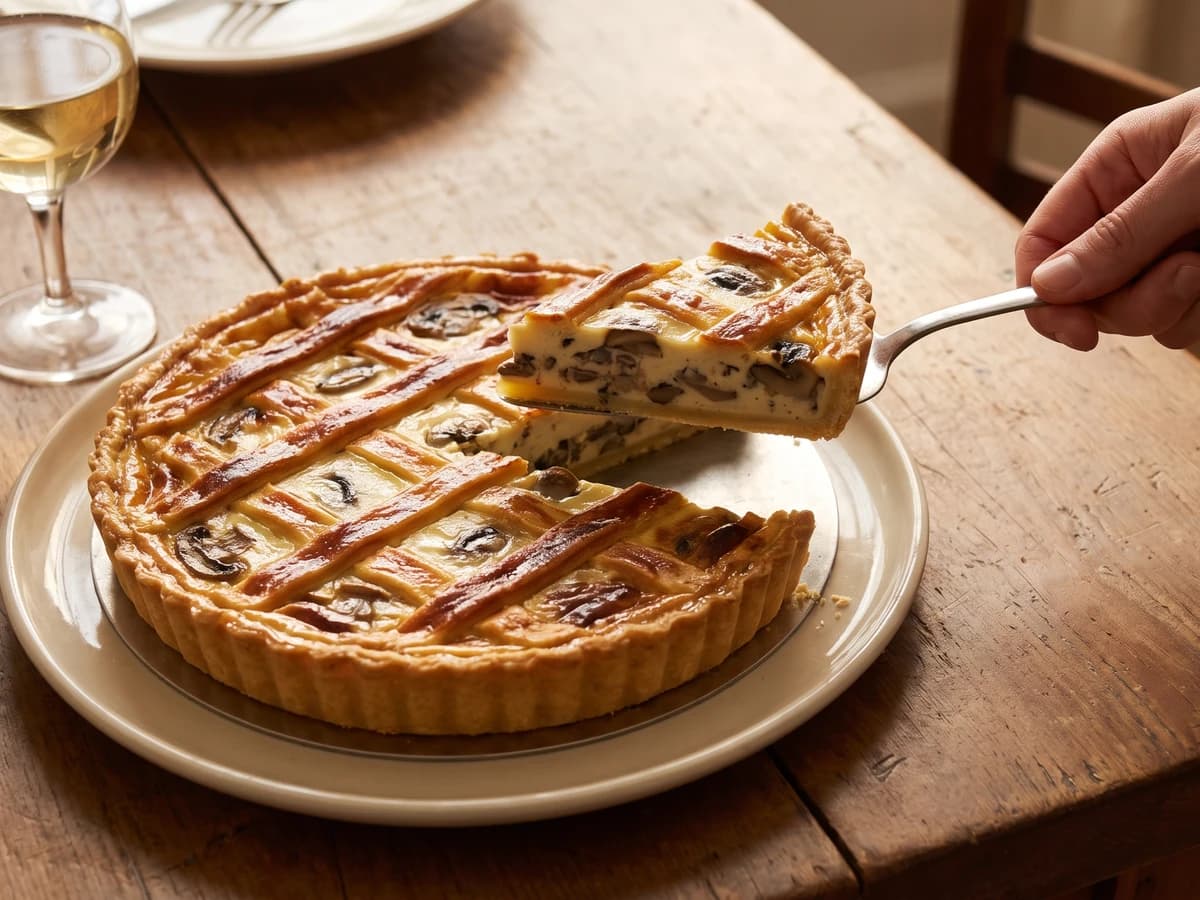
A hot mushroom flan under a butter-gold lattice, with cream reduced close around barely opened caps and a crisp short-paste base protected by one discipline: cool the filling completely.

Chef Juliette
Four little mushroom flans, latticed and gilded, baked hard and fast until butter-gold: a classical garnish scaled to the meat it accompanies and served before its crispness has time to fade.
Chef Juliette
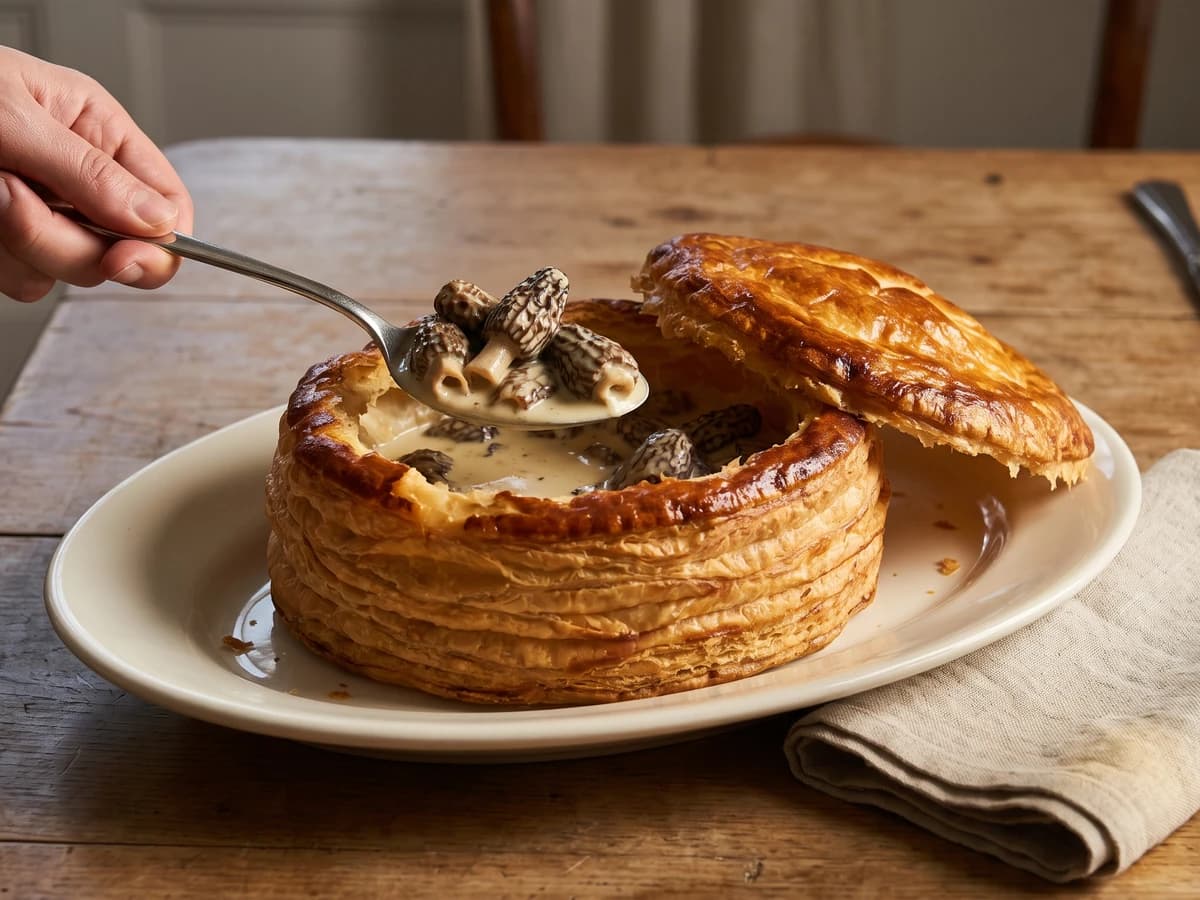
Morels surrender their liquor, then take it back as a glossy cream-and-butter sauce inside burnished puff pastry. The lesson is simple and absolute: reduce with patience, then heat gently and never boil.