
Chef Juliette
Flan aux Carottes
A pale short-paste shell holds silken, lightly sweet carrot purée beneath neat glazed half-discs, their butter syrup catching the light: a classical tart poised between vegetable course and sweet.
A cooking platform built around craft, culture, and the stories behind what we eat.
Created by Chef Juliette
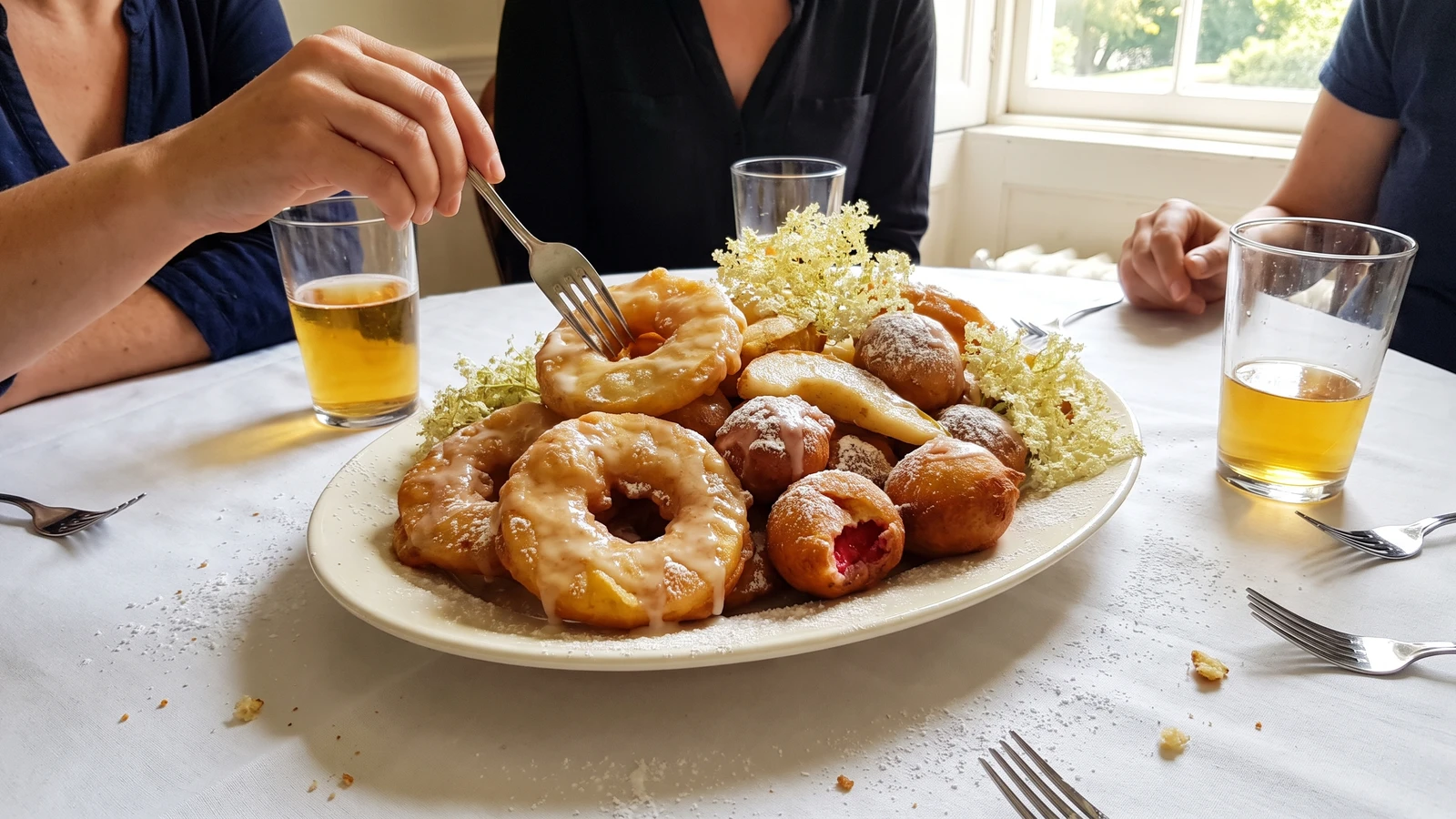
Based on No. 2419, Class 1. Fresh Fruit and Flower Fritters, from Le Guide Culinaire (1907) by Auguste Escoffier
Firm apple and pear take a short maceration; aqueous strawberry does not. This master pâte à frire turns both, plus delicate elderflower, into crisp, golden beignets for a generous celebration plate.
Beignets de fruits frais et de fleurs (fresh fruit and flower fritters) teach one rule before all others: moisture decides the method. Apple and pear can take a short maceration in sugar and kirsch because their flesh holds; strawberry cannot sit under sugar without giving up the juice that loosens the coating and spits in the fat. Flowers ask for no maceration at all. The batter is not the first decision. The fruit is.
The classical pastry station assumed separate trays of prepared fruit, brigade quantities, a cook stationed at the friture, the frying station, and a salamander ready to glaze the sugar. For one cook, one stove, one evening, a heavy pot and thermometer replace the dedicated fryer, the household broiler replaces the salamander, and one rested pâte à frire (frying batter) serves every piece. The scale and equipment have changed because that scaffolding served the brigade, not the flavor. Maceration by fruit type, a rested batter, and frying to order are the dish, and they stay.
When the beignets are right, apple turns tender inside its golden shell, pear becomes almost custardy, strawberry warms without collapsing, and elderflower fries into a delicate lace. Before the first piece meets the fat, drain and blot its surface until no bead of juice remains. That is the step that matters most.
Beignets de fruits frais et de fleurs belong to the French cuisine bourgeoise table, where orchard fruit and safely gathered blossoms moved easily from the household frying pan into the formal classical repertory. The division between firm and aqueous fruit is a cook's classification, not a botanical one: apple and pear withstand a sugared kirsch maceration, while strawberry must be protected from the juice that sugar pulls out. The salamander glaze came from the grand kitchen, but the fritter remained generous domestic food, served as soon as it left the fat.
Quantity
1 medium (about 180 g)
Quantity
1 medium (about 180 g)
Quantity
8 (about 180 g)
Quantity
6 small heads
stems left as handles
Quantity
2 tablespoons (30 ml / 25 g)
Quantity
2 tablespoons (30 ml / 28 g)
Quantity
1¼ cups (300 ml / 155 g)
divided between the batter, dredging, and adjustment
Quantity
¼ teaspoon (1.25 ml / 1.5 g)
Quantity
½ cup plus 2 tablespoons (150 ml / 150 g)
divided
Quantity
1 tablespoon (15 ml / 14 g)
melted and cooled
Quantity
2
Quantity
6 cups (1.4 L / 1.3 kg)
for frying
Quantity
½ cup (120 ml / 60 g)
for glazing
| Ingredient | Quantity |
|---|---|
| crisp apple | 1 medium (about 180 g) |
| firm ripe pear | 1 medium (about 180 g) |
| small, firm strawberries | 8 (about 180 g) |
| positively identified, unsprayed European elderflower heads (Sambucus nigra)stems left as handles | 6 small heads |
| superfine sugar | 2 tablespoons (30 ml / 25 g) |
| kirsch | 2 tablespoons (30 ml / 28 g) |
| all-purpose flourdivided between the batter, dredging, and adjustment | 1¼ cups (300 ml / 155 g) |
| fine sea salt | ¼ teaspoon (1.25 ml / 1.5 g) |
| lukewarm waterdivided | ½ cup plus 2 tablespoons (150 ml / 150 g) |
| unsalted buttermelted and cooled | 1 tablespoon (15 ml / 14 g) |
| large egg whites | 2 |
| neutral high-heat oilfor frying | 6 cups (1.4 L / 1.3 kg) |
| confectioners' sugarfor glazing | ½ cup (120 ml / 60 g) |
Wash the apple, pear, and strawberries, then dry them completely. Keep the firm fruit on one tray and the aqueous strawberries and elderflower on another, because their treatment must remain separate. Use only positively identified, unsprayed Sambucus nigra flower heads; never use foliage, berries, or a hedgerow flower you cannot identify with certainty. If the source is doubtful, omit the flowers and prepare a few more pieces of fruit.
Measure 1 cup (240 ml / 125 g) of the flour into a bowl and whisk in the salt. Make a well, then gradually whisk in ½ cup plus 1 tablespoon (135 ml / 135 g) of the lukewarm water and the melted butter until the pâte à frire is smooth and falls from the whisk in a broad ribbon. Cover and rest it for 45 minutes so the flour hydrates and the gluten relaxes. If small lumps remain, pass the batter through a sieve rather than beating it fiercely. Ça se rattrape.
Twenty minutes before frying, peel and core the apple and pear. Cut the apple crosswise into rings about ¼ inch (6 mm) thick and the pear lengthwise into eight wedges. Toss them gently with the superfine sugar and kirsch, then leave them for exactly 20 minutes, turning once. Drain in a sieve for 5 minutes and blot every surface thoroughly. The maceration perfumes and tenderizes firm fruit, but any syrup left outside it will send the batter sliding away.
Hull the strawberries only when the oil is nearly ready, keeping them whole, and blot the cut tops. Do not sugar or macerate them. Shake the elderflower heads gently to remove insects and trim each stem to a short handle; if they had to be rinsed, they must dry completely before frying. This restraint is not an omission. It keeps aqueous fruit intact and the flowers delicate.
Pour the frying oil into a heavy 5-quart pot, leaving the vessel no more than half full, and heat it to 355°F (180°C). Beat the egg whites to soft peaks, then fold them through the rested pâte à frire in three additions. The finished batter should coat a spoon without running bare in patches. If it is too thick, fold in the reserved water a teaspoon at a time; if it streams off like milk, sift in a teaspoon of the reserved flour. Make either correction gently so the whites keep their lift.
Dust the drained apple and pear very lightly with some of the reserved flour, shake away every excess, dip each piece in pâte à frire, and fry two or three at a time for 2 to 3 minutes, turning once, until evenly golden. Fry the elderflower next: hold a head by its stem, coat the blossoms, let the excess fall away, then lower it flower-side down for about 45 seconds before releasing and turning it for another 30 seconds. Trim away the tough stem after draining. Dust, dip, and fry the strawberries last for 1½ to 2 minutes, just until their coating is golden and set. Keep the oil between 340°F and 355°F (170°C and 180°C), allowing it to recover between batches, and drain every fritter on a wire rack. If a coating slips, the surface was wet or the oil was cool. Lift the piece out, let it cool for a minute, blot the exposed fruit, dust it lightly with flour, return the oil to temperature, and dip it again. Ça se rattrape. Skim loose batter fragments before they burn.
Set a broiler-safe rack about 6 inches (15 cm) below a hot broiler. Arrange the drained beignets in one layer on a wire rack set over a rimmed sheet and dust them generously with confectioners' sugar. Broil for 15 to 30 seconds, watching without looking away, until the sugar melts into glossy freckles. This brief broiler finish is the home equivalent of the salamander. If a few patches remain matte, dust them again at the table instead of overcooking the fruit for the sake of a uniform glaze. Pile the beignets on a warm platter and serve immediately. À table!
1 serving (about 250g)
Culinary guides, cultural storytelling, and the editorial depth that makes cooking meaningful.
Discover Culinary ExplorerChef Juliette
A pale short-paste shell holds silken, lightly sweet carrot purée beneath neat glazed half-discs, their butter syrup catching the light: a classical tart poised between vegetable course and sweet.
Chef Juliette
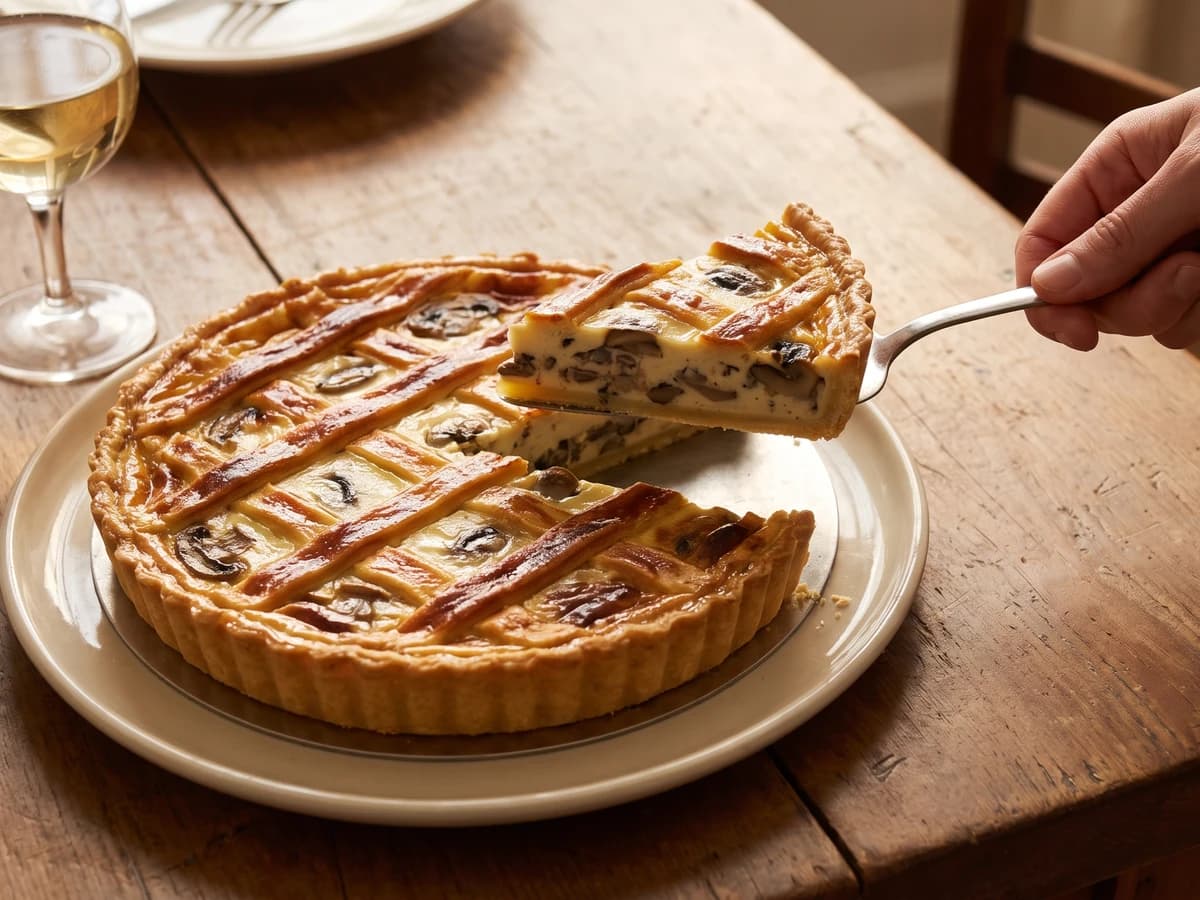
A hot mushroom flan under a butter-gold lattice, with cream reduced close around barely opened caps and a crisp short-paste base protected by one discipline: cool the filling completely.

Chef Juliette
Four little mushroom flans, latticed and gilded, baked hard and fast until butter-gold: a classical garnish scaled to the meat it accompanies and served before its crispness has time to fade.
Chef Juliette
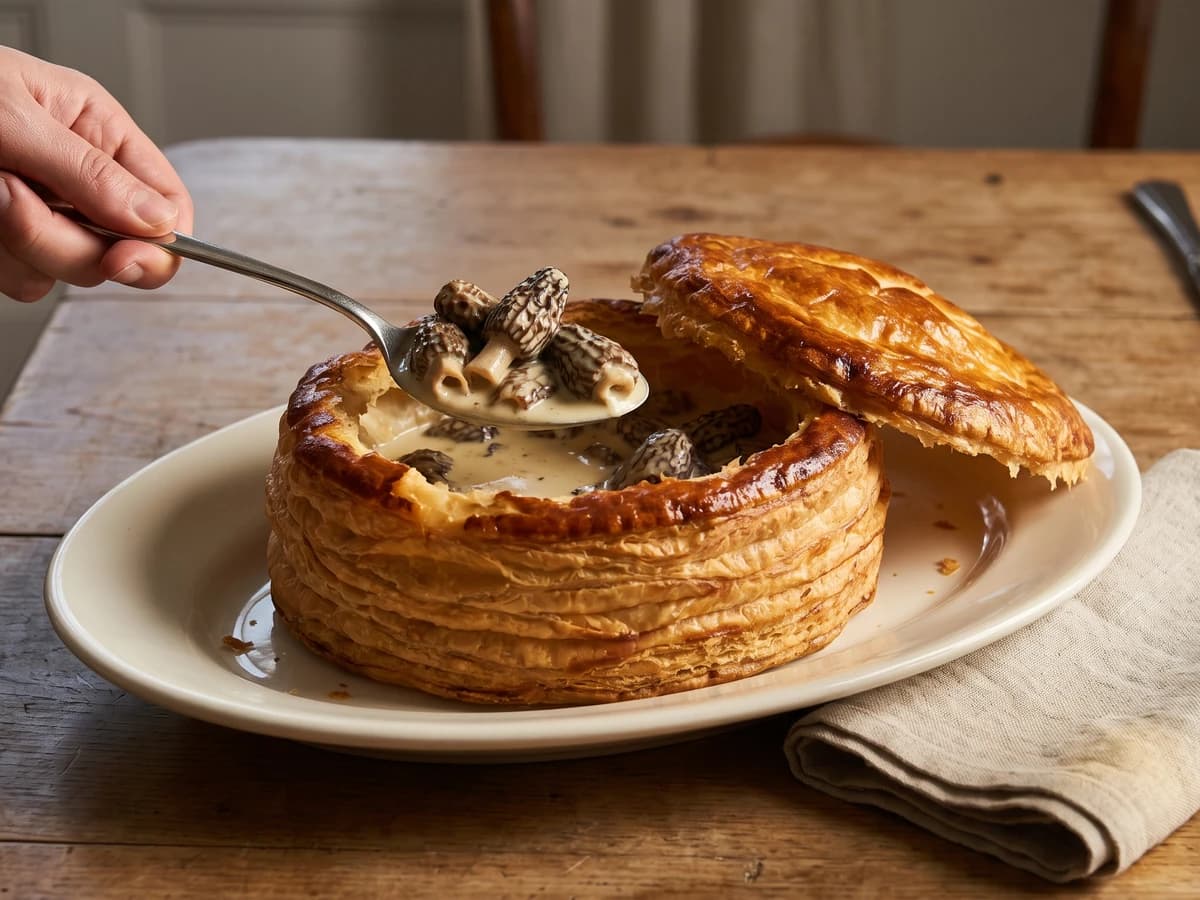
Morels surrender their liquor, then take it back as a glossy cream-and-butter sauce inside burnished puff pastry. The lesson is simple and absolute: reduce with patience, then heat gently and never boil.