Chef Juliette
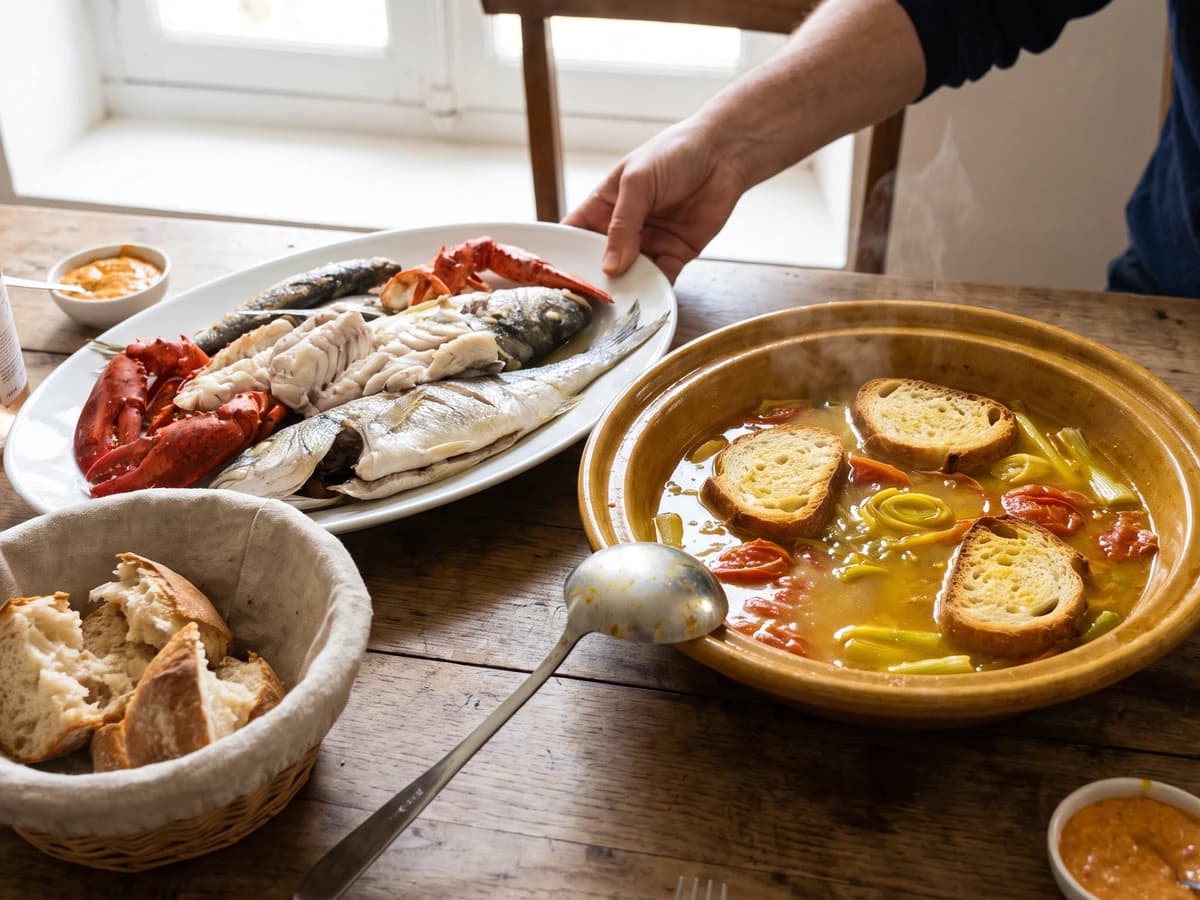
Bouillabaisse à la Marseillaise
Marseille's great fish stew, saffron-gold and garlic-scented, proves that a hard boil can be the careful choice: it binds olive oil into broth before the whole pot meets bread.
A cooking platform built around craft, culture, and the stories behind what we eat.
Created by Chef Juliette
Based on No. 241, Bisques, from Le Guide Culinaire (1907) by Auguste Escoffier
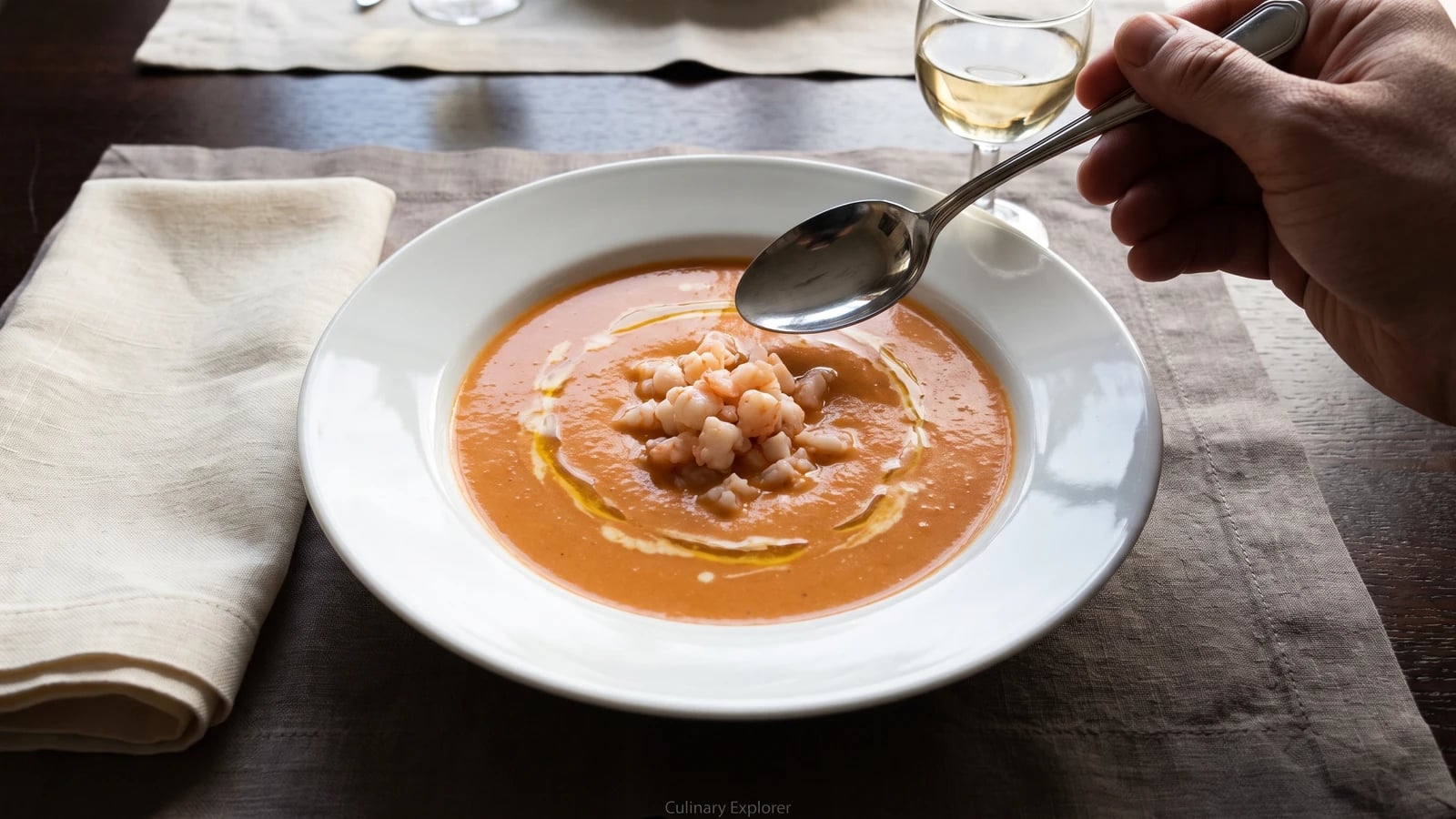
Bisque de crustacés proves the shells are the treasure: browned with their aromatic base, simmered with the book’s exact measure of rice, crushed, strained, and finished with cream and reserved shellfish dice.
Bisque de crustacés (shellfish bisque) teaches extraction. The one true thing to know before touching the pan is this: the shells are the soup, while the cream only rounds it. Brown the shells until they smell deeply roasted, crush them thoroughly, and their modest contents become a bisque with the full, sweet depth of the sea.
The original entry assumed a saucier tending a cullis, a mortar large enough for the shells, and a tamis for the final passing. Your honest equivalents are a heavy saucepan, a potato masher, a countertop blender, and a fine sieve. The entry permits rice, fish velouté, or bread crusts fried in butter as thickeners; this home version chooses rice at its exact proportion, six ounces for two pounds of shellfish, because it makes a self-contained pot for one cook, one stove, one evening.
The separate cullis station was brigade scaffolding and can go. Thorough browning, crushing, and straining are the dish, so they stay. The step that decides everything is the browning: take the shells to deep coral and build a chestnut-colored fond without letting either turn black.
Bisque de crustacés belongs less to one province than to the classical kitchens of Paris, where lobster, crayfish, and shrimp arriving from Atlantic, Channel, and river markets were cooked into a strained cullis. Its defining practice is shellfish cooked with Mirepoix (No. 228), then crushed and passed, not simply cream stirred into any puréed soup; rice, fish velouté, and butter-fried bread crusts are all canonical thickeners. The familiar claim that the name comes neatly from the Bay of Biscay remains debated, while the cooking method does not: extract the shells, strain scrupulously, and reserve some meat for the garnish.
Quantity
2 pounds (900 g)
preferably head-on
Quantity
6 tablespoons (90 ml / 3 ounces / 85 g)
divided
Quantity
¾ cup plus 2 tablespoons (210 ml / 6 ounces / 170 g)
Quantity
10 cups (2.4 L / 2.4 kg), plus more as needed
Quantity
1 cup (240 ml / 240 g)
Quantity
2 teaspoons (10 ml / 12 g)
divided
Quantity
¼ teaspoon (1.25 ml / 0.5 g)
| Ingredient | Quantity |
|---|---|
| whole raw shell-on shrimppreferably head-on | 2 pounds (900 g) |
| Mirepoix (No. 228) | 2 cups (475 ml / 425 g) Mirepoix (No. 228) |
| unsalted butterdivided | 6 tablespoons (90 ml / 3 ounces / 85 g) |
| short-grain white rice | ¾ cup plus 2 tablespoons (210 ml / 6 ounces / 170 g) |
| cold water | 10 cups (2.4 L / 2.4 kg), plus more as needed |
| heavy cream | 1 cup (240 ml / 240 g) |
| fine sea saltdivided | 2 teaspoons (10 ml / 12 g) |
| freshly ground white pepper | ¼ teaspoon (1.25 ml / 0.5 g) |
Peel the shrimp over a bowl so every drop of their juices is saved, keeping all the heads and shells. Measure 6 ounces (170 g) of the peeled meat, cut it into small dice, cover, and refrigerate it for the garnish. Keep the remaining meat with the shells. Reserve this portion now, as the source directs; once the rest has been crushed into the soup, there is no garnish to recover.
Melt 3 tablespoons of the butter in a heavy 6-quart saucepan over medium-high heat. Add the remaining shrimp meat, heads, shells, and captured juices, then cook until their moisture evaporates and the shells turn deep coral. Add the Mirepoix (No. 228) and continue cooking for 8 to 10 minutes, stirring and pressing the shells against the pot, until a chestnut-colored fond, the browned film on the pot floor, forms beneath them. If that fond threatens to blacken, lower the heat and loosen the dark brown patches with a spoonful of the measured water. Brown is flavor; black is bitterness and cannot be disguised.
Stir in the rice and coat every grain in the buttery shell mixture for 1 minute. Add the water gradually, scraping up every trace of fond, then bring the pot just to a boil. Lower the heat and simmer uncovered for 35 to 40 minutes, stirring across the bottom occasionally, until the rice crushes easily between two fingers and the liquid tastes intensely of shellfish. A hard boil drives away aroma and throws shell fragments against the sides; keep the surface at a steady tremble.
Crush the shells and heads firmly with a potato masher while they remain in the liquid. Working in small batches, never filling the blender more than one-third full, blend the mixture with the center cap removed and a folded towel held over the opening so pressure can escape safely. Pass it first through a coarse strainer, then through a fine-mesh sieve, pressing the rice and liquid through with a ladle but leaving the dry shell chaff behind. If the soup feels gritty on the tongue, don’t serve it and hope nobody notices. Ça se rattrape: dampen a clean fine sieve and pass the soup once more without forcing through the last dry spoonful.
Return the cullis, the strained shellfish purée, to the clean saucepan and measure its volume. Simmer gently if you have more than 7 cups (1.65 L), or add enough hot water to reach that amount if you have less. Stir in 1½ teaspoons of the salt and all the white pepper, then simmer for 8 minutes, stirring often, until the bisque coats a spoon in a light, even layer. Rice continues tightening as it stands, so keep it flowing rather than pasty.
Melt 1 tablespoon of the butter in a small skillet over medium heat. Add the reserved diced shrimp with a pinch of the remaining salt and cook for 1 to 2 minutes, turning gently, just until the pieces become opaque and firm at their edges. Lift them out at once. They will warm again in the bowl, and cooking them hard now would turn the garnish rubbery.
Stir the cream into the cullis and warm it to the barest tremble. Taste and use the remaining salt as needed, then take the pot completely off the heat. Montez au beurre (mount with butter) by whisking in the final 2 tablespoons of cold butter, a small piece at a time, until the surface gleams and the bisque feels silky on the tongue. Do not boil it after this point. If butter gathers in separate beads, the soup became too hot; take it off the stove and whisk in a tablespoon of cold cream until the emulsion returns.
Warm the soup plates, divide the reserved shrimp dice among them, and ladle the bisque around the garnish so the pieces remain distinct. Serve small, generous bowls while the surface still carries its butter sheen. The soup needs no herb confetti and no decoration beyond the shellfish it was made from. À table!
1 serving (about 240g)
Culinary guides, cultural storytelling, and the editorial depth that makes cooking meaningful.
Discover Culinary ExplorerChef Juliette
Marseille's great fish stew, saffron-gold and garlic-scented, proves that a hard boil can be the careful choice: it binds olive oil into broth before the whole pot meets bread.
Chef Juliette
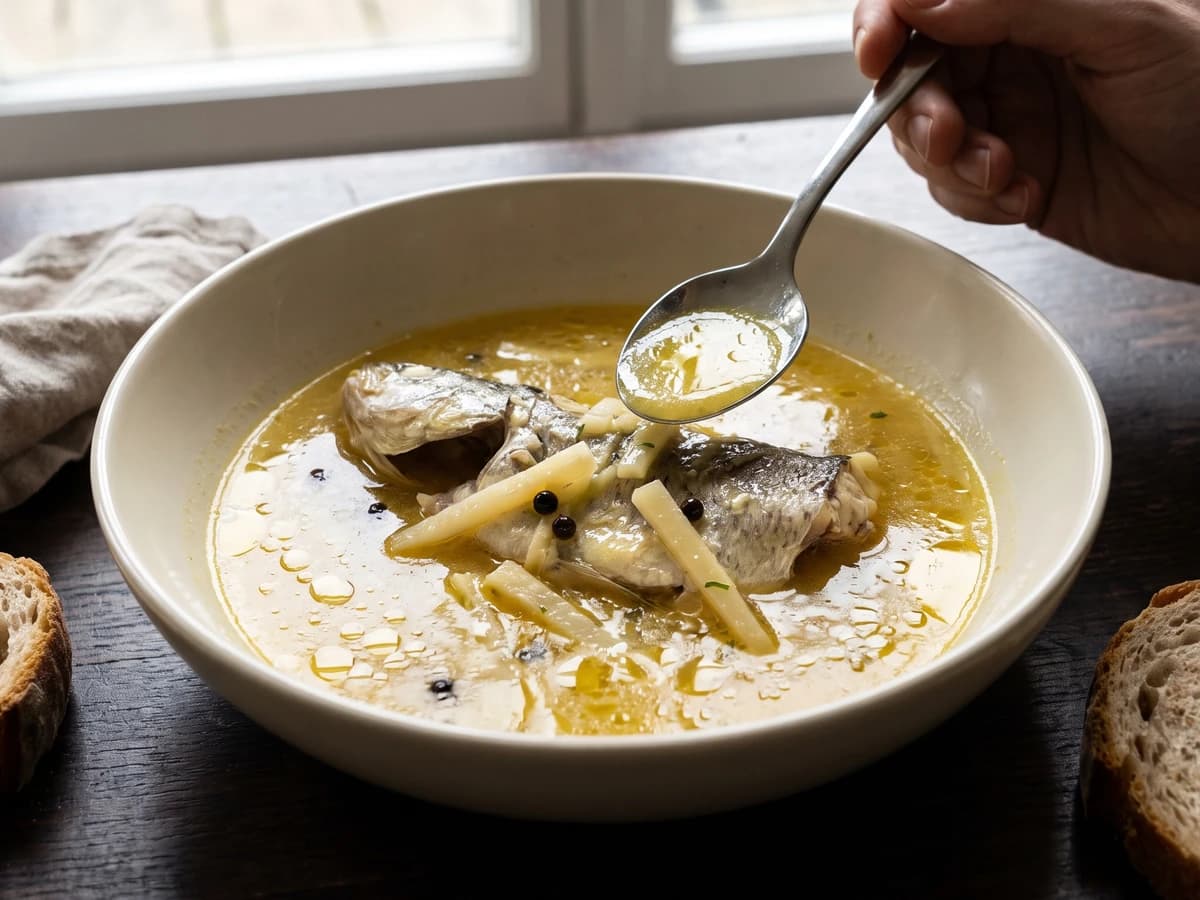
Waterzoi asks fresh, bone-in river fish to thicken its own buttery broth, with parsley root and pepper for company. No flour, no stockpot, just a brisk simmer watched closely.
Chef Juliette
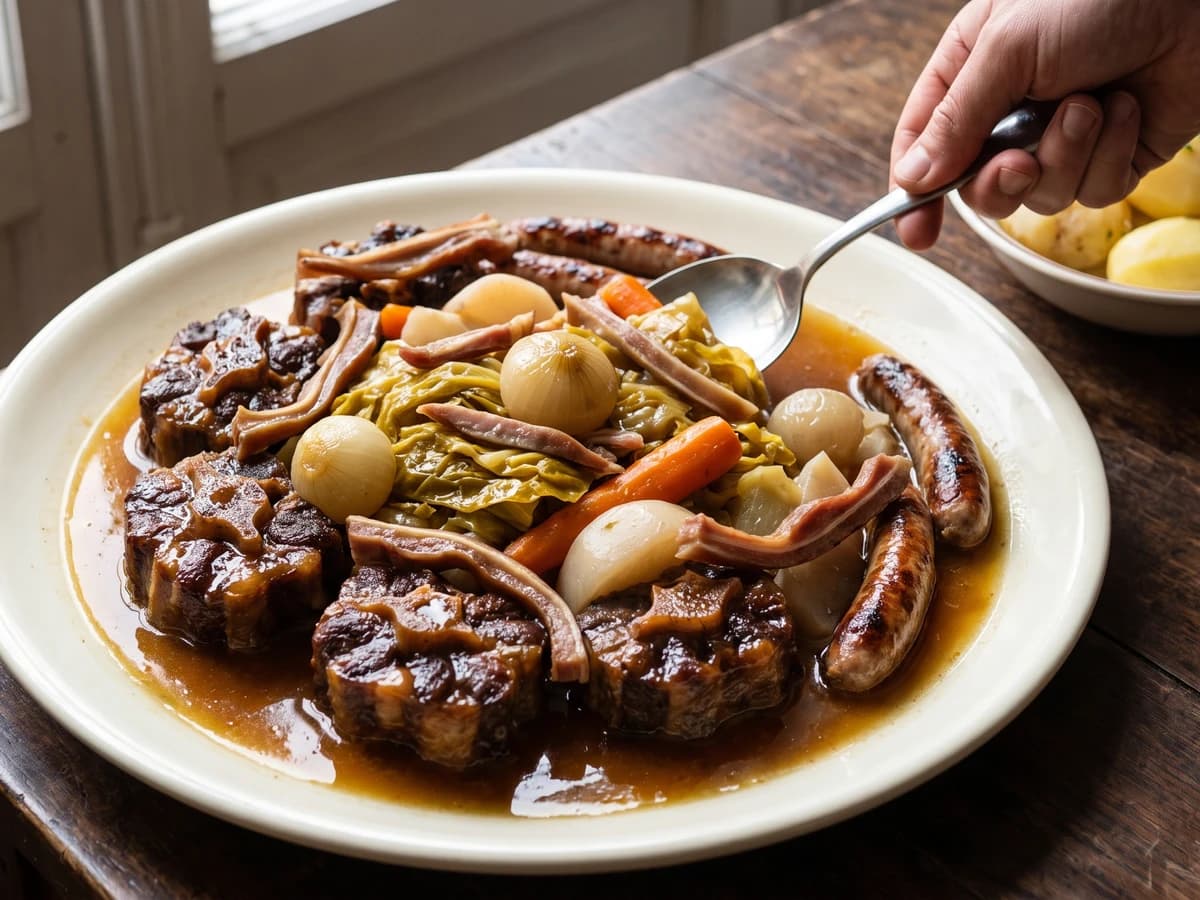
Queue de Bœuf en Hochepot gathers oxtail, pig's trotter and ear, cabbage, roots, and grilled chipolatas around a clear, gelatin-rich broth whose quiet simmer keeps every piece tender and distinct.
Chef Juliette
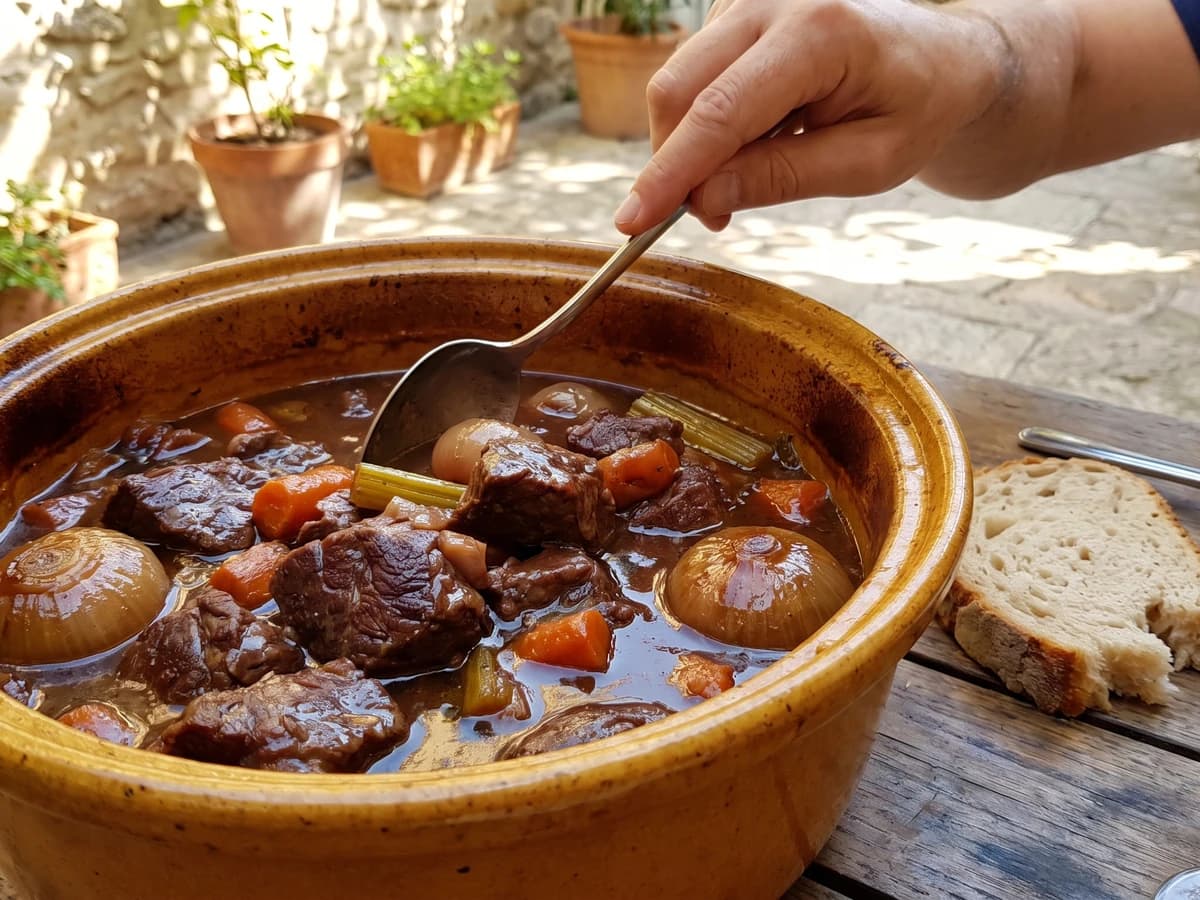
Beef shoulder larded with bacon, sharpened by red wine and vinegar, then sealed with garlic, vegetables, and dry lemon peel until the low oven turns it yielding and the gravy darkly glossy.