
Chef Juliette
Various Almond Preparations
Five almond preparations, one discipline: remove the skins cleanly, dry every kernel through, then cut, toast, or cloak it in pale caramel without letting its fragrant oils escape.
A cooking platform built around craft, culture, and the stories behind what we eat.
Created by Chef Juliette
Based on No. 2401, Pastry Cream, from Le Guide Culinaire (1907) by Auguste Escoffier
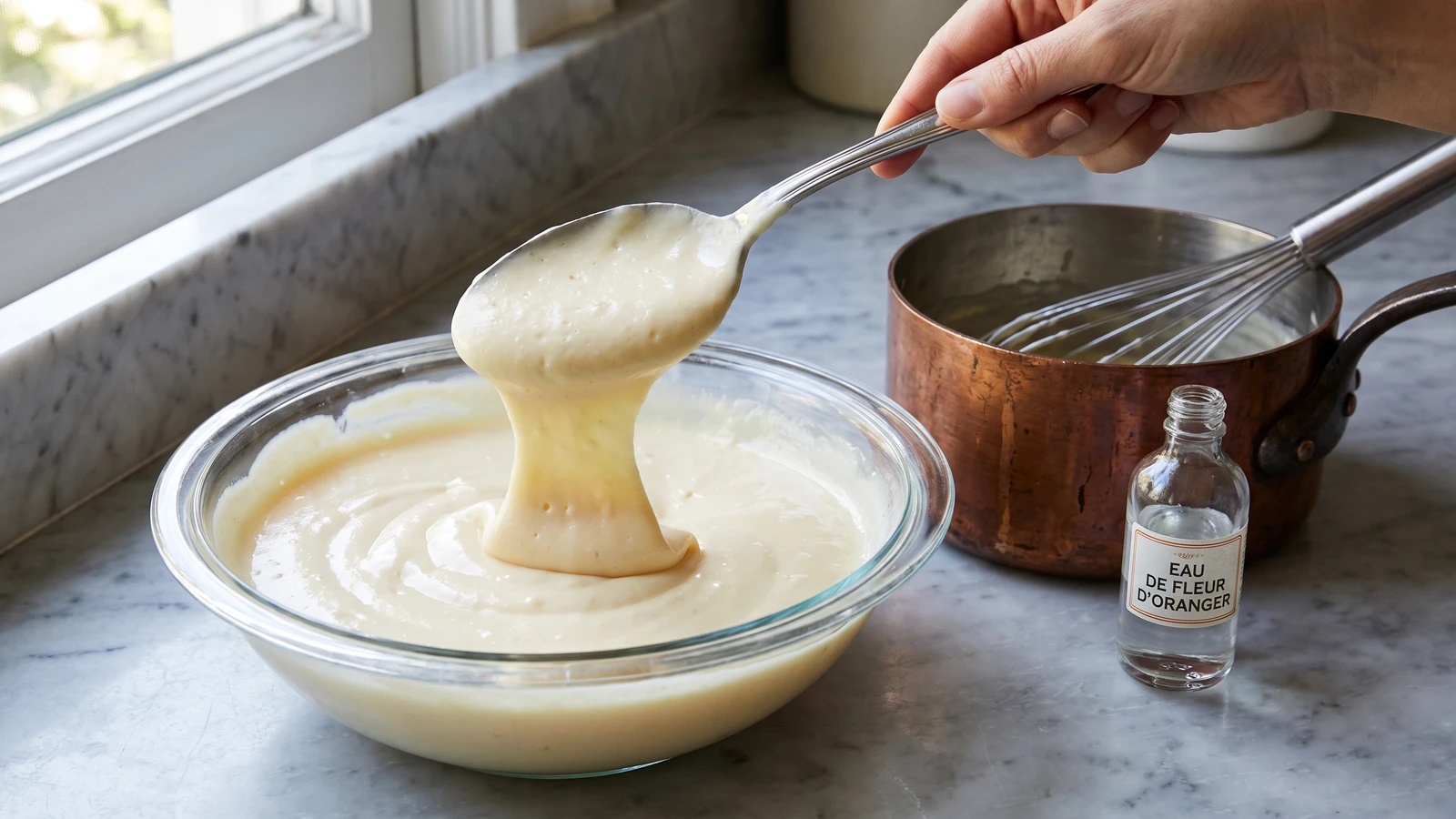
Crème pâtissière made airy with beaten whites and held with gelatin, scented faintly with orange flower: boil the base fully, then fold while hot for a Saint-Honoré cream that sets light.
Crème pâtissière teaches the nerve required of every flour-thickened custard: once it boils, you keep stirring and let it boil. Stop early and raw flour remains; fear the bubbles and the cream won't gain the strength to carry its crown of beaten whites.
The brigade formula assumed twelve yolks, twelve whites, a quart of milk, and two pairs of hands, one beating while the other guarded the pan. At home, every measure is quartered without disturbing the ratios, and the whites are beaten first with an electric mixer. Pasteurized shell eggs are the one ingredient update because their whites enter off the heat. One cook, one stove, one evening.
The brigade's extra hands were scaffolding and can go. The orange-flower water, gelatin, hot folding, and proper boil are the dish and must stay. When the first heavy bubble breaks, add the flavoring and gelatin, then boil for two minutes under constant stirring; that is the step that decides the cream.
Crème pâtissière belongs to the working grammar of Parisian pâtisserie, where it fills choux, tarts, and layered sweets, while this lightened, gelatin-set formula is tied especially to the Saint-Honoré. The naming has never been entirely peaceful: many pastry cooks call the finished mixture crème Saint-Honoré and reserve crème pâtissière for the flour-thickened base, but this source does the reverse and calls the unlightened base a Frangipan. Its beaten whites, gelatin, and orange-flower water therefore remain exactly where the entry places them.
Quantity
1 leaf (about 2 g)
Quantity
3
separated, yolks and whites reserved separately
Quantity
1 cup (240 ml / 113 g)
Quantity
¼ cup (60 ml / 28 g)
Quantity
1 cup (240 ml / 245 g)
Quantity
2 to 3 drops
| Ingredient | Quantity |
|---|---|
| gelatin leaf | 1 leaf (about 2 g) |
| large pasteurized shell eggsseparated, yolks and whites reserved separately | 3 |
| powdered sugar | 1 cup (240 ml / 113 g) |
| all-purpose flour | ¼ cup (60 ml / 28 g) |
| whole milk | 1 cup (240 ml / 245 g) |
| orange-flower water | 2 to 3 drops |
Submerge the gelatin leaf in plenty of cold water for 5 to 10 minutes, until completely limp. Leave it there while you prepare the eggs, then lift it out and squeeze away the excess water just before it enters the cream. Measure the orange-flower water now; the pan will demand your full attention once it boils.
Put the egg whites in a perfectly clean, dry bowl and beat them to a stiff froth. The peaks should stand upright while remaining glossy and supple, never dry or grainy. Hold them at room temperature for no longer than 10 minutes while you cook the base. This order replaces the second cook the brigade formula assumed.
Whisk the powdered sugar and flour together in a heatproof bowl, breaking up every flour pocket, then work in the yolks. The mixture will be very stiff, closer to damp sand than batter. This is exactly right. Bring the milk to a full boil in a heavy saucepan. Pour about one-quarter of it onto the yolk mixture while whisking briskly, continue until smooth, then whisk in the remaining hot milk and return everything to the saucepan.
Cook over medium heat, stirring continuously with the whisk and reaching firmly into the bottom edge of the pan. The cream will thicken abruptly, then release its first heavy bubble. Add the squeezed gelatin and orange-flower water at once. Keep the cream at a steady bubbling boil for 2 minutes, never less than one full minute, stirring without pause, until the flour tastes cooked and the surface looks thick and glossy. If lumps appear, pull the pan from the heat and whisk hard. If some remain, pass the hot cream through a fine sieve into a clean saucepan and finish the boiling time. Ça se rattrape. If the bottom scorches, immediately pour the clean upper cream into another pan without scraping the burned layer.
Take the pan off the heat. Whisk one-third of the beaten whites briskly into the boiling-hot cream to loosen it, then pour this lightened base over the remaining whites. Fold with a flexible spatula, cutting through the middle, sweeping across the bottom, and turning the bowl until no white streaks remain. Work promptly but don't beat out the air. If gelatin begins tightening around the edge before the whites are incorporated, set the bowl briefly over barely warm water and continue folding until the cream loosens.
Use the crème pâtissière while it is still supple. Spoon or pipe it into a prepared Saint-Honoré, or divide it among 6 small dessert glasses. Cover without pressing anything against the surface and refrigerate for at least 2 hours, until softly set. Once cold, don't whisk it again or the airy structure and gelatin set will be lost. Serve well chilled. À table!
1 serving (about 90g)
Culinary guides, cultural storytelling, and the editorial depth that makes cooking meaningful.
Discover Culinary ExplorerChef Juliette
Five almond preparations, one discipline: remove the skins cleanly, dry every kernel through, then cut, toast, or cloak it in pale caramel without letting its fragrant oils escape.

Chef Juliette
A pastry pantry lesson in one tray: filberts warmed only until their red skins release, rubbed clean, cooled, and chopped into a fragrant mise-en-place for cakes, creams, pralines, and petits fours.

Chef Juliette
The smallest pâtisserie discipline decides whether a cake leaves its mould intact: clarified butter in every corner, followed by the lightest veil of dry flour or fécule.

Chef Juliette
Four whites, one spotless bowl, and a patient change of speed: whisk gently until loosened, then briskly to glossy stiffness, with powdered sugar waiting if the foam begins to granulate.