
Chef Juliette
Flan aux Carottes
A pale short-paste shell holds silken, lightly sweet carrot purée beneath neat glazed half-discs, their butter syrup catching the light: a classical tart poised between vegetable course and sweet.
A cooking platform built around craft, culture, and the stories behind what we eat.
Created by Chef Juliette
Based on No. 2400, Frangipan for Fried Cream, from Le Guide Culinaire (1907) by Auguste Escoffier
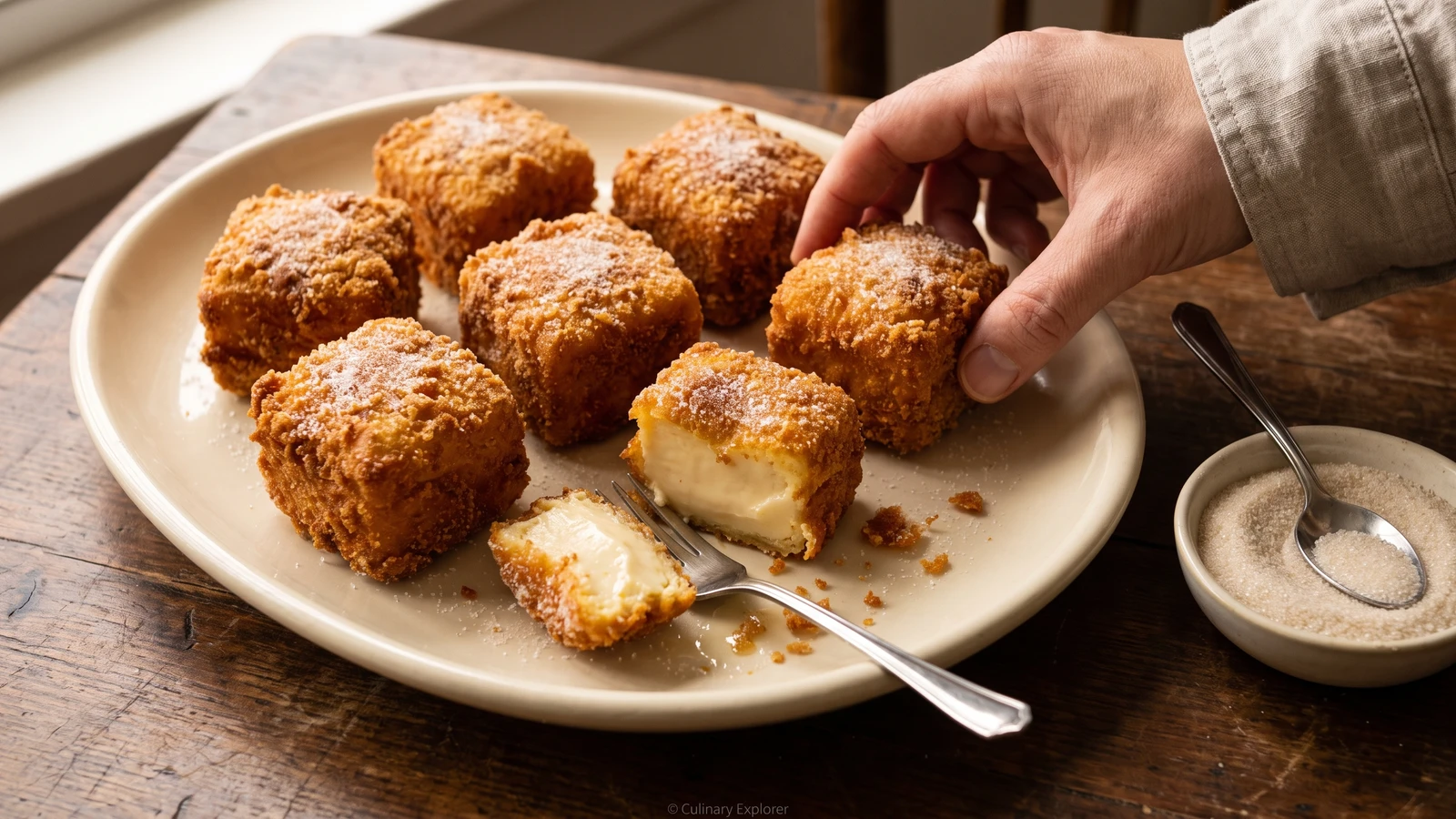
Firm custard, chilled one inch thick, breaded and fried until its shell turns butter-gold while the centre stays tender: the pastry-kitchen lesson that cold structure makes clean frying possible.
Crème Frangipane pour Crème Frite (firm custard for frying) teaches the discipline behind every cut-and-fried cream: structure comes from cooking, but clean edges come from cold. Before you touch the frying pan, know this one thing. The cream must take a knife without dragging; if the edge smears, it is not cold enough.
The source formula assumed a pâtissier, a marble slab, and a batch large enough for continuous service. This version halves those quantities exactly, preserving the proportions of flour, sugar, eggs, milk, and butter, then exchanges the marble for buttered parchment on a small tray. The brigade batch and marble are scaffolding and can go. The one-inch layer, buttered surface, complete chill, and careful frying are the dish and must stay. One cook, one stove, one evening.
The reward is a deep-golden crumb enclosing a tender ivory centre, rich with eggs and butter but firm enough to hold in your fingers. Give the one-inch slab its full chill before cutting, because cold is the hinge on which the whole dish turns.
Crème frite belongs to the French classical pastry kitchen, particularly the Parisian table of hot sweet entremets, where set creams were cut, coated, and fried shortly before service. Its name can mislead a modern cook: this source's frangipane contains no ground almonds, but is a flour-and-egg custard deliberately strengthened for frying. Marble helped a large kitchen cool the cream quickly, yet the essential method passed easily to the bourgeois home table because it asks only for a shallow tray, thorough chilling, and clean hot fat.
Quantity
2 cups (480 ml / 495 g)
Quantity
⅔ cup (160 ml / 85 g)
Quantity
⅓ cup plus 1 tablespoon (95 ml / 85 g)
Quantity
5 (about 90 g)
Quantity
2 (about 100 g without shells)
Quantity
1 tablespoon (15 ml / 14 g)
for the cream
Quantity
1 tablespoon (15 ml / 14 g)
divided between the tray and cream surface
Quantity
½ cup (120 ml / 60 g)
for coating
Quantity
2 (about 100 g without shells)
beaten for coating
Quantity
1½ cups (360 ml / 150 g)
Quantity
4 cups (1 litre / about 920 g)
Quantity
¼ cup (60 ml / 50 g)
for finishing
| Ingredient | Quantity |
|---|---|
| whole milk | 2 cups (480 ml / 495 g) |
| plain flour | ⅔ cup (160 ml / 85 g) |
| granulated sugar | ⅓ cup plus 1 tablespoon (95 ml / 85 g) |
| large egg yolks | 5 (about 90 g) |
| large whole eggs | 2 (about 100 g without shells) |
| unsalted butterfor the cream | 1 tablespoon (15 ml / 14 g) |
| softened unsalted butterdivided between the tray and cream surface | 1 tablespoon (15 ml / 14 g) |
| plain flourfor coating | ½ cup (120 ml / 60 g) |
| large eggsbeaten for coating | 2 (about 100 g without shells) |
| fine dry breadcrumbs | 1½ cups (360 ml / 150 g) |
| neutral frying oil | 4 cups (1 litre / about 920 g) |
| fine granulated sugarfor finishing | ¼ cup (60 ml / 50 g) |
Line a small rimmed tray with parchment and use half the softened butter to coat it lightly. Leave enough open space to spread the cooked cream into an 8 by 6 inch (20 by 15 cm) rectangle about one inch (2.5 cm) thick. Set the tray beside the stove, because the finished cream will stiffen quickly and must be spread while hot.
Warm the milk in a heavy saucepan over medium heat until a ring of small bubbles gathers at the edge. Keep it just below a boil. Meanwhile, whisk the flour and sugar together in a heatproof bowl, add the yolks and whole eggs, and whisk until you have a completely smooth, thick paste with no dry flour hiding at the bottom.
Pour half the hot milk into the egg mixture in a thin stream, whisking constantly, then whisk in the remainder. Return everything to the saucepan and cook over medium heat, scraping the corners and floor without pause. The cream will thicken abruptly. Once heavy bubbles begin breaking through it, lower the heat and beat with a sturdy whisk or spatula for two full minutes, until glossy, very stiff, and free of any raw flour taste. Beat in the tablespoon of butter. If lumps appear, pull the pan off the heat and whisk vigorously; if a few remain, press the hot cream through a coarse sieve. Ça se rattrape. If the bottom catches, transfer the cream immediately without scraping the scorched layer.
Scrape the hot cream onto the prepared tray and spread it promptly into the measured rectangle, keeping the layer an even one inch thick. Smooth the top, then brush it carefully with the remaining softened butter; this is the source method, and the thin butter film prevents a leathery skin. Let it cool for about 20 minutes, then refrigerate uncovered until cold before covering it. Chill for at least four hours, preferably overnight.
Turn the cold slab onto a board and peel away the parchment. With a long knife wiped clean between cuts, divide it into twelve 2 inch (5 cm) squares. If it will not hold a clean edge, it is not cold enough. Slide the pieces back onto the tray and chill for another 30 minutes, or place them in the freezer for 15 minutes. Do not add more flour to compensate; the ratio is right, and cold is the remedy.
Paner à l'anglaise (coat with flour, egg, and breadcrumbs): place the coating flour, beaten eggs, and breadcrumbs in three shallow dishes. Dust each square completely with flour and shake off the excess, coat it in egg, then press breadcrumbs over every face and edge. Bare spots become leaks in the oil, so inspect the corners closely. Set the coated pieces on a rack and refrigerate for 30 minutes to fix the crust.
Pour the oil into a deep, heavy saucepan, filling it no more than halfway, and heat it to 350°F (175°C). Lower two or three pieces into the oil, away from your body, and fry for 2 to 3 minutes, turning once, until evenly deep gold. Let the oil return to temperature between batches. If the first piece opens, lift it out at once, patch any thin coating on the remaining pieces with egg and breadcrumbs, and return them to the cold for 20 minutes before continuing.
Lift the fried pieces onto a wire rack and leave them for one minute so excess oil falls away without softening the underside. Roll or dust them lightly with fine sugar while the crust is still warm, then rest for three minutes before serving. The outside should be crisp and deeply golden, the centre tender and intact. À table!
1 serving (about 330g)
Culinary guides, cultural storytelling, and the editorial depth that makes cooking meaningful.
Discover Culinary ExplorerChef Juliette
A pale short-paste shell holds silken, lightly sweet carrot purée beneath neat glazed half-discs, their butter syrup catching the light: a classical tart poised between vegetable course and sweet.
Chef Juliette
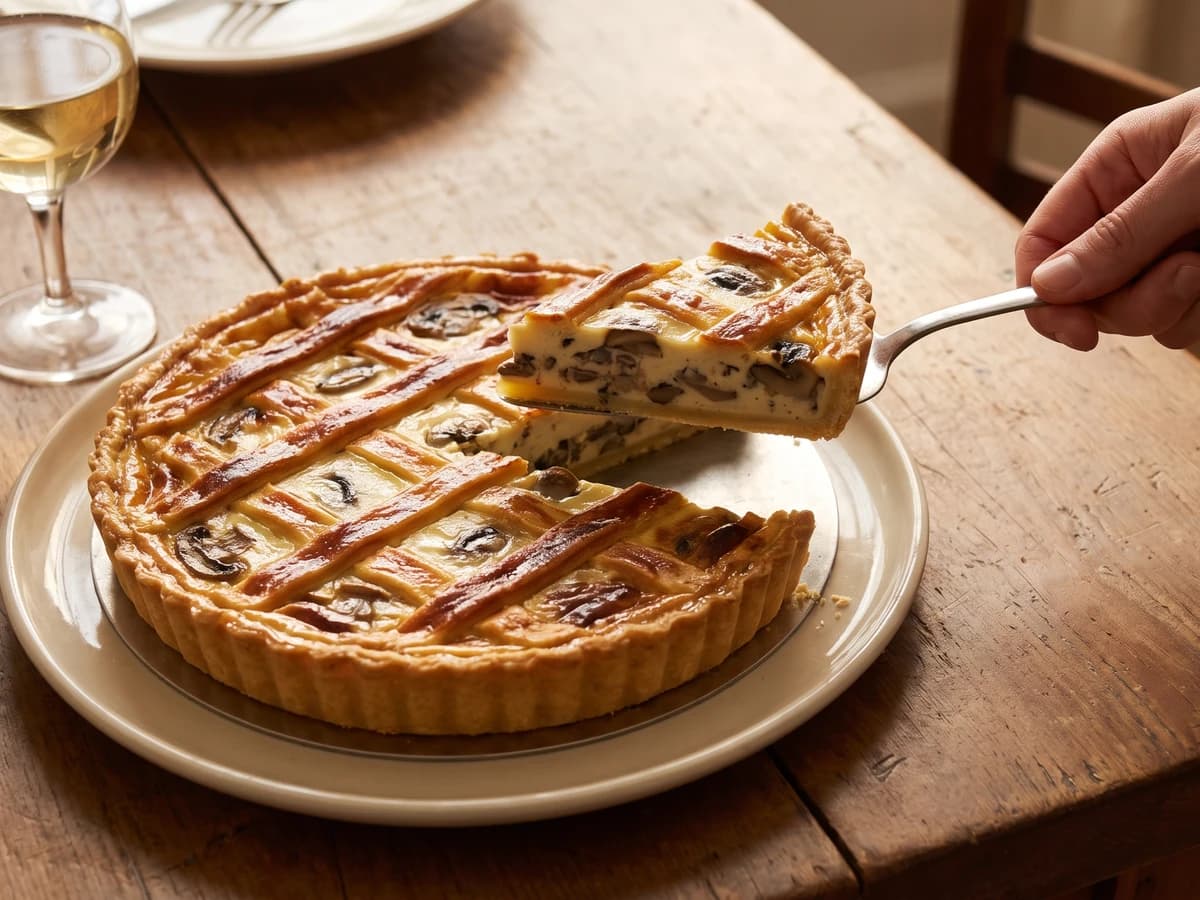
A hot mushroom flan under a butter-gold lattice, with cream reduced close around barely opened caps and a crisp short-paste base protected by one discipline: cool the filling completely.

Chef Juliette
Four little mushroom flans, latticed and gilded, baked hard and fast until butter-gold: a classical garnish scaled to the meat it accompanies and served before its crispness has time to fade.
Chef Juliette
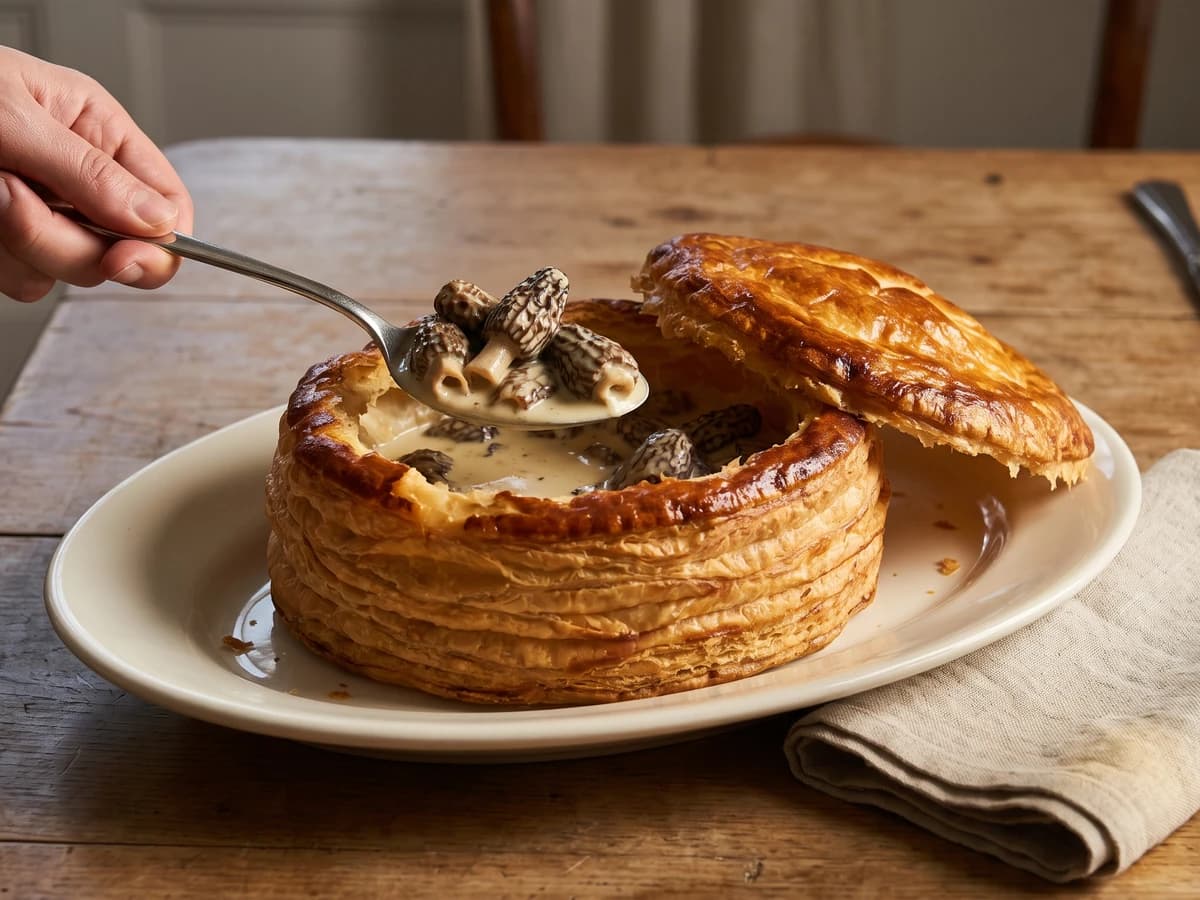
Morels surrender their liquor, then take it back as a glossy cream-and-butter sauce inside burnished puff pastry. The lesson is simple and absolute: reduce with patience, then heat gently and never boil.