
Chef Juliette
Various Almond Preparations
Five almond preparations, one discipline: remove the skins cleanly, dry every kernel through, then cut, toast, or cloak it in pale caramel without letting its fragrant oils escape.
A cooking platform built around craft, culture, and the stories behind what we eat.
Created by Chef Juliette
Based on No. 2399, Frangipan Cream, from Le Guide Culinaire (1907) by Auguste Escoffier
Crème frangipane turns eggs, milk, flour, butter, and dry almond macaroons into a glossy pastry cream. Stir without pause once it meets the heat, because the pan floor decides everything.
Crème frangipane (flour-bound custard with crushed almond macaroons) teaches the pastry kitchen's most useful discipline: flour needs a brief boil to thicken properly, but constant movement keeps the cream alive. Know this before you touch the pan. Once the cream returns to the heat, your spoon does not stop, especially along the floor and corners, because frangipane scorches in seconds.
The book's pint-based formula assumed a pastry station making a larger batch and a cook free to remain at the stove. Here every quantity is halved exactly, including the half yolk, to make about 2½ cups in a heavy home saucepan. A digital scale replaces brigade measuring, and buttered parchment protects the smooth surface once a buttered spoon has done the book's work. The batch size and cooling guard are scaffolding. The brisk tempering, brief boil, uninterrupted stirring, and butter-macaroon finish are the dish, so they stay.
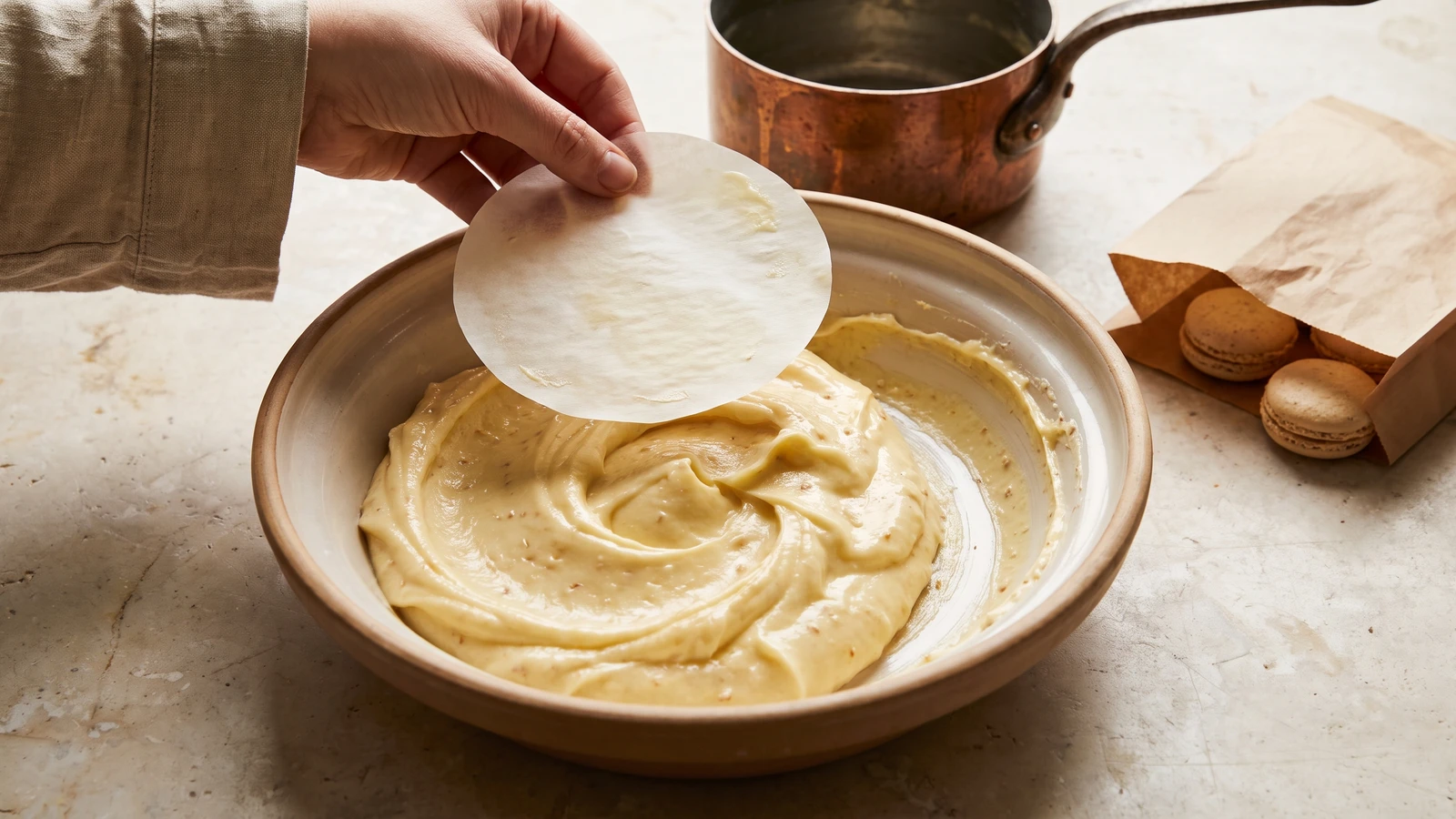
When it is right, frangipane falls heavily from the spoon, ivory-gold and glossy with butter, with fine almond crumbs disappearing into the custard. If it catches, do not scrape the bottom. Decant the clean cream into another pan and continue; ça se rattrape when you act before bitterness spreads. Have the bowl, butter, crushed macaroons, and buttered parchment ready before the milk boils. That preparation matters most tonight.
Crème frangipane belongs to the Parisian pâtisserie workroom, where adaptable cooked creams traveled into tartlets, petits fours, and gâteaux rather than being served only by the spoon. Across the classical canon, the name is disputed: many pastry kitchens mean crème d'amandes mixed with pastry cream, while this formula names a flour-bound custard enriched with butter and crushed dry almond macaroons. The macaroon supplies the almond character here, so a coconut macaroon is not the same ingredient.
Quantity
Scant 1 cup (225 ml / 113 g)
Quantity
¼ cup (60 ml / 28 g)
Quantity
1
Quantity
2½ yolks (45 g), from 3 yolks
beat the third yolk and use half
Quantity
1 cup plus 3 tablespoons (285 ml / 293 g)
Quantity
1 small pinch (about 0.3 g)
Quantity
1 teaspoon (5 ml / 4 g), or to taste
Quantity
3 tablespoons (45 ml / 43 g)
very soft
Quantity
1 tablespoon (15 ml / 8 g)
crushed to fine crumbs
Quantity
½ teaspoon (2.5 ml / 2 g)
softened
| Ingredient | Quantity |
|---|---|
| powdered sugar, preferably starch-free | Scant 1 cup (225 ml / 113 g) |
| all-purpose flour | ¼ cup (60 ml / 28 g) |
| large egg | 1 |
| large egg yolksbeat the third yolk and use half | 2½ yolks (45 g), from 3 yolks |
| whole milk | 1 cup plus 3 tablespoons (285 ml / 293 g) |
| fine salt | 1 small pinch (about 0.3 g) |
| vanilla extract or another selected aromatic essence | 1 teaspoon (5 ml / 4 g), or to taste |
| unsalted buttervery soft | 3 tablespoons (45 ml / 43 g) |
| dry almond macaroonscrushed to fine crumbs | 1 tablespoon (15 ml / 8 g) |
| unsalted butter for the spoon and parchmentsoftened | ½ teaspoon (2.5 ml / 2 g) |
Cut a sheet of parchment to fit directly against the surface of the finished cream. Butter one side of it and the back of a metal spoon with the ½ teaspoon butter. Set out a wide heatproof bowl, the soft butter, and the finely crushed macaroons. Beat the third yolk, measure 9 g of it, and combine that half yolk with the two whole yolks. The fraction is deliberate: it keeps this home batch at exactly half the book's proportion.
Whisk the powdered sugar and flour together in a heatproof mixing bowl, breaking up every flour pocket before liquid arrives. Add the whole egg and measured yolks, then whisk from the centre outward until the mixture becomes a thick, perfectly smooth paste. Scrape the sides and bottom of the bowl so no dry flour remains.
Bring the milk to a full boil in the heavy saucepan, watching closely so it does not rise over the rim. Pour the first third over the egg paste in a thin stream while whisking briskly; once the paste loosens, add the remaining milk steadily. Whisk in the salt and vanilla, then scrape the mixture back into the saucepan.
Set the saucepan over medium-low heat and stir continuously with a flat-edged spatula, tracing the centre, circumference, corners, and entire pan floor. The cream will thicken abruptly. Once bubbles break through the centre, lower the heat and keep it at a gentle boil for 2 to 3 minutes, stirring without pause so the flour cooks through. If lumps form, lift the pan from the heat and whisk hard, then pass the cream through a fine sieve before continuing. If you smell scorching or feel a rough patch beneath the spatula, stop scraping immediately and pour the clean upper cream into a fresh saucepan, leaving the caught layer behind. Ça se rattrape if there are no black flecks or bitter smell; if bitterness has spread, begin again.
Immediately pour the cooked cream into the prepared bowl. Add the 43 g soft butter in three portions, stirring until each disappears before adding the next, then fold in the crushed dry macaroons. The finished frangipane should be thick, smooth, and visibly glossy. If the butter pools because the cream has cooled too far, set the bowl over warm water and whisk until the emulsion returns, never over direct heat.
Smooth the surface with the buttered back of the spoon, then press the parchment directly against the cream, buttered side down. Let it cool for 15 minutes and refrigerate for about 45 minutes, until thoroughly cold. Before filling a tart or spooning it into small dessert cups, work the frangipane slowly with a spatula to restore its suppleness. If it has set too firmly, stir in cold milk 1 teaspoon at a time, stopping as soon as it falls from the spoon in a slow, heavy ribbon. À table!
1 serving (about 100g)
Culinary guides, cultural storytelling, and the editorial depth that makes cooking meaningful.
Discover Culinary ExplorerChef Juliette
Five almond preparations, one discipline: remove the skins cleanly, dry every kernel through, then cut, toast, or cloak it in pale caramel without letting its fragrant oils escape.

Chef Juliette
A pastry pantry lesson in one tray: filberts warmed only until their red skins release, rubbed clean, cooled, and chopped into a fragrant mise-en-place for cakes, creams, pralines, and petits fours.

Chef Juliette
The smallest pâtisserie discipline decides whether a cake leaves its mould intact: clarified butter in every corner, followed by the lightest veil of dry flour or fécule.

Chef Juliette
Four whites, one spotless bowl, and a patient change of speed: whisk gently until loosened, then briskly to glossy stiffness, with powdered sugar waiting if the foam begins to granulate.