Chef Juliette
Bouillabaisse à la Marseillaise
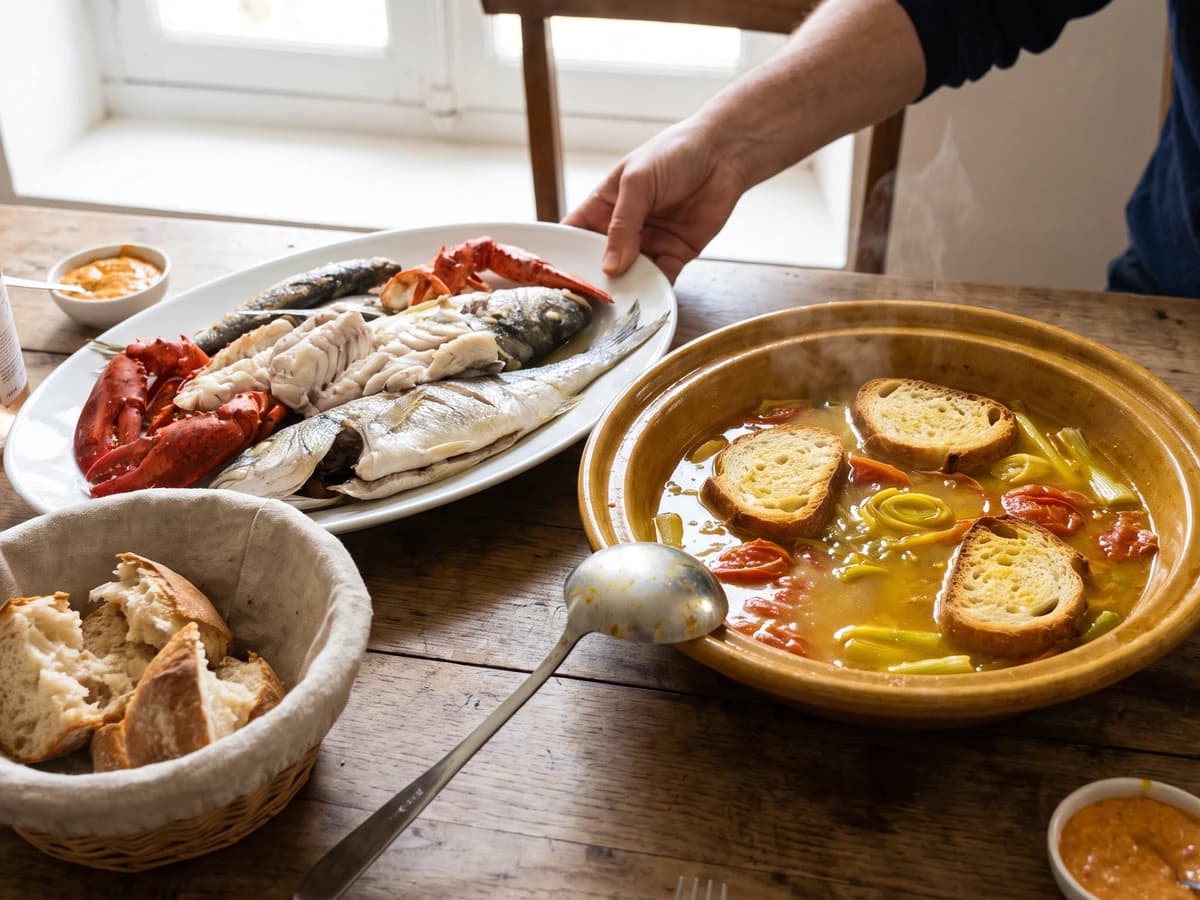
Marseille's great fish stew, saffron-gold and garlic-scented, proves that a hard boil can be the careful choice: it binds olive oil into broth before the whole pot meets bread.
A cooking platform built around craft, culture, and the stories behind what we eat.
Created by Chef Juliette
Based on No. 239, Purées, from Le Guide Culinaire (1907) by Auguste Escoffier
Purées de légumes teach the first law of the soup pot: floury vegetables bind themselves, watery vegetables need measured help, and both become silken through skimming, butter, and one final sieve.
Purées de légumes (vegetable purée soups) teach one true thing before you touch the pan: know where the body will come from. Lentils, dried beans, and floury potatoes bring their own starch. Carrots, pumpkin, turnips, celery, and tender herbs do not, so they need rice, potato, or butter-fried bread crumb to cohere. This carrot purée uses rice at the classical proportion, enough to bind the soup without announcing itself in the bowl.
The original formula assumed a saucier beside the pot, ordinary white consommé never far from the fire, brigade quantities, and a tamis (drum sieve) broad enough to process them. Your honest equivalents are a light chicken stock, an immersion blender, and a fine-mesh sieve. This batch begins with one pound of carrots and keeps the book's exact proportion of three ounces of rice; only the volume and the number of hands have changed. One cook, one stove, one evening.
The enormous pot and its attendant cook were scaffolding. The quiet simmer, careful skimming, butter added away from the heat, and second passage through the sieve are the dish, so those remain. The step that matters most is the finish: take the pan completely off the fire before the butter enters, then strain once more for the texture a proper purée promises.
Potages purées belong to the Parisian classical kitchen and the French bourgeois table, where vegetable and pulse soups from regional households became a practical system organized by texture. Their defining distinction is starch: beans, lentils, and potatoes bind themselves, while carrots, pumpkin, turnips, celery, and tender herbs require rice, potato, or butter-fried bread crumb. Careful skimming and repeated straining carried the family into the grand repertoire, but purées never stopped being generous, useful soups for the home table.
Quantity
3½ cups (830 ml / 450 g)
peeled and cut into even ¼-inch (6 mm) slices
Quantity
Scant ½ cup (110 ml / 85 g)
Quantity
Up to 8 cups (1.9 L / about 1.9 kg)
warmed and divided
Quantity
¾ cup (180 ml / 170 g)
cut into small cubes
Quantity
As needed
| Ingredient | Quantity |
|---|---|
| carrotspeeled and cut into even ¼-inch (6 mm) slices | 3½ cups (830 ml / 450 g) |
| plain white rice | Scant ½ cup (110 ml / 85 g) |
| ordinary white consommé or light unsalted chicken stockwarmed and divided | Up to 8 cups (1.9 L / about 1.9 kg) |
| cold unsalted buttercut into small cubes | ¾ cup (180 ml / 170 g) |
| fine salt | As needed |
| prepared Chiffonade (No. 215)warmed for serving | ½ cup (120 ml / about 60 g) prepared Chiffonade (No. 215) |
Carrots are aqueous vegetables, so the rice is essential here: three ounces for one pound of carrots supplies the coherence the vegetable lacks. Do not rinse the rice, because its starch is wanted. When making a purée from dried beans, lentils, or floury potatoes, omit the additional thickener; those vegetables carry their own.
Put the carrots, rice, and 5½ cups (1.3 L) of the warm ordinary white consommé or stock into a heavy saucepan. Bring just to a boil, lower the heat immediately, and hold at a gentle simmer with the lid slightly ajar for 30 to 35 minutes. Stir along the bottom every few minutes, especially near the end, until a carrot slice crushes without resistance and the rice has lost its distinct outline. Add a little reserved consommé if the solids begin to stand above the liquid.
Take the pan off the heat and blend with the blade kept fully submerged until no grains of rice remain visible. Pass the purée through a fine-mesh sieve into a clean saucepan, pressing with a ladle or flexible spatula. If it sits in the sieve like paste, do not force a dry mass through; loosen it with warm consommé, two tablespoons at a time, and continue. Ça se rattrape. Discard only the dry fibers left behind.
Thin the strained purée with enough reserved consommé to make it slightly looser than heavy cream. Bring it to a boil while stirring constantly, then lower the heat to the faintest simmer for 25 to 30 minutes. Skim away every patch of pale foam or dull scum as it gathers; this slow dépouillement, purification by skimming, gives the soup its clean flavor and gloss. Stir along the pot floor often. If the purée catches, do not scrape the scorched layer into it: pour the unburned soup into a clean pan and continue at lower heat.
Remove the saucepan completely from the heat. Monter au beurre, finish with cold butter, by whisking in the cubes a few at a time until each disappears and the surface gleams. If butter gathers in oily beads, the purée was too hot; whisk in a tablespoon of cool consommé away from the fire, then rebuild the emulsion gradually. Ça se rattrape. Taste for salt, adjust the consistency and volume with warm consommé if necessary, and pass the finished purée through a clean fine-mesh sieve once more into a warmed vessel.
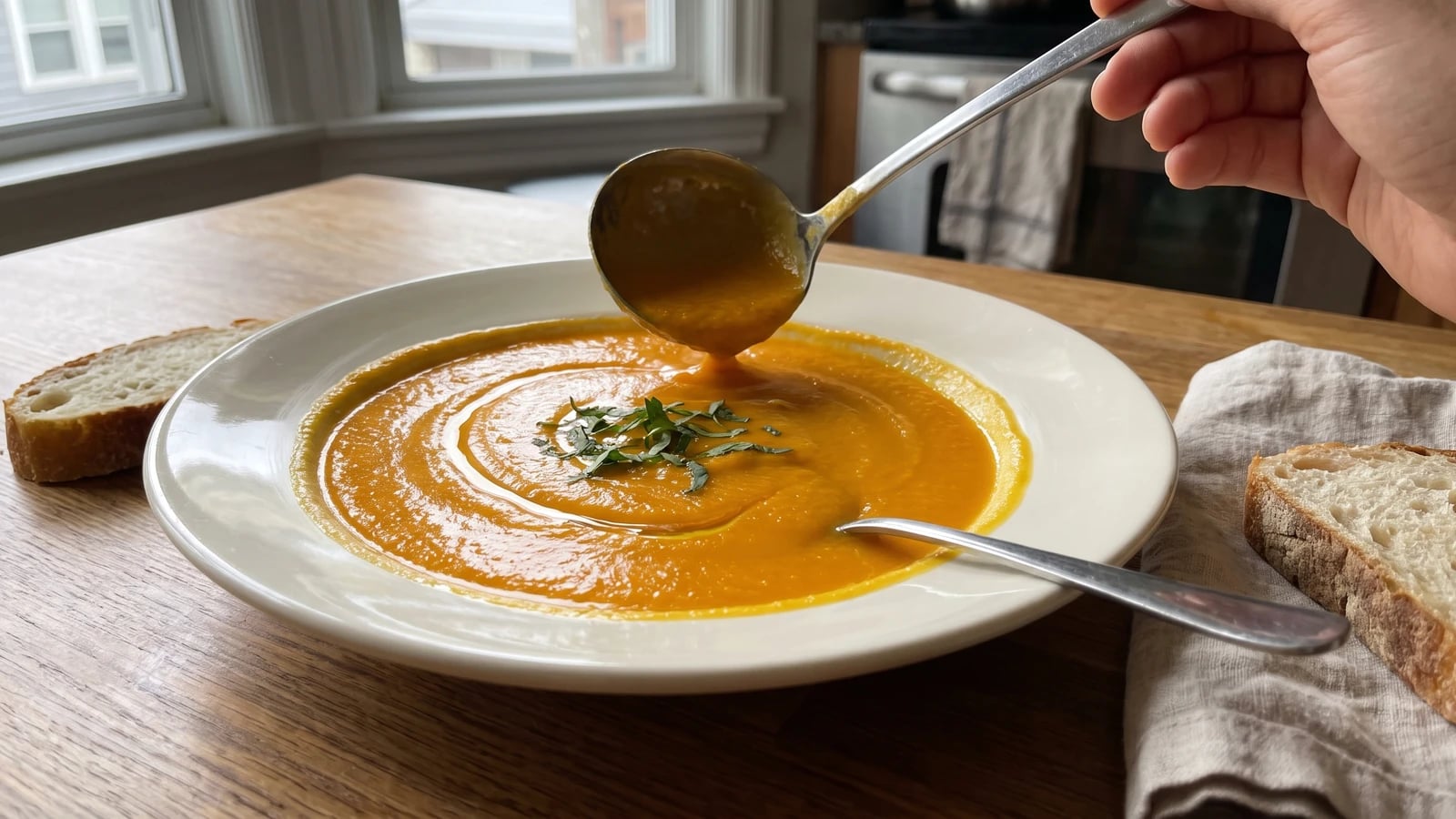
Divide the warmed prepared Chiffonade (No. 215) among heated soup bowls and ladle the purée around it, letting the green leaves settle naturally into the butter-glossed surface. Serve at once. The purée should coat the spoon lightly, then flow from it without sitting in a mound. À table!
1 serving (about 240g)
Culinary guides, cultural storytelling, and the editorial depth that makes cooking meaningful.
Discover Culinary ExplorerChef Juliette
Marseille's great fish stew, saffron-gold and garlic-scented, proves that a hard boil can be the careful choice: it binds olive oil into broth before the whole pot meets bread.
Chef Juliette
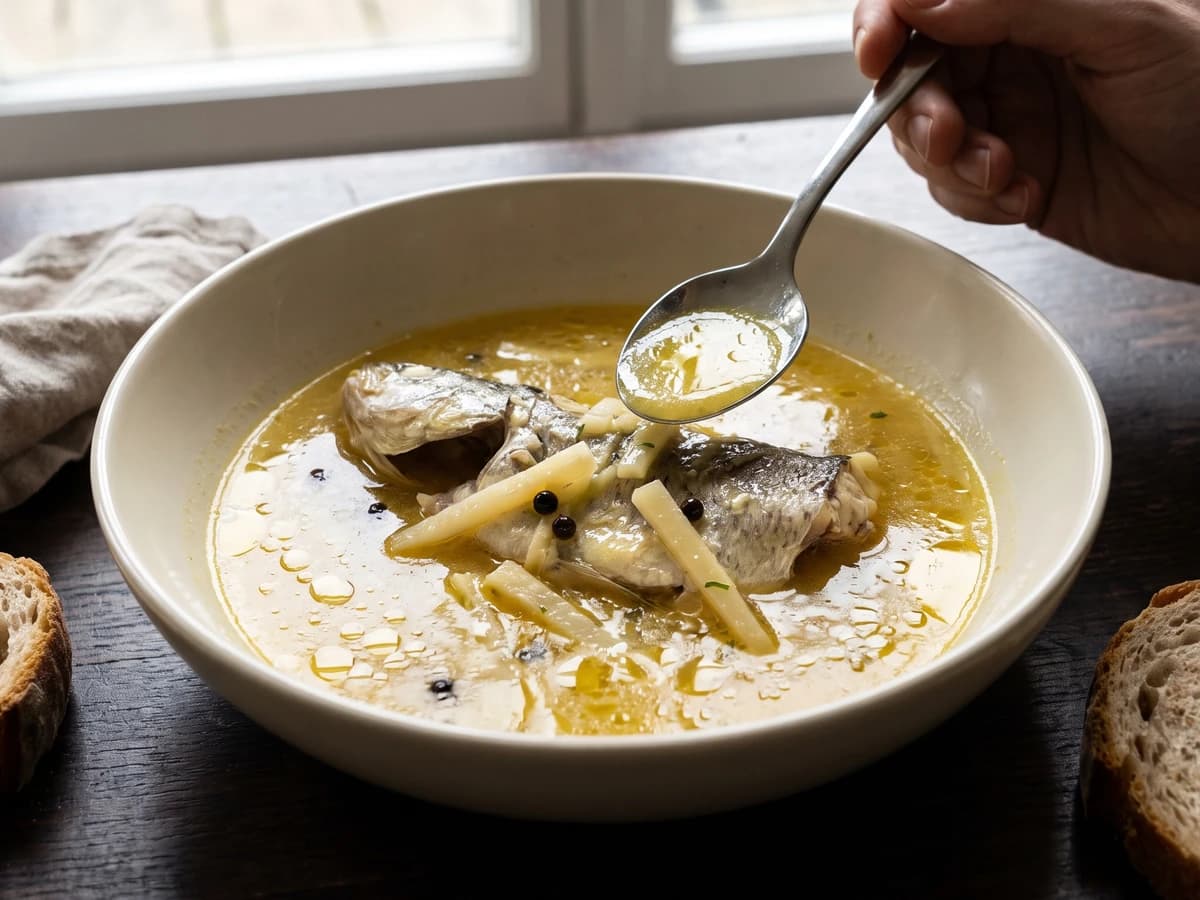
Waterzoi asks fresh, bone-in river fish to thicken its own buttery broth, with parsley root and pepper for company. No flour, no stockpot, just a brisk simmer watched closely.
Chef Juliette
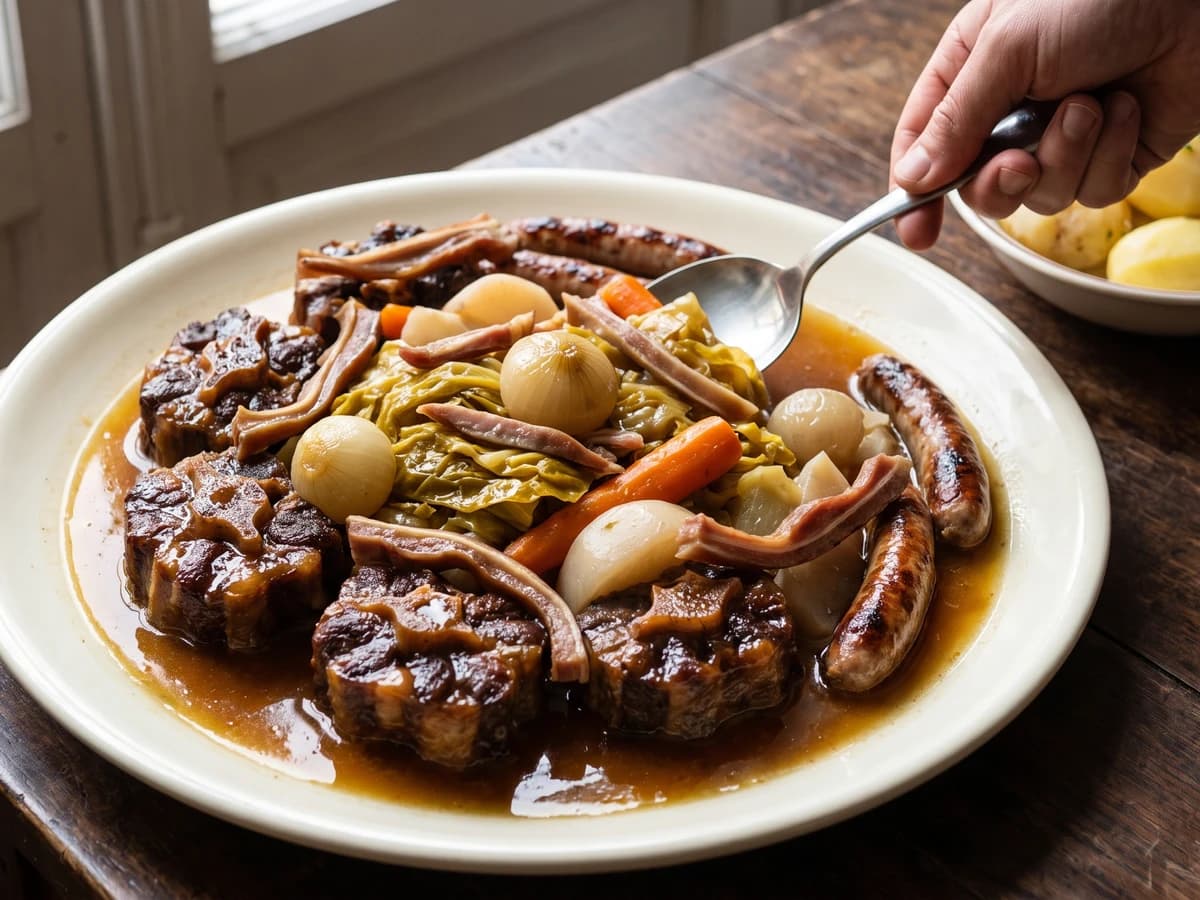
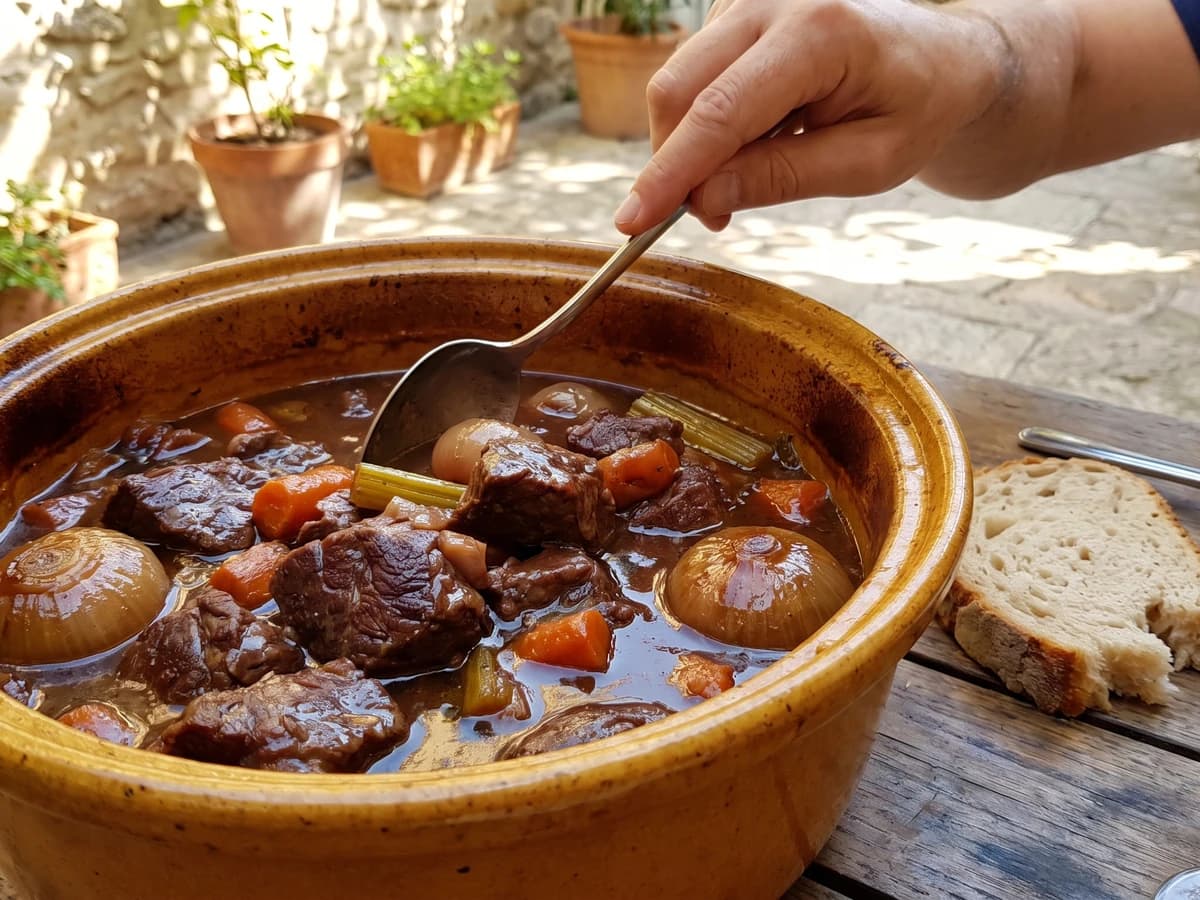
Queue de Bœuf en Hochepot gathers oxtail, pig's trotter and ear, cabbage, roots, and grilled chipolatas around a clear, gelatin-rich broth whose quiet simmer keeps every piece tender and distinct.
Chef Juliette
Beef shoulder larded with bacon, sharpened by red wine and vinegar, then sealed with garlic, vegetables, and dry lemon peel until the low oven turns it yielding and the gravy darkly glossy.