
Chef Juliette
Flan aux Carottes
A pale short-paste shell holds silken, lightly sweet carrot purée beneath neat glazed half-discs, their butter syrup catching the light: a classical tart poised between vegetable course and sweet.
A cooking platform built around craft, culture, and the stories behind what we eat.
Created by Chef Juliette
Based on No. 2367, Puff-paste Trimmings or Half Puff-paste, from Le Guide Culinaire (1907) by Auguste Escoffier
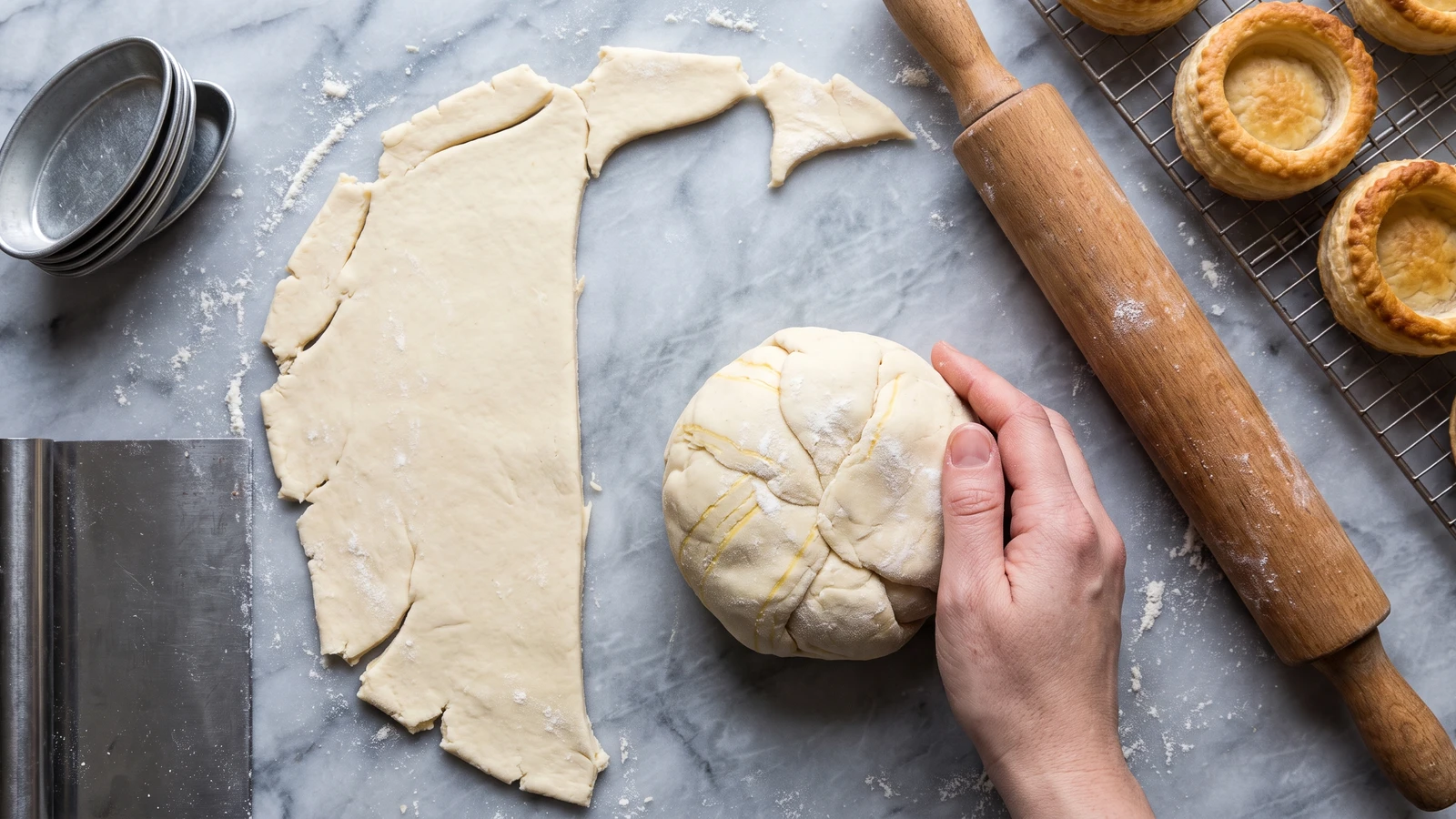
Rognures become useful demi-feuilletage when kept cold and handled lightly: enough buttered layers for crisp tartlets, Barquettes (No. 314), and Croûtons, though never the proud, even climb of untouched puff paste.
Rognures de feuilletage ou demi-feuilletage (puff-paste trimmings or half puff-paste) teaches the economy at the heart of good pastry: cold, layered scraps remain useful, but they are no longer full puff paste. Their cut layers have been disturbed, so the dough will crisp, brown, and rise modestly rather than climb in proud, even leaves. Know that before touching it and you'll choose the right work for it.
The original entry assumed a pâtisserie bench cutting sheet after sheet, a cool larder waiting beside it, and enough small moulds to turn the rognures into tartlets and Barquettes (No. 314). At home, collect the clean trimmings from one batch, 12 ounces is a useful working quantity, gather them once, cover them tightly, and use the refrigerator in place of the cool room. The brigade's constant sorting and accumulation can go. Keeping the butter cold, avoiding kneading, and using the ball promptly must stay.
The gathering decides everything. Stack the pieces as neatly as their irregular shapes allow, then press only until they hold together. If the butter softens and smears, stop and chill the scraps. Ça se rattrape. One cook, one stove, one evening, and not a useful flake wasted.
Rognures de feuilletage belong to the pâtisserie and traiteur workrooms of Paris and to pastry benches throughout France, where economy meant saving every clean cutting from a sheet of feuilletage. From those workrooms the practice passed naturally into bourgeois home pastry, supplying small tartlets, Barquettes (No. 314), and garnish pieces without demanding a fresh batch. The name demi-feuilletage does not promise half the butter; it warns that reballed layers rise less evenly, which is why the paste serves small cases and Croûtons rather than tall showpieces.
Quantity
12 ounces (340 g)
Quantity
1 tablespoon (15 ml / 8 g)
for the bench and rolling pin
Quantity
1 chosen finished preparation
| Ingredient | Quantity |
|---|---|
| cold, clean puff-paste trimmings | 12 ounces (340 g) |
| all-purpose flourfor the bench and rolling pin | 1 tablespoon (15 ml / 8 g) |
| Barquettes (No. 314), tartlets, or Croûtons (optional) | 1 chosen finished preparation |
Lay the clean, raw trimmings flat on parchment as you cut them. Keep pieces carrying filling, crumbs, or egg wash out of the pile, since moisture glues the exposed layers together. If the scraps feel supple, greasy, or shiny, refrigerate them for 15 to 20 minutes, until the butter is firm but the pastry can still bend without snapping.
Set the largest pieces on the cold work surface and lay the smaller trimmings over them, keeping the pieces flat rather than crumpling them. Align their long edges when the shapes permit, but don't fuss over a perfect stack. Neat layering preserves some lift; kneading destroys what remains.
Fold the outer pieces around the smaller ones, then cup and roll the pile gently against the bench until it becomes a compact ball. Apply only enough pressure to make the scraps adhere. Seams and faint butter streaks are correct. If the mass crumbles, let it stand for 2 minutes and press again, but add no water; if butter begins smearing onto the bench, chill everything for 10 minutes before continuing. Ça se rattrape.
Wrap the ball tightly or place it in a small airtight container, then refrigerate it for at least 30 minutes. The rest firms the butter and relaxes the pastry after handling. The book's rule allows two days in summer and four in winter; with a modern refrigerator, use the demi-feuilletage within two days for its best lift and no later than four days.
Dust the bench and rolling pin with only as much flour as prevents sticking. Flatten the cold ball slightly, then roll from the centre outward with light, even pressure to the thickness required by the preparation using it. Do not knead it or give it fresh turns in an attempt to rebuild full puff paste. If the edges crack, wait 2 or 3 minutes; if the butter softens, return the dough to the cold for 10 minutes.
Reach for this dough when crispness, butter, and shape matter more than height: use it in one finished preparation of Barquettes (No. 314), tartlet shells, or Croûtons, following that preparation's own dimensions and baking instructions. The demi-feuilletage should brown and separate into small flakes, but it will not rise evenly enough for a tall vol-au-vent or a precise mille-feuille. Bake the chosen preparation until its underside is dry and butter-gold; pale pastry still tastes of raw flour.
1 serving (about 340g)
Culinary guides, cultural storytelling, and the editorial depth that makes cooking meaningful.
Discover Culinary ExplorerChef Juliette
A pale short-paste shell holds silken, lightly sweet carrot purée beneath neat glazed half-discs, their butter syrup catching the light: a classical tart poised between vegetable course and sweet.
Chef Juliette
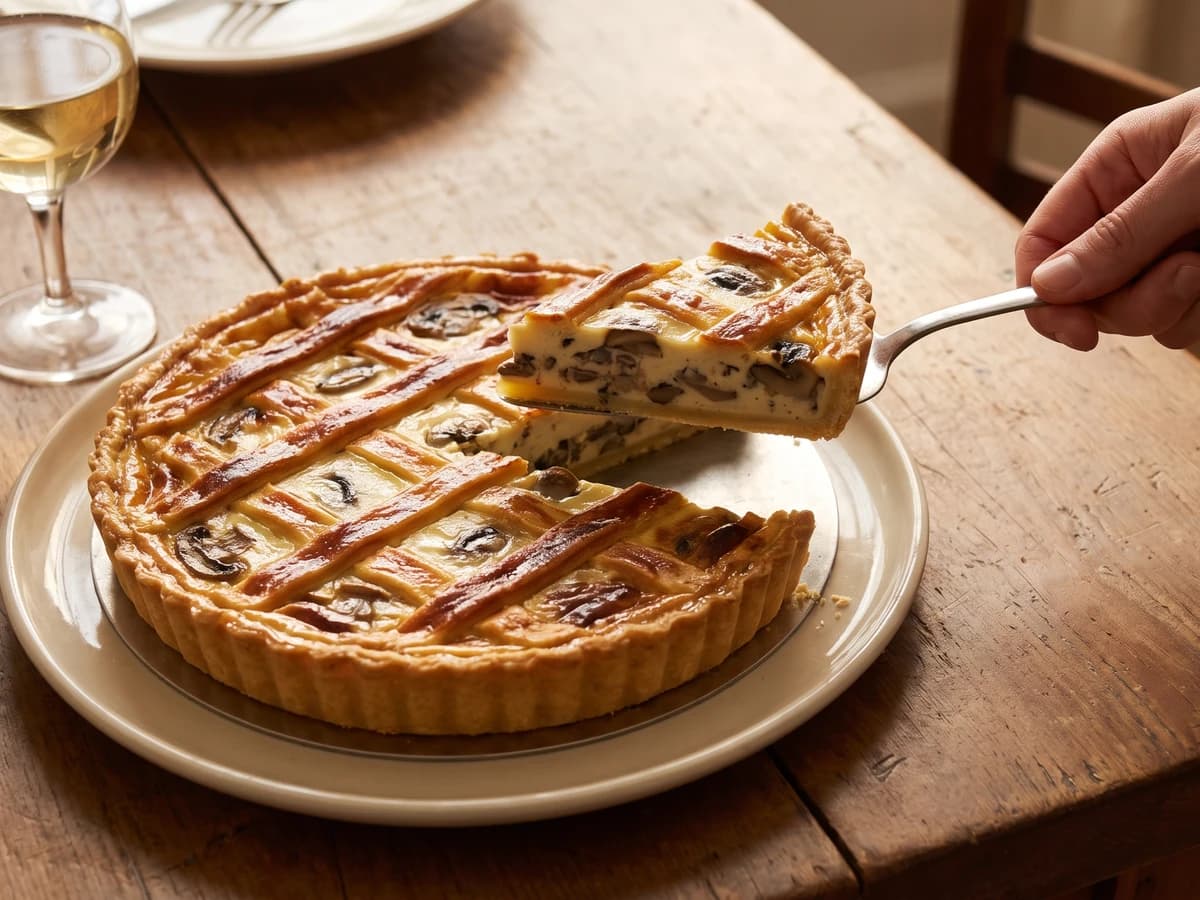
A hot mushroom flan under a butter-gold lattice, with cream reduced close around barely opened caps and a crisp short-paste base protected by one discipline: cool the filling completely.

Chef Juliette
Four little mushroom flans, latticed and gilded, baked hard and fast until butter-gold: a classical garnish scaled to the meat it accompanies and served before its crispness has time to fade.
Chef Juliette
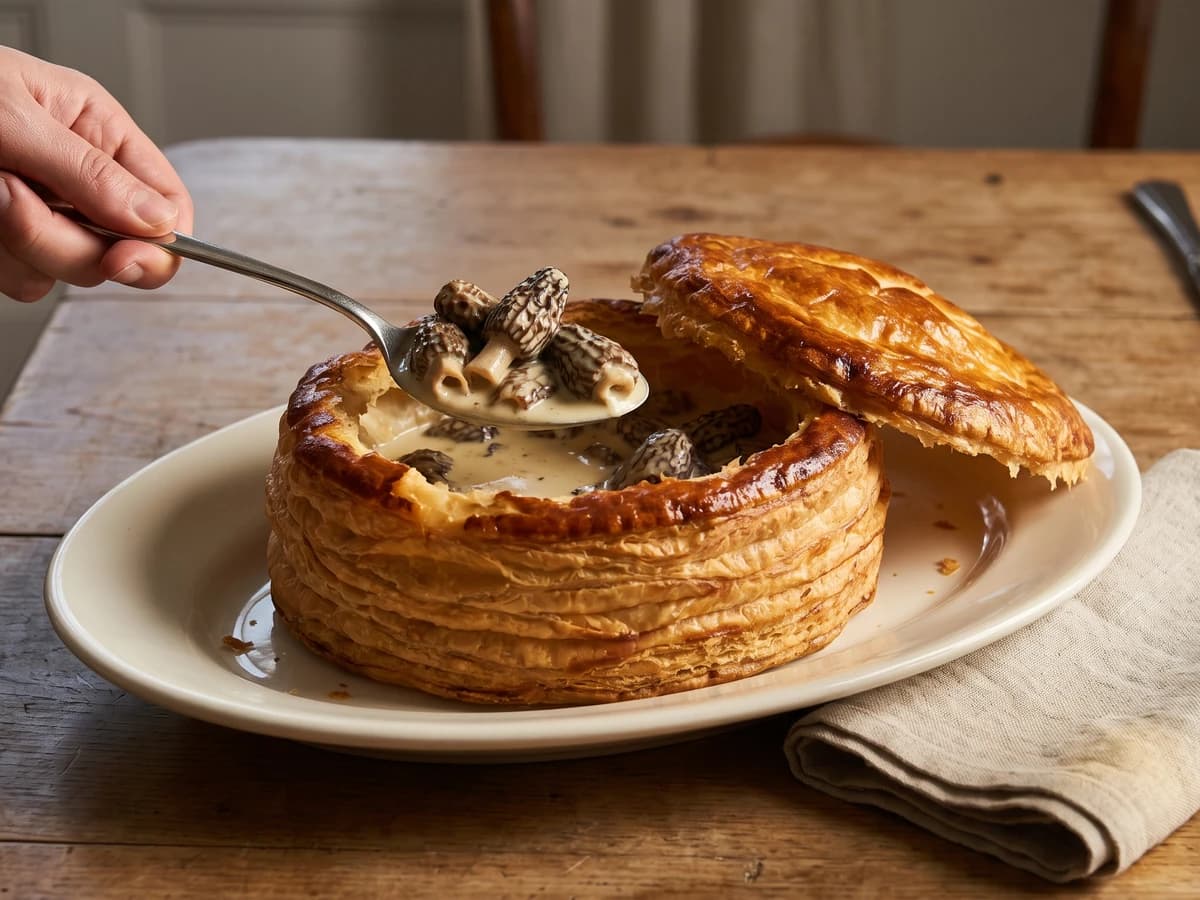
Morels surrender their liquor, then take it back as a glossy cream-and-butter sauce inside burnished puff pastry. The lesson is simple and absolute: reduce with patience, then heat gently and never boil.