
Chef Juliette
Flan aux Carottes
A pale short-paste shell holds silken, lightly sweet carrot purée beneath neat glazed half-discs, their butter syrup catching the light: a classical tart poised between vegetable course and sweet.
A cooking platform built around craft, culture, and the stories behind what we eat.
Created by Chef Juliette
Based on No. 2364, Gumming, from Le Guide Culinaire (1907) by Auguste Escoffier
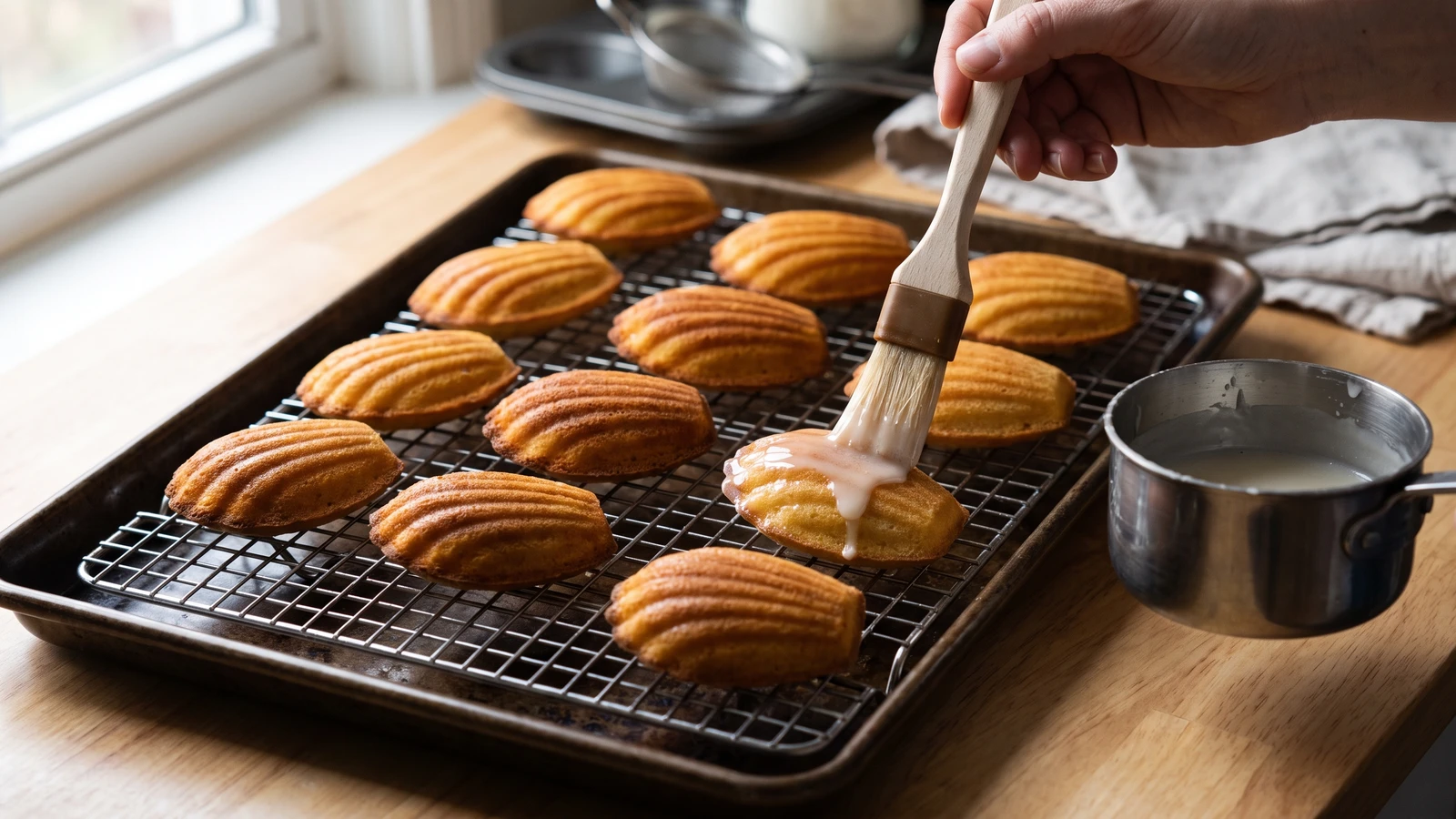
Warm milk-and-sugar gommage, brushed over petits gâteaux the moment they leave the oven, gives a fine gloss and delicate sweet skin. The brushwork matters more than any pastry-shop supply.
Gommage teaches the difference between coating and finishing. The one true thing is this: the cakes must be hot and the gommage warm. A whisper-thin coat laid on at that meeting point dries to a soft shine; cold cake makes it sit heavily, and a generous hand turns gloss into icing.
The original entry assumed a pastry kitchen with a thin gum arabic solution waiting beside the oven and tray after tray passing beneath the brush. For one home batch, that standing jar and brigade quantity are scaffolding and can go. A small saucepan, a soft brush, and enough milk-and-sugar syrup for 24 cakes do the honest work. The source itself gives milk and sugar as the better alternative, so we keep it because it tastes better and belongs in the everyday pantry.
Have the rack ready and the brush in your hand before the cakes leave the oven. Immediate brushing is the dish and cannot go; everything else is setup. One cook, one stove, one evening.
Gommage belongs to French pâtisserie and the salon-de-thé table rather than to a single province: it is a finishing technique for petits fours and other small cakes. Professional pastry kitchens favored a thin solution of food-grade gum arabic because it dried clear and bright over trays moving from the oven. The finish passed easily into cuisine bourgeoise, where milk-and-sugar syrup did the same work from the everyday pantry and brought a little more flavor.
Quantity
24
just baked and still hot
Quantity
1/4 cup (60 ml / 50 g)
Quantity
2 tablespoons (30 ml / 31 g)
Quantity
1 teaspoon (5 ml / 5 g)
| Ingredient | Quantity |
|---|---|
| small plain tea cakes, such as madeleines or financiersjust baked and still hot | 24 |
| superfine sugar | 1/4 cup (60 ml / 50 g) |
| whole milk | 2 tablespoons (30 ml / 31 g) |
| whole milk for loosening (optional) | 1 teaspoon (5 ml / 5 g) |
Set a cooling rack over parchment or a clean tray while the tea cakes finish baking. Place the saucepan, brush, and measured ingredients beside it. The gommage takes only minutes, but the cakes won't wait politely while you search a drawer; the glaze must meet them while their surfaces are still hot.
Combine the superfine sugar and 2 tablespoons (30 ml / 31 g) milk in the smallest heavy saucepan you have. Stir over low heat for 2 to 3 minutes, just until every grain has dissolved and the gommage runs from the spoon in a narrow, fluid ribbon. Don't let it boil hard or take color. If it becomes grainy or too thick to brush, remove it from the heat and stir in the reserved milk a few drops at a time until smooth. Ça se rattrape.
Remove the cakes from their tins as their own recipe directs and begin brushing within a minute. Keep the gommage warm over the lowest heat, load the brush lightly, and give each hot cake one thin, even coat across its upper surface. You should still see every browned ridge beneath the shine. If syrup puddles in a hollow, pass a clean, nearly dry brush over it once to lift the excess before it sets.
Leave the cakes uncovered on the rack for 15 to 20 minutes, until the surface feels dry beneath a light fingertip and holds an even satin gloss. Cool them completely before stacking or closing them in a container, or the finish will stick. Serve them at tea, when the browned edges are still crisp and the milk-sugar skin is delicate. À table!
1 serving (about 28g)
Culinary guides, cultural storytelling, and the editorial depth that makes cooking meaningful.
Discover Culinary ExplorerChef Juliette
A pale short-paste shell holds silken, lightly sweet carrot purée beneath neat glazed half-discs, their butter syrup catching the light: a classical tart poised between vegetable course and sweet.
Chef Juliette
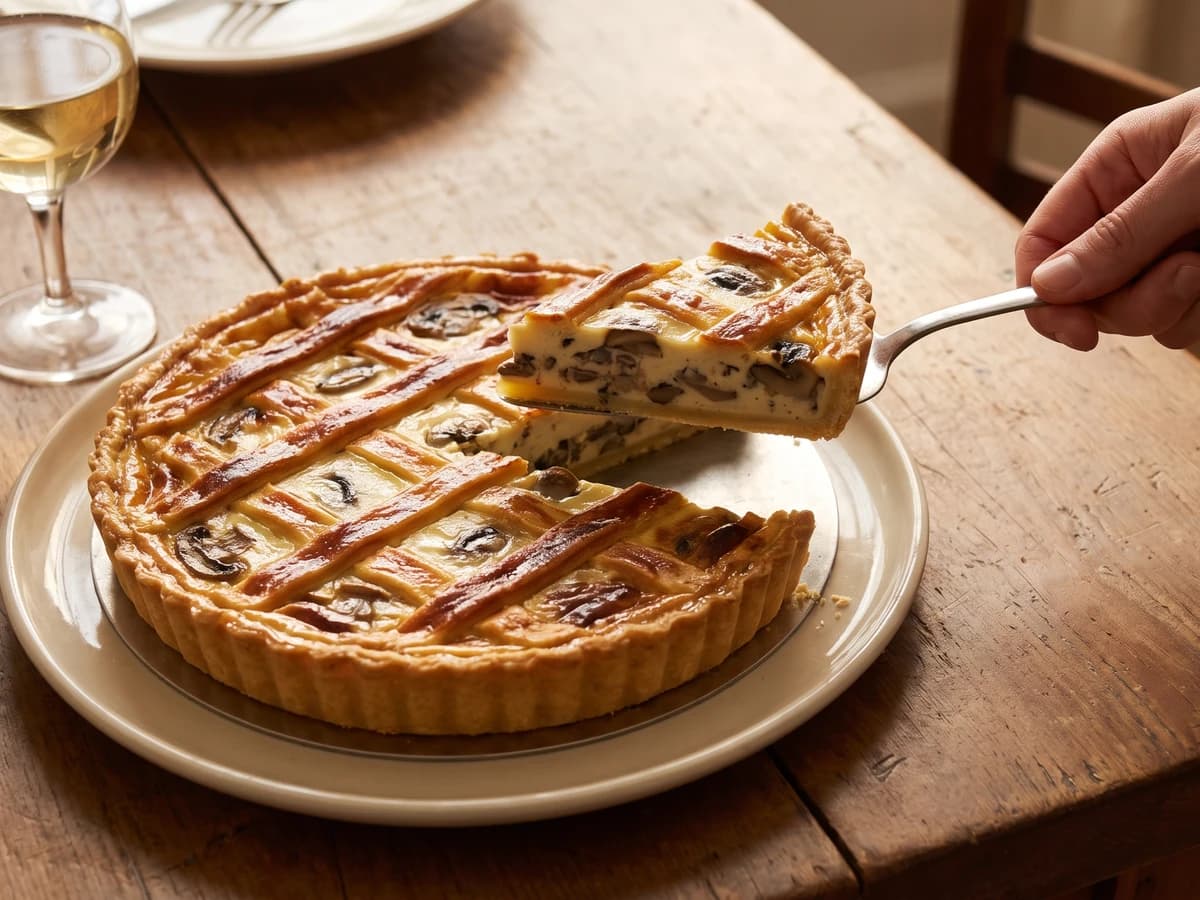
A hot mushroom flan under a butter-gold lattice, with cream reduced close around barely opened caps and a crisp short-paste base protected by one discipline: cool the filling completely.

Chef Juliette
Four little mushroom flans, latticed and gilded, baked hard and fast until butter-gold: a classical garnish scaled to the meat it accompanies and served before its crispness has time to fade.
Chef Juliette
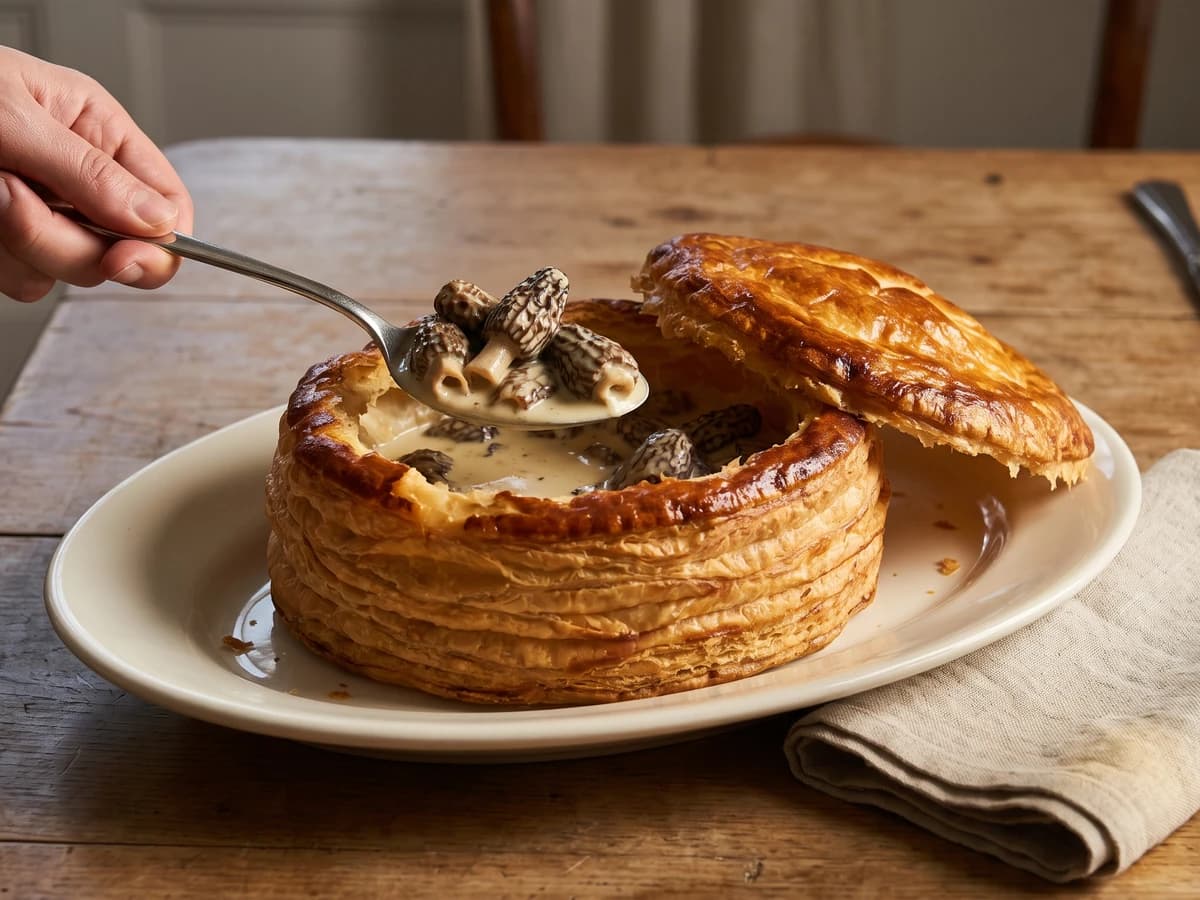
Morels surrender their liquor, then take it back as a glossy cream-and-butter sauce inside burnished puff pastry. The lesson is simple and absolute: reduce with patience, then heat gently and never boil.