
Chef Juliette
Flan aux Carottes
A pale short-paste shell holds silken, lightly sweet carrot purée beneath neat glazed half-discs, their butter syrup catching the light: a classical tart poised between vegetable course and sweet.
A cooking platform built around craft, culture, and the stories behind what we eat.
Created by Chef Juliette
Based on No. 2363, Paste for Small Gummed Tea-cakes, from Le Guide Culinaire (1907) by Auguste Escoffier
Pâte pour petits gâteaux gommés is the disciplined little paste behind crisp, clean shapes: real butter, four yolks, orange-flower water, two thin rollings, and one necessary cold rest.
La pâte pour petits gâteaux gommés (paste for small gummed tea-cakes) teaches the discipline behind every neatly cut petit four: cold dough remembers its shape, while warm, overworked dough forgets it. Butter and four yolks make this paste rich and tender, and orange-flower water gives it a quiet perfume. The cold rest is not waiting. It is the structure of the dish.
The original formula assumed a cool pastry room, a broad marble bench, and hands accustomed to moving one great sheet of paste. Its quantity, about 1.15 kilograms, is generous but still manageable as a home baking batch, so I keep the book's proportions intact rather than force you to measure fractions of an egg. Divide it into four sheets, roll between parchment, and let the refrigerator stand in for the cold pastry room. The marble and extra hands were brigade scaffolding and can go; the two rolling passes and the rest are the dish and must stay.
Work only until the paste comes together. If it turns greasy, stop and chill it for ten minutes; if its edges crack under the pin, let it soften for three minutes and patch them with your fingers. Ça se rattrape. The step that matters most is the final cold rest before cutting, because that is what gives the finished little cakes their true edges.
Pâte pour petits gâteaux gommés belongs to the Parisian pâtisserie repertoire of petits fours, compact morsels prepared ahead for the salon and bourgeois tea table. In classical confectionery vocabulary, gommés names the finished little cakes and their smooth surface treatment, not gum mixed into this paste; the base itself is flour, butter, sugar, eggs, and orange-flower water. The English title can suggest a risen tea bun, but this is a rolled sweet paste whose clean cutting depends on careful handling and a cold rest.
Quantity
3¾ cups (900 ml / 454 g)
sifted
Quantity
1¼ cups (300 ml / 284 g)
cool and pliable
Quantity
1⅓ cups plus 1 tablespoon plus 1 teaspoon (340 ml / 284 g)
Quantity
1 large egg (about 3 tablespoons / 50 ml / 50 g)
beaten
Quantity
4 large egg yolks (about 4 tablespoons / 60 ml / 68 g)
Quantity
1 tablespoon (15 ml / 14 g)
| Ingredient | Quantity |
|---|---|
| plain floursifted | 3¾ cups (900 ml / 454 g) |
| unsalted buttercool and pliable | 1¼ cups (300 ml / 284 g) |
| fine caster sugar | 1⅓ cups plus 1 tablespoon plus 1 teaspoon (340 ml / 284 g) |
| large eggbeaten | 1 large egg (about 3 tablespoons / 50 ml / 50 g) |
| large egg yolks | 4 large egg yolks (about 4 tablespoons / 60 ml / 68 g) |
| orange-flower water | 1 tablespoon (15 ml / 14 g) |
Let the butter soften only until a finger leaves a clean indentation. It should bend without looking oily. Line four small trays or two half-sheet pans with parchment, and clear enough refrigerator space to hold the rolled paste. A warm, glossy butter will make the dough smear; if yours has gone that far, chill it for ten minutes before beginning.
Work the butter and caster sugar together in a wide bowl with a sturdy spoon until smooth and completely combined, but do not beat them fluffy. Air is useful in a cake and troublesome in a paste meant to hold precise shapes. Scrape the bowl thoroughly so no hard streaks of butter remain.
Mix the beaten whole egg, yolks, and orange-flower water together. Add this mixture to the butter in four additions, blending each one fully before adding the next. The gradual mixing is part of the source method: too much liquid at once makes the butter separate. If the mixture looks curdled, add one tablespoon of the measured flour and stir gently until it closes again. Ça se rattrape.
Draw in the remaining sifted flour in three additions, folding with a flexible scraper rather than beating. Stop when the mixture forms large, moist crumbs. Turn it onto the work surface and press those crumbs together with the scraper and heel of your hand until they become one mass. Do not knead. If loose flour remains, cover the paste for three minutes so the flour can absorb the egg, then press again; adding water would change the book's proportion and toughen the result.
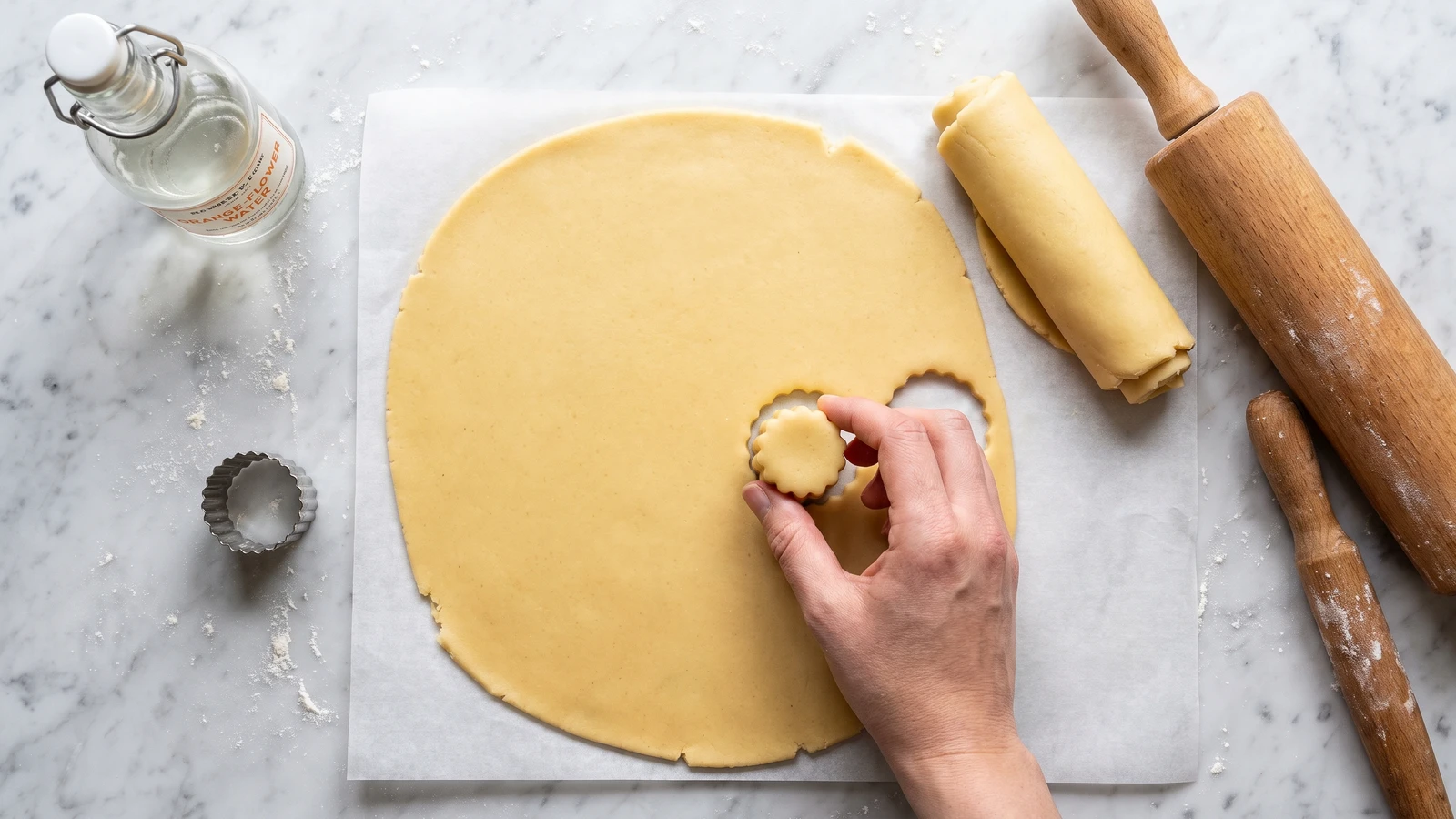
Divide the paste into four equal portions and place each between two sheets of parchment. Roll each portion from the centre outward to an even 5 mm thickness. Peel back and replace the top parchment to release any tension, rotate the sheet a quarter-turn, then make the second rolling pass to about 3 mm. Keep the pressure light and even. If the paste sticks or leaves butter on the paper, chill it flat for ten minutes; if an edge cracks, let it stand for three minutes, press the crack closed, and continue.
Using the lower parchment as a guide, roll each sheet loosely from a short edge into a scroll without compressing it. Wrap the scrolls well and refrigerate for at least one hour. This is the source's rest in the cool, translated to the home refrigerator, and it cannot be hurried: the flour hydrates, the butter firms, and the paste relaxes enough to hold a clean cut.
Set a chilled scroll on the counter for about five minutes, then unroll it slowly. If it begins to split across the fold, pause for another two minutes rather than forcing it. The paste is now ready to be cut and finished according to the small gummed tea-cake preparation that calls for it. This entry supplies the paste alone; baking and gumming belong to that finished preparation and are not invented here.
1 serving (about 48g)
Culinary guides, cultural storytelling, and the editorial depth that makes cooking meaningful.
Discover Culinary ExplorerChef Juliette
A pale short-paste shell holds silken, lightly sweet carrot purée beneath neat glazed half-discs, their butter syrup catching the light: a classical tart poised between vegetable course and sweet.
Chef Juliette
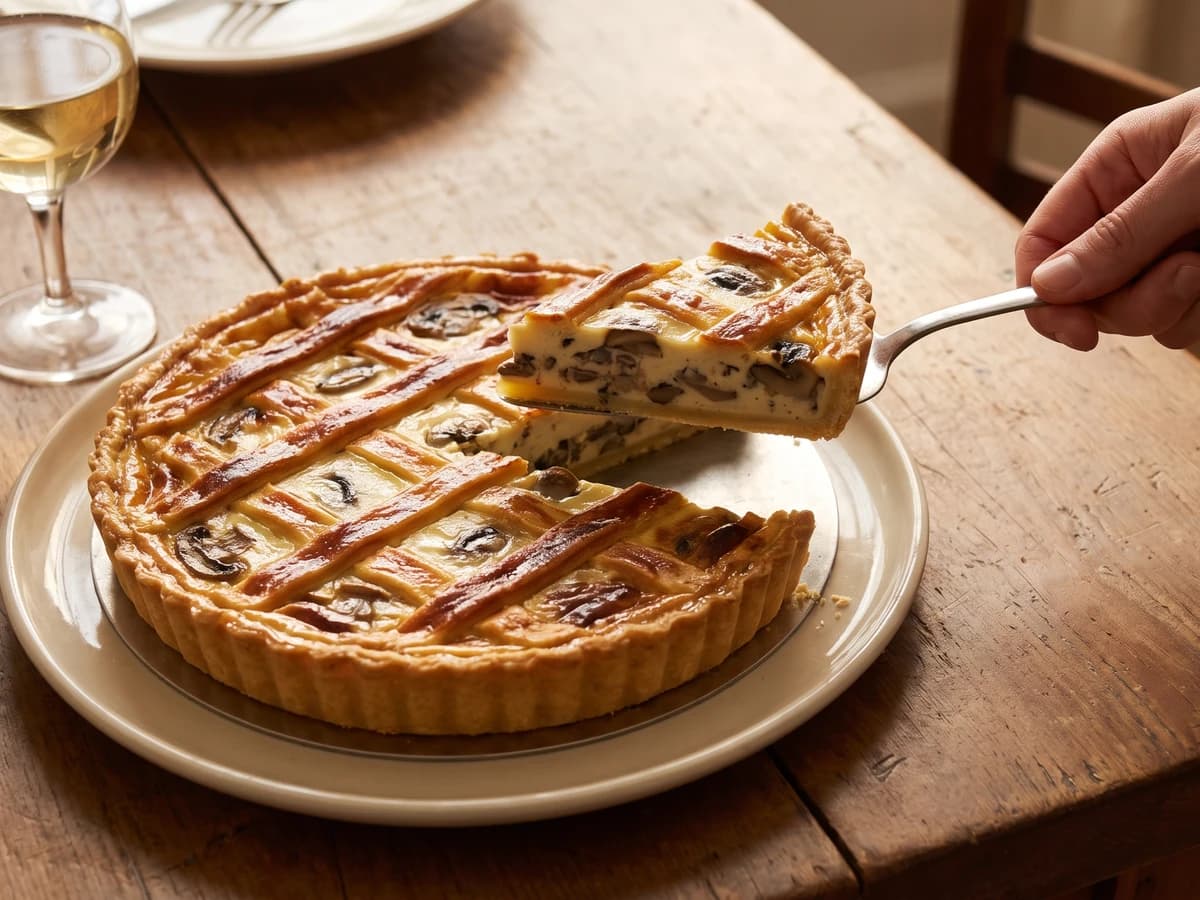
A hot mushroom flan under a butter-gold lattice, with cream reduced close around barely opened caps and a crisp short-paste base protected by one discipline: cool the filling completely.

Chef Juliette
Four little mushroom flans, latticed and gilded, baked hard and fast until butter-gold: a classical garnish scaled to the meat it accompanies and served before its crispness has time to fade.
Chef Juliette
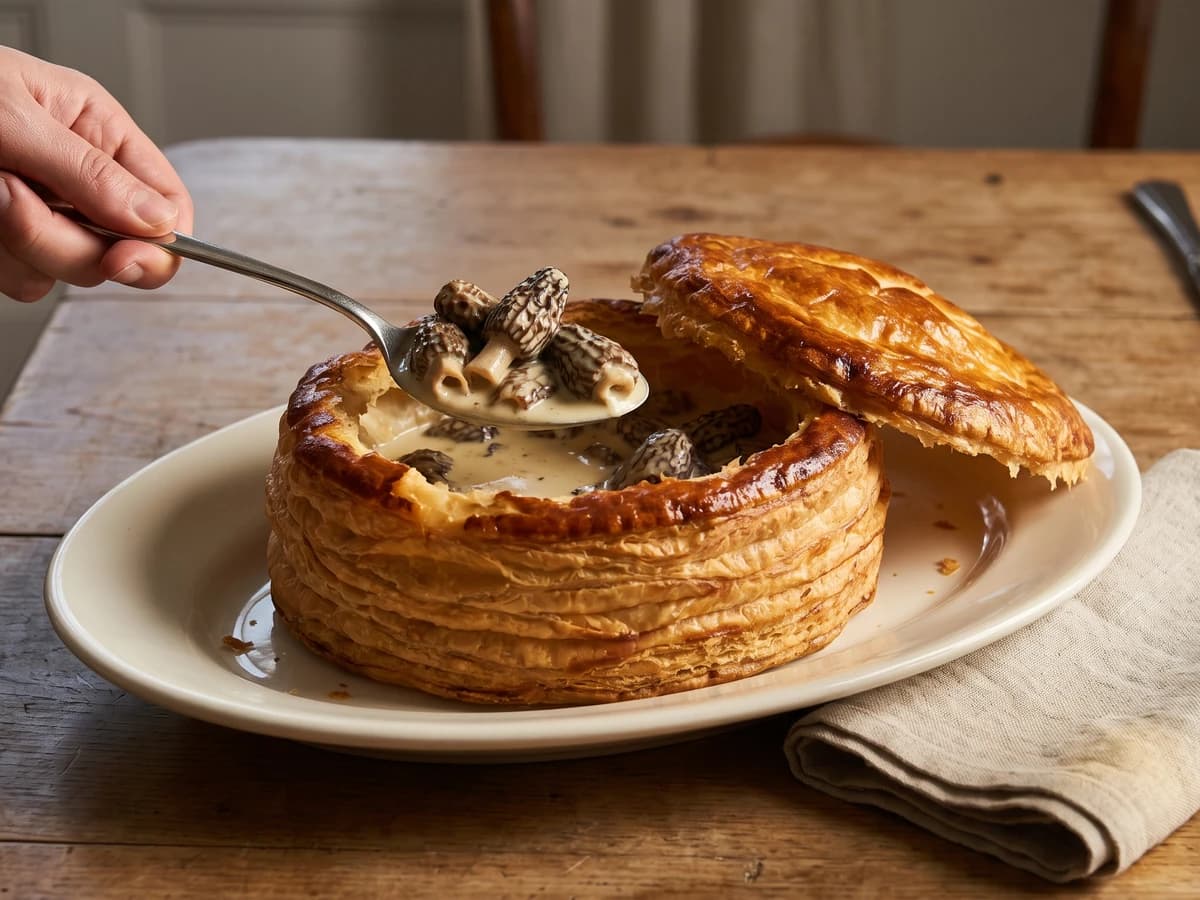
Morels surrender their liquor, then take it back as a glossy cream-and-butter sauce inside burnished puff pastry. The lesson is simple and absolute: reduce with patience, then heat gently and never boil.