
Chef Juliette
Flan aux Carottes
A pale short-paste shell holds silken, lightly sweet carrot purée beneath neat glazed half-discs, their butter syrup catching the light: a classical tart poised between vegetable course and sweet.
A cooking platform built around craft, culture, and the stories behind what we eat.
Created by Chef Juliette
Based on No. 2357, The Kneading of Pastes, from Le Guide Culinaire (1907) by Auguste Escoffier
Fraisage turns a rough mixed paste smooth with two passes of the palm, no more. Learn the pressure, stop before elasticity, and your pies begin with tenderness instead of toil.
Fraisage des pâtes (kneading pastry pastes) teaches one true thing: two passes are the whole of it. You press the mixed paste away from you, little by little, between palm and board, gather it again, and repeat once. The motion combines what mixing left uneven and smooths the paste without working it into elasticity. This is not bread kneading. The word carries the technique.
The original entry gives no dough formula or quantity because it assumes a pastry cook already has the chosen paste mixed and waiting on a broad board. This home version begins at precisely the same point, with one 1 lb (450 g) batch on a clean counter or large cutting board. The smaller working quantity is the honest home equivalent; no flour, butter, water, or egg ratio has been invented where the source supplied none. Brigade organization and a dedicated pastry bench are scaffolding. The two complete passes must stay.
Use firm, brief pressure and move forward, never back and forth. If the butter warms and the paste begins greasing the board, stop and chill it before continuing. Ça se rattrape. The step that matters is the second pass: finish it once, judge the smoothness, and put your hands down.
Fraisage belongs to the working vocabulary of French pâtisserie and the cuisine bourgeoise household, where short pastes for tartes and tourtes moved naturally between the professional pastry bench and the home board. Its English label is easily mistaken for bread-style kneading, but the French term names a distinct action: the paste is pressed away beneath the palm, regathered, and treated twice rather than worked until elastic. The method remains useful because it asks for nothing more specialized than practiced pressure and a flat surface.
Quantity
1 batch, 1 lb (450 g)
gathered but not yet rested
| Ingredient | Quantity |
|---|---|
| freshly mixed short pastry pastegathered but not yet rested | 1 batch, 1 lb (450 g) |
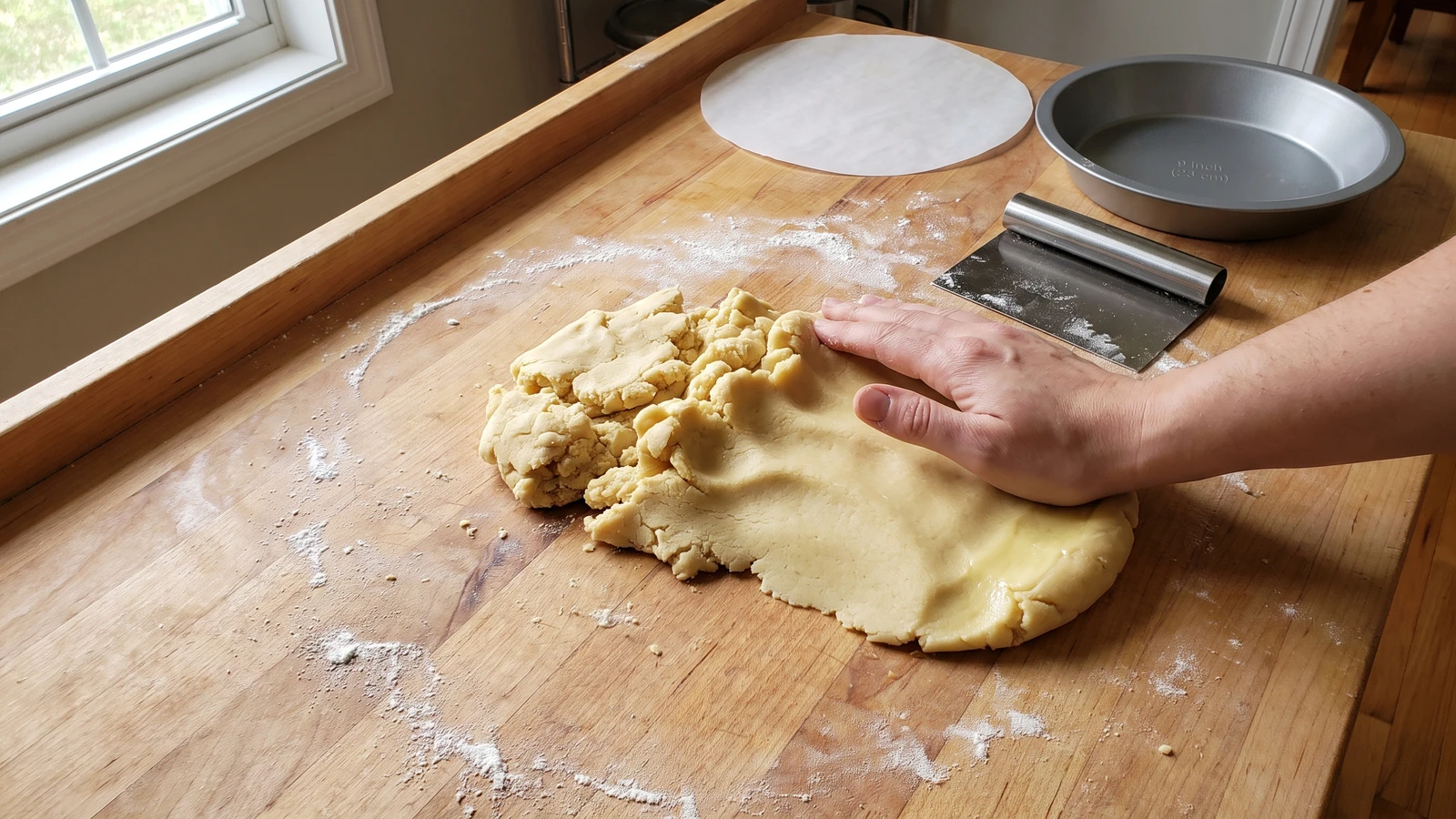
Set the freshly mixed paste on a clean, cool, dry board. Use the bench scraper to collect every loose piece, then roll and press the mixture lightly into one compact mass in front of you. Do not dust the board with flour; extra flour changes the paste's ratio and encourages toughness. The mass may still look rough and faintly cracked. That is exactly why it needs fraisage.
Starting at the edge nearest you, place the heel of your palm on a small section of paste and press it firmly away in one short stroke, trapping it between hand and board. Move to the next section and repeat until the whole mass has been pressed forward little by little. Use pressure, not friction; rubbing back and forth warms the butter without improving the paste. If the paste turns shiny, sticky, or leaves a greasy film, gather it with the scraper and chill it for 10 minutes before resuming. Ça se rattrape.
Scrape the flattened paste back into a single mass without folding or kneading it. Place it before you again and repeat the same forward pressing motion across the entire batch. Work any isolated dry crumbs into the next small section as you go. At the end of this second treatment, the paste should be unified, smooth, and matte, with no loose patches. Stop there. A third full pass develops more gluten and warmth, neither of which belongs in a tender short paste.
Gather the finished paste with the scraper and press it into an even disc about 1 inch (2.5 cm) thick. Wrap it closely and refrigerate for at least 30 minutes before rolling. The rest lets the moisture settle through the paste and relaxes the gluten formed during mixing. If it springs back beneath the rolling pin, return it to the cold for another 15 minutes rather than forcing it.
1 serving (about 450g)
Culinary guides, cultural storytelling, and the editorial depth that makes cooking meaningful.
Discover Culinary ExplorerChef Juliette
A pale short-paste shell holds silken, lightly sweet carrot purée beneath neat glazed half-discs, their butter syrup catching the light: a classical tart poised between vegetable course and sweet.
Chef Juliette
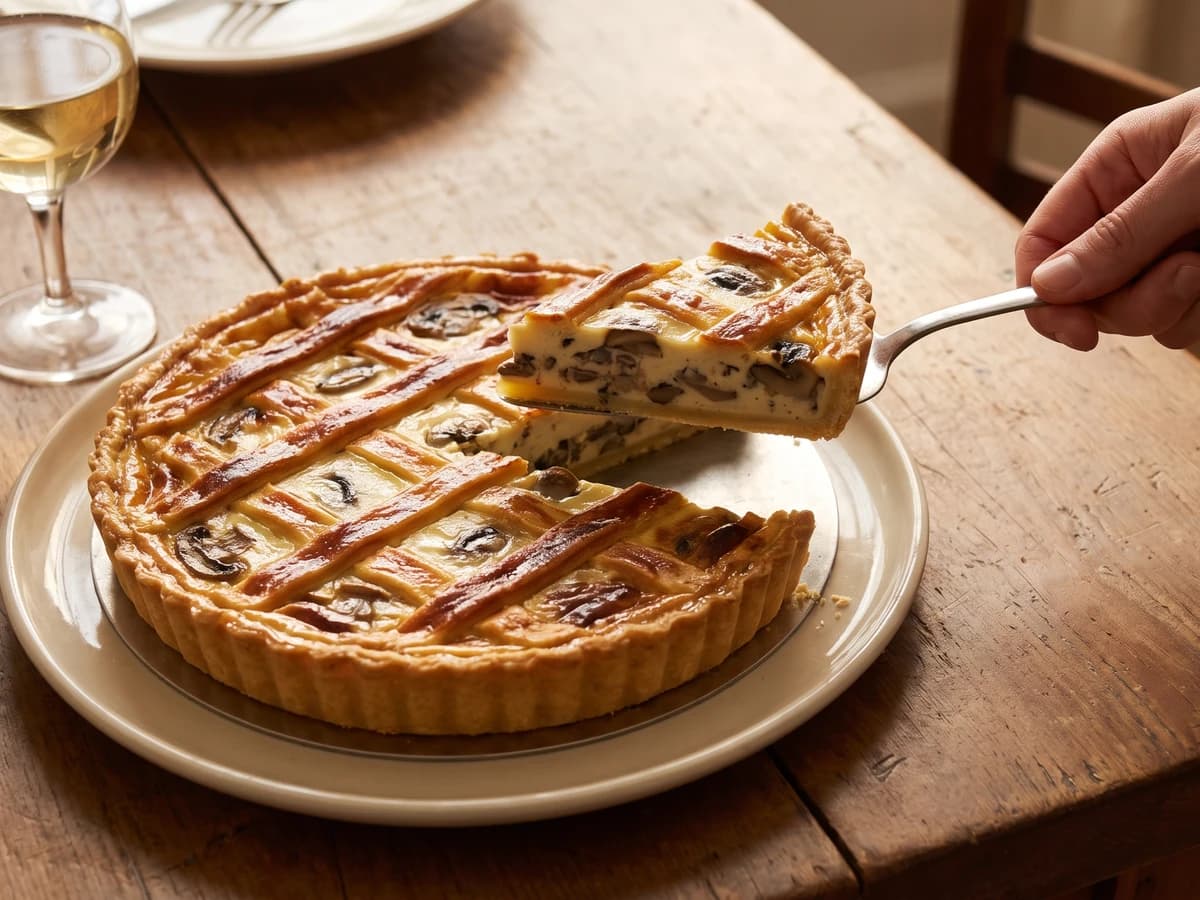
A hot mushroom flan under a butter-gold lattice, with cream reduced close around barely opened caps and a crisp short-paste base protected by one discipline: cool the filling completely.

Chef Juliette
Four little mushroom flans, latticed and gilded, baked hard and fast until butter-gold: a classical garnish scaled to the meat it accompanies and served before its crispness has time to fade.
Chef Juliette
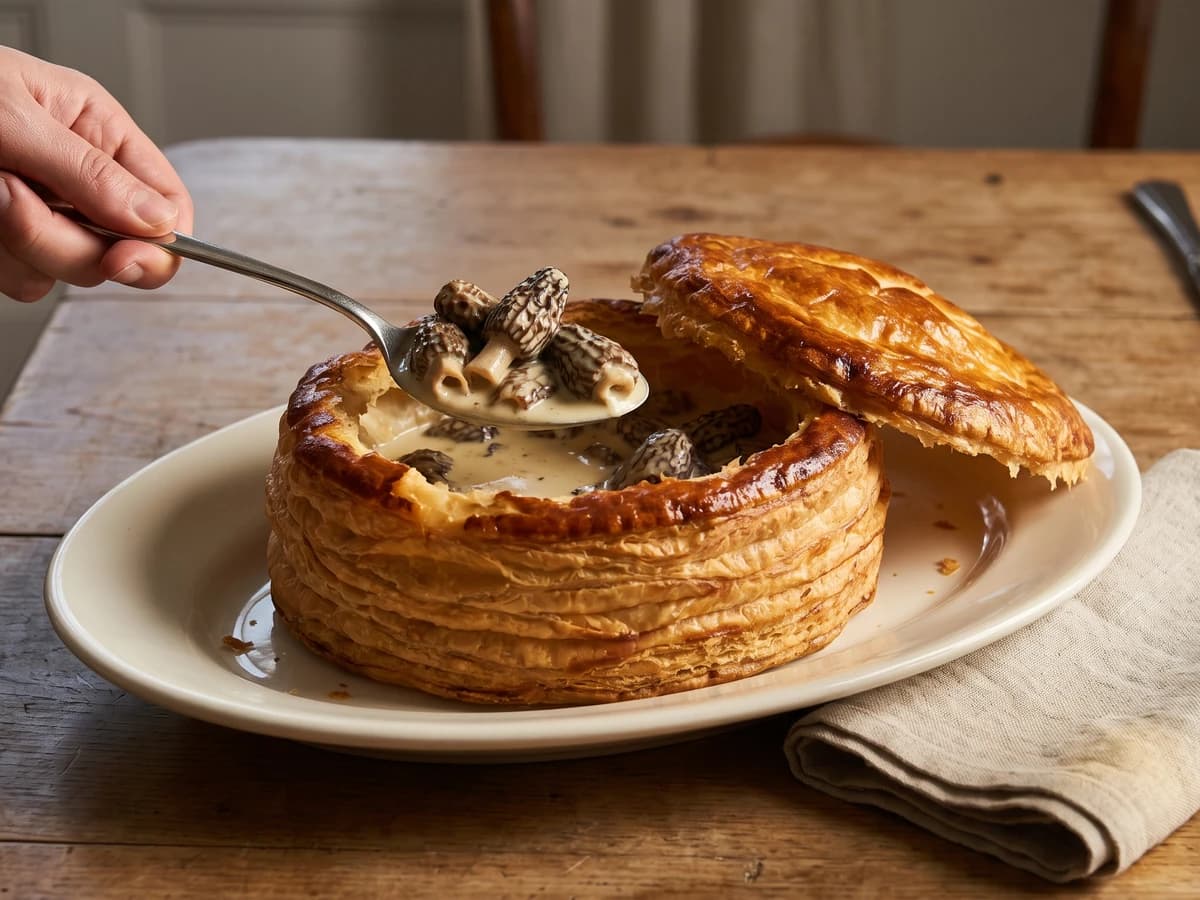
Morels surrender their liquor, then take it back as a glossy cream-and-butter sauce inside burnished puff pastry. The lesson is simple and absolute: reduce with patience, then heat gently and never boil.