Chef Juliette
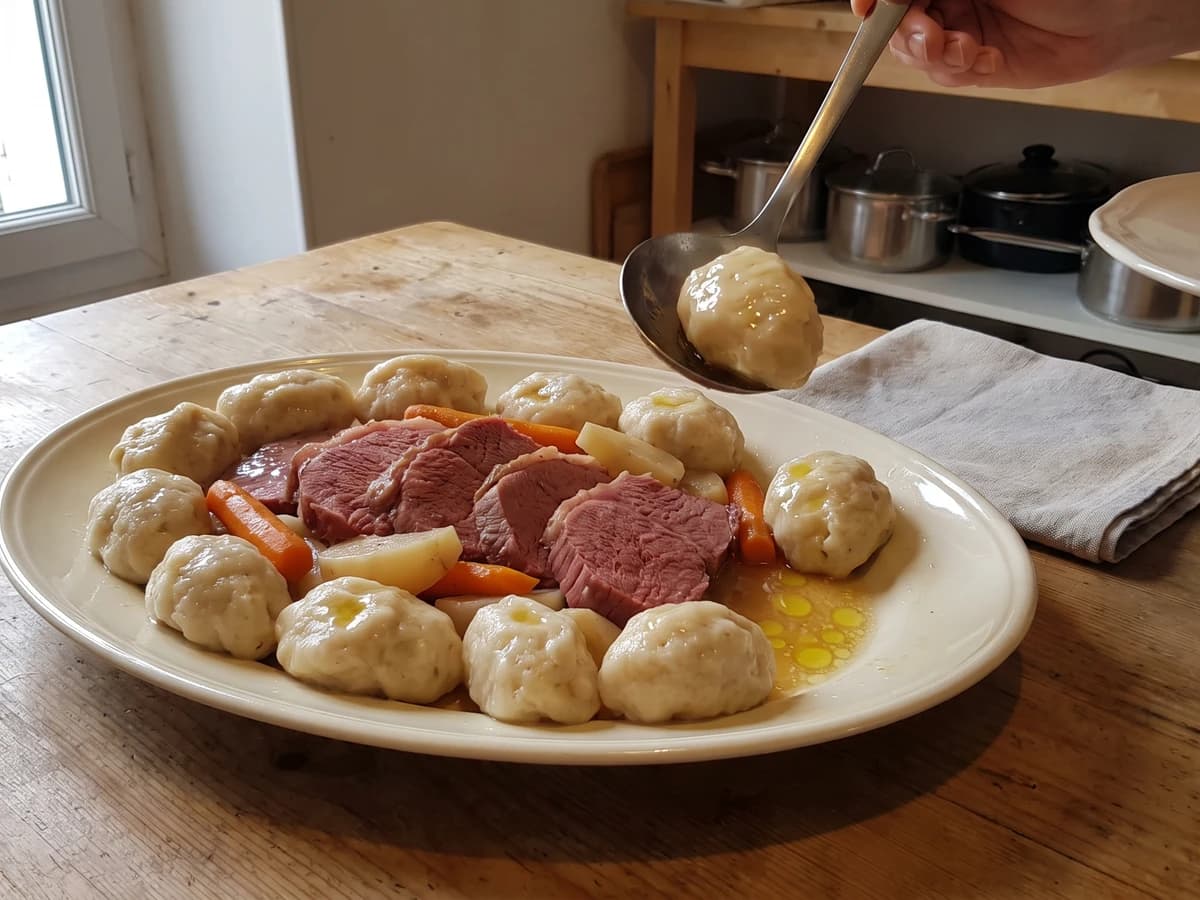
Suet Dumpling
Boulettes au suif, poached beside salt beef, turn equal weights of flour and finely chopped suet into tender, rich dumplings. Keep the beef liquor at a bare tremble and the old garnish works beautifully at home.
A cooking platform built around craft, culture, and the stories behind what we eat.
Created by Chef Juliette
Based on No. 232, Batter for Vegetables, from Le Guide Culinaire (1907) by Auguste Escoffier
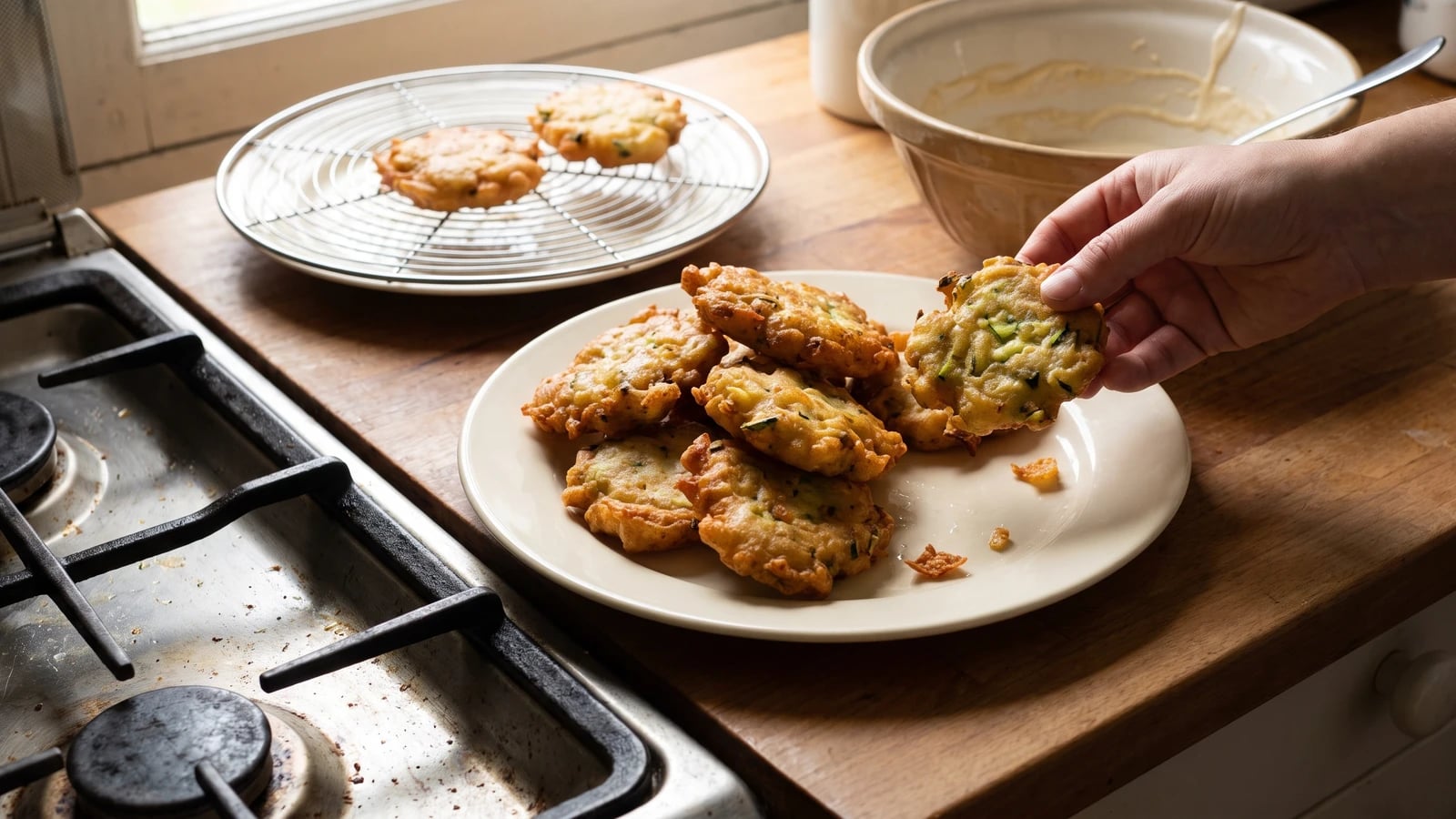
Pâte à frire should cling as a translucent veil, not a coat of plaster: cold water, a restrained hand, and a long untouched rest give modest vegetables crisp golden edges.
Pâte à frire pour légumes (thin frying batter for vegetables) teaches restraint: the batter must film the vegetable, never bury it. That is the one true thing to know before the pan comes out. A slack coating fries into a close, pale-gold shell with crisp edges; a thick one becomes bread around supper.
The original formula assumed a professional frying station and a service bowl built on one pound of flour. For four, that quantity is brigade scaffolding, so this version is exactly one quarter: even the egg is measured as one tablespoon after beating, while the original proportions of flour, salt, oil, and egg remain intact. The prepared vegetables and frying oil merely carry the batter to the table; they don't change its formula. One cook, one stove, one evening.
The long rest is not scaffolding. It is the dish, along with cold water and the instruction not to stir once the batter has settled; these relax the flour so the coating stays tender rather than chewy. Set the slackness before the bowl goes into the cold, because judging that thin veil is the step that matters most.
Pâte à frire belongs to the French bourgeois table and the national classical frying repertoire, not to one province; it was used for beignets (small fritters) of vegetables, fruit, fish, and edible flowers according to the season. Professional kitchens codified it in large quantities for the frying station, but its grammar remained domestic: flour, egg, a little oil, cold water, and time. It is often mistaken for a batter meant to be beaten smooth, when its defining practice is the opposite: mix only enough to dilute it, then leave it alone.
Quantity
1 cup minus 1 tablespoon (225 ml / 113 g)
sifted
Quantity
⅓ teaspoon (1.7 ml / 1.8 g)
Quantity
1½ teaspoons (7.5 ml / 7 g)
Quantity
1 tablespoon (15 ml / 13 g), about ¼ large egg
Quantity
⅔ to ¾ cup (160 to 180 ml / 160 to 180 g)
Quantity
About 4 cups (950 ml / 450 g)
cut into even bite-size pieces and thoroughly dried
Quantity
4 cups (950 ml / 870 g), or enough for a 4 cm depth
| Ingredient | Quantity |
|---|---|
| all-purpose floursifted | 1 cup minus 1 tablespoon (225 ml / 113 g) |
| fine salt | ⅓ teaspoon (1.7 ml / 1.8 g) |
| neutral oil | 1½ teaspoons (7.5 ml / 7 g) |
| beaten egg | 1 tablespoon (15 ml / 13 g), about ¼ large egg |
| very cold water | ⅔ to ¾ cup (160 to 180 ml / 160 to 180 g) |
| prepared vegetablescut into even bite-size pieces and thoroughly dried | About 4 cups (950 ml / 450 g) |
| neutral frying oil | 4 cups (950 ml / 870 g), or enough for a 4 cm depth |
Sift the flour and salt into a wide bowl, drizzle the measured oil over them, and make a well in the centre. Beat one large egg only until the white and yolk are uniform, then measure one tablespoon for the batter. This slightly peculiar measure is the honest home equivalent of the original one egg to one pound of flour; keep the remainder covered in the cold for another dish.
Combine the measured egg with ⅔ cup of the cold water. Pour it into the well in three additions, using a fork or small whisk held low in the bowl to draw flour gradually from the sides. Stop as soon as no dry flour remains. Don't beat, whip, or chase every tiny lump; working the flour builds gluten and gives the fried shell a chew it doesn't want. If the batter has already become elastic or stringy, stop. Ça se rattrape: cover it and give it the full three-hour rest, because further stirring only tightens it.
Lift the fork and watch the batter fall. It should run in a steady ribbon that disappears almost immediately, and a spoon dipped into it should emerge beneath a thin, translucent film. If it falls like paste, add the remaining cold water one tablespoon at a time, tilting the bowl and folding only once or twice after each addition. If it seems just slightly thin, leave it alone; the flour will swell as it rests.
Cover the bowl and refrigerate the batter for two to three hours. Do not stir it during the rest or before frying. A few droplets of oil on the surface do no harm. If the rested batter has tightened so much that it no longer films a spoon, pour one teaspoon of cold water down the side and rotate the bowl gently to distribute it, without whisking.
While the batter rests, prepare the vegetables in pieces of equal thickness so each batch cooks together. Zucchini, mushrooms, onion petals, and thin pepper strips can remain raw. Blanch dense vegetables such as cauliflower or carrot until barely yielding, then cool them completely. Dry every surface well; moisture pushes the batter away and spits when it reaches the oil.
Pour the frying oil into a narrow, heavy saucepan to a depth of about 4 cm and heat it to 175°C. Set a wire rack over a tray beside the stove. Keep the oil between 170°C and 180°C as you work: cooler oil soaks the coating, while fierce oil colours it before the vegetable cooks.
Take the batter from the cold without stirring it. Draw each vegetable through the batter, lift it for two seconds, and let the excess run away; you should still recognize the shape and colour beneath the film. Lower pieces into the oil away from you and fry in small batches, turning once, until the coating is crisp and pale gold, about two to four minutes depending on the vegetable. If the first batch emerges pale and greasy, stop and let the oil regain 175°C, then refry those pieces for thirty seconds once the temperature is correct.
Lift the vegetables onto the wire rack in a single layer so air reaches the undersides. Don't pile them or cover them, because trapped moisture softens the thin shell you worked to preserve. Bring them to the table at once. This batter has no ambition to wait. À table!
1 serving (about 160g)
Culinary guides, cultural storytelling, and the editorial depth that makes cooking meaningful.
Discover Culinary ExplorerChef Juliette
Boulettes au suif, poached beside salt beef, turn equal weights of flour and finely chopped suet into tender, rich dumplings. Keep the beef liquor at a bare tremble and the old garnish works beautifully at home.

Chef Juliette
Bread, flour, frangipane, and rice become four cool, supple panades for binding forcemeats, each changing body and flavor while preserving tenderness. The finest Mousselines need none, and knowing that distinction is the lesson.

Chef Juliette
Panade au pain is bread, milk, salt, heat, and attention: stir until the paste releases cleanly, butter it against a skin, and you have the quiet binder behind tender French farces.

Chef Juliette
Panade de farine teaches the drying stroke behind pâte à choux: flour meets boiling buttered water, then stays over the fire until the paste gathers, smooths, and quits the pan cleanly.