Chef Juliette
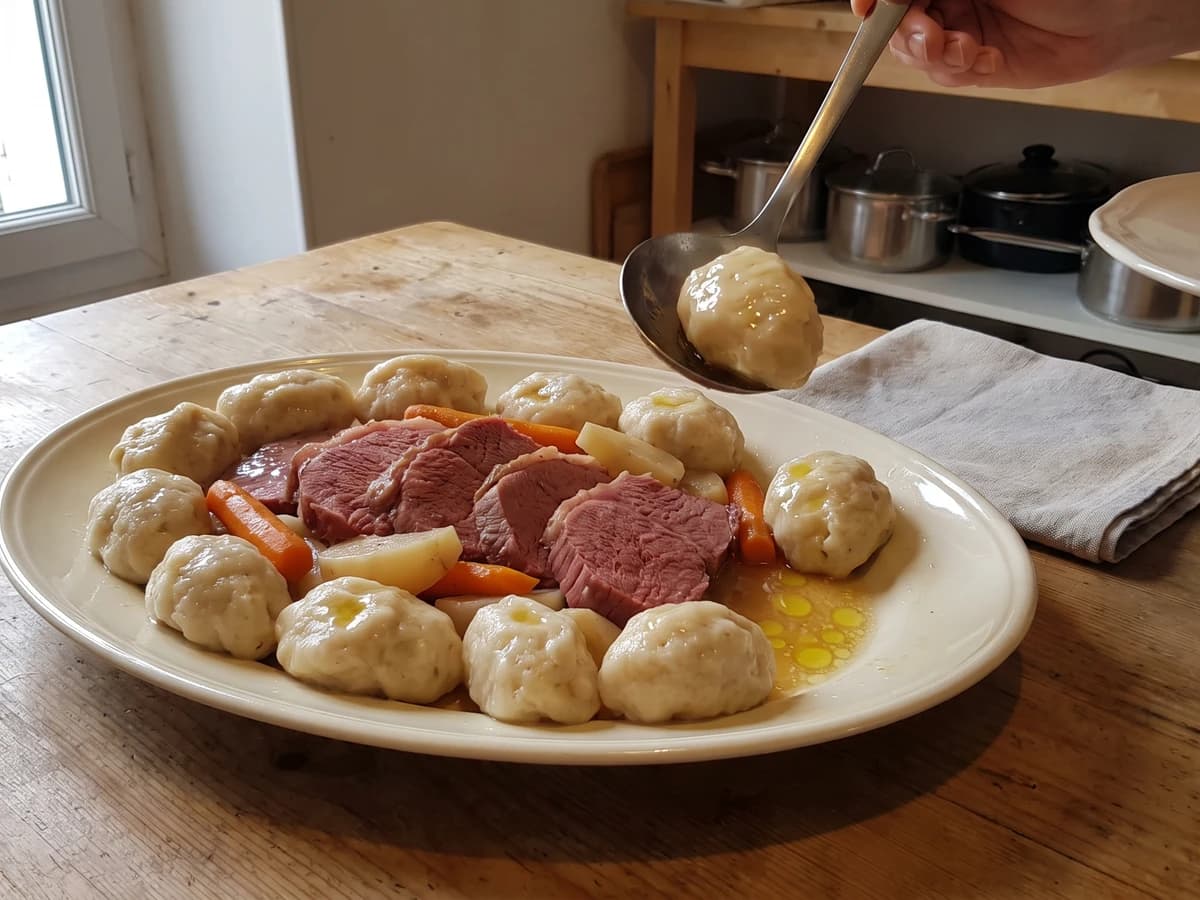
Suet Dumpling
Boulettes au suif, poached beside salt beef, turn equal weights of flour and finely chopped suet into tender, rich dumplings. Keep the beef liquor at a bare tremble and the old garnish works beautifully at home.
A cooking platform built around craft, culture, and the stories behind what we eat.
Created by Chef Juliette
Based on No. 2315, Diablotins, from Le Guide Culinaire (1907) by Auguste Escoffier
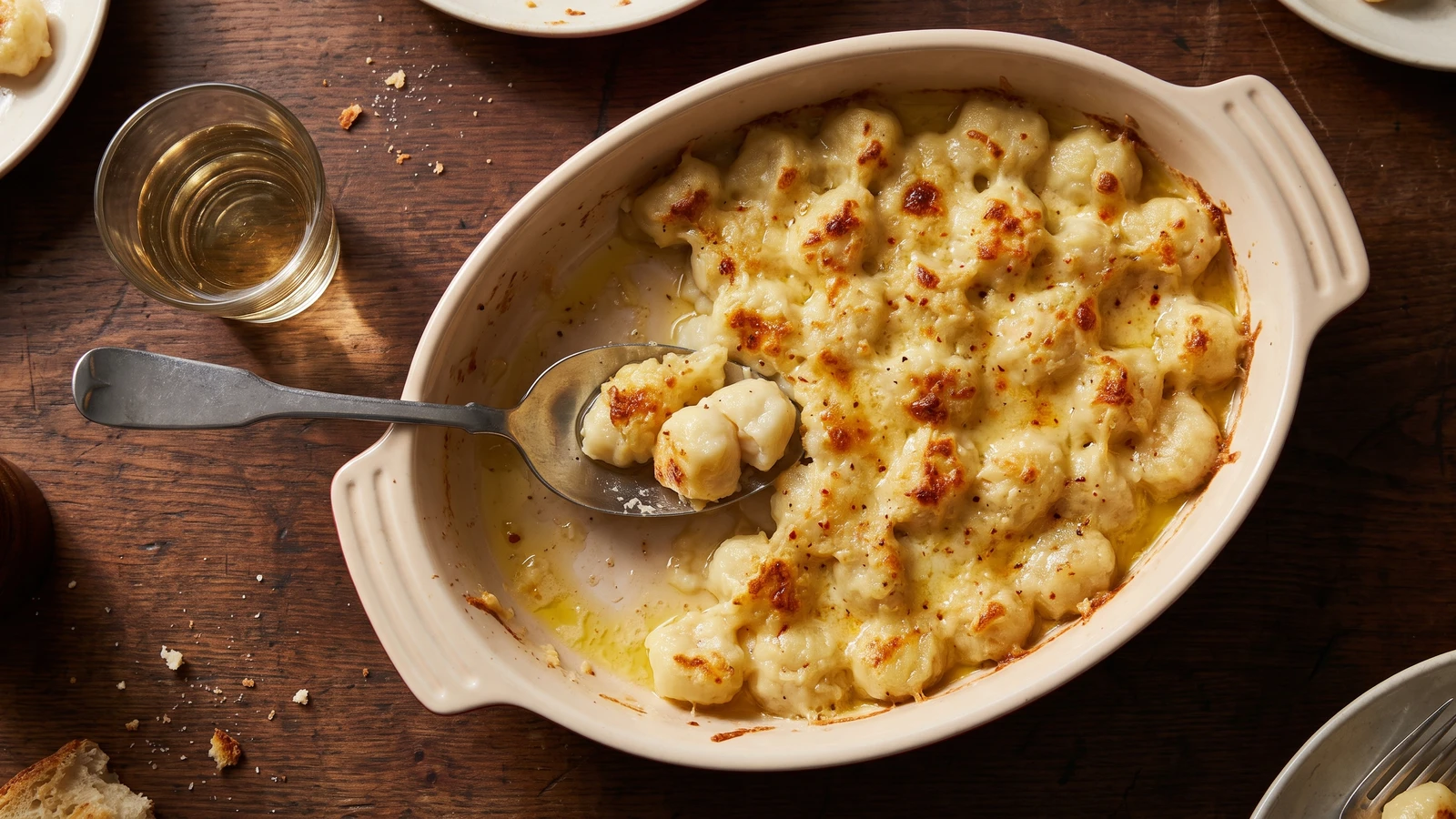
Tiny poached gnocchi, tender at heart and bronzed under Gruyère with a pinprick of cayenne, teach the essential rule of a rapid gratin: top heat waits for the table.
Diablotins (tiny poached gnocchi with a cheese crust) teach one true thing: the gratin must form at the last possible moment. These little dumplings should arrive tender beneath a fine bronze crown, with just enough cayenne to leave a warm prickle. Hold them after gratinating and the crust softens while the gnocchi tighten. Timing is the dish.
The grand kitchen surrounding the original had a saucier on staff, stock never off the fire, and extra hands for service, though Diablotins needs neither sauce nor stock. What it truly assumed was a cook free to poach minute gnocchi on command and a fierce salamander waiting overhead. At home, a small saucepan, a piping bag or sturdy freezer bag, and a thoroughly heated broiler do the same work. The entry gives no fixed brigade quantities, so this formula makes one shallow dish for four while preserving its flavorings and exact sequence: poach, cheese, cayenne, gratin.
The brigade's holding arrangements are scaffolding and can go. The immediate passage from poaching water to top heat cannot, because that is the dish itself. Drain the gnocchi well, spread them in one layer, and have the broiler ready before the cheese touches them. One cook, one stove, one evening.
Diablotins belong to the Parisian classical dining room rather than to a particular rural region, one of the small farinaceous dishes shaped by professional service and readily adopted at the bourgeois table. Their name means little devils, a reference to the discreet sting of cayenne rather than extravagant heat. The salamander once supplied the sudden top heat; the modern broiler preserves the same rapid gratin and the same last-minute journey to the table.
Quantity
1 cup (240 ml / 247 g)
Quantity
4 tablespoons (60 ml / 57 g)
Quantity
½ teaspoon (2.5 ml / 3 g)
Quantity
1 cup (240 ml / 120 g)
Quantity
2
at room temperature and beaten separately
Quantity
2 quarts (1.9 L / 1.9 kg)
for poaching
Quantity
1 tablespoon (15 ml / 18 g)
for the poaching water
Quantity
1 tablespoon (15 ml / 14 g)
for the dish and finish
Quantity
1 small pinch (about 1/16 teaspoon / 0.1 g)
| Ingredient | Quantity |
|---|---|
| whole milk | 1 cup (240 ml / 247 g) |
| unsalted butter | 4 tablespoons (60 ml / 57 g) |
| fine salt | ½ teaspoon (2.5 ml / 3 g) |
| plain flour | 1 cup (240 ml / 120 g) |
| large eggsat room temperature and beaten separately | 2 |
| waterfor poaching | 2 quarts (1.9 L / 1.9 kg) |
| fine saltfor the poaching water | 1 tablespoon (15 ml / 18 g) |
| unsalted butterfor the dish and finish | 1 tablespoon (15 ml / 14 g) |
| aged Gruyèrefinely grated | ¾ cup (180 ml / 75 g), for Gratins (No. 268) |
| cayenne | 1 small pinch (about 1/16 teaspoon / 0.1 g) |
Set a broiler rack about 4 inches from the element and preheat the broiler thoroughly. Butter a shallow broiler-safe gratin dish with about one teaspoon of the finishing butter. Bring the poaching water and its tablespoon of salt to a simmer in a wide saucepan. Everything must be ready now, because the finished Diablotins will not improve while you search for the cheese.
Bring the milk, four tablespoons of butter, and the half teaspoon of salt just to a boil in a heavy saucepan. Take the pan from the heat, add all the flour at once, and beat firmly with a wooden spoon until no dry pockets remain. Return it to low heat and beat for 1 to 2 minutes, until the panade, the cooked flour paste, gathers into a smooth ball and leaves a thin film on the pan. This drying gives the eggs somewhere to go; a wet panade makes gnocchi that dissolve in the water. Let it cool for 3 minutes.
Beat in the first egg a little at a time, waiting for each addition to disappear before adding more. Add the second egg by spoonfuls until the paste is smooth, glossy, and falls from the spoon in a heavy V rather than pouring. Egg sizes differ, so the final teaspoon may not be needed. If the paste begins to flow, stop adding egg. Ça se rattrape: beat it firmly for 30 seconds, then chill it for 10 minutes before testing.
Transfer the paste to a piping bag or sturdy freezer bag cut to make a ⅜-inch opening. Keep the water at a bare simmer. Pipe over the pan and snip off ⅜-inch lengths with damp kitchen shears, making only a dozen for the first batch. Poach one test gnocco first; if it frays, lower the heat and chill the remaining paste for 10 minutes. Once sound, poach in uncrowded batches until the gnocchi rise, then give them another 60 to 90 seconds so their centers set. They should swell only to the size of small marbles.
Lift each batch with a slotted spoon onto a clean towel and roll the gnocchi lightly so no water clings to them. Wet gnocchi dilute the butter and prevent an even crust. Transfer them directly to the buttered gratin dish in one close layer, then dot with the remaining finishing butter. Do not rinse them, pile them deeply, or leave them sitting in water.
Apply the rapid form of Gratins (No. 268): scatter the Gruyère evenly over the hot gnocchi, then dust the cayenne from high above so no bite receives a fiery pocket. Broil for 1 to 3 minutes, turning the dish once, until the cheese melts into a thin butter-gold crust with bronze freckles and the rim bubbles. Watch continuously. If one edge colors too quickly, rotate the dish and shield that patch with a small piece of foil. Carry the dish straight to the table; held waiting, the gnocchi turn tough. À table!
1 serving (about 145g)
Culinary guides, cultural storytelling, and the editorial depth that makes cooking meaningful.
Discover Culinary ExplorerChef Juliette
Boulettes au suif, poached beside salt beef, turn equal weights of flour and finely chopped suet into tender, rich dumplings. Keep the beef liquor at a bare tremble and the old garnish works beautifully at home.

Chef Juliette
Bread, flour, frangipane, and rice become four cool, supple panades for binding forcemeats, each changing body and flavor while preserving tenderness. The finest Mousselines need none, and knowing that distinction is the lesson.

Chef Juliette
Panade au pain is bread, milk, salt, heat, and attention: stir until the paste releases cleanly, butter it against a skin, and you have the quiet binder behind tender French farces.

Chef Juliette
Panade de farine teaches the drying stroke behind pâte à choux: flour meets boiling buttered water, then stays over the fire until the paste gathers, smooths, and quits the pan cleanly.