
Chef Juliette
Flan aux Carottes
A pale short-paste shell holds silken, lightly sweet carrot purée beneath neat glazed half-discs, their butter syrup catching the light: a classical tart poised between vegetable course and sweet.
A cooking platform built around craft, culture, and the stories behind what we eat.

Created by Chef Juliette
Based on No. 2302, Choux au Fromage, from Le Guide Culinaire (1907) by Auguste Escoffier
Choux au fromage teach the discipline of drying pâte à choux: golden shells that sound hollow, filled with cayenne-warmed fondue au fromage and crowned with Parmesan Chantilly for a generous celebration tray.
Choux au Fromage (cheese choux buns) teach one stern little truth: a choux shell isn't finished when it has risen and browned. It must be dry to its centre. These golden shells hold Fondue au fromage, a soft cheese preparation sharpened with cayenne, beneath Parmesan Chantilly, savoury whipped cream folded with grated cheese. Any dampness left inside will soften the crust and pull the whole proud structure down.
The old entry assumed a pastry station with Ramequins and Gougère Paste (No. 2375) already prepared, another pair of hands tending the fondue, and Chantilly whipped for service. This dish needs neither a saucier, a stockpot, nor a salamander. At home, one prepared batch, one saucepan, one piping bag washed and retipped, and an ordinary oven do the work. The separate stations were brigade scaffolding and can go; the cheese-enriched paste, egg gilding, cayenne fondue, Parmesan Chantilly, and thorough drying are the dish and must stay. One cook, one stove, one evening.
When they are right, the choux feel nearly weightless, their ridges are burnished, and a tap on the base answers with a hollow knock. Bake them until you hear it. That drying is the one step that decides everything.
Choux au fromage belong to the Parisian grand-kitchen family of petits fours salés, where pâte à choux passed easily from the pastry room to the savoury course through changes in seasoning and filling. This preparation is not simply Burgundy's gougère: its cheese-enriched shell is cut and layered with a separate fondue au fromage and Parmesan Chantilly, joining the work of the pastry and cold-kitchen stations. On the home celebration table, the same construction becomes a generous hand-held bite, provided the shells are baked dry enough to wait for their filling.
Quantity
1 home-scale batch, about 2 cups (480 ml / 500 g) Ramequins and Gougère Paste (No. 2375)
freshly made and still supple
Quantity
1, about 3 tablespoons (45 ml / 50 g without shell)
beaten for gilding
Quantity
1 teaspoon (5 ml / 5 g)
Quantity
1½ cups (360 ml / 150 g)
finely grated
Quantity
3, about ⅝ cup (150 ml / 150 g without shells)
Quantity
5 tablespoons (75 ml / 70 g)
cubed
Quantity
⅛ teaspoon (0.6 ml / 0.3 g)
Quantity
1 cup (240 ml / 240 g)
well chilled
Quantity
½ cup (120 ml / 45 g)
finely grated
| Ingredient | Quantity |
|---|---|
| Ramequins and Gougère Pastefreshly made and still supple | 1 home-scale batch, about 2 cups (480 ml / 500 g) Ramequins and Gougère Paste (No. 2375) |
| large eggbeaten for gilding | 1, about 3 tablespoons (45 ml / 50 g without shell) |
| water | 1 teaspoon (5 ml / 5 g) |
| Gruyèrefinely grated | 1½ cups (360 ml / 150 g) |
| large eggs | 3, about ⅝ cup (150 ml / 150 g without shells) |
| unsalted buttercubed | 5 tablespoons (75 ml / 70 g) |
| cayenne pepper | ⅛ teaspoon (0.6 ml / 0.3 g) |
| heavy whipping creamwell chilled | 1 cup (240 ml / 240 g) |
| Parmesanfinely grated | ½ cup (120 ml / 45 g) |
Heat a conventional oven to 375°F (190°C), or a fan oven to 340°F (170°C), and line a heavy half-sheet pan with parchment. Fit a large piping bag with a ⅝-inch (15 mm) plain tip and fill it with the Ramequins and Gougère Paste (No. 2375). Pipe 16 upright mounds about 1¾ inches (4.5 cm) wide, a little larger than the choux used for Saint-Honoré, leaving at least 2 inches (5 cm) between them. Smooth each peak with a fingertip dipped in water so it doesn't scorch before the rest has browned.
Beat the single egg with the teaspoon of water, then gild the choux by brushing their tops and sides lightly with the egg wash. Keep it from running onto the parchment, where it can glue the base and hinder the rise. Bake without opening the door for the first 20 minutes, then continue for 7 to 10 minutes, until the choux stand high, feel firm, and wear a deep, even gold rather than a timid blond.
Lower the oven to 325°F (160°C), or 285°F (140°C) fan. Pierce the side of each choux with a skewer to release trapped moisture, then return them to the oven for 10 to 15 minutes. A finished shell sounds hollow when tapped and feels crisp underneath. Cool completely on a rack. If the shells soften as they cool, don't fill them yet. Ça se rattrape: split or repierce them and bake at 325°F (160°C) for another 5 to 8 minutes, then cool again. A shell already sunken won't become tall again, but its dried halves will still hold the fillings beautifully beneath the cap.
Combine the Gruyère, three eggs, and butter in a cold, heavy-bottomed saucepan. Set it over low heat and stir continuously, scraping the bottom and corners, until the butter and cheese melt into the eggs and the Fondue au fromage becomes thick, glossy, and cohesive, about 6 to 9 minutes. It should hold soft folds and reach 162°F (72°C), but it must never boil. Stir in the cayenne. If beads of butter appear around the edge, pull the pan from the heat and whisk in 1 teaspoon of the measured cold cream while cooling the base of the pan in cold water. Ça se rattrape. Scrape the fondue into a shallow bowl, cover its surface directly, and chill until cool and spoonable, about 30 minutes.
Reserve 2 tablespoons of the cold cream, then whip the remainder in a cold bowl until it holds soft peaks. Fold in the finely grated Parmesan and continue whisking just until the Parmesan Chantilly holds a clean, medium-firm peak suitable for piping. Stop there. If it begins to look grainy, fold in the reserved cream a teaspoon at a time until smooth again. Transfer it to the cleaned piping bag fitted with a ½-inch (12 mm) star tip and keep it cold.
Only when the choux are completely cold, cut off their top quarter with a small serrated knife and keep each cap beside its shell. Beat the chilled fondue briefly to restore its softness, then spoon a generous layer into every shell. If it is too firm, let it stand for 10 minutes; if it slumps, chill it for another 15. Pipe a full rosette of Parmesan Chantilly over the fondue and settle the caps lightly on top. Arrange the choux on a platter and serve within 45 minutes, while the shells still answer the teeth with a proper crisp bite. À table!
1 serving (about 250g)
Culinary guides, cultural storytelling, and the editorial depth that makes cooking meaningful.
Discover Culinary ExplorerChef Juliette
A pale short-paste shell holds silken, lightly sweet carrot purée beneath neat glazed half-discs, their butter syrup catching the light: a classical tart poised between vegetable course and sweet.
Chef Juliette
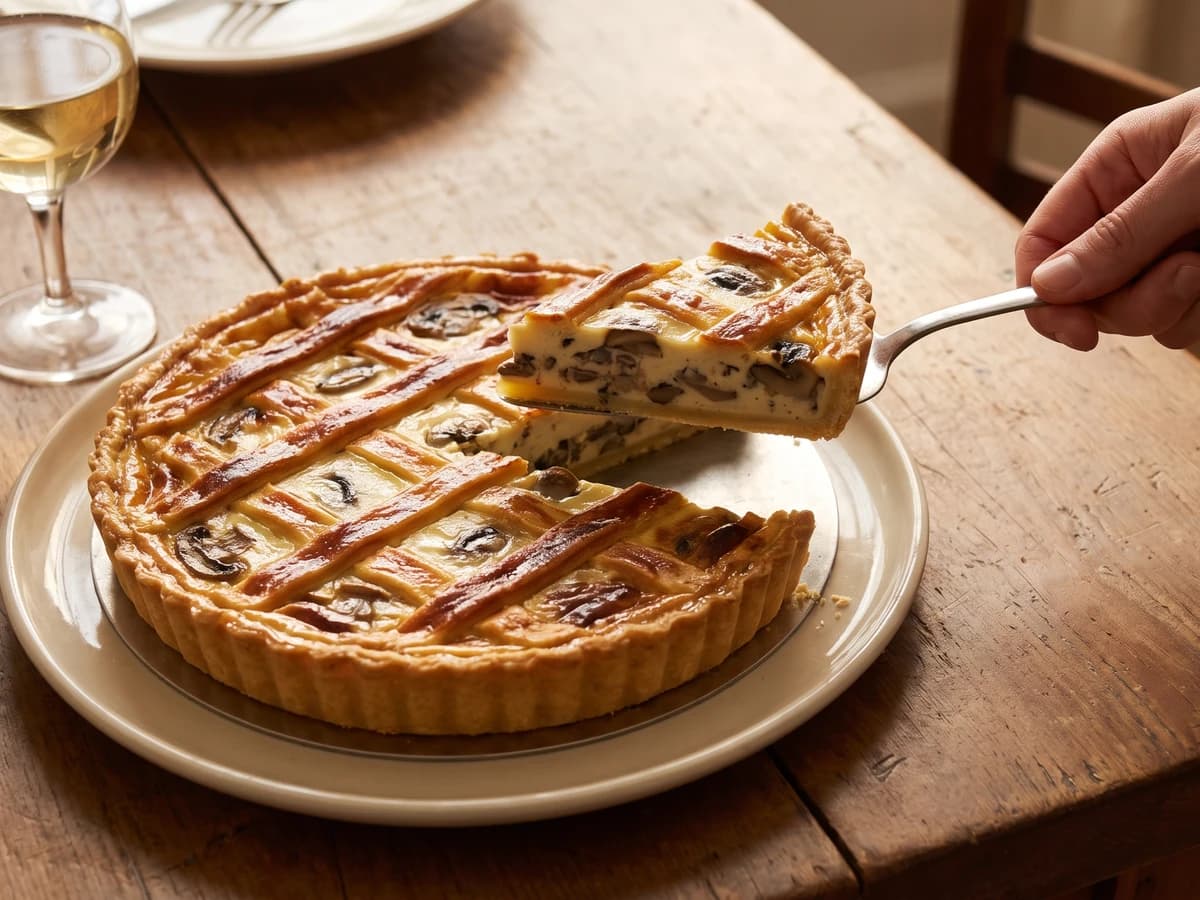
A hot mushroom flan under a butter-gold lattice, with cream reduced close around barely opened caps and a crisp short-paste base protected by one discipline: cool the filling completely.

Chef Juliette
Four little mushroom flans, latticed and gilded, baked hard and fast until butter-gold: a classical garnish scaled to the meat it accompanies and served before its crispness has time to fade.
Chef Juliette
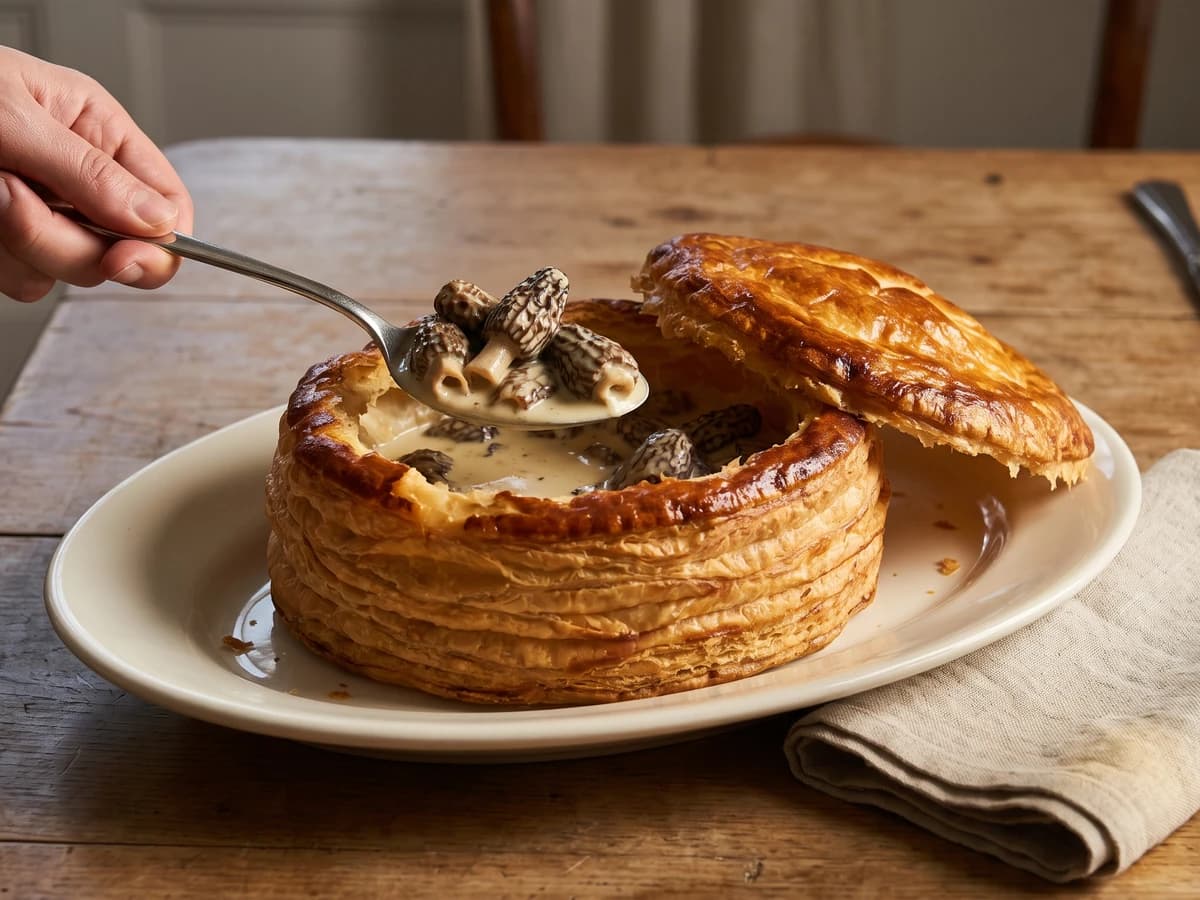
Morels surrender their liquor, then take it back as a glossy cream-and-butter sauce inside burnished puff pastry. The lesson is simple and absolute: reduce with patience, then heat gently and never boil.