Chef Juliette
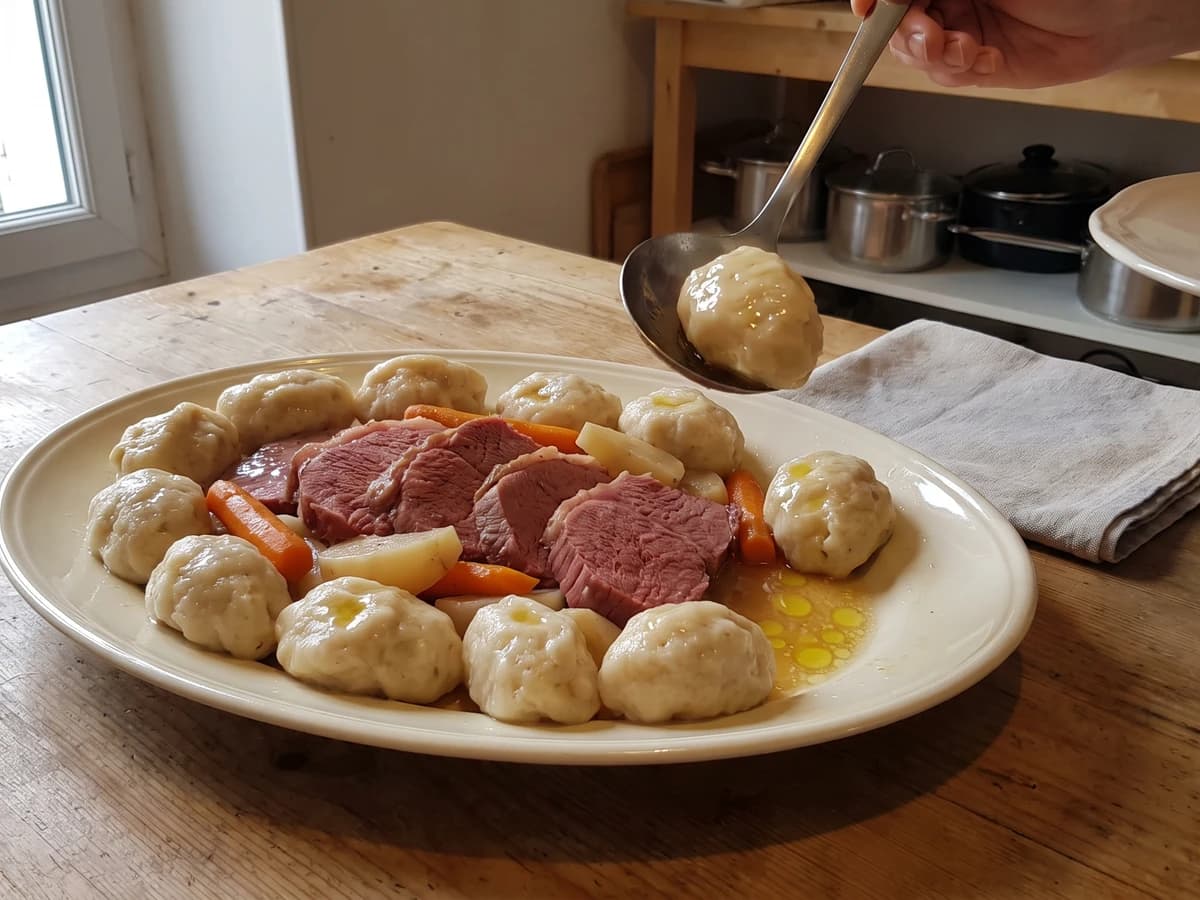
Suet Dumpling
Boulettes au suif, poached beside salt beef, turn equal weights of flour and finely chopped suet into tender, rich dumplings. Keep the beef liquor at a bare tremble and the old garnish works beautifully at home.
A cooking platform built around craft, culture, and the stories behind what we eat.
Created by Chef Juliette
Based on No. 2295, Soufflé Piémontais, from Le Guide Culinaire (1907) by Auguste Escoffier
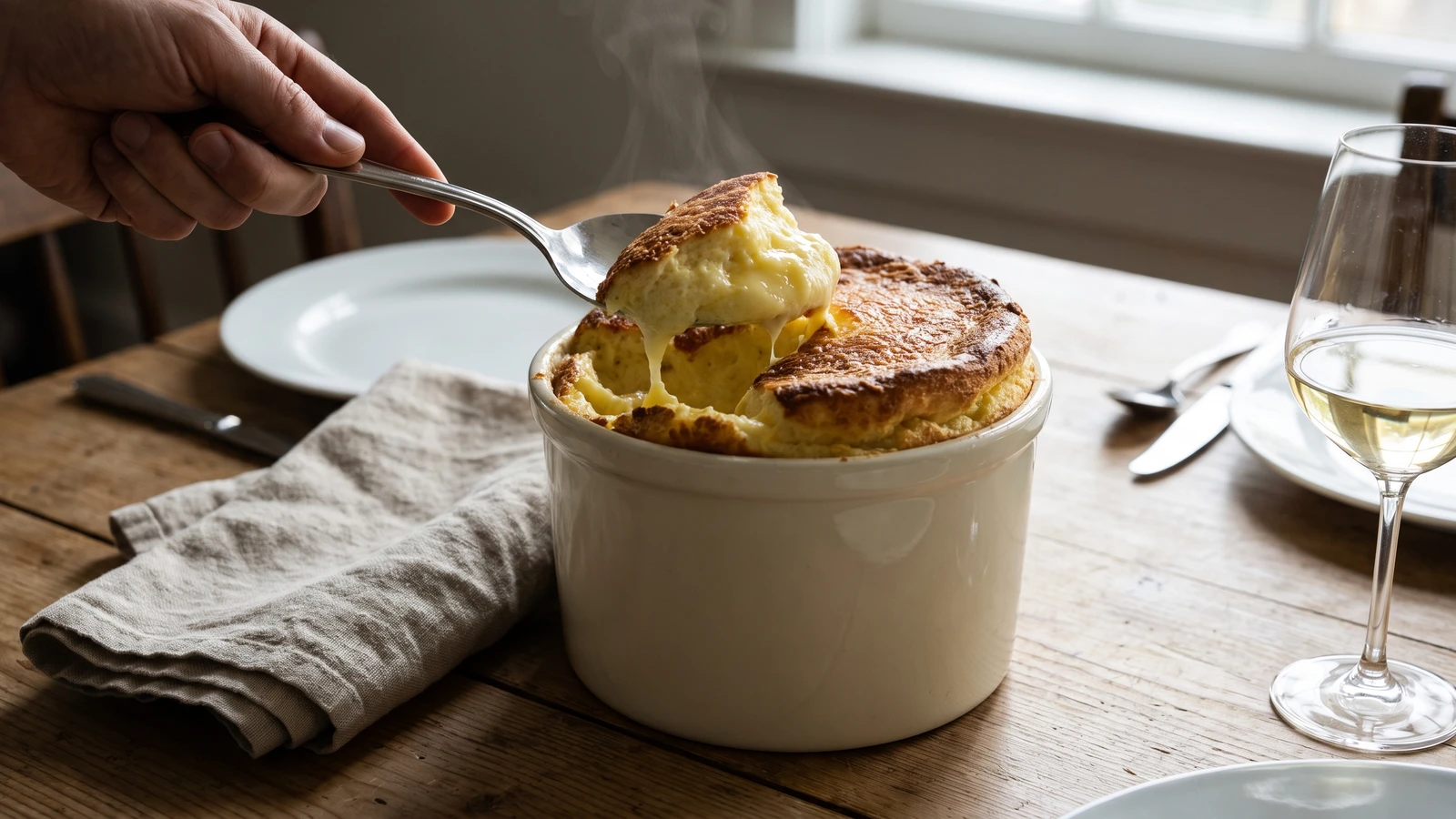
Soufflé Piémontais rises from a Parmesan-rich maize paste into a tender golden crown, proving that a sturdy base can still fly when three stiff whites are folded with restraint and baked without delay.
Soufflé Piémontais (Piedmont-style maize soufflé) teaches the governing law of every hot soufflé: the base gives flavor and the whites give height, but only an oven already at heat lets both survive. Before you touch a pan, set the dish, the oven, and every ingredient in place. Once the whites are folded, the clock belongs to the soufflé.
The original formula called for a mild oven to cook the maize paste, a buttered timbale mould, and a second saucepan waiting so the paste could be worked without delay. It needed neither stockpot, saucier, nor salamander. Your equivalents are a covered ovenproof saucepan, a straight-sided soufflé dish, and an electric mixer. The one-pint formula is already right for four generous side portions, so its proportions remain intact; only the second saucepan, useful brigade scaffolding, becomes a warmed mixing bowl. One cook, one stove, one evening.
The finished Soufflé Piémontais should stand high above its dish, butter-gold at the crown and creamy beneath, with the sweet grain of maize held firmly against the salt of Parmesan. Cooking the paste thoroughly is part of the dish and must stay. Fold the whites only until the heavy base has become light, then fill the dish and bake at once.
Soufflé Piémontais belongs to the French classical repertoire's conversation with Piedmont, the Alpine region where maize porridge became everyday food and crossed readily into neighboring French kitchens. French cooks worked that maize paste with butter, Parmesan, eggs, and whipped whites, turning the logic of polenta into the logic of a hot soufflé. The name describes a French Piémontais style, not a claim that this exact formula is a Piedmontese household standard.
Quantity
1 tablespoon (15 ml / 14 g)
softened
Quantity
1 pint (2 cups / 475 ml / 490 g)
Quantity
1 teaspoon (5 ml / 6 g)
Quantity
½ cup (120 ml / 57 g)
not cornstarch
Quantity
3 tablespoons (45 ml / 43 g)
softened
Quantity
½ cup (120 ml / 43 g)
finely grated
Quantity
4 total
keep 1 whole; separate 3, using all 3 whites and 2 yolks; reserve the remaining yolk
Quantity
2 tablespoons (30 ml / 10 g)
finely grated
| Ingredient | Quantity |
|---|---|
| unsalted butter for the dishsoftened | 1 tablespoon (15 ml / 14 g) |
| whole milk | 1 pint (2 cups / 475 ml / 490 g) |
| fine salt | 1 teaspoon (5 ml / 6 g) |
| fine yellow maize flour or fine polenta flournot cornstarch | ½ cup (120 ml / 57 g) |
| unsalted buttersoftened | 3 tablespoons (45 ml / 43 g) |
| Parmesanfinely grated | ½ cup (120 ml / 43 g) |
| large eggskeep 1 whole; separate 3, using all 3 whites and 2 yolks; reserve the remaining yolk | 4 total |
| Parmesan for the topfinely grated | 2 tablespoons (30 ml / 10 g) |
Set a rack in the lower third of the oven and heat it to 325°F (165°C). Butter the bottom and sides of a 1.5-liter or 6-cup straight-sided soufflé dish, drawing the butter upward along the walls, then chill the dish. Keep one egg whole. Separate the other three, putting all three whites into a perfectly clean mixing bowl and retaining two yolks for the base; reserve the remaining yolk for another use.
Bring the milk and salt to a full boil in a medium ovenproof saucepan. Lower the heat and rain in the maize flour gradually while whisking without pause. Continue whisking for 2 minutes, until the mixture becomes a thick, smooth paste, then cover tightly and cook in the mild oven for 25 minutes. This gentle covered cooking swells the grain without scorching it. If lumps appear, take the pan off the heat and beat firmly until smooth before covering it. If the bottom catches later, don't scrape it; lift the clean paste away and leave the scorched layer behind. Ça se rattrape.
Remove the saucepan and raise the oven to 400°F (200°C). Transfer the hot maize paste to a large heatproof mixing bowl. Work in the softened butter until fully absorbed, then beat in the ½ cup Parmesan. Let the base cool for 5 to 8 minutes, until warm rather than fiercely hot, then beat in the whole egg followed by the two yolks, one at a time. The finished base should be smooth, glossy, and thick enough to fall heavily from the spatula. Wait until the oven has reached its full heat before whipping the whites.
Whip the three egg whites until they hold stiff, glossy peaks. Stop as soon as they stand; dry, clumpy whites are harder to fold and give less lift. Stir one-quarter of the whites briskly into the maize base to loosen it. Add the remainder in two portions, cutting down through the center with a broad spatula, sweeping across the bottom, and turning the bowl after each fold. Stop when no dense pockets of white remain. A faint pale streak is safer than folding until every trace disappears.
Spoon the mixture into the prepared dish and level the surface lightly without pressing out the air. Sprinkle the remaining 2 tablespoons Parmesan evenly over the top, then run a clean thumb around the inside rim to free the edge. Bake immediately for 22 to 28 minutes without opening the oven during the first 20. The Soufflé Piémontais is ready when it has risen well above the rim, the crown is deeply golden, and the center gives a small, controlled tremor. If a thin skewer finds liquid paste at the center, return the dish to the oven for 3 to 5 minutes.
Carry the Soufflé Piémontais directly to the table and serve it with a broad spoon, reaching down for both the creamy maize center and the bronzed Parmesan crown. Its first gentle settling is natural, not a failure; a hot soufflé is alive, and it waits for no speech. À table!
1 serving (about 185g)
Culinary guides, cultural storytelling, and the editorial depth that makes cooking meaningful.
Discover Culinary ExplorerChef Juliette
Boulettes au suif, poached beside salt beef, turn equal weights of flour and finely chopped suet into tender, rich dumplings. Keep the beef liquor at a bare tremble and the old garnish works beautifully at home.

Chef Juliette
Bread, flour, frangipane, and rice become four cool, supple panades for binding forcemeats, each changing body and flavor while preserving tenderness. The finest Mousselines need none, and knowing that distinction is the lesson.

Chef Juliette
Panade au pain is bread, milk, salt, heat, and attention: stir until the paste releases cleanly, butter it against a skin, and you have the quiet binder behind tender French farces.

Chef Juliette
Panade de farine teaches the drying stroke behind pâte à choux: flour meets boiling buttered water, then stays over the fire until the paste gathers, smooths, and quits the pan cleanly.