Chef Juliette
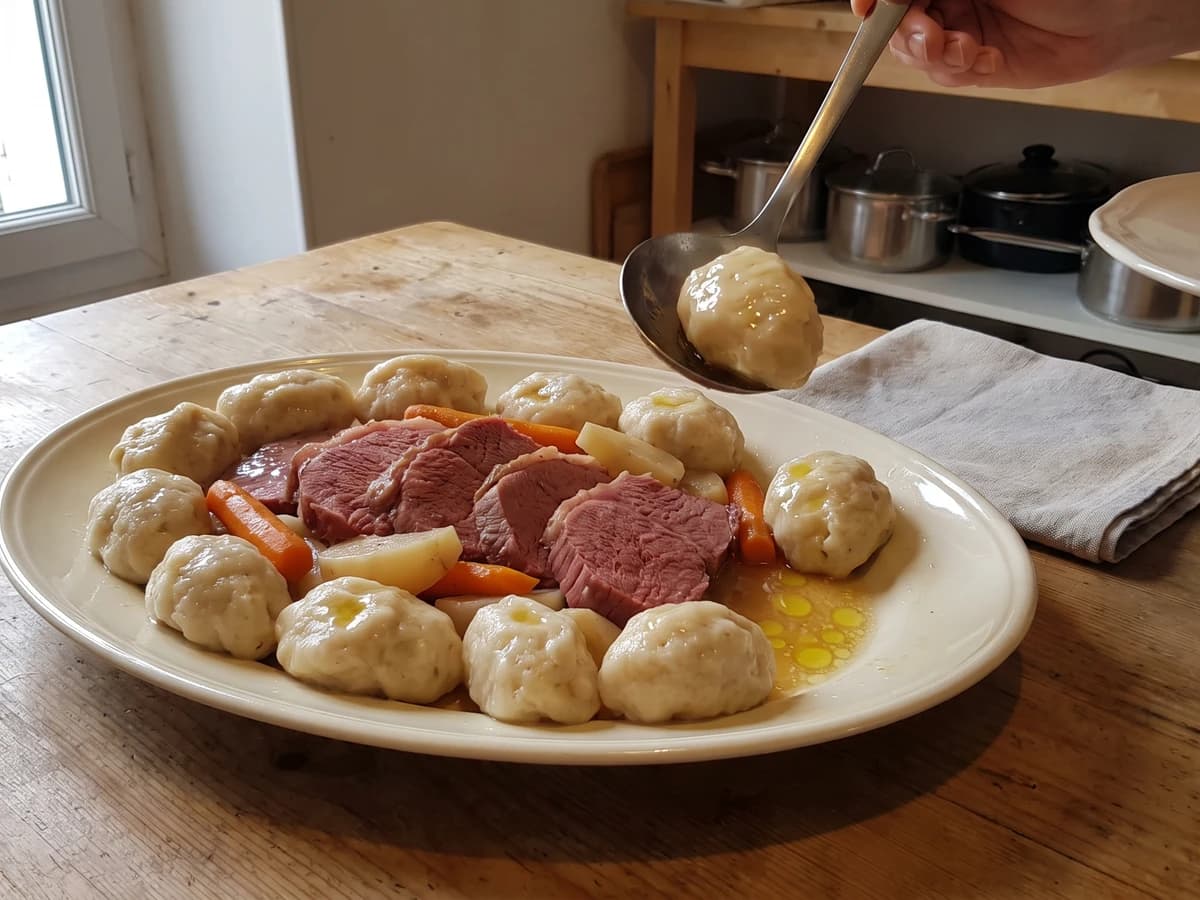
Suet Dumpling
Boulettes au suif, poached beside salt beef, turn equal weights of flour and finely chopped suet into tender, rich dumplings. Keep the beef liquor at a bare tremble and the old garnish works beautifully at home.
A cooking platform built around craft, culture, and the stories behind what we eat.
Created by Chef Juliette
Based on No. 2294, Polenta, from Le Guide Culinaire (1907) by Auguste Escoffier
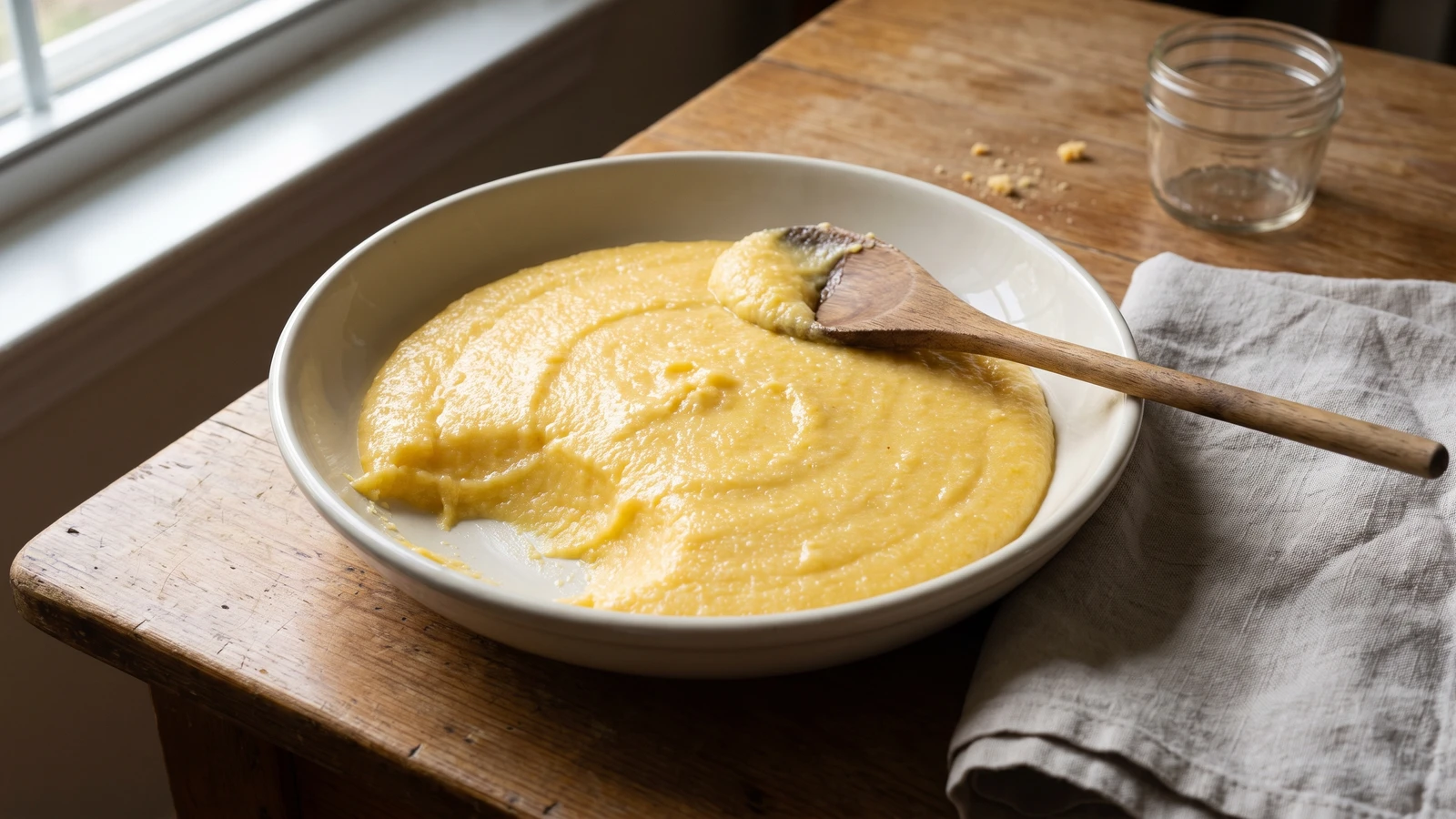
Polenta teaches one clean lesson: rain the maize slowly against a moving spoon, cook it fully, then let butter and Parmesan turn humble grain supple, savory, and generous.
Polenta (maize porridge) teaches control at the simplest level: dry grain must meet boiling water gradually, each small shower dispersed before the next arrives. Pour it in all at once and you will spend the evening chasing lumps. Rain it slowly against a moving spoon and the mixture becomes smooth almost by itself.
The original entry assumed a cook free to tend the saucepan and, when the polenta was destined for garnish, a station ready to spread, cut, and brown it. Your honest equivalent is a heavy saucepan, a wooden spoon, and an ordinary skillet. I have reduced the batch by one-third to give four generous side portions, rounded the old measures for a home kitchen, and kept its proportions, sequence, and full cooking time intact. The tray work is brigade scaffolding unless you want browned polenta pieces; the slow rain and twenty-five-minute cooking are the dish itself.
Finished directly from the pot, the polenta should fall from the spoon in a thick, glossy ribbon, with butter and Parmesan held inside rather than floating on top. If you want the classical garnish, cool it in a thin sheet, cut it into roundels or lozenges, and brown those in butter. Either way, the moment that matters comes first: keep the spoon moving while the maize falls.
Polenta belongs first to northern Italy, but within French cooking it found a natural home along the Alpine and southeastern borders, particularly in Savoie and the country around Nice, where maize became dependable everyday food. Classical French kitchens adopted it as both a soft vegetable accompaniment and a molded garnish, often enriched with Parmesan, then cut and browned in butter for service. Despite richer modern versions, the canonical foundation is water, salt, maize, butter, and cheese, with patient cooking supplying the body.
Quantity
2⅔ cups (630 ml / 630 g)
Quantity
1½ teaspoons (7.5 ml / 9 g)
Quantity
1¼ cups (300 ml / 200 g)
Quantity
2 tablespoons plus 2 teaspoons (40 ml / 38 g)
Quantity
½ cup (120 ml / 47 g)
finely grated
Quantity
3 tablespoons (45 ml / 43 g)
divided
Quantity
2 tablespoons (30 ml / 12 g)
finely grated
| Ingredient | Quantity |
|---|---|
| water | 2⅔ cups (630 ml / 630 g) |
| fine salt | 1½ teaspoons (7.5 ml / 9 g) |
| fine- or medium-ground maize flour for polenta | 1¼ cups (300 ml / 200 g) |
| unsalted butter | 2 tablespoons plus 2 teaspoons (40 ml / 38 g) |
| Parmesanfinely grated | ½ cup (120 ml / 47 g) |
| unsalted butter for molded and browned polenta (optional)divided | 3 tablespoons (45 ml / 43 g) |
| Parmesan for molded and browned polenta (optional)finely grated | 2 tablespoons (30 ml / 12 g) |
Bring the water to a full boil in a heavy saucepan, then add the salt and stir until dissolved. Keep the maize flour beside the stove with a wooden spoon or stiff whisk ready. Once the grain begins to fall, you won't stop stirring to hunt for equipment.
Stir the boiling water into a steady current, then rain in the maize flour in a thin, continuous stream exactly where the spoon passes. Keep stirring until every grain is incorporated and the mixture returns to a gentle bubble. If lumps form, take the pan off the heat and whisk vigorously while they are still soft. Ça se rattrape: for stubborn lumps, press the mixture through a coarse sieve, return it to the saucepan, and continue.
Lower the heat and cook for twenty-five minutes, stirring frequently and scraping the bottom, sides, and corners so nothing catches. The polenta will thicken early, but it isn't ready until the maize tastes tender rather than raw and gritty. If it becomes too stiff before that point, work in boiling water one tablespoon at a time; if it remains loose after twenty-five minutes, cook it uncovered a little longer. It should leave the pan sides cleanly yet fall from the spoon in a slow ribbon.
Take the saucepan off the heat. Beat in the butter until fully absorbed, then add the Parmesan and stir until the polenta is glossy and cohesive. This is a small emulsion, so don't leave streaks of melted fat on the surface. If the butter separates, return the pan to the lowest heat and beat in a teaspoon of hot water; the mixture will come together again. Serve at once if you want soft polenta.
For the classical molded garnish, spread the finished polenta in a thin, even layer, about 1 cm or ⅜ inch, on a tray moistened with cold water. Cool until firm, then cut it into roundels or lozenges. Brown the pieces on both sides in two tablespoons of the optional butter over medium heat. Let the remaining tablespoon of butter cook until it becomes beurre noisette, butter browned to a hazelnut color and aroma, then spoon it over the pieces and sprinkle with the optional Parmesan. À table!
1 serving (about 220g)
Culinary guides, cultural storytelling, and the editorial depth that makes cooking meaningful.
Discover Culinary ExplorerChef Juliette
Boulettes au suif, poached beside salt beef, turn equal weights of flour and finely chopped suet into tender, rich dumplings. Keep the beef liquor at a bare tremble and the old garnish works beautifully at home.

Chef Juliette
Bread, flour, frangipane, and rice become four cool, supple panades for binding forcemeats, each changing body and flavor while preserving tenderness. The finest Mousselines need none, and knowing that distinction is the lesson.

Chef Juliette
Panade au pain is bread, milk, salt, heat, and attention: stir until the paste releases cleanly, butter it against a skin, and you have the quiet binder behind tender French farces.

Chef Juliette
Panade de farine teaches the drying stroke behind pâte à choux: flour meets boiling buttered water, then stays over the fire until the paste gathers, smooths, and quits the pan cleanly.