Culinary Explorer
A cooking platform built around craft, culture, and the stories behind what we eat.
Kache de Semoule pour Coulibiac
Created by Chef Juliette
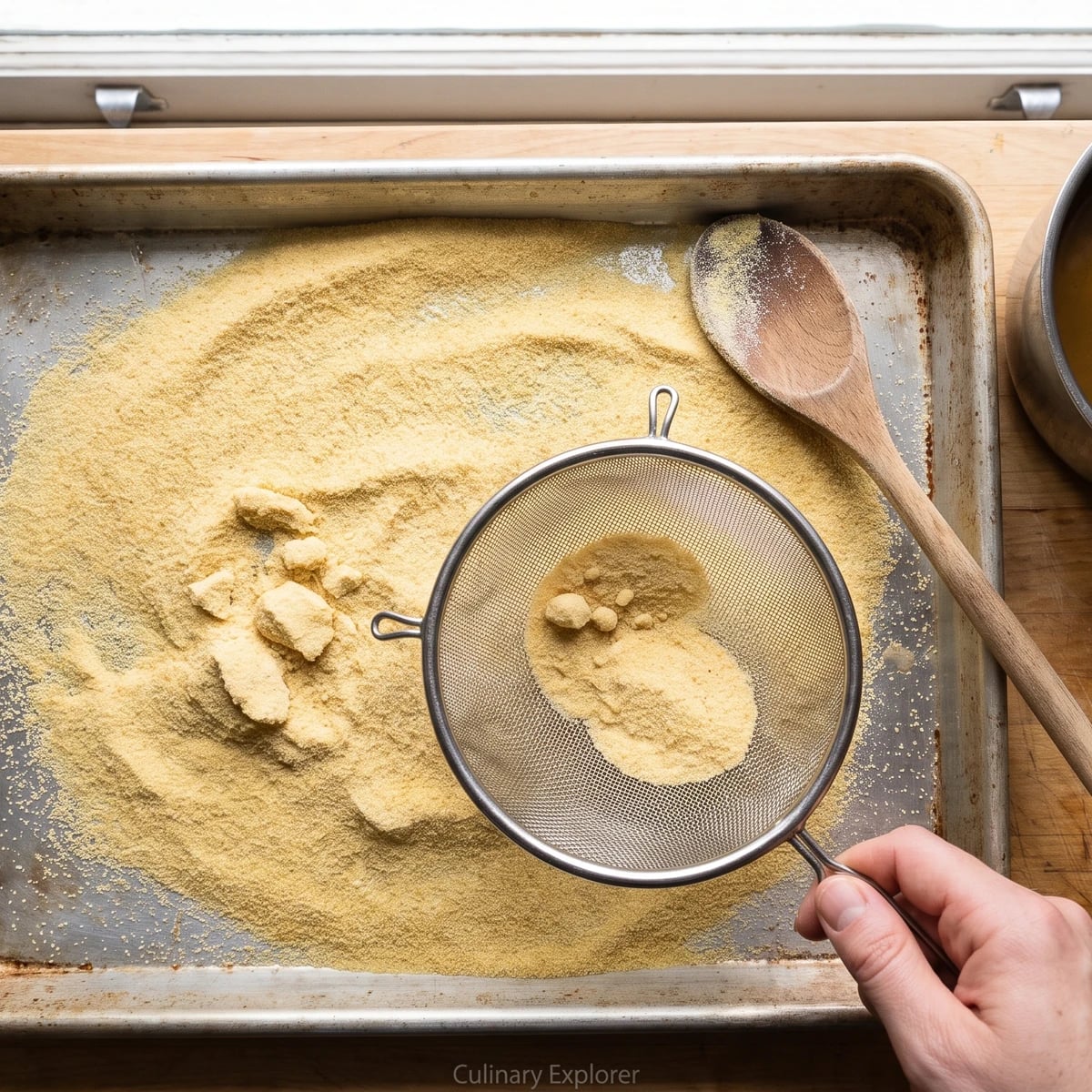
The quiet layer that keeps coulibiac crisp: coarse yellow semolina swelled in consommé, dried without browning, then passed through a coarse sieve until every grain lies loose and ready for the pastry.
Kache de Semoule pour Coulibiac (separated semolina for coulibiac) teaches moisture management. The one true thing to know before touching the pan is that the kache must enter the pastry completely dry. Its purpose is not merely to stretch the filling. It absorbs the juices released inside the coulibiac without surrendering the crust to them.
The source assumed what a brigade kept close at hand: a stockpot of consommé never off the fire, broad service trays, and a coarse tamis for separating large quantities. For one cook, one stove, one evening, that becomes one cup of coarse semolina, three cups of finished consommé, a quarter-sheet pan, and an ordinary coarse sieve. The brigade quantity and dedicated equipment are scaffolding and can go. The three-to-one proportion, twenty-five-minute cooking, draining, oven-drying, and final sieving are the dish, and each remains intact.
You are looking for loose, durum-gold granules with no damp paste between them. The drying decides everything: do not stop when the surface merely looks dry; stop when a pinched clump breaks apart cleanly and leaves your fingertips free of starch.
Ingredients
coarse yellow semolina
Quantity
1 cup (240 ml / 170 g)
finished chicken or beef consommé
Quantity
3 cups (720 ml / 720 g)
well flavored but not heavily salted
| Ingredient | Quantity |
|---|---|
| coarse yellow semolina | 1 cup (240 ml / 170 g) |
| finished chicken or beef consomméwell flavored but not heavily salted | 3 cups (720 ml / 720 g) |
Where cooking meets culture.
Culinary guides, cultural storytelling, and the editorial depth that makes cooking meaningful.
Discover Culinary Explorer