Chef Juliette
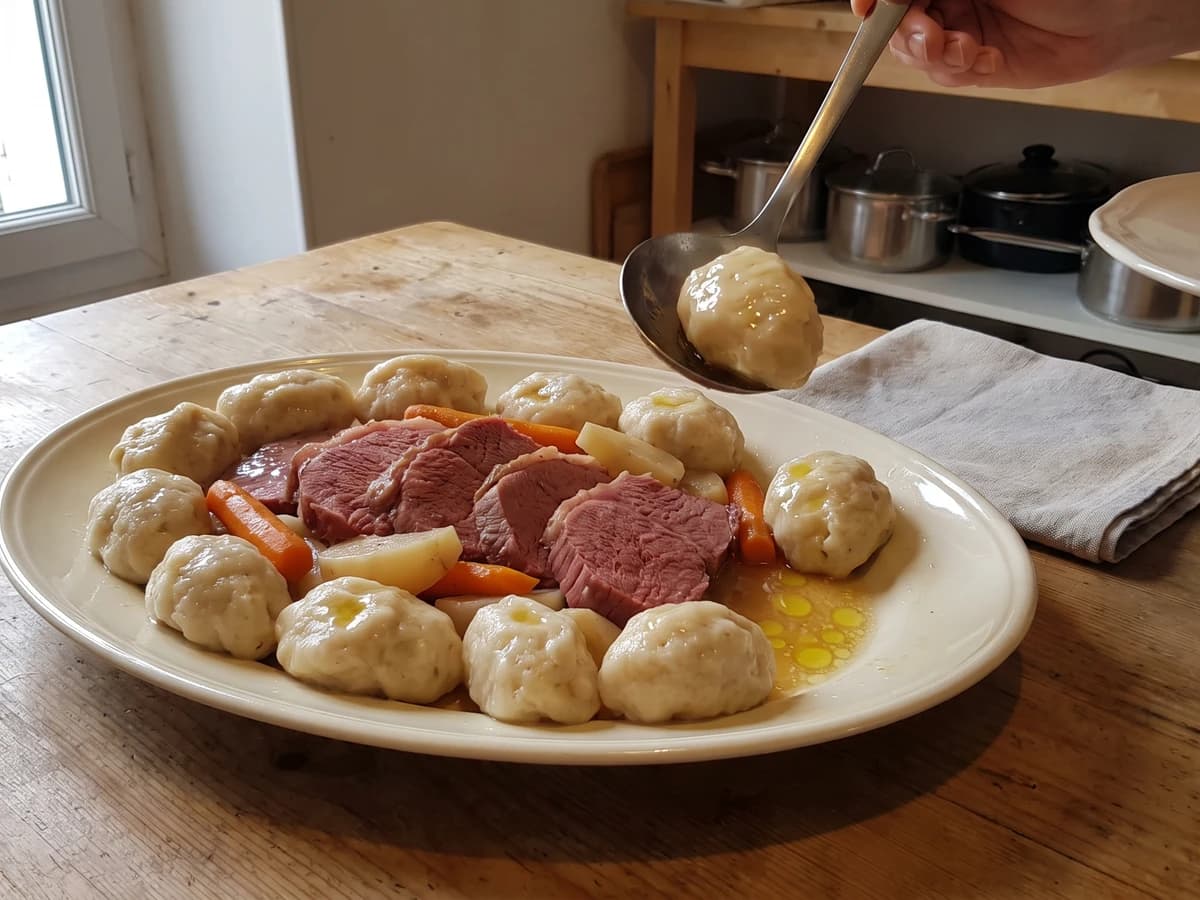
Suet Dumpling
Boulettes au suif, poached beside salt beef, turn equal weights of flour and finely chopped suet into tender, rich dumplings. Keep the beef liquor at a bare tremble and the old garnish works beautifully at home.
A cooking platform built around craft, culture, and the stories behind what we eat.

Created by Chef Juliette
Based on No. 2287, Macaroni au Jus, from Le Guide Culinaire (1907) by Auguste Escoffier
Macaroni au jus drinks in the concentrated flavor of a beef braise, turning a modest pantry staple glossy and savory. The secret is stopping while the pasta still has a firm heart.
Macaroni au jus teaches absorption: pasta can become part of a sauce by drinking it in, not merely carrying it on the surface. The one true thing to know before you touch the pan is that the macaroni must leave the jus firmer than you want to eat it, because the liquor keeps cooking it after it is dished. Aim for a tender outside, a definite core, and a chestnut gloss in every hollow.
The source entry assumes the saucier's domain: a stockpot never off the fire, beef braising liquor ready beside it, and long macaroni handled in brigade quantities. A home kitchen needs no separate sauce station and no salamander, because this dish is absorbed and spooned, never gratinéed. Save and freeze the strained liquor from a beef braise, scale the pasta to four side portions, and use kitchen shears for the short lengths. One cook, one stove, one evening.
That continual sauce station is brigade scaffolding and can go. The firm parboil, the cutting, the second simmer in real braising liquor, and the final spoonful are the dish, so they stay. Watch the last minute closely; that is where firmness, gloss, and generosity meet.
Macaroni au jus belongs less to one French province than to the classical Parisian table, where macaroni passed from Italian practice into the repertoire as an entremets and an accompaniment to roasted or braised meat. Cuisine bourgeoise households made the method their own because the liquor left from a beef braise supplied both sauce and seasoning. The title is precise: au jus here means braising liquor absorbed into the macaroni itself, not a meat sauce poured over fully cooked pasta.
Quantity
8 ounces (225 g)
left whole
Quantity
3 quarts (2.8 liters / about 2.8 kg)
Quantity
1 tablespoon (15 ml / 18 g)
Quantity
2 cups (480 ml / about 500 g)
well strained, defatted, and divided
| Ingredient | Quantity |
|---|---|
| dry long hollow macaronileft whole | 8 ounces (225 g) |
| water | 3 quarts (2.8 liters / about 2.8 kg) |
| fine sea salt | 1 tablespoon (15 ml / 18 g) |
| finished beef braising liquorwell strained, defatted, and divided | 2 cups (480 ml / about 500 g) |
Warm the beef braising liquor gently until any natural gelatin melts, then taste it. It should be concentrated and savory but not aggressively salty, because the second simmer will strengthen it further. If it is too salty, dilute it with a little of the measured water and remeasure 2 cups. Reserve 3 tablespoons (45 ml) for spooning over the finished dish and another 2 tablespoons (30 ml) for adjustment; keep both portions warm. Pour the remaining liquor, about 1 2/3 cups (400 ml), into a wide sauté pan.
Bring the water to a full boil and add the salt. Lower in the macaroni without breaking it and cook until the tubes bend without snapping but retain a broad, chalky core, about 4 to 5 minutes for most brands. This is a true parboil, not ordinary al dente pasta; the macaroni must have enough uncooked heart to absorb the jus without becoming soft.
Drain the macaroni immediately and do not rinse it. While it is still pliable, snip it with kitchen shears into short lengths of about 2 inches (5 cm). Work promptly so the pieces remain separate; rinsing would cool the macaroni and wash away the surface starch that helps the liquor cling.
Bring the liquor in the wide pan to a bare simmer, add the cut macaroni, and cook for 5 to 7 minutes, turning it gently and often. The liquor should reduce as the macaroni absorbs it, leaving only a glossy coating and a few spoonfuls around the pieces. Stop while the center is still distinctly firm. If the pan dries before that core is ready, add the adjustment liquor one tablespoon at a time; ça se rattrape. If the macaroni is nearly ready while too much liquor remains, lift it into the warmed serving dish, reduce the liquor quickly, then return the macaroni only long enough to coat it.
Mound the macaroni in a warmed timbale or deep serving bowl. Spoon the reserved 3 tablespoons (45 ml) of warm braising liquor evenly over the top, letting it run into the hollows and collect lightly at the base. Serve at once, before the macaroni drinks that final liquor and softens further. À table!
1 serving (about 160g)
Culinary guides, cultural storytelling, and the editorial depth that makes cooking meaningful.
Discover Culinary ExplorerChef Juliette
Boulettes au suif, poached beside salt beef, turn equal weights of flour and finely chopped suet into tender, rich dumplings. Keep the beef liquor at a bare tremble and the old garnish works beautifully at home.

Chef Juliette
Bread, flour, frangipane, and rice become four cool, supple panades for binding forcemeats, each changing body and flavor while preserving tenderness. The finest Mousselines need none, and knowing that distinction is the lesson.

Chef Juliette
Panade au pain is bread, milk, salt, heat, and attention: stir until the paste releases cleanly, butter it against a skin, and you have the quiet binder behind tender French farces.

Chef Juliette
Panade de farine teaches the drying stroke behind pâte à choux: flour meets boiling buttered water, then stays over the fire until the paste gathers, smooths, and quits the pan cleanly.