Chef Juliette
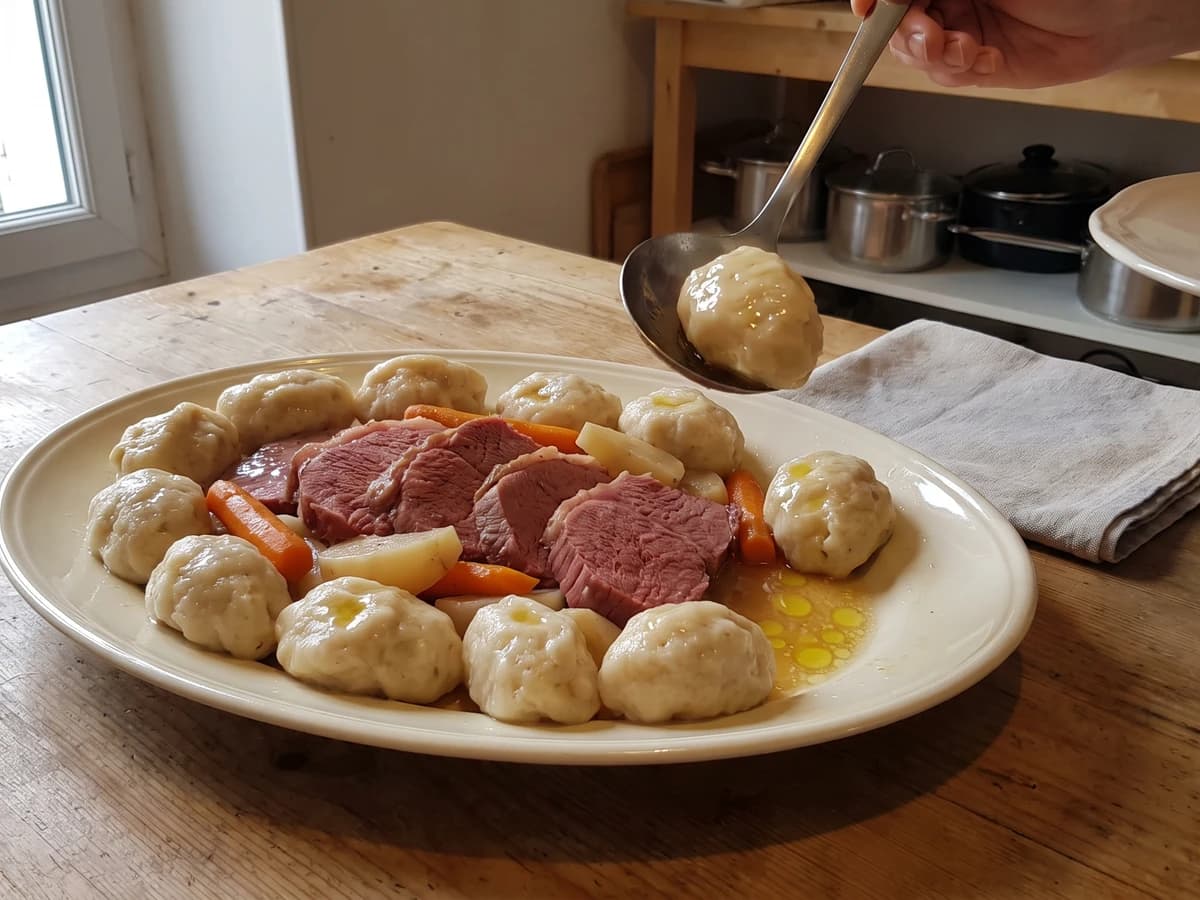
Suet Dumpling
Boulettes au suif, poached beside salt beef, turn equal weights of flour and finely chopped suet into tender, rich dumplings. Keep the beef liquor at a bare tremble and the old garnish works beautifully at home.
A cooking platform built around craft, culture, and the stories behind what we eat.
Created by Chef Juliette
Based on No. 2274, Soufflé de Topinambours, from Le Guide Culinaire (1907) by Auguste Escoffier
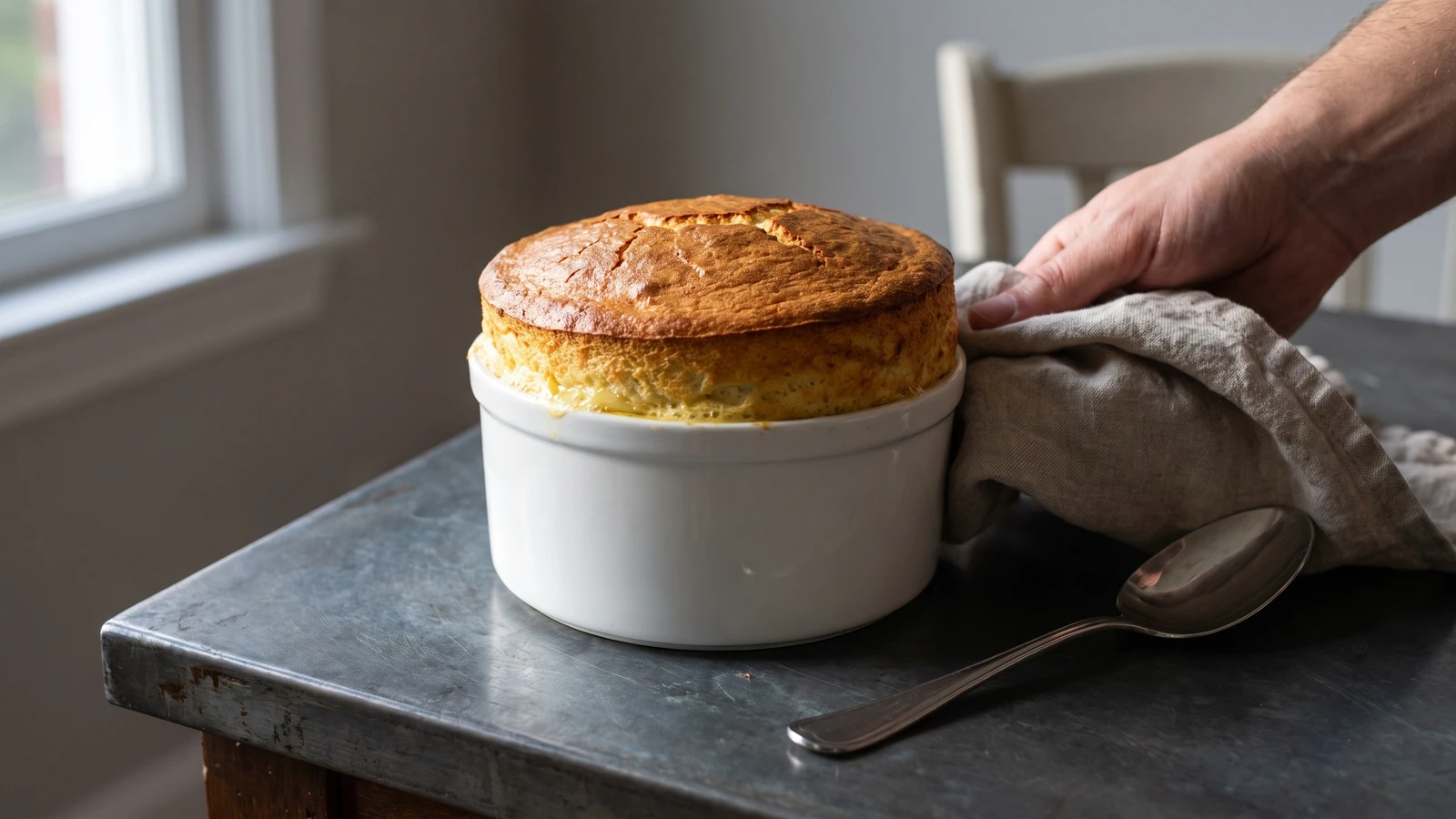
Soufflé de Topinambours turns an earthy root into a proud, butter-gold rise: cream enriches the purée, yolks give it body, and glossy beaten whites provide every bit of lift.
Soufflé de Topinambours (Jerusalem artichoke soufflé) teaches the discipline behind every savory soufflé: the base supplies flavor, but the beaten whites supply every bit of lift. Fold that lift away and nothing in the oven can put it back. Keep your hand light and an earthy, cream-enriched purée rises into a bronzed crown with a tender center.
The original entry sends the cook back to Soufflé de Pommes de Terre (No. 2250), then simply says to cook it like an ordinary soufflé. That was enough in a brigade where the purée, the beaten whites, the porcelain cases, and immediate service could belong to several pairs of hands. For one cook, one stove, one evening, a food mill, a hand mixer, and one straight-sided porcelain dish are the honest equivalents. Multiple cooks and trays of individual cases are scaffolding; the pint of cream-enriched purée, three yolks, three stiffly beaten whites, buttered vessel, and immediate baking are the dish, so they stay.
Only the handling of the base changes. Topinambours contain more water and less starch than potatoes, so the cooked roots must be dried over low heat before the cream goes in. The finished soufflé should stand proudly above its dish, butter-gold at the crown and soft enough to yield under the serving spoon. The one step that matters most is the fold: stop while the mixture still feels buoyant.
The savory soufflé belongs to the Parisian classical kitchen and bourgeois dining room, where vegetable purées were lightened with yolks and beaten whites, then carried directly from oven to table. Topinambours came into French market cooking from North America and became a dependable winter root; their French name is a historical accident linked to the Tupinambá people of Brazil, not to the plant's true home. This preparation applies the grand kitchen's soufflé grammar to a practical market vegetable, carrying it from the winter larder to the special-occasion table.
Quantity
1⅛ pounds (about 3⅓ packed cups / 500 g), replacing the potato in Soufflé de Pommes de Terre (No. 2250)
cut into 1-inch (2.5 cm) pieces
Quantity
¼ cup (60 ml / 60 g)
Quantity
1 tablespoon (15 ml / 14 g)
softened, for the soufflé dish
Quantity
3
separated
Quantity
1½ teaspoons (7.5 ml / 9 g)
divided
| Ingredient | Quantity |
|---|---|
| peeled topinambours (Jerusalem artichokes)cut into 1-inch (2.5 cm) pieces | 1⅛ pounds (about 3⅓ packed cups / 500 g), replacing the potato in Soufflé de Pommes de Terre (No. 2250) |
| heavy cream | ¼ cup (60 ml / 60 g) |
| unsalted buttersoftened, for the soufflé dish | 1 tablespoon (15 ml / 14 g) |
| large eggsseparated | 3 |
| fine sea saltdivided | 1½ teaspoons (7.5 ml / 9 g) |
Set a rack in the lower third of the oven and heat it to 375°F (190°C), with a rimmed baking sheet inside. Brush a 1½-quart (1.4-liter) straight-sided porcelain soufflé dish generously with the softened butter, working upward from base to rim. Coat the inner rim as well, then keep the dish cool while you make the base. Use butter alone, with no crumbs or cheese; that is what the source calls for.
Put the topinambours in a saucepan and cover them with cold water by about 1 inch (2.5 cm). Add 1 teaspoon (5 ml / 6 g) of the salt, bring to a gentle boil, and cook for 15 to 20 minutes. They are ready when a small knife passes through the thickest piece without resistance. Drain them in a colander for 2 minutes, shaking away every visible drop.
Return the drained topinambours to the dry saucepan and set them over low heat for 3 to 5 minutes, stirring and shaking until the pan floor stays dry. Pass them through a food mill or ricer while hot. Warm the cream, then stir it into the purée a little at a time until smooth, holding some back if the roots need less. Measure 2 cups (1 pint / 475 ml / about 500 g) of the finished purée. This is the cream-enriched base carried over from Soufflé de Pommes de Terre (No. 2250), with topinambours replacing potato. Stir in the remaining ½ teaspoon (2.5 ml / 3 g) salt. If liquid gathers around the spoon, return the purée to low heat and stir until it holds a soft mound. Ça se rattrape. If it becomes stiff enough to crack, loosen it with a spoonful of the reserved warm cream.
Let the purée cool until warm rather than hot, about 105°F (40°C). Stir in the yolks one at a time, mixing each completely before adding the next. The base should be smooth, thick, and spoonable. If the first yolk forms yellow threads, the purée was too hot; press the mixture through a fine sieve at once, let it cool slightly, and continue with the remaining yolks.
Put the whites in a perfectly clean, dry bowl. Beat at medium speed until foamy, then increase the speed and continue until they hold glossy, stiff peaks whose tips barely bend. Stop there. Dry, cottony whites have been beaten too far and resist a clean fold; the lift comes from their supple network of air, not from making them rigid.
Whisk one-quarter of the whites into the topinambour base to lighten it. Add half the remaining whites and fold with a wide spatula, cutting down through the center, sweeping across the bottom, and lifting the mixture over itself while turning the bowl. Repeat with the last whites. Stop as soon as no large white clouds remain; a few fine streaks are safer than another six turns. Fold with a light hand. Beaten out, the whites give nothing. Spoon the mixture into the buttered dish, smooth the top lightly, and run a clean thumb around the inner rim to free the edge.
Set the dish on the hot baking sheet and bake for 27 to 32 minutes without opening the oven during the first 22 minutes. The soufflé is ready when its crown is deep butter-gold, it has risen about 1½ inches (4 cm) above the rim, and the center trembles but does not slosh when the dish is nudged. If the center still moves like liquid, close the door and give it another 3 minutes. Carry it directly to the table and serve with a broad spoon. A soufflé begins to settle because it is alive with air, not because you failed it. À table!
1 serving (about 160g)
Culinary guides, cultural storytelling, and the editorial depth that makes cooking meaningful.
Discover Culinary ExplorerChef Juliette
Boulettes au suif, poached beside salt beef, turn equal weights of flour and finely chopped suet into tender, rich dumplings. Keep the beef liquor at a bare tremble and the old garnish works beautifully at home.

Chef Juliette
Bread, flour, frangipane, and rice become four cool, supple panades for binding forcemeats, each changing body and flavor while preserving tenderness. The finest Mousselines need none, and knowing that distinction is the lesson.

Chef Juliette
Panade au pain is bread, milk, salt, heat, and attention: stir until the paste releases cleanly, butter it against a skin, and you have the quiet binder behind tender French farces.

Chef Juliette
Panade de farine teaches the drying stroke behind pâte à choux: flour meets boiling buttered water, then stays over the fire until the paste gathers, smooths, and quits the pan cleanly.