Chef Juliette
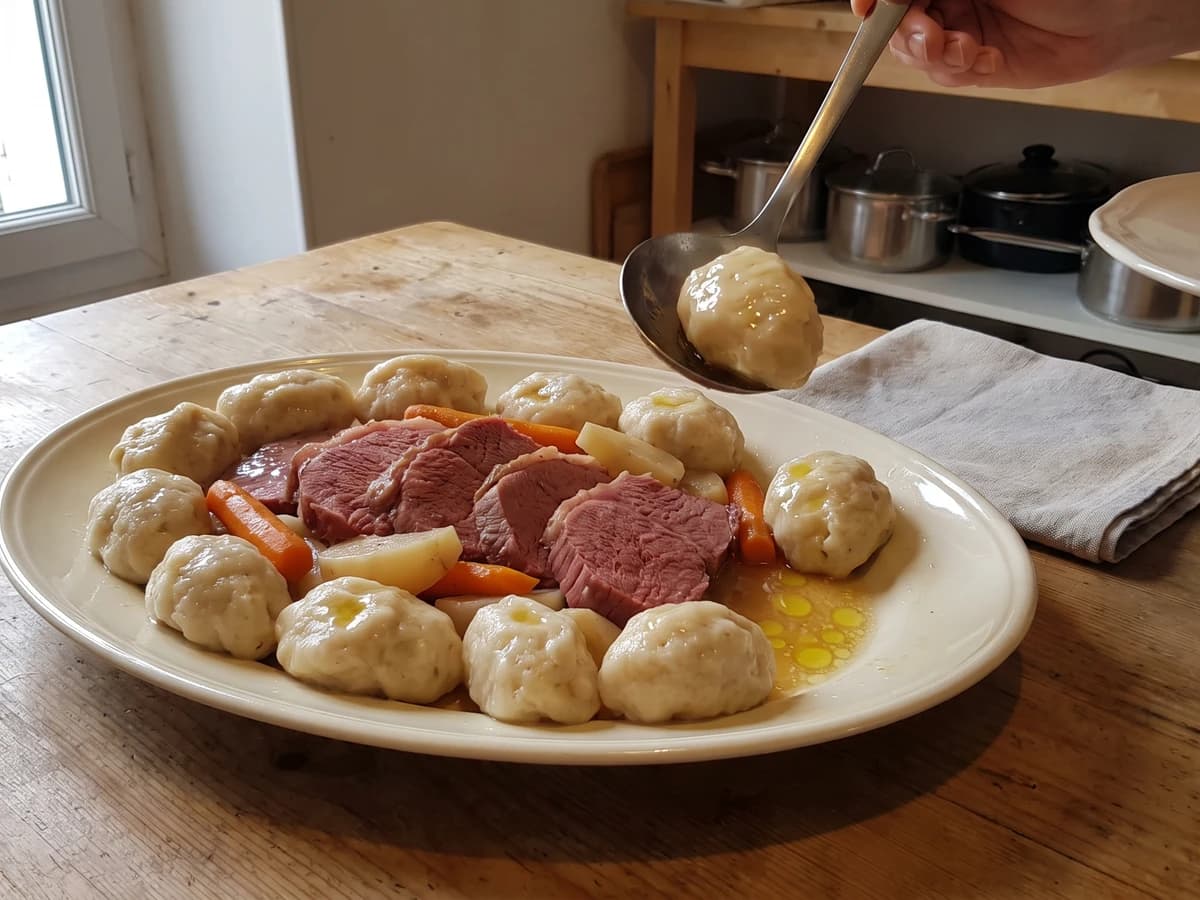
Suet Dumpling
Boulettes au suif, poached beside salt beef, turn equal weights of flour and finely chopped suet into tender, rich dumplings. Keep the beef liquor at a bare tremble and the old garnish works beautifully at home.
A cooking platform built around craft, culture, and the stories behind what we eat.
Created by Chef Juliette
Based on No. 2265, Tomates Farcies au Gratin, from Le Guide Culinaire (1907) by Auguste Escoffier
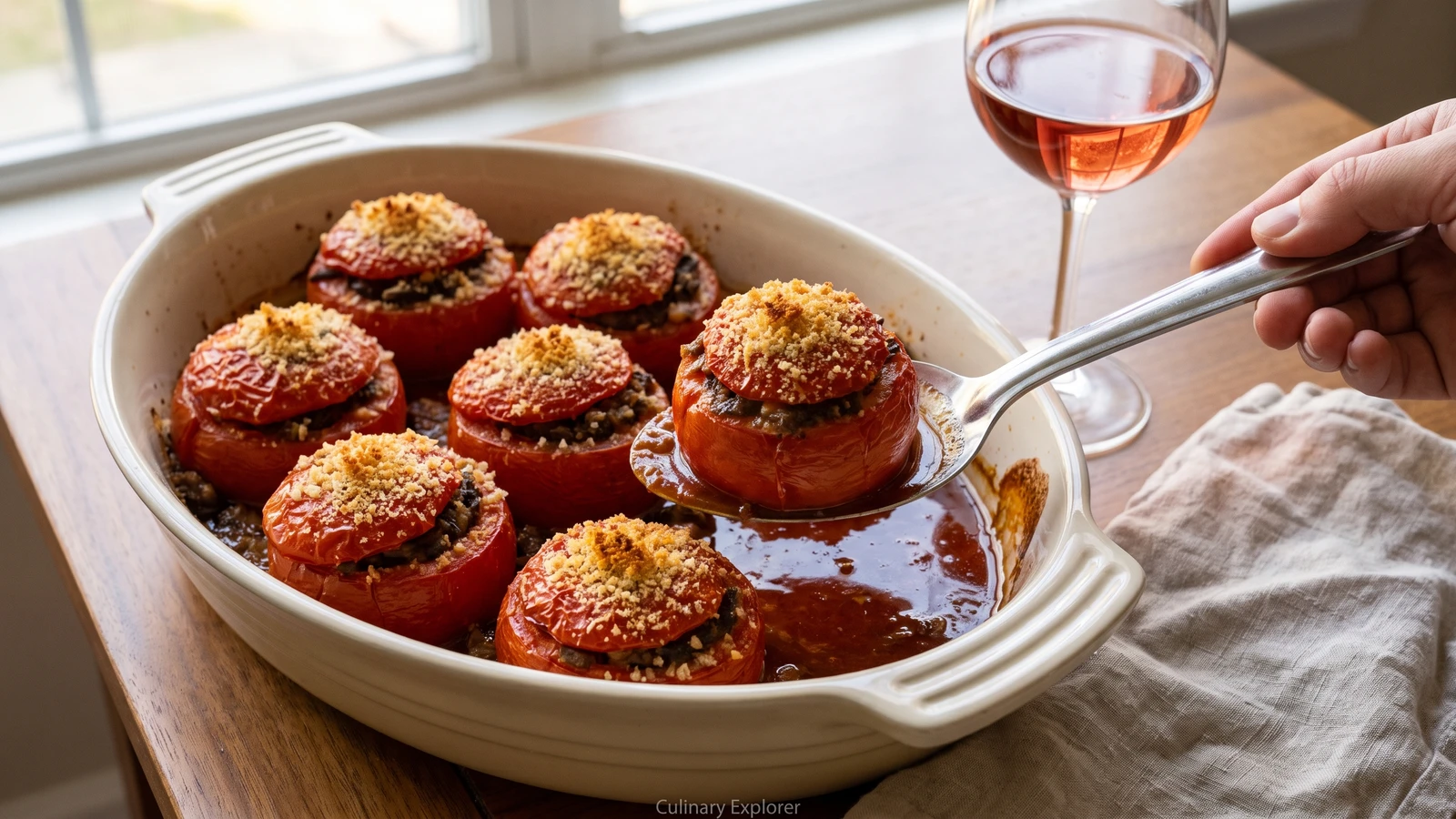
Tomates Farcies au Gratin stand or fall on stiff mushroom duxelles, held beneath a crisp crumb and ringed with a glossy thread of tomatéd half-glaze.
Tomates Farcies au Gratin (gratinéed tomatoes filled with mushroom duxelles) teach one clean discipline: the filling must be drier than you think. Tomatoes bring their own water, so a soft duxelles makes the gratin weep and its crumb slump. Cook the mushrooms until a spoon drawn across the pan leaves a dry track. That is the one true thing to know before touching the pan.
The original assumed a saucier on staff, veal stock never off the fire, finished half-glaze ready for service, and a salamander waiting to bronze the crumbs. Here, eight medium tomatoes feed four; one skillet makes exactly enough duxelles, a good prepared veal demi-glace replaces the permanent stockpot, and the home broiler supplies that fierce final heat. Gallons of standing sauce were brigade scaffolding and can go. Half-baking the tomatoes, working the filling stiff, and forming the hot gratin are the dish, so all three stay. One cook, one stove, one evening.
Done properly, the tomatoes remain upright and scarlet, the duxelles tastes deeply of mushroom and butter, and the crumb forms a crisp bronze cap. The clear tomatéd half-glaze belongs around the tomatoes, never over them, where it can gleam without softening the crust. Work the duxelles stiff before you fill a single shell.
Tomates farcies are cooked across France, but this duxelles-filled, sauce-ringed version belongs specifically to the Parisian classical kitchen, where stuffed vegetables became composed garnitures for formal service. It carried the household practice of using ripe tomatoes as edible vessels into the grand repertoire, adding concentrated Duxelles, a hot gratin, and a clear tomatéd half-glaze. It should not be confused with the meat-filled tomates farcies of family tables or the mixed petits farcis associated with Nice; here mushroom concentration and sauce work define the dish.
Quantity
8 (about 3 pounds / 1.35 kg total)
Quantity
2 teaspoons (10 ml / 12 g)
divided
Quantity
8 cups (1.9 L / 570 g)
very finely chopped
Quantity
¾ cup (180 ml / 110 g)
finely chopped
Quantity
3 tablespoons (45 ml / 42 g)
Quantity
¼ cup (60 ml / 15 g)
finely chopped
Quantity
½ teaspoon (2.5 ml / 1 g)
Quantity
½ cup (120 ml / 55 g), for Gratins (No. 268)
Quantity
2 teaspoons (10 ml / 9 g)
Quantity
½ cup (120 ml / 130 g)
Quantity
½ cup (120 ml / 120 g)
Quantity
2 tablespoons (30 ml / 30 g)
| Ingredient | Quantity |
|---|---|
| medium round ripe tomatoes | 8 (about 3 pounds / 1.35 kg total) |
| fine sea saltdivided | 2 teaspoons (10 ml / 12 g) |
| white button or cremini mushroomsvery finely chopped | 8 cups (1.9 L / 570 g) |
| shallotsfinely chopped | ¾ cup (180 ml / 110 g) |
| unsalted butter | 3 tablespoons (45 ml / 42 g) |
| flat-leaf parsleyfinely chopped | ¼ cup (60 ml / 15 g) |
| freshly ground black pepper | ½ teaspoon (2.5 ml / 1 g) |
| fine dry breadcrumbs | ½ cup (120 ml / 55 g), for Gratins (No. 268) |
| olive oil | 2 teaspoons (10 ml / 9 g) |
| finished clear veal demi-glace or half-glaze | ½ cup (120 ml / 130 g) |
| unsalted veal stock | ½ cup (120 ml / 120 g) |
| smooth tomato purée | 2 tablespoons (30 ml / 30 g) |
Heat the oven to 425°F (220°C) with a rack in the upper third. Cut a lid about ½ inch (1.25 cm) thick from the stem end of each tomato. Scoop out the seeds and loose pulp with a teaspoon, leaving the outer walls and base intact. Sprinkle half the salt inside the cavities, then invert the tomatoes on a wire rack for 20 minutes. Do not carve the walls thin; they must survive two visits to the oven.
Pat the cavities dry and arrange the tomatoes upright in a shallow gratin dish that holds them snugly. Bake for 10 to 12 minutes, until their skins brighten and just begin to wrinkle while the walls remain upright. Carefully tip out any collected juice, then invert the tomatoes on a clean towel for 5 minutes. This half-bake expels the first rush of water before the filling arrives. If the cavities still hold considerable juice, return them to the oven for 3 minutes more.
Melt the butter in a wide 12-inch (30 cm) skillet over medium heat. Add the shallots and cook without browning for 3 to 4 minutes, until soft and translucent. Add the mushrooms, remaining salt, and pepper. Raise the heat and stir as the mushrooms release their water, then continue cooking for 15 to 20 minutes, adjusting the heat to prevent scorching, until the liquid is gone, the mushrooms have darkened, and the mixture pulls together into a somewhat stiff mass. Stir in the parsley and cook for 1 minute. Draw a spoon across the pan: the track should remain dry. If liquid immediately floods it, spread the duxelles more thinly or divide it between two pans and keep cooking. Do not hide the water with extra crumbs. Ça se rattrape.
Combine the veal demi-glace, veal stock, and tomato purée in a small saucepan. Bring to a gentle simmer and reduce for 8 to 10 minutes, until the sauce lightly coats a spoon but still falls from it in a narrow ribbon. Tomatéd means the purée must be plainly perceptible in both colour and flavour; the sauce should remain a clear, glossy half-glaze, not become a heavy tomato sauce. Pass it through a fine sieve and keep it warm. If it tightens too far, loosen it with stock one teaspoon at a time; if it runs like broth, reduce it a little longer.
Spoon the cooled duxelles firmly into the half-baked tomatoes, filling each to the rim and shaping a modest dome without pressing hard enough to split the walls. Divide the breadcrumbs evenly over the tops and pat them lightly so they adhere. Finish each tomato with a few drops of olive oil, just enough to help the crumbs colour without soaking them.
Return the dish to the upper third of the oven and bake for 8 to 10 minutes, until the filling is hot and the crumb is golden at the edges. Finish with the rapid operation set out in Gratins (No. 268): place the tomatoes under the broiler for 30 to 90 seconds, watching without interruption, until the caps are evenly bronzed. This is the honest home equivalent of the salamander. Spoon the warm tomatéd half-glaze in a narrow thread around the bases, never over the crisp crumbs, and serve in the gratin dish. À table!
1 serving (about 375g)
Culinary guides, cultural storytelling, and the editorial depth that makes cooking meaningful.
Discover Culinary ExplorerChef Juliette
Boulettes au suif, poached beside salt beef, turn equal weights of flour and finely chopped suet into tender, rich dumplings. Keep the beef liquor at a bare tremble and the old garnish works beautifully at home.

Chef Juliette
Bread, flour, frangipane, and rice become four cool, supple panades for binding forcemeats, each changing body and flavor while preserving tenderness. The finest Mousselines need none, and knowing that distinction is the lesson.

Chef Juliette
Panade au pain is bread, milk, salt, heat, and attention: stir until the paste releases cleanly, butter it against a skin, and you have the quiet binder behind tender French farces.

Chef Juliette
Panade de farine teaches the drying stroke behind pâte à choux: flour meets boiling buttered water, then stays over the fire until the paste gathers, smooths, and quits the pan cleanly.