Chef Juliette
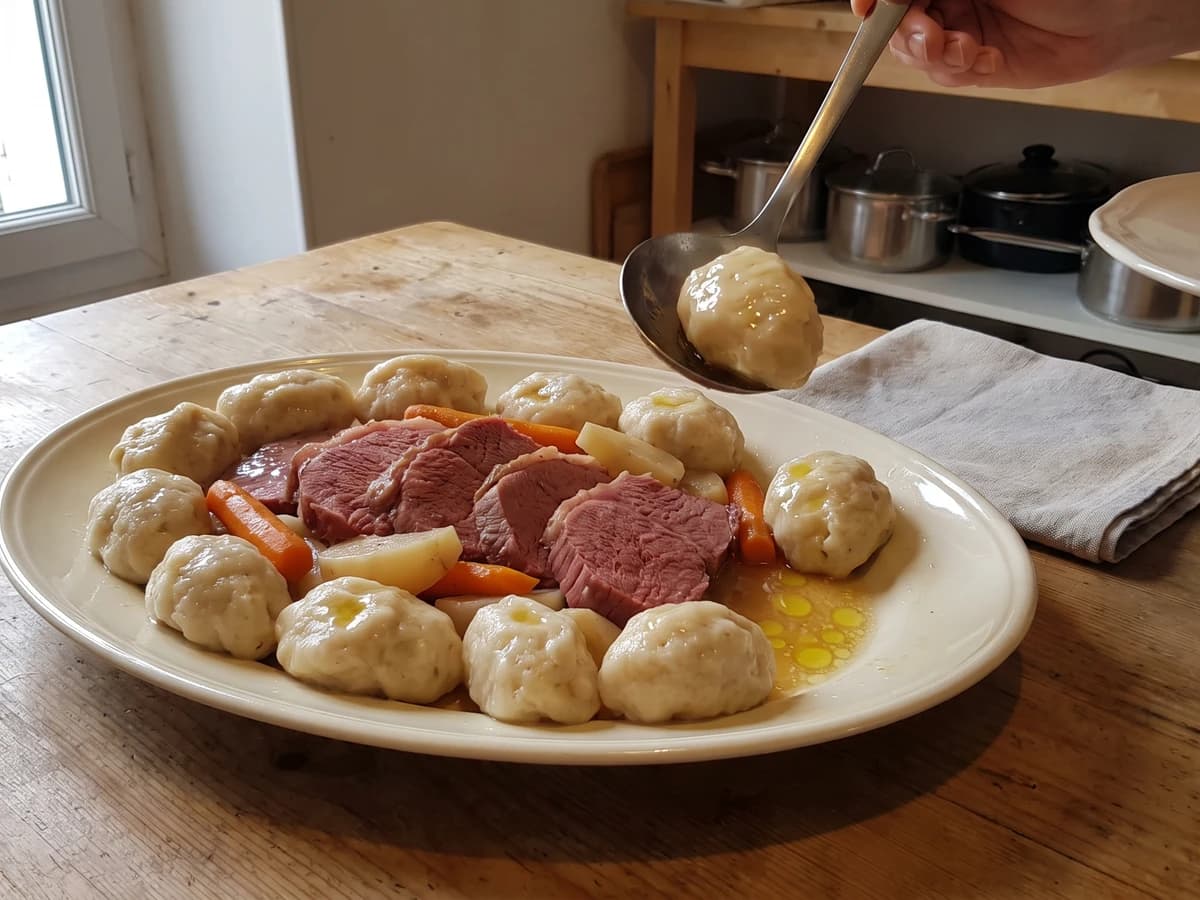
Suet Dumpling
Boulettes au suif, poached beside salt beef, turn equal weights of flour and finely chopped suet into tender, rich dumplings. Keep the beef liquor at a bare tremble and the old garnish works beautifully at home.
A cooking platform built around craft, culture, and the stories behind what we eat.
Created by Chef Juliette
Based on No. 2257, Riz Pilaff à la Turque, from Le Guide Culinaire (1907) by Auguste Escoffier
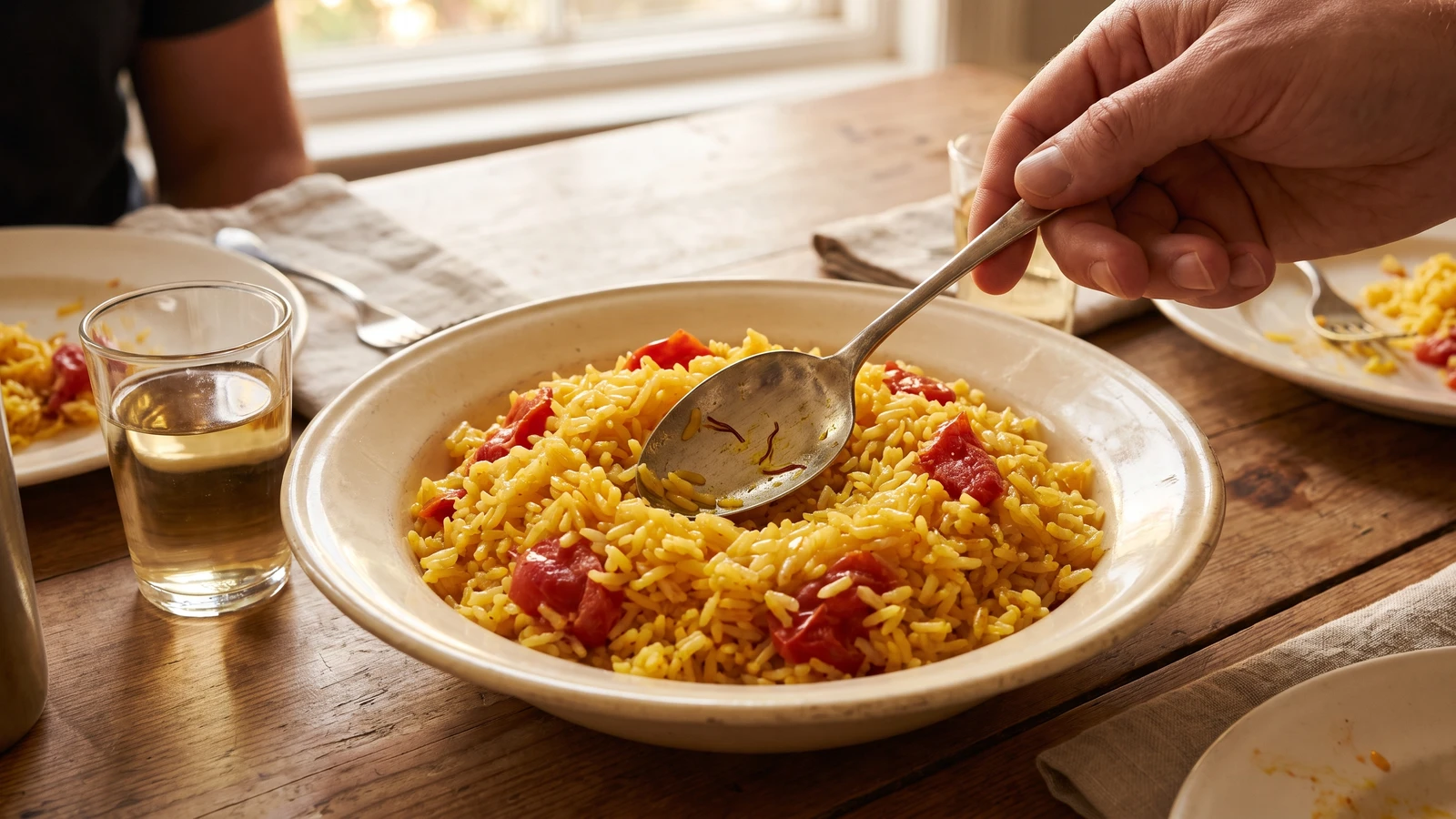
Golden saffron runs through every grain of this buttery pilaff, with peeled concassed tomato folded in only after cooking. The lesson is timing: colour during the cook, freshness at the finish.
Riz Pilaff à la Turque (Turkish-style pilaff rice) teaches one clean lesson: saffron must colour the rice while it cooks, not be dusted over it at the finish. Give the spice liquid and time, and every grain turns gold from within; add it late and you get yellow freckles.
The entry assumes Riz Pilaff (No. 2255) already moving through a brigade kitchen, with hot stock never off the fire, a moderate oven ready, and a second saucepan waiting to stop the cooking. At home, make one batch scaled for four in its own lidded pan, then set that pan on a cool trivet instead of transferring the rice. The second saucepan is service scaffolding. Saffron during cooking and peeled, concassed tomato after cooking are the dish, and both stay. One cook, one stove, one evening.
What comes to the table is loose, butter-sheened rice, evenly gold and punctuated with soft ruby pieces of tomato that retain their freshness. Distribute the saffron the instant the cooking liquid enters the rice; that is the one step that decides the dish.
Riz Pilaff à la Turque has its French home in the Parisian classical kitchen, where Ottoman pilav was recast through French service, butter, consommé, and precisely named garnitures. In this entry, à la Turque does not claim to reproduce a Turkish household recipe; it is a French designation for pilaff coloured with saffron and finished with tomato. The method traveled from eastern grain cookery into the grand repertoire, then returned naturally to the home table as a compact one-pan accompaniment.
Quantity
1 home-scale batch Riz Pilaff (No. 2255), scaled to 4 side servings from 1 cup (240 ml / 185 g) dry rice
Quantity
1/8 teaspoon (0.6 ml / 0.05 g)
Quantity
1/2 cup (120 ml / 92 g)
peeled and concassed
| Ingredient | Quantity |
|---|---|
| Riz Pilaff | 1 home-scale batch Riz Pilaff (No. 2255), scaled to 4 side servings from 1 cup (240 ml / 185 g) dry rice |
| saffron threads | 1/8 teaspoon (0.6 ml / 0.05 g) |
| ripe tomato fleshpeeled and concassed | 1/2 cup (120 ml / 92 g) |
Score a shallow cross in the base of the tomato and cover it with boiling water in a heatproof bowl. After 30 to 45 seconds, cool it under cold water and slip off the skin. Core the tomato and make a tomate concassée, a peeled and roughly chopped tomato. Measure 1/2 cup (120 ml / 92 g), then leave it in a sieve while the rice cooks so loose juice cannot make the finished pilaff wet.
Begin the Riz Pilaff (No. 2255) according to its own entry. At the moment its cooking liquid has been added, crush the saffron threads between your fingertips and scatter them across the liquid. Stir once to distribute the colour, then cover and complete the linked method. Saffron needs the wet cooking phase to travel through every grain. If one orange clump remains before the pan is covered, tip the pan gently in several directions instead of raking through the rice; ça se rattrape, and the moving liquid will carry the colour.
When the Riz Pilaff (No. 2255) is tender and its liquid has been absorbed, remove the pan from the oven and set it on a cool trivet. Uncover it promptly and loosen the grains with two forks. The original transfers the rice to another saucepan to halt carryover cooking during service; a cool surface and an uncovered pan do the same work at home. If the grains remain chalky and the pan is dry, sprinkle 2 tablespoons (30 ml / 30 g) hot water around the edge, cover, and return it to the gentle oven for 5 minutes. If the rice is slightly wet, leave it uncovered in the turned-off oven for 3 minutes.
Add the drained concassed tomato to the cooked pilaff and fold it through with two forks, using only three or four broad turns. Do not return the pan to active heat; the tomato should warm in the rice while keeping its fresh colour and shape. If juice gathers at the bottom, lift the pilaff into the serving dish and leave that liquid behind. Bring it to the table at once, loose, golden, and gleaming with butter. À table!
1 serving (about 175g)
Culinary guides, cultural storytelling, and the editorial depth that makes cooking meaningful.
Discover Culinary ExplorerChef Juliette
Boulettes au suif, poached beside salt beef, turn equal weights of flour and finely chopped suet into tender, rich dumplings. Keep the beef liquor at a bare tremble and the old garnish works beautifully at home.

Chef Juliette
Bread, flour, frangipane, and rice become four cool, supple panades for binding forcemeats, each changing body and flavor while preserving tenderness. The finest Mousselines need none, and knowing that distinction is the lesson.

Chef Juliette
Panade au pain is bread, milk, salt, heat, and attention: stir until the paste releases cleanly, butter it against a skin, and you have the quiet binder behind tender French farces.

Chef Juliette
Panade de farine teaches the drying stroke behind pâte à choux: flour meets boiling buttered water, then stays over the fire until the paste gathers, smooths, and quits the pan cleanly.