Chef Juliette
Suet Dumpling
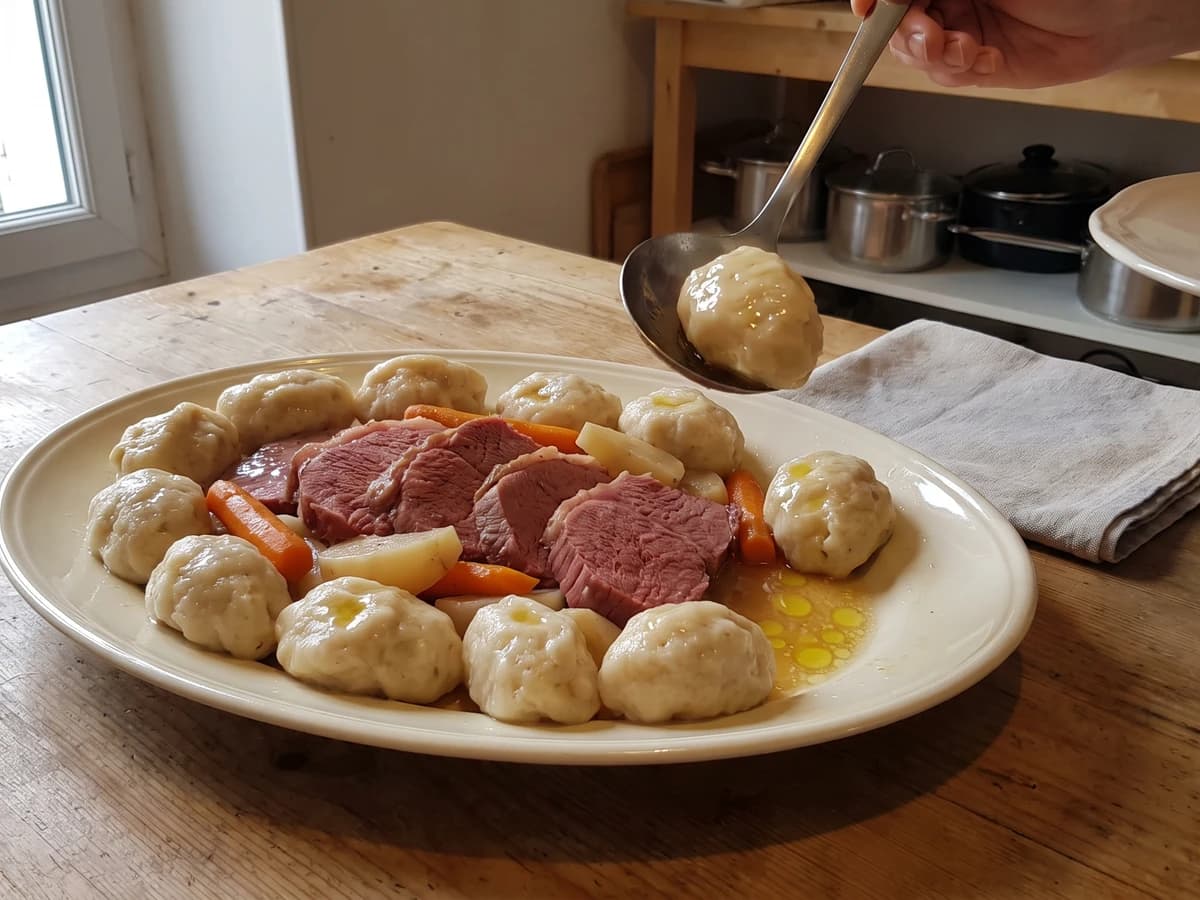
Boulettes au suif, poached beside salt beef, turn equal weights of flour and finely chopped suet into tender, rich dumplings. Keep the beef liquor at a bare tremble and the old garnish works beautifully at home.
A cooking platform built around craft, culture, and the stories behind what we eat.
Created by Chef Juliette
Based on No. 2249, Quenelles de Pommes de Terre, from Le Guide Culinaire (1907) by Auguste Escoffier
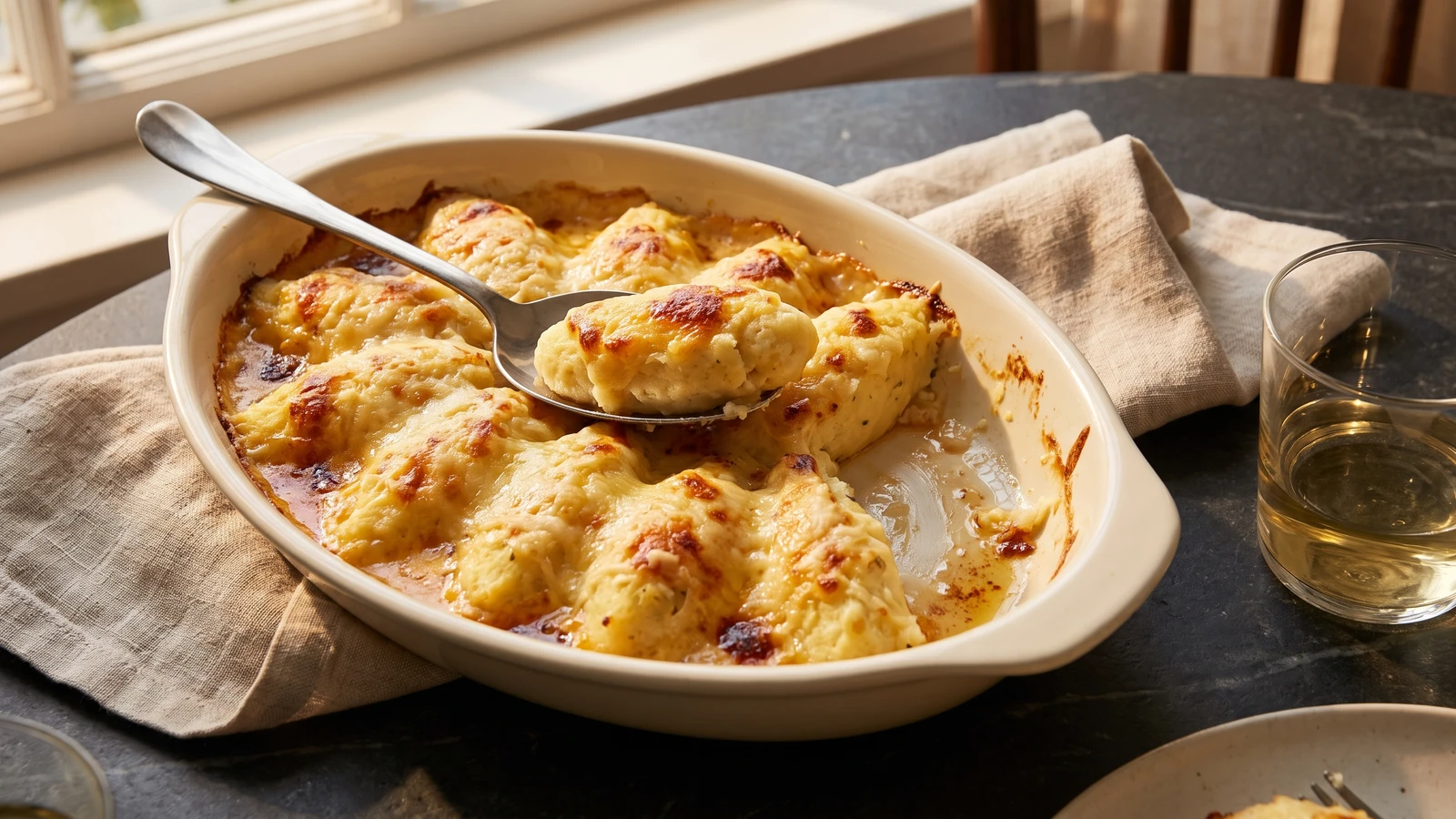
Quenelles de pommes de terre turn a dry Duchesse base into tender poached dumplings, bronzed under Gruyère and carried to the table beneath beurre noisette, a generous lesson in precision without fuss.
Quenelles de pommes de terre (poached potato dumplings) teach one hard, useful truth: the Pommes Duchesse, the butter-and-yolk potato base, must be dry before the eggs and flour enter. A wet paste cannot hold a clean oval in the poaching water; a dry one swells gently, stays tender, and carries its Gruyère crust without heaviness. That is the one thing to know before touching a pan.
The book assumed a two-pound Duchesse preparation waiting in the brigade, several hands to divide it into ounce-and-a-half pieces, and a salamander ready to seize the gratin. Unlike many classical garnishes, this one requires neither a saucier nor stock held on the fire. This version halves the book's formula for four, measures the awkward half egg by weight, and uses a home broiler for the same fierce top heat. Making the Duchesse base in one sequence removes brigade scaffolding; the dry mash, exact egg-and-flour ratio, gentle poach, cheese, melted butter, and final beurre noisette (nut-brown butter) stay because they are the dish. One cook, one stove, one evening.
Shape the quenelles with two spoons and expect the first to be less handsome than the last. Poach a tester before committing the batch; if it frays, chill the remaining quenelles and quiet the water. Ça se rattrape. The step that matters most is drying the potato thoroughly while it is still hot.
Quenelles de pommes de terre belong to the classical Parisian grand-kitchen table rather than to a single regional household tradition, and from there they passed naturally into bourgeois dining rooms as a composed potato garnish. The preparation joins Pommes Duchesse to the quenelle's moulded form, then poaches it before applying a gratin, an unusual sequence that makes the potato both dumpling and baked side dish. They should not be mistaken for Lyon's quenelles de brochet; the shared word describes the shape and moulding technique, while this dish's identity is potato, cheese, and beurre noisette.
Quantity
1 pound (454 g), about 3 medium
scrubbed
Quantity
4 tablespoons (60 ml / 57 g)
softened
Quantity
3
Quantity
¾ teaspoon (3.75 ml / 4.5 g)
Quantity
⅛ teaspoon (0.6 ml / 0.3 g)
Quantity
⅛ teaspoon (0.6 ml / 0.25 g)
Quantity
¼ cup plus 1 tablespoon (75 ml / 75 g), measured from 2 large eggs
Quantity
⅔ cup (160 ml / 76 g)
sifted
Quantity
3 quarts (2.8 L / 2.8 kg)
Quantity
1 tablespoon (15 ml / 18 g)
Quantity
3 tablespoons (45 ml / 43 g)
divided
Quantity
1 cup, loosely packed (240 ml / 100 g)
finely grated and divided
Quantity
3 tablespoons (45 ml / 43 g)
| Ingredient | Quantity |
|---|---|
| russet or other floury potatoesscrubbed | 1 pound (454 g), about 3 medium |
| unsalted butter for the Pommes Duchesse basesoftened | 4 tablespoons (60 ml / 57 g) |
| large egg yolks | 3 |
| fine salt | ¾ teaspoon (3.75 ml / 4.5 g) |
| ground white pepper | ⅛ teaspoon (0.6 ml / 0.3 g) |
| freshly grated nutmeg | ⅛ teaspoon (0.6 ml / 0.25 g) |
| beaten whole egg | ¼ cup plus 1 tablespoon (75 ml / 75 g), measured from 2 large eggs |
| all-purpose floursifted | ⅔ cup (160 ml / 76 g) |
| water for poaching | 3 quarts (2.8 L / 2.8 kg) |
| fine salt for the poaching water | 1 tablespoon (15 ml / 18 g) |
| unsalted butter for greasing and meltingdivided | 3 tablespoons (45 ml / 43 g) |
| Gruyèrefinely grated and divided | 1 cup, loosely packed (240 ml / 100 g) |
| Gratins (No. 268)for forming the cheese crust | 1 application |
| unsalted butter for the beurre noisette | 3 tablespoons (45 ml / 43 g) |
Heat the oven to 425°F (220°C). Prick the potatoes and bake them directly on the rack until a knife passes through without resistance, 45 to 55 minutes. Split them immediately, scoop out the flesh, and pass it through a potato ricer or food mill into a wide saucepan while it is still hot. Never use a food processor; its blades release too much starch and turn the potato elastic.
Set the riced potato over medium-low heat and work it with a wooden spoon for 2 to 3 minutes, until a light film appears on the pan and the potato pulls away cleanly. Take it off the heat and beat in the softened butter, then the yolks one at a time. Season with the salt, white pepper, and nutmeg. If the mixture still glistens wetly or slumps from the spoon, return it to gentle heat now and keep stirring until dry; once the whole egg enters, that chance is gone.
Spread the Duchesse base in a broad bowl and let it cool for about 10 minutes, until warm rather than hot. Fold in the measured beaten whole egg in three additions, letting the paste come together after each, then sift over the flour and fold only until no dry streaks remain. The mixture should be soft but hold a clear ridge from the spoon. If it slumps, cover and chill it for 15 minutes instead of burying it under extra flour. Ça se rattrape, and the exact proportion keeps the quenelles tender.
Use a little of the divided butter to grease a tray and two dessertspoons. Weigh the paste into 1½-ounce (43 g) portions, preserving the book's generous size, then pass each portion between the spoons to form a smooth oval about 2½ inches (6 cm) long. Set the quenelles on the tray without touching. Cork shapes or small quoits are equally proper if you prefer to form them by hand; smooth any cracks with a buttered fingertip.
Combine the water and poaching salt in a wide sauté pan and bring it just below a boil, about 185 to 190°F (85 to 88°C). Slip in one tester. If it holds cleanly, poach the remaining quenelles in batches of four or five, keeping the water at the barest tremble. Turn them once and cook until they rise, then give them another 2 minutes, about 5 to 6 minutes altogether. Lift them with a slotted spoon and drain on a clean towel for 5 minutes. If the tester feathers at the edges, lower the heat and chill the remaining shaped quenelles for 15 minutes before trying again; boiling water and warm paste are the usual culprits.
Preheat the broiler with a rack about 6 inches (15 cm) below it. Butter a shallow 2-quart gratin dish and scatter one-third of the Gruyère across its base. Arrange the drained quenelles in a single close layer, cover them with the remaining cheese, and drizzle over the remaining greasing butter, melted. Apply the Rapid Gratin treatment from Gratins (No. 268) under the broiler until the cheese bubbles and takes an irregular butter-gold and deep bronze crust, 2 to 4 minutes. Watch continuously and rotate the dish if one side colours first; if a patch darkens too quickly, shield that spot with a small piece of foil.
While the gratin forms, melt the remaining butter in a small pale-coloured saucepan over medium heat. Swirl as it foams, then pull it from the heat when the milk solids turn hazelnut brown and the butter smells rounded and nutty. Pour it immediately into a cool jug so it cannot burn. Bring the gratin to the table and spoon the beurre noisette, including its browned specks, over the quenelles. If the specks have turned black, begin the butter again; burnt butter has no honest rescue. À table!
1 serving (about 210g)
Culinary guides, cultural storytelling, and the editorial depth that makes cooking meaningful.
Discover Culinary ExplorerChef Juliette
Boulettes au suif, poached beside salt beef, turn equal weights of flour and finely chopped suet into tender, rich dumplings. Keep the beef liquor at a bare tremble and the old garnish works beautifully at home.

Chef Juliette
Bread, flour, frangipane, and rice become four cool, supple panades for binding forcemeats, each changing body and flavor while preserving tenderness. The finest Mousselines need none, and knowing that distinction is the lesson.

Chef Juliette
Panade au pain is bread, milk, salt, heat, and attention: stir until the paste releases cleanly, butter it against a skin, and you have the quiet binder behind tender French farces.

Chef Juliette
Panade de farine teaches the drying stroke behind pâte à choux: flour meets boiling buttered water, then stays over the fire until the paste gathers, smooths, and quits the pan cleanly.