Chef Juliette
Suet Dumpling
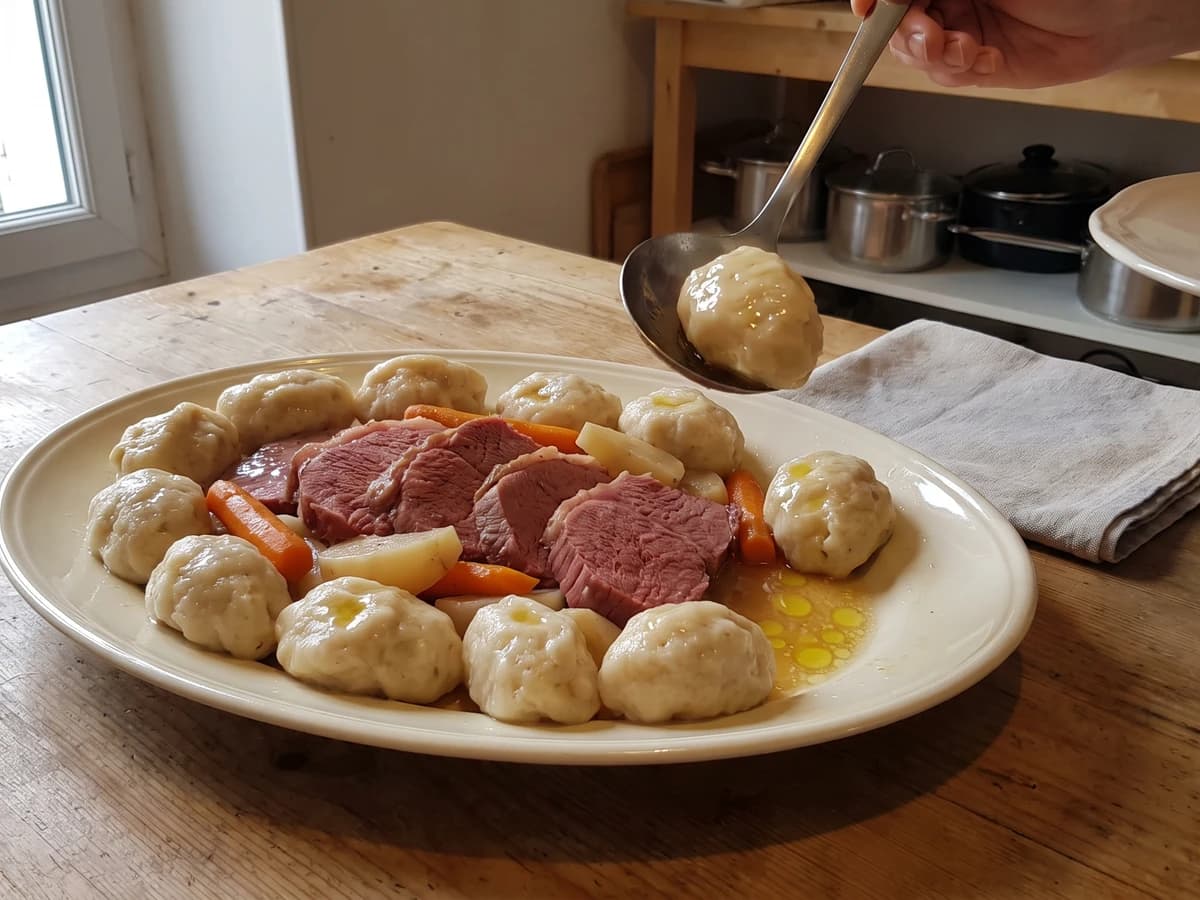
Boulettes au suif, poached beside salt beef, turn equal weights of flour and finely chopped suet into tender, rich dumplings. Keep the beef liquor at a bare tremble and the old garnish works beautifully at home.
A cooking platform built around craft, culture, and the stories behind what we eat.
Created by Chef Juliette
Based on No. 2238, Pommes de Terre Parmesane, from Le Guide Culinaire (1907) by Auguste Escoffier
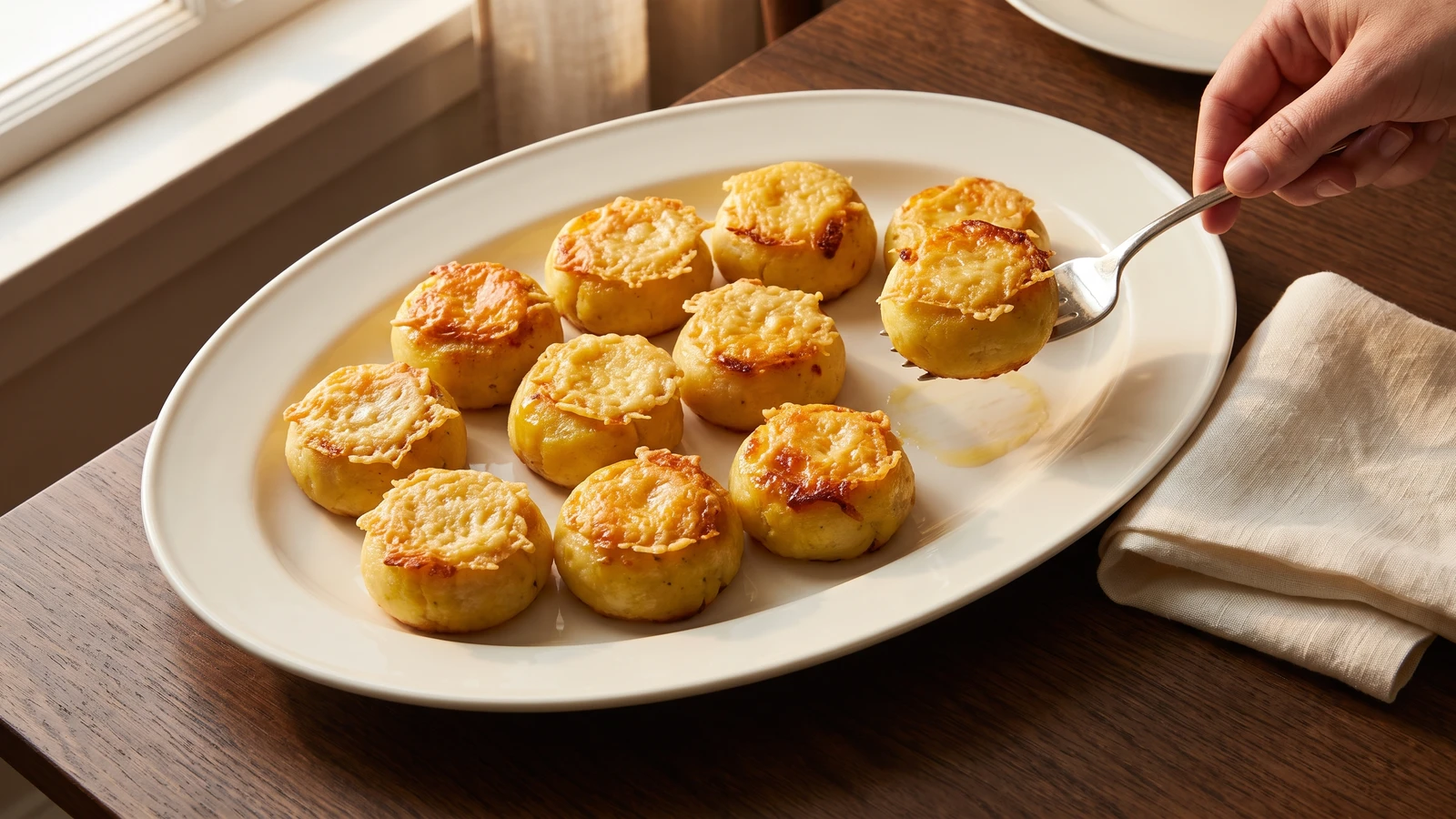
Small Duchesse potato galettes worked with Parmesan, gilded with egg, capped with delicate cheese shavings, and baked to a burnished finish, a precise classical side scaled for one home tray.
Pommes de Terre Parmesane (Parmesan Duchesse potato cakes) teaches the discipline of the classical variation: change the flavour, keep the structure. The one true thing to know before touching a pan is that the Duchesse paste must already hold a neat ridge. The oven can colour a sound galette, but it cannot repair a slack one.
The original assumed its Duchesse preparation was waiting at the potato station, with buttered trays in rotation and an oven that recovered its heat at once. Here, the book's per-pound formula becomes one pound of paste, enough for twelve small galettes and four people. A quarter-sheet pan, a thoroughly preheated oven, and the upper rack replace the brigade equipment honestly. Batch holding is scaffolding and goes; the two-ounce cheese ratio, egg gilding, Parmesan cap, and seven-to-eight-minute finish are the dish and stay.
Done properly, the galettes arrive plump and butter-gold, with nutty Parmesan running through the tender centres and bronzed into delicate caps. Work the cheese into paste that is warm, not hot, then test one portion before shaping the rest. That judgment of consistency is the step that matters most.
Pommes de Terre Parmesane belongs to the classical Parisian dining-room repertoire, as a named garnish built from pommes Duchesse rather than a provincial potato dish. It traveled through professional kitchens as a direct variation on the Chester galette: the paste, egg gilding, shape, and oven finish remained fixed while Parmesan supplied a drier, nuttier cheese character. The Italian cheese does not make the preparation Italian; the title records one disciplined substitution within a French family of potato garnishes.
Quantity
about 2 cups (475 ml / 1 lb / 454 g) from Pommes de Terre Duchesse au Chester (No. 2213)
kept warm and stopped before its Chester addition
Quantity
2/3 cup (160 ml / 2 oz / 57 g)
finely grated
Quantity
12 broad shavings, about 1/2 cup loosely packed (120 ml / 1 oz / 28 g)
shaved paper-thin for capping
Quantity
1
beaten until uniform
Quantity
1 tablespoon (15 ml / 14 g)
softened for the tray
| Ingredient | Quantity |
|---|---|
| prepared plain Duchesse potato pastekept warm and stopped before its Chester addition | about 2 cups (475 ml / 1 lb / 454 g) from Pommes de Terre Duchesse au Chester (No. 2213) |
| Parmesanfinely grated | 2/3 cup (160 ml / 2 oz / 57 g) |
| Parmesanshaved paper-thin for capping | 12 broad shavings, about 1/2 cup loosely packed (120 ml / 1 oz / 28 g) |
| large eggbeaten until uniform | 1 |
| unsalted buttersoftened for the tray | 1 tablespoon (15 ml / 14 g) |
Set a rack in the upper third of the oven and heat it thoroughly to 425°F (220°C). Butter a quarter-sheet pan from edge to edge. Have ready the plain Duchesse potato paste called for in Pommes de Terre Duchesse au Chester (No. 2213), following that preparation only to the point where its Chester would be added. Its formula remains in its own entry; this recipe changes the cheese and nothing else.
Fold the finely grated Parmesan into the warm Duchesse paste until evenly dispersed, working just enough to combine it. Pinch off a spoonful and set it down: it should stand in a soft mound with a clean edge. If it spreads, don't add flour. Ça se rattrape: spread the paste on a cool plate for five minutes, gather it again, and retest. If it cracks, work a portion briefly between warm palms before shaping; cream would soften the structure too far.
Divide the paste into twelve equal portions, about 1 1/2 ounces (43 g) each. Mould each into a small, tidy galette about 2 inches (5 cm) across and 1/2 inch (1.25 cm) thick, then arrange them on the buttered tray with space between them. Smooth split edges with a warm fingertip, but leave the surfaces slightly hand-worked; cooking well is not cooking fancy.
Brush each galette lightly with beaten egg, coating the top and visible sides without letting egg pool around the base. Lay one paper-thin Parmesan shaving over each top, piecing together two smaller flakes when the brittle cheese refuses to make a perfect round. If egg gathers on the tray, blot it away before baking; otherwise it sets into a rubbery skirt around the potato.
Bake for seven to eight minutes, until the galettes are heated through, the egg gilding is deep gold, and the Parmesan caps have blistered to amber at their ragged edges. If the tops remain pale after eight minutes, place the tray beneath a fully heated broiler for fifteen to thirty seconds, watching without interruption because Parmesan turns quickly. Rest them on the tray for one minute, then lift them with a thin spatula and serve at once. À table!
1 serving (about 140g)
Culinary guides, cultural storytelling, and the editorial depth that makes cooking meaningful.
Discover Culinary ExplorerChef Juliette
Boulettes au suif, poached beside salt beef, turn equal weights of flour and finely chopped suet into tender, rich dumplings. Keep the beef liquor at a bare tremble and the old garnish works beautifully at home.

Chef Juliette
Bread, flour, frangipane, and rice become four cool, supple panades for binding forcemeats, each changing body and flavor while preserving tenderness. The finest Mousselines need none, and knowing that distinction is the lesson.

Chef Juliette
Panade au pain is bread, milk, salt, heat, and attention: stir until the paste releases cleanly, butter it against a skin, and you have the quiet binder behind tender French farces.

Chef Juliette
Panade de farine teaches the drying stroke behind pâte à choux: flour meets boiling buttered water, then stays over the fire until the paste gathers, smooths, and quits the pan cleanly.