Chef Juliette
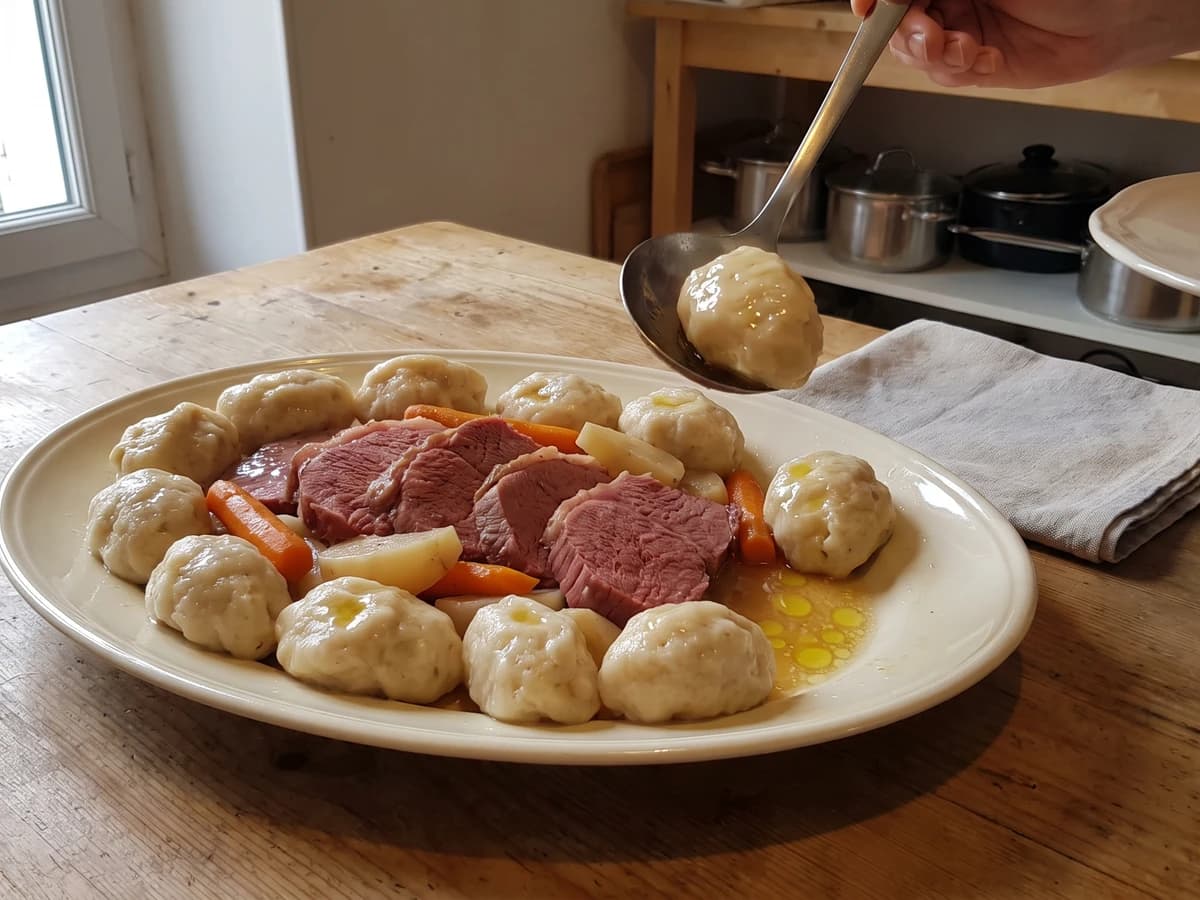
Suet Dumpling
Boulettes au suif, poached beside salt beef, turn equal weights of flour and finely chopped suet into tender, rich dumplings. Keep the beef liquor at a bare tremble and the old garnish works beautifully at home.
A cooking platform built around craft, culture, and the stories behind what we eat.
Created by Chef Juliette
Based on No. 2213, Pommes de Terre Duchesse au Chester, from Le Guide Culinaire (1907) by Auguste Escoffier
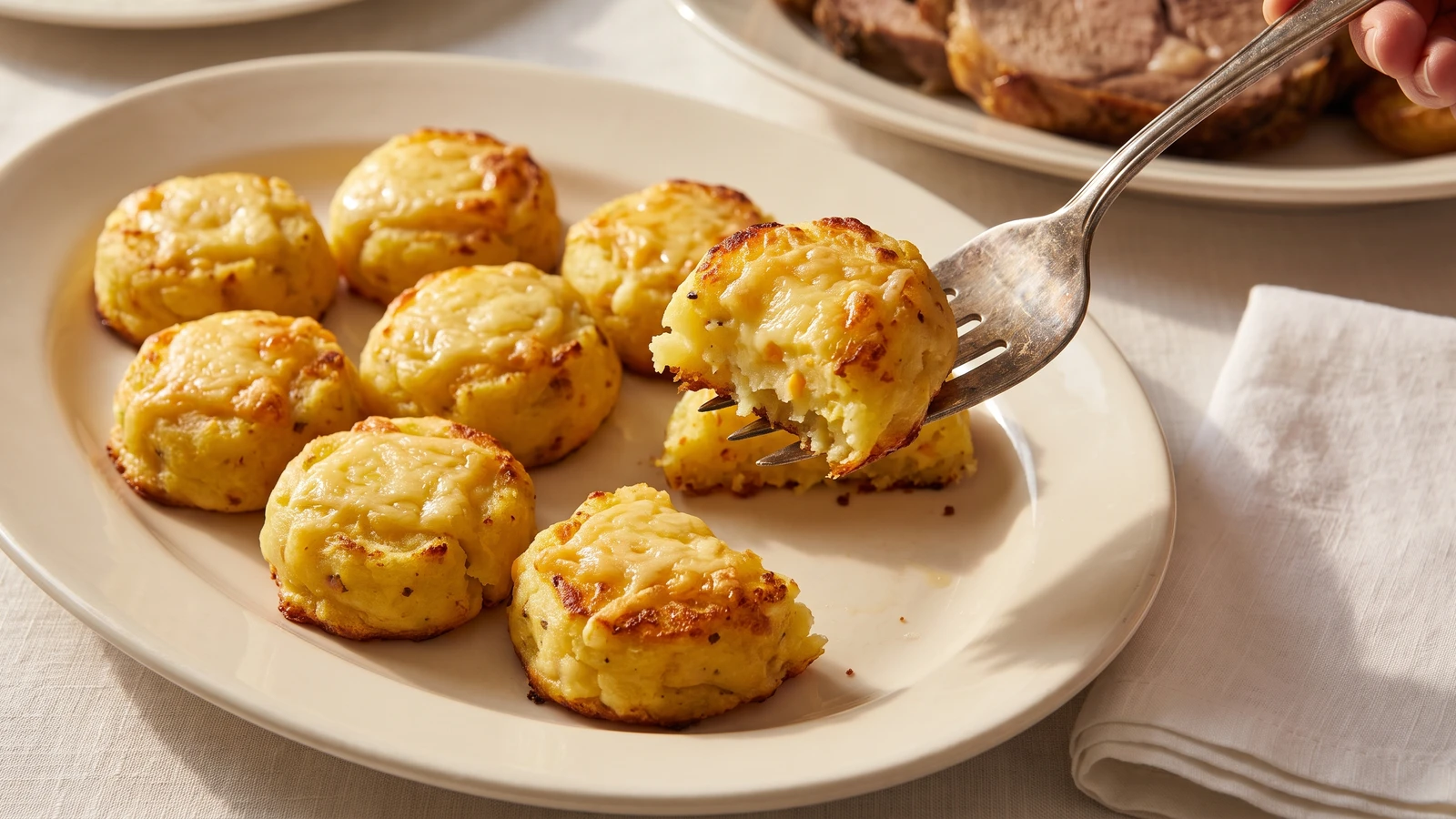
Small Duchesse galettes, tender within and gilded at the edges, carry grated Cheshire through the potato and a thin melting cap above, a precise old garnish made generous enough for the holiday table.
Pommes de Terre Duchesse au Chester (Duchesse potato galettes with Chester cheese) teach one true thing: the paste must be cool and dry enough to hold a moulded edge before it meets the oven. Grated cheese runs through the potato, beaten egg gives the galettes their gild, and a thin Chester cap melts over the top. If the paste is warm, they slump; chill it and begin again. Ça se rattrape.
The original entry assumed Croquettes de Pommes de Terre (No. 2210) already prepared by another station, a tray filled for a dining room, and a fierce service oven ready for the last seven or eight minutes. At home, use one pound of that prepared mixture, a buttered metal sheet, and the upper third of a well-heated oven. That makes eight small galettes for four people: one cook, one stove, one evening.
The brigade's holding tray and extra hands are scaffolding and can go. The cheese ratio, the small galette shape, the egg gilding, and the thin slice of Chester on each one are the dish, so they stay exactly where the book puts them. Keep the mixture cold before you shape it. That decides whether the galettes arrive proud or spread into one very agreeable, but incorrect, potato blanket.
Pommes duchesse belong to the Parisian grand-kitchen table, where smooth potato paste was piped or moulded into individual garnishes and coloured in a hot oven. In French culinary writing, Chester names Cheshire cheese from England, and its place here shows how readily the classical repertoire folded a useful foreign cheese into its own grammar. This version is not a cheese-topped croquette: it is a small baked galette, enriched within, gilded with egg, then capped with the same cheese.
Quantity
1 lb (454 g) Croquettes de Pommes de Terre (No. 2210)
cooled until firm
Quantity
½ cup, loosely packed (120 ml / 2 oz / 57 g)
finely grated
Quantity
8 paper-thin slices (about 2 oz / 57 g)
cut slightly smaller than the galettes
Quantity
1
beaten until smooth
Quantity
1 tablespoon (15 ml / 14 g)
softened, for the tray
| Ingredient | Quantity |
|---|---|
| prepared Croquettes de Pommes de Terre mixturecooled until firm | 1 lb (454 g) Croquettes de Pommes de Terre (No. 2210) |
| Chester (Cheshire) cheesefinely grated | ½ cup, loosely packed (120 ml / 2 oz / 57 g) |
| Chester (Cheshire) cheesecut slightly smaller than the galettes | 8 paper-thin slices (about 2 oz / 57 g) |
| large eggbeaten until smooth | 1 |
| unsalted buttersoftened, for the tray | 1 tablespoon (15 ml / 14 g) |
Set a rack in the upper third of the oven and heat it to 425°F (220°C), or 400°F (200°C) with a fan. Butter a heavy metal baking sheet generously, carrying the butter beneath every place a galette will sit. Use the bare buttered metal, not a thick ceramic dish, because the short baking time requires immediate heat beneath the potatoes.
Put the cold 1 lb (454 g) Croquettes de Pommes de Terre (No. 2210) mixture in a wide bowl and scatter over the ½ cup (120 ml / 57 g) grated Chester. Fold just until the cheese is evenly distributed, pressing rather than beating so the paste stays light. It should feel firm, cool, and mouldable. If it clings heavily to your fingers or relaxes into the bowl, stop and chill it for 15 minutes. Ça se rattrape; shaping warm paste and hoping the oven will save it does not.
Divide the mixture into eight equal 2 oz (57 g) portions. Roll each briefly between your palms, then flatten it into a galette, a small round about 2 inches (5 cm) across and ½ inch (1.25 cm) thick. Set the galettes on the buttered sheet with space between them and smooth any deep cracks around the edges. Keep them compact rather than broad; their little bit of height protects the tender centre.
Brush each galette lightly with beaten egg, covering the top and exposed sides in one thin, even coat. This is the gild: the egg must colour the potato, not collect in a yellow moat around it. If it puddles on the tray, blot away the excess with the dry edge of the brush. Lay one thin slice of Chester on each galette, leaving a narrow egg-painted rim visible. If the crumbly cheese breaks, overlap the pieces into a single cap; they will melt together.
Bake for 7 to 8 minutes without opening the door during the first 6. The galettes are ready when their sides hold cleanly, the egg-gilded rims are deep butter gold, and the Chester caps have melted and taken a few bronze freckles. If they are hot but still pale after 8 minutes, place them under the broiler for 30 to 60 seconds, the honest home equivalent of a salamander. Watch continuously; cheese crosses from gilded to scorched with very little ceremony.
Let the galettes settle on the tray for 1 minute, then lift them with a thin metal spatula onto a warm serving platter. The short rest firms the base without sacrificing the tender middle. Bring them straight to the table beside a roast, glazed ham, or game bird while the cheese remains soft and the gilded edges are crisp. À table!
1 serving (about 140g)
Culinary guides, cultural storytelling, and the editorial depth that makes cooking meaningful.
Discover Culinary ExplorerChef Juliette
Boulettes au suif, poached beside salt beef, turn equal weights of flour and finely chopped suet into tender, rich dumplings. Keep the beef liquor at a bare tremble and the old garnish works beautifully at home.

Chef Juliette
Bread, flour, frangipane, and rice become four cool, supple panades for binding forcemeats, each changing body and flavor while preserving tenderness. The finest Mousselines need none, and knowing that distinction is the lesson.

Chef Juliette
Panade au pain is bread, milk, salt, heat, and attention: stir until the paste releases cleanly, butter it against a skin, and you have the quiet binder behind tender French farces.

Chef Juliette
Panade de farine teaches the drying stroke behind pâte à choux: flour meets boiling buttered water, then stays over the fire until the paste gathers, smooths, and quits the pan cleanly.