Chef Juliette
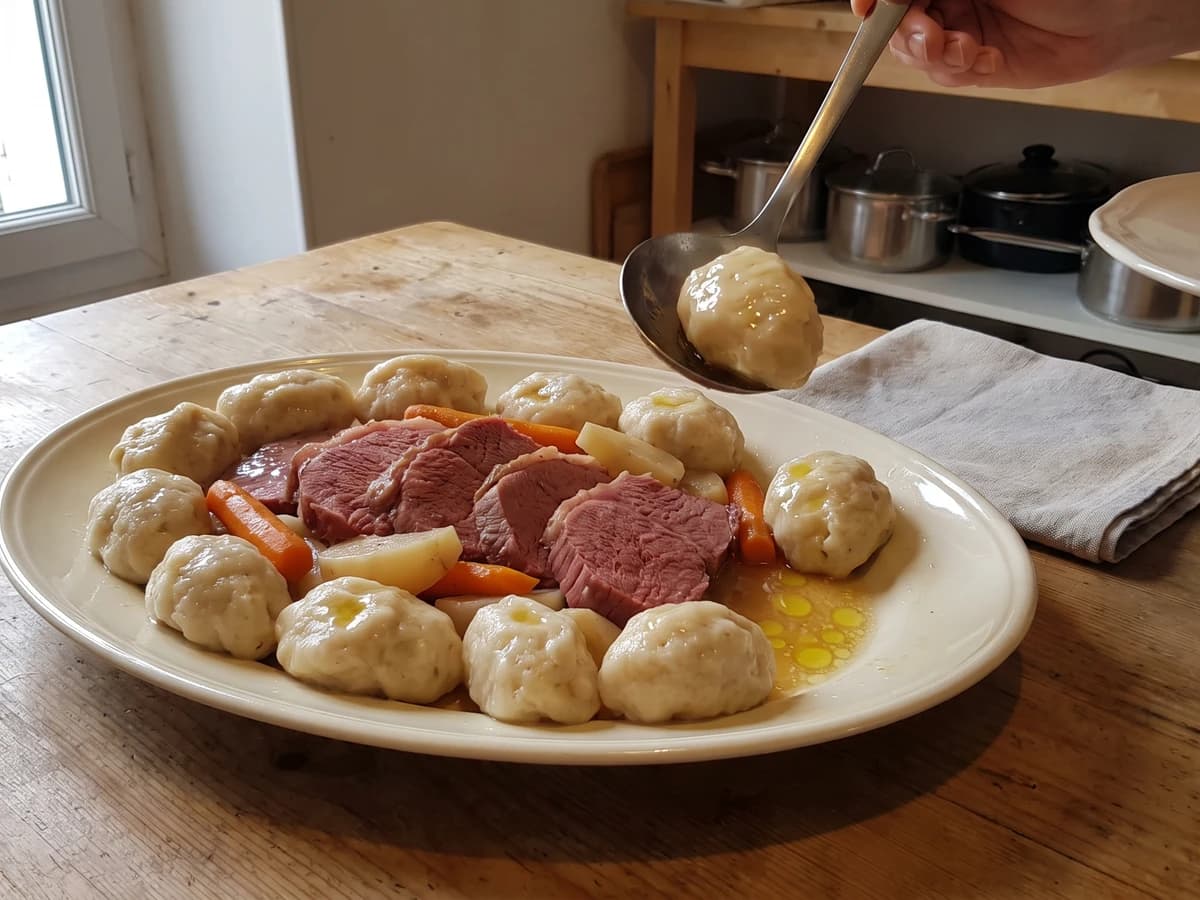
Suet Dumpling
Boulettes au suif, poached beside salt beef, turn equal weights of flour and finely chopped suet into tender, rich dumplings. Keep the beef liquor at a bare tremble and the old garnish works beautifully at home.
A cooking platform built around craft, culture, and the stories behind what we eat.
Created by Chef Juliette
Based on No. 221, Duchesse Potatoes, from Le Guide Culinaire (1907) by Auguste Escoffier
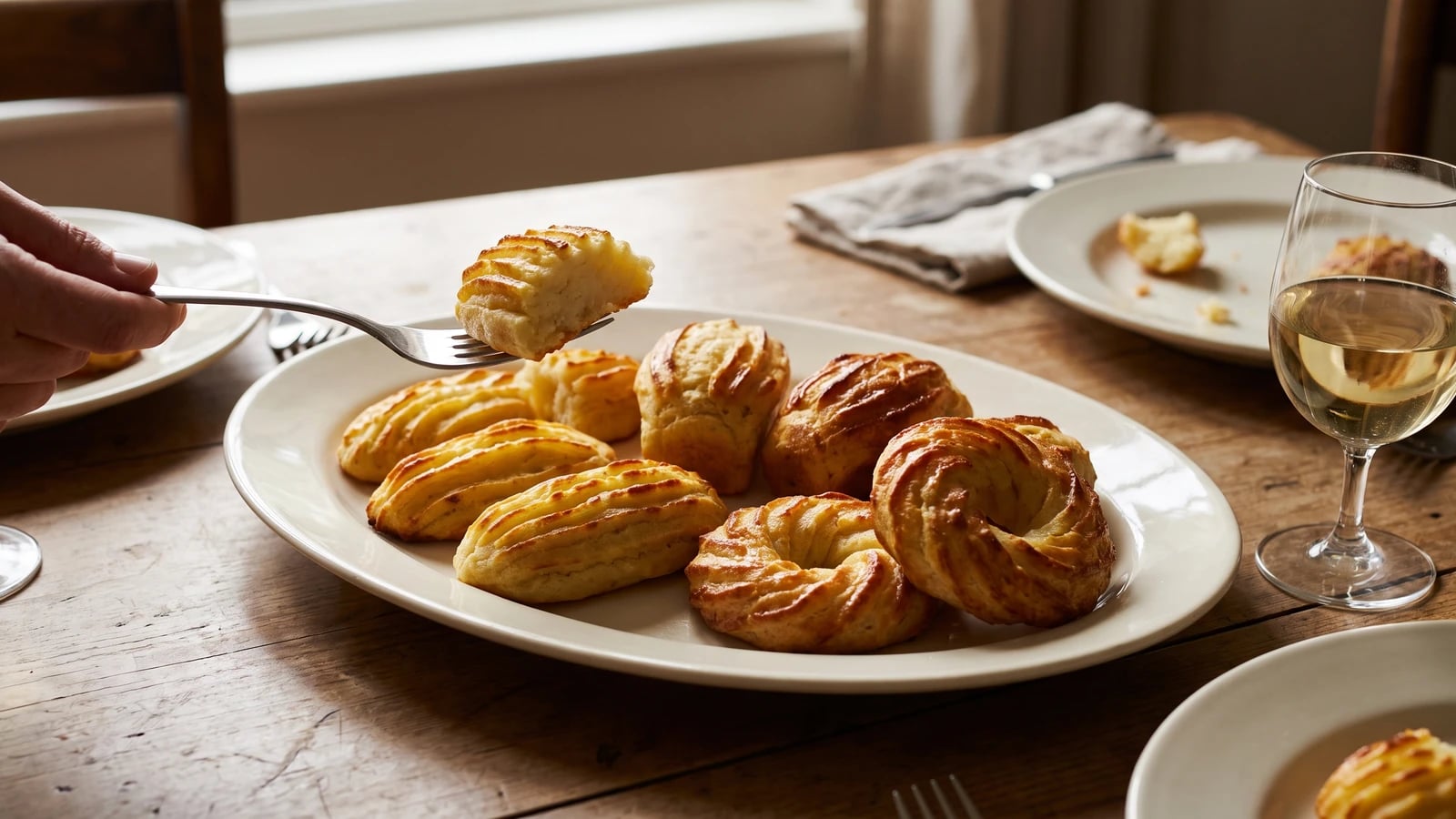
Pommes Duchesse teach the discipline of a dry purée: enrich it with butter and yolks, shape it neatly, then gild and streak each piece before baking it deep gold.
Pommes Duchesse (Duchess potatoes) teach one true thing: control the water and the potato will obey you. A dry purée holds its shape, takes butter and yolks without slumping, and bakes into tender little loaves with bronzed edges. A wet one spreads. Drying the potatoes thoroughly is the step that decides the dish.
The old entry assumed croquette potato mixture already waiting, a floured board, and enough trained hands to shape trays for service. It calls for an oven, not a sauce or stockpot, and although a brigade might keep a salamander ready for rapid browning, your honest equivalent is a parchment-lined tray in a thoroughly heated home oven. I have reduced the production batch to four generous servings. The brigade quantities were scaffolding; the dry purée, yolks, gilding, and protective streaks are the dish, so every one remains.
When they are right, the centres are soft and buttery while the scored crowns are burnished gold. Shape them while the mixture is warm enough to cooperate, then gild lightly and cut the streaks through the beaten egg. Those little vents matter: they keep the gilding close to the potato instead of letting it rise in blisters.
Pommes Duchesse belong to the French classical garniture tradition of the grand urban kitchen, where shaped potato preparations framed roasts, cutlets, and sauced dishes without competing with them. The piped rosette became the most familiar form, but classical entries also shaped the mixture by hand into cottage loaves, shuttles, quoits, lozenges, and rectangles on a floured board. Their name suggests ceremony, yet their method is practical home cooking: dry potato, enrichment, careful shaping, and a brief bake.
Quantity
4 large (1¾ pounds / 800 g)
Quantity
5 tablespoons (75 ml / 70 g)
cubed
Quantity
4
Quantity
1 teaspoon (5 ml / 6 g)
Quantity
¼ teaspoon (1.25 ml / 0.5 g)
Quantity
2 tablespoons (30 ml / 16 g)
for the board
Quantity
1
thoroughly beaten for gilding
| Ingredient | Quantity |
|---|---|
| floury potatoes, such as russet or Maris Piper | 4 large (1¾ pounds / 800 g) |
| unsalted buttercubed | 5 tablespoons (75 ml / 70 g) |
| large egg yolks | 4 |
| fine salt | 1 teaspoon (5 ml / 6 g) |
| ground white pepper | ¼ teaspoon (1.25 ml / 0.5 g) |
| all-purpose flourfor the board | 2 tablespoons (30 ml / 16 g) |
| large eggthoroughly beaten for gilding | 1 |
Heat the oven to 425°F (220°C) with a rack in the middle. Prick the potatoes and bake them directly on the rack for 45 to 55 minutes, until a skewer passes through without resistance. Baking instead of boiling keeps excess water out of the purée, which gives the yolks and butter a firm foundation. Line a baking sheet with parchment while the potatoes cook.
Split the potatoes while they are hot, scoop out the flesh, and pass it through a potato ricer or food mill into a wide saucepan. Set the pan over low heat and turn the purée with a flexible spatula for 2 to 3 minutes, until it looks matte, leaves the sides cleanly, and gives off no visible moisture. Don't beat it with a food processor or blender; ruptured starch makes glue, and no quantity of butter can persuade glue to become potato again.
Take the pan off the heat. Work in the butter until fully absorbed, then season with the salt and white pepper. Add the yolks one at a time, mixing each in completely before the next; the purée should be smooth, rich, and firm enough to hold a peak. If it turns slack, don't add handfuls of flour. Ça se rattrape: spread it on a cool tray and chill it for 10 to 15 minutes, then test a spoonful. Cooling firms the butter and starch without making the potatoes heavy.
Lower the oven to 400°F (200°C). Dust the board very lightly with the flour and divide the warm mixture into 12 equal portions. With floured fingertips or two small palette knives, form diminutive cottage loaves, shuttle-shaped loaves, thick lozenges, rectangles, or quoits with a small opening in the centre. Transfer them to the lined baking sheet, leaving space between them, and brush away loose flour. Handle them decisively but gently; overworking compacts the purée.
Brush each shape with a thin, even coat of beaten egg. This is to gild: the book's term for covering the surface with beaten egg so heat gives it a golden sheen. For quoits, rectangles, and lozenges, draw shallow parallel or crossing streaks through the wet gilding with the tip of a small knife. The cuts vent the surface and prevent the egg coating from blistering. If egg gathers in the cuts or around the base, lift the excess with a dry corner of the brush before baking.
Bake for 10 to 14 minutes, rotating the tray once, until the potatoes are heated through and the raised edges are a deep butter gold. If a patch of gilding begins to blister, prick it immediately with the knife tip and return the tray to the oven for another minute; it will settle. Slide the Pommes Duchesse onto a warm serving platter and bring them straight to the table. À table!
1 serving (about 200g)
Culinary guides, cultural storytelling, and the editorial depth that makes cooking meaningful.
Discover Culinary ExplorerChef Juliette
Boulettes au suif, poached beside salt beef, turn equal weights of flour and finely chopped suet into tender, rich dumplings. Keep the beef liquor at a bare tremble and the old garnish works beautifully at home.

Chef Juliette
Bread, flour, frangipane, and rice become four cool, supple panades for binding forcemeats, each changing body and flavor while preserving tenderness. The finest Mousselines need none, and knowing that distinction is the lesson.

Chef Juliette
Panade au pain is bread, milk, salt, heat, and attention: stir until the paste releases cleanly, butter it against a skin, and you have the quiet binder behind tender French farces.

Chef Juliette
Panade de farine teaches the drying stroke behind pâte à choux: flour meets boiling buttered water, then stays over the fire until the paste gathers, smooths, and quits the pan cleanly.