Chef Juliette
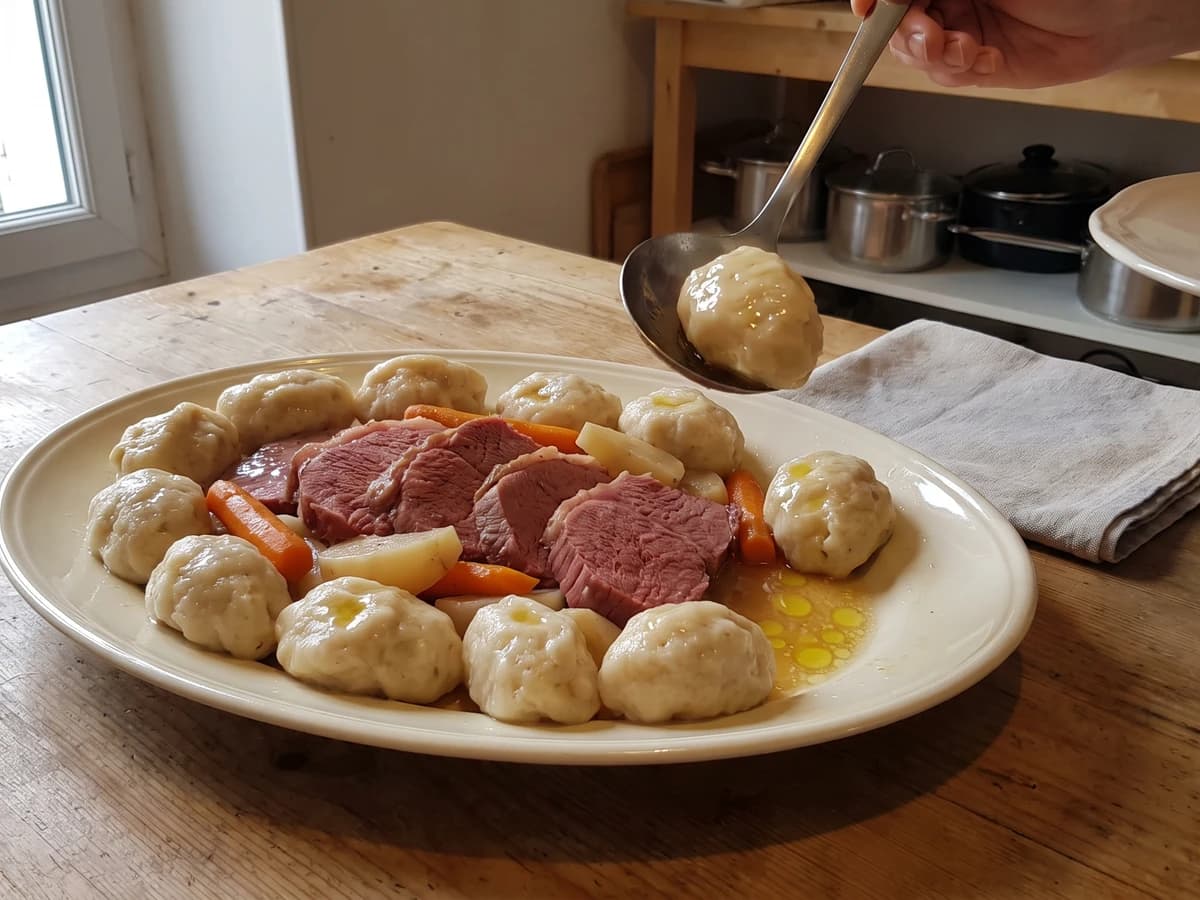
Suet Dumpling
Boulettes au suif, poached beside salt beef, turn equal weights of flour and finely chopped suet into tender, rich dumplings. Keep the beef liquor at a bare tremble and the old garnish works beautifully at home.
A cooking platform built around craft, culture, and the stories behind what we eat.
Created by Chef Juliette
Based on No. 2186, Oxalis, from Le Guide Culinaire (1907) by Auguste Escoffier
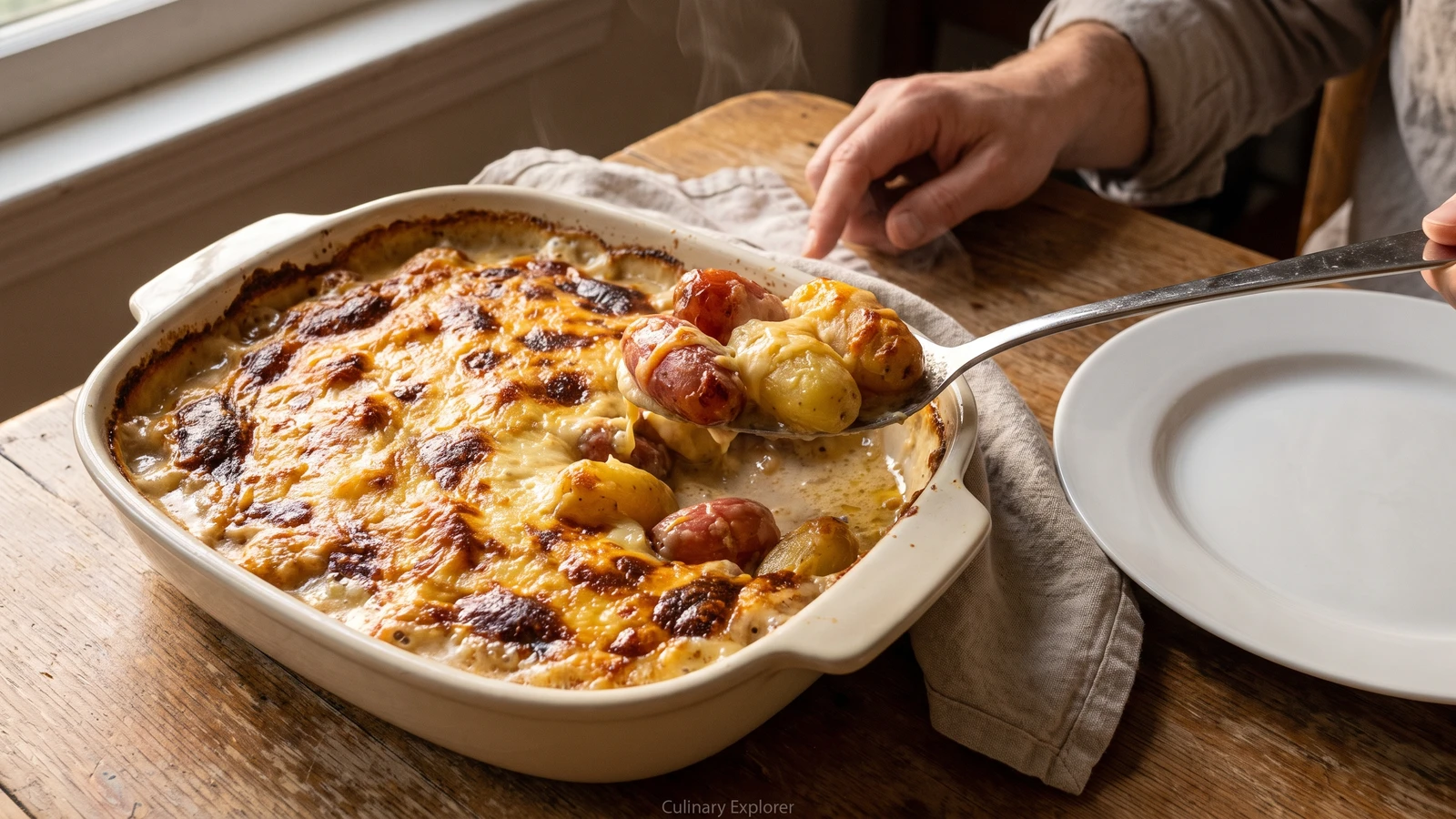
Oxalis au gratin brings a bright, sorrel-like root beneath a bronzed finish. Boil it tender, drain it dry, then trust close heat: dryness below makes the crust possible above.
Oxalis au gratin (tart oxalis roots beneath a browned finish) teaches a useful rule: a boiled vegetable must be dry before it receives a gratin. Leave water clinging to the roots and the finish slides into a pale puddle; drain them properly and their lively acidity sits beautifully beneath the buttered crust.
The classical entry is brigade shorthand. It assumes a separate Gratins (No. 268) preparation and a salamander waiting above the range. Your honest equivalent is one shallow, broiler-safe dish beneath a fully heated household broiler. The separate station and holding pans were scaffolding, so they go. The salted boiling, thorough draining, and final gratin stay; those steps are the dish. One cook, one stove, one evening.
Expect tender roots with a bright, sorrel-like edge, their irregular shapes caught beneath an evenly bronzed top. The moment that matters comes between the pot and the gratin dish: dry the oxalis until no cooking water remains.
Oxalis in the French classical repertoire belongs to the cosmopolitan grand kitchens of Paris rather than a provincial French larder; the source tradition identifies it as a Mexican vegetable allied to sorrel and values chiefly its roots. Cooks folded the vegetable into familiar French grammar, boiling it in salted water before sending it à la crème, stuffed, or au gratin. Its purée was called Purée Brésilienne and handled like turnip purée, a reminder that classical garnish names were not always reliable maps of botanical origin.
Quantity
About 6 cups (1.4 L / 900 g)
well scrubbed, trimmed, and sorted by size
Quantity
10 cups (2.4 L / 2.4 kg)
Quantity
1 tablespoon (15 ml / 18 g)
Quantity
1 tablespoon (15 ml / 14 g)
softened
Quantity
1 prepared application Gratins (No. 268)
| Ingredient | Quantity |
|---|---|
| cultivated edible oxalis tuberswell scrubbed, trimmed, and sorted by size | About 6 cups (1.4 L / 900 g) |
| water | 10 cups (2.4 L / 2.4 kg) |
| fine sea salt | 1 tablespoon (15 ml / 18 g) |
| unsalted buttersoftened | 1 tablespoon (15 ml / 14 g) |
| Gratins | 1 prepared application Gratins (No. 268) |
Use only cultivated edible oxalis tubers sold for cooking. Scrub them thoroughly under running water, working into every crease, then trim away hairlike roots and bruised patches without peeling the thin skins. Sort them by size and halve only the largest tubers so the whole batch cooks evenly. Cleaning well is not brigade fuss here; earth lodged in a fold will survive the boiling pot.
Bring the water and salt to a full boil in a wide saucepan. Add the oxalis, let the water return to the boil, then adjust the heat so it remains lively without throwing the tubers against one another. Cook for 12 to 18 minutes, testing several sizes. A knife should enter with only faint resistance, while the roots still hold their shapes. Remove smaller pieces as they become ready rather than sacrificing them to the largest one.
Drain the oxalis thoroughly, then return it to the empty warm saucepan over the lowest heat for 1 to 2 minutes. Turn the roots gently until their surfaces look dry and no water gathers on the pan floor. If a few have split, place their broken sides downward in the gratin dish; if several are too soft, press them into a rough bottom layer and arrange the intact roots above. Ça se rattrape. What cannot remain is loose cooking water.
Heat the broiler fully and position a rack 4 to 5 inches (10 to 12 cm) below it. Butter a shallow 1½-quart (1.4 L) broiler-safe gratin dish, covering its base and sides. Arrange the dry oxalis snugly in one layer, placing any rough pieces underneath. The roots should fill the dish generously without being crushed.
Finish the arranged oxalis with the prepared Gratins (No. 268), following that preparation in its own entry and keeping it whole rather than rebuilding it here. Set the dish beneath the hot household broiler, the honest equivalent of the salamander, and watch continuously until the surface is evenly bronzed and the edge bubbles actively. If one patch colours too quickly, turn the dish; if the entire top darkens before the centre is hot, lower it one rack and continue gently. Ça se rattrape.
Let the oxalis rest for 5 minutes, just long enough for the finish to settle around the roots without losing its bubbling edge. Spoon it directly from the gratin dish, making certain each serving receives both tender oxalis and bronzed topping. Serve beside roast poultry, veal, or pork. À table!
1 serving (about 280g)
Culinary guides, cultural storytelling, and the editorial depth that makes cooking meaningful.
Discover Culinary ExplorerChef Juliette
Boulettes au suif, poached beside salt beef, turn equal weights of flour and finely chopped suet into tender, rich dumplings. Keep the beef liquor at a bare tremble and the old garnish works beautifully at home.

Chef Juliette
Bread, flour, frangipane, and rice become four cool, supple panades for binding forcemeats, each changing body and flavor while preserving tenderness. The finest Mousselines need none, and knowing that distinction is the lesson.

Chef Juliette
Panade au pain is bread, milk, salt, heat, and attention: stir until the paste releases cleanly, butter it against a skin, and you have the quiet binder behind tender French farces.

Chef Juliette
Panade de farine teaches the drying stroke behind pâte à choux: flour meets boiling buttered water, then stays over the fire until the paste gathers, smooths, and quits the pan cleanly.