Chef Juliette
Suet Dumpling
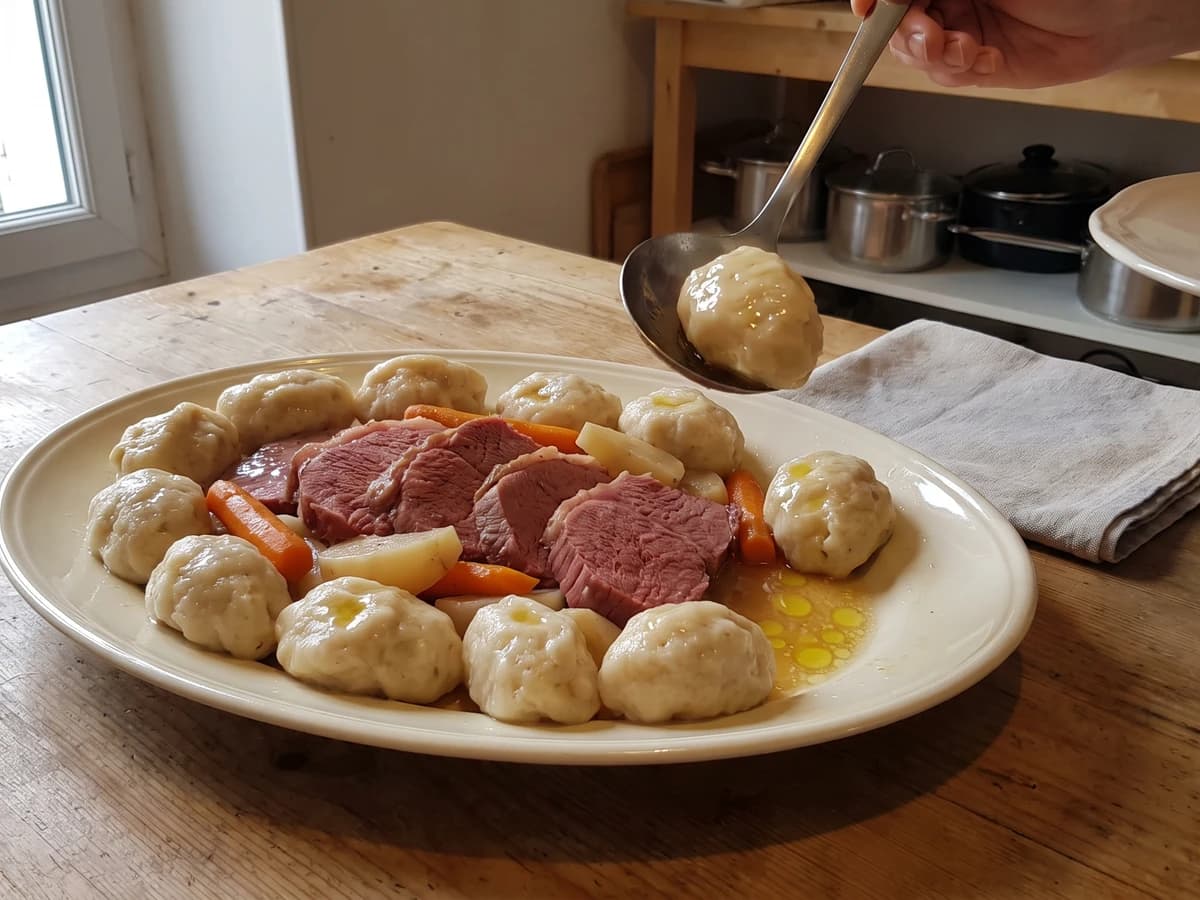
Boulettes au suif, poached beside salt beef, turn equal weights of flour and finely chopped suet into tender, rich dumplings. Keep the beef liquor at a bare tremble and the old garnish works beautifully at home.
A cooking platform built around craft, culture, and the stories behind what we eat.
Created by Chef Juliette
Based on No. 2138, Crêpes aux Épinards, from Le Guide Culinaire (1907) by Auguste Escoffier
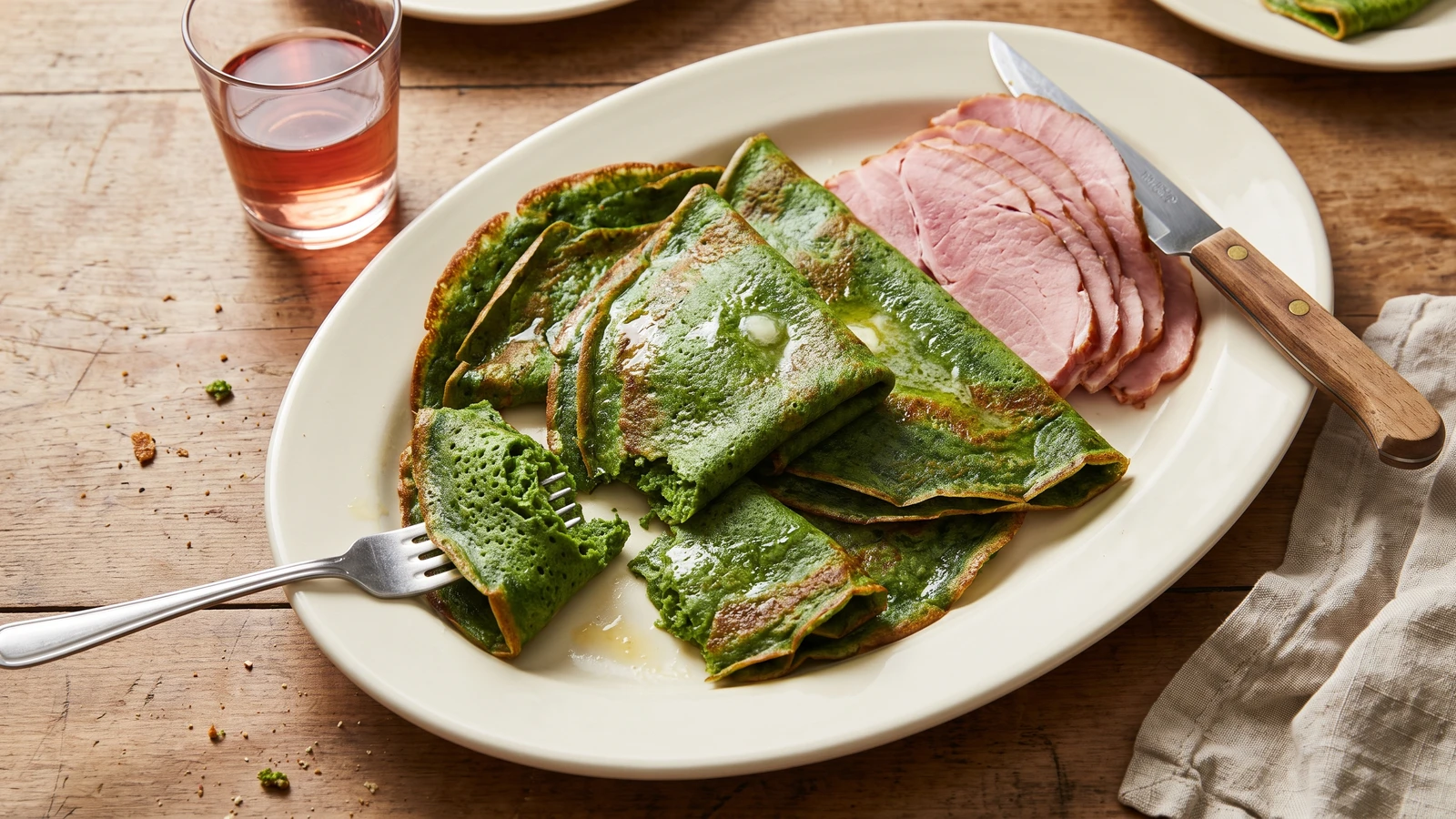
Butter-dried spinach folded with its own weight of Yorkshire Pudding (For Beef Roasts) (No. 1943) paste, then cooked into tender green crêpes with bronzed edges, ready for beef, veal, or ham.
Crêpes aux Épinards (spinach pancakes) teach a strict little truth: spinach must be dry before it meets the batter. Parboiling softens it, but dessécher, drying it over heat in butter, gives the crêpes their tender body instead of a wet, custardy middle. You aren't chasing a paper-thin crêpe here. These are small savory green cakes, bronze at the edges and soft within, built to catch the juices of beef, veal, or ham.
The source gives no yield because a garnish cook made as many as the joint required, using a small omelet pan or deep tartlet moulds in repetition. Here it becomes eight cakes for four people, cooked in one skillet and held briefly in a low oven. The moulds are brigade scaffolding and can go; the parboil, the butter-drying, and the exact equal-weight fold with the prepared paste from Yorkshire Pudding (For Beef Roasts) (No. 1943) are the dish and stay. One cook, one stove, one evening.
Weigh the spinach only after it has been squeezed and desséché. Raw leaves tell you nothing useful because water lies. If liquid appears on the plate while the spinach cools, return it to the pan and dry it once more. Ça se rattrape. This is the step that matters most.
Crêpes aux Épinards belong to the French grand-kitchen garnish repertoire rather than a single province: they accompanied a relevé, a substantial presentation of beef, veal, or ham at the formal roast table. Their surprising hinge is Yorkshire Pudding (For Beef Roasts) (No. 1943), an English roast preparation absorbed into the French canon and used here as the binding structure for spinach. Despite their name, these are not thin Breton crêpes, but compact savory cakes made to hold their shape beside carved meat and drink its juices.
Quantity
11 loosely packed cups (2.6 L / 340 g)
large stems removed and leaves well shredded
Quantity
about ¾ cup (180 ml / 190 g) Yorkshire Pudding (For Beef Roasts) (No. 1943), adjusted to exactly equal the cooked spinach by weight
prepared according to its own entry
Quantity
5 tablespoons (75 ml / 70 g)
divided
Quantity
½ teaspoon (2.5 ml / 3 g)
Quantity
¼ teaspoon (1.25 ml / 0.6 g)
Quantity
⅛ teaspoon (0.6 ml / 0.25 g)
| Ingredient | Quantity |
|---|---|
| fresh spinach leaveslarge stems removed and leaves well shredded | 11 loosely packed cups (2.6 L / 340 g) |
| prepared Yorkshire pudding pasteprepared according to its own entry | about ¾ cup (180 ml / 190 g) Yorkshire Pudding (For Beef Roasts) (No. 1943), adjusted to exactly equal the cooked spinach by weight |
| unsalted butterdivided | 5 tablespoons (75 ml / 70 g) |
| fine salt | ½ teaspoon (2.5 ml / 3 g) |
| freshly ground white pepper | ¼ teaspoon (1.25 ml / 0.6 g) |
| freshly grated nutmeg | ⅛ teaspoon (0.6 ml / 0.25 g) |
Bring a wide saucepan of water to a strong boil. Lower in the well-shredded spinach and parboil it for 45 to 60 seconds, just until every ribbon has collapsed and turned bright green. Drain at once, cool briefly under cold running water, then gather the spinach in a clean kitchen towel and wring firmly until no more water falls. It should weigh about 190 g, but record the actual weight because that number governs the paste.
Melt 3 tablespoons (45 ml / 42 g) of the butter in the skillet over medium heat. Add the spinach, salt, white pepper, and nutmeg, spreading the ribbons across the pan. Dessécher for 6 to 8 minutes, turning and separating the spinach until the pan leaves no wet trail and the leaves wear only a satin butter sheen. If water still beads in the pan, raise the heat slightly and keep turning. If the butter begins to brown before the water is gone, lift the pan off the heat, lower the flame, and continue gently. Ça se rattrape.
Transfer the spinach to a plate and let it cool for about 5 minutes, until warm rather than hot. If liquid gathers underneath, return the spinach to the skillet and dry it for another minute before proceeding. Weigh out exactly the same amount of prepared paste from Yorkshire Pudding (For Beef Roasts) (No. 1943), expected to be about ¾ cup (180 ml / 190 g). Fold the spinach and paste together just until evenly combined; beating would make the finished crêpes heavy.
Wipe the skillet clean and set it over medium-low heat. Melt enough of the remaining butter to coat the floor generously. Spoon in three scant ¼-cup portions, about 45 ml or 45 to 50 g each, leaving room between them. Ease each portion into a round about 3 inches (8 cm) wide and a little under ½ inch (1 cm) thick. Keep the layer even so the centre sets before the butter browns too far.
Cook the crêpes for 3 to 4 minutes, until the undersides are butter-gold with bronze patches, the rims look set, and the upper surface has lost its wet shine. Slide a thin spatula underneath each one and turn it decisively, then cook the second side for 2 to 3 minutes. If a crêpe tears, nudge the pieces together while the second side is still soft and leave it undisturbed for another minute; the paste will bind again as it sets.
Transfer the cooked crêpes to a baking sheet and hold them uncovered in a 200°F (95°C) oven while you butter the skillet and cook the remaining batches. Keep them in one layer, because stacking or covering traps moisture and softens their browned edges. Serve two per person beside carved beef, veal, or ham, close enough to catch the meat juices without being drowned in them. À table!
1 serving (about 100g)
Culinary guides, cultural storytelling, and the editorial depth that makes cooking meaningful.
Discover Culinary ExplorerChef Juliette
Boulettes au suif, poached beside salt beef, turn equal weights of flour and finely chopped suet into tender, rich dumplings. Keep the beef liquor at a bare tremble and the old garnish works beautifully at home.

Chef Juliette
Bread, flour, frangipane, and rice become four cool, supple panades for binding forcemeats, each changing body and flavor while preserving tenderness. The finest Mousselines need none, and knowing that distinction is the lesson.

Chef Juliette
Panade au pain is bread, milk, salt, heat, and attention: stir until the paste releases cleanly, butter it against a skin, and you have the quiet binder behind tender French farces.

Chef Juliette
Panade de farine teaches the drying stroke behind pâte à choux: flour meets boiling buttered water, then stays over the fire until the paste gathers, smooths, and quits the pan cleanly.