Chef Juliette
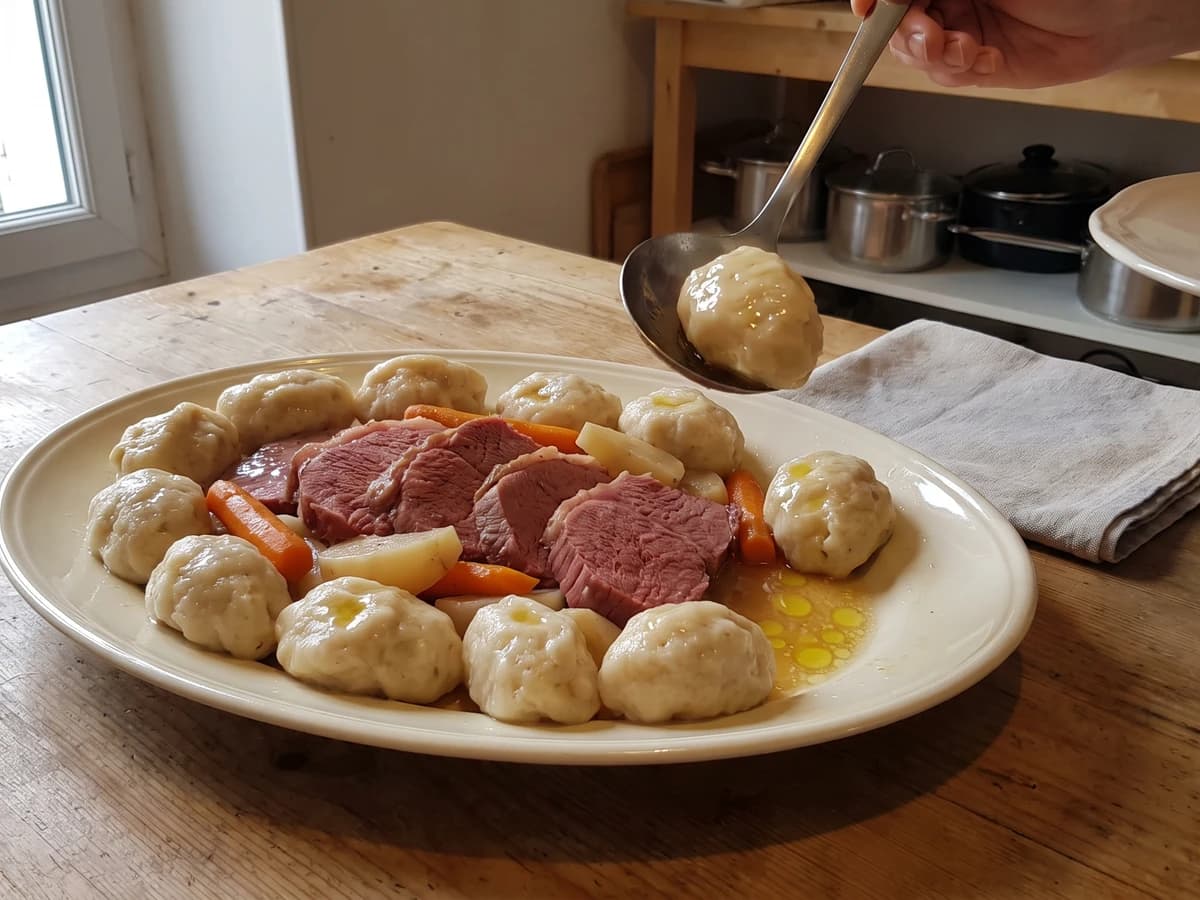
Suet Dumpling
Boulettes au suif, poached beside salt beef, turn equal weights of flour and finely chopped suet into tender, rich dumplings. Keep the beef liquor at a bare tremble and the old garnish works beautifully at home.
A cooking platform built around craft, culture, and the stories behind what we eat.

Created by Chef Juliette
Based on No. 1943, Yorkshire Pudding (For Beef Roasts), from Le Guide Culinaire (1907) by Auguste Escoffier
Pouding du Yorkshire teaches the law of hot fat: an egg-rich, nutmeg-scented batter poured into smoking beef dripping, rising bronze and crisp before it catches the roast's savory juices.
Pouding du Yorkshire teaches one uncompromising law: batter waits for fat, fat never waits for batter. The dripping must be near-smoking and the metal pan fully heated before the first drop lands. Get that right, and the thin, egg-rich appareil (batter) climbs into bronzed ridges around a tender center; pour it into merely warm fat and it lies flat.
The original entry assumed a beef joint turning on a spit above the pudding, feeding it with falling fat and gravy as it baked. Your oven offers a roasting pan, reserved dripping, and the quiet half hour while the beef rests. That is the honest equivalent: heat a deep metal pan fiercely in the roast's oven, bake the pudding in saved dripping, then give it a final spoonful of hot meaty juices. The spit is brigade scaffolding; the smoking fat and beef saturation are the dish.
The book's six-egg formula is reduced to exactly one third, enough for four, while its flour, egg, and milk proportions remain intact. Only the quantity and equipment changed because a home roast doesn't need a brigade panful. One cook, one stove, one evening. Before the full pour, test the dripping with one drop of appareil. No fierce hiss means wait. Ça se rattrape now, not after the pan is filled.
Pouding du Yorkshire belongs to Yorkshire and the roast-beef tables of northern England, where batter cooked beneath a turning joint caught precious fat and meat juices rather than letting them fall away. Across generations it moved from an opening course, served before the beef to stretch the meal, to its familiar place beside the joint. French classical kitchens admitted it as a formal accompaniment for beef roasts, preserving the hot dripping, falling gravy, and service in squares or lozenges.
Quantity
⅔ cup (160 ml / 76 g)
sifted
Quantity
2
Quantity
1⅓ cups (315 ml / 325 g)
Quantity
½ teaspoon (2.5 ml / 3 g)
Quantity
⅛ teaspoon (0.6 ml / 0.3 g)
Quantity
⅛ teaspoon (0.6 ml / 0.25 g)
Quantity
2 tablespoons (30 ml / 27 g)
Quantity
2 tablespoons (30 ml / 30 g)
reserved from the joint and kept hot
| Ingredient | Quantity |
|---|---|
| all-purpose floursifted | ⅔ cup (160 ml / 76 g) |
| large eggs | 2 |
| whole milk | 1⅓ cups (315 ml / 325 g) |
| fine salt | ½ teaspoon (2.5 ml / 3 g) |
| finely ground black pepper | ⅛ teaspoon (0.6 ml / 0.3 g) |
| freshly grated nutmeg | ⅛ teaspoon (0.6 ml / 0.25 g) |
| rendered beef dripping | 2 tablespoons (30 ml / 27 g) |
| hot beef roasting juicesreserved from the joint and kept hot | 2 tablespoons (30 ml / 30 g) |
Set an oven rack in the upper-middle position. Once the beef joint comes out to rest, raise the oven to 450°F (230°C) and let it reach full heat. Bring the milk to a complete boil in a small saucepan, remove it from the heat, and cool it until lukewarm, about 15 minutes. The source calls for boiled milk, but cooling it before mixing prevents the eggs from setting on contact.
Put the sifted flour in a bowl and make a well. Add the eggs one by one, working each fully into the flour before adding the next. Pour in the boiled, cooled milk little by little, whisking each addition smooth before continuing. Add the salt, pepper, and nutmeg. The appareil should pour like thin cream. If it has lumps, don't thicken it with more flour. Ça se rattrape: pass it through a fine sieve into a pouring jug, pressing the last small lumps through with a spatula.
Put the beef dripping in an 8-inch (20 cm) deep metal baking pan and heat it in the fully heated oven for 8 to 10 minutes, until the fat shimmers and is just beginning to smoke. Using long oven mitts, set the pan on a heatproof surface and tilt it carefully so the dripping coats the bottom. Test it with one drop of appareil: it must hiss fiercely and set at once. If the drop sits quietly, stop and return the pan to the oven for another 3 to 5 minutes. Cold dripping and the pudding never rises.
Pour the appareil promptly into the hot dripping, keeping your hands clear of any splatter, and return the pan to the oven at once. Bake for 15 minutes at 450°F (230°C), then reduce the temperature to 400°F (200°C) without opening the door. Continue for 12 to 15 minutes, until the pudding stands high at the edges, the ridges are deep bronze, and the center is set rather than wet. Do not open the oven during the first 20 minutes. If the center remains pale after the edges have browned, lower the heat to 375°F (190°C) and give it another 5 minutes.
Once the pudding is risen, crisp, and fully set, draw the pan out and spoon the hot beef roasting juices over the tender center and into the lower folds, leaving the proud top ridges crisp. Return it to the oven for 2 to 3 minutes so the juices soak in. If liquid pools instead of absorbing, tip away the excess and bake for another 3 minutes. Ça se rattrape, but don't drown what the dripping worked so hard to raise.
Run a thin spatula around the edges, lift the Pouding du Yorkshire onto a warm board, and cut it into four squares or generous lozenges, exactly as the source directs. Set the pieces around the roast or serve them separately with more hot beef juices at the table. Bring them out immediately, while the ridges remain crisp and the centers are still tender. À table!
1 serving (about 115g)
Culinary guides, cultural storytelling, and the editorial depth that makes cooking meaningful.
Discover Culinary ExplorerChef Juliette
Boulettes au suif, poached beside salt beef, turn equal weights of flour and finely chopped suet into tender, rich dumplings. Keep the beef liquor at a bare tremble and the old garnish works beautifully at home.

Chef Juliette
Bread, flour, frangipane, and rice become four cool, supple panades for binding forcemeats, each changing body and flavor while preserving tenderness. The finest Mousselines need none, and knowing that distinction is the lesson.

Chef Juliette
Panade au pain is bread, milk, salt, heat, and attention: stir until the paste releases cleanly, butter it against a skin, and you have the quiet binder behind tender French farces.

Chef Juliette
Panade de farine teaches the drying stroke behind pâte à choux: flour meets boiling buttered water, then stays over the fire until the paste gathers, smooths, and quits the pan cleanly.